Article text
The world of golf equipment is undergoing a dramatic transformation, driven by continued innovation in additive manufacturing. At the front is Bryson DeChambeau, a renowned golfer known for his scientific approach to the game. He is widely known for his use of 3D printed iron More than just a gimmick; it’s a technological leap that demonstrates the transformative power of metal 3D printing, pushing the boundaries of club design and performance customization like never before. These irons represent the pinnacle of applying advanced industrial technology to traditional sports.
Deconstructing technology: how are they made?
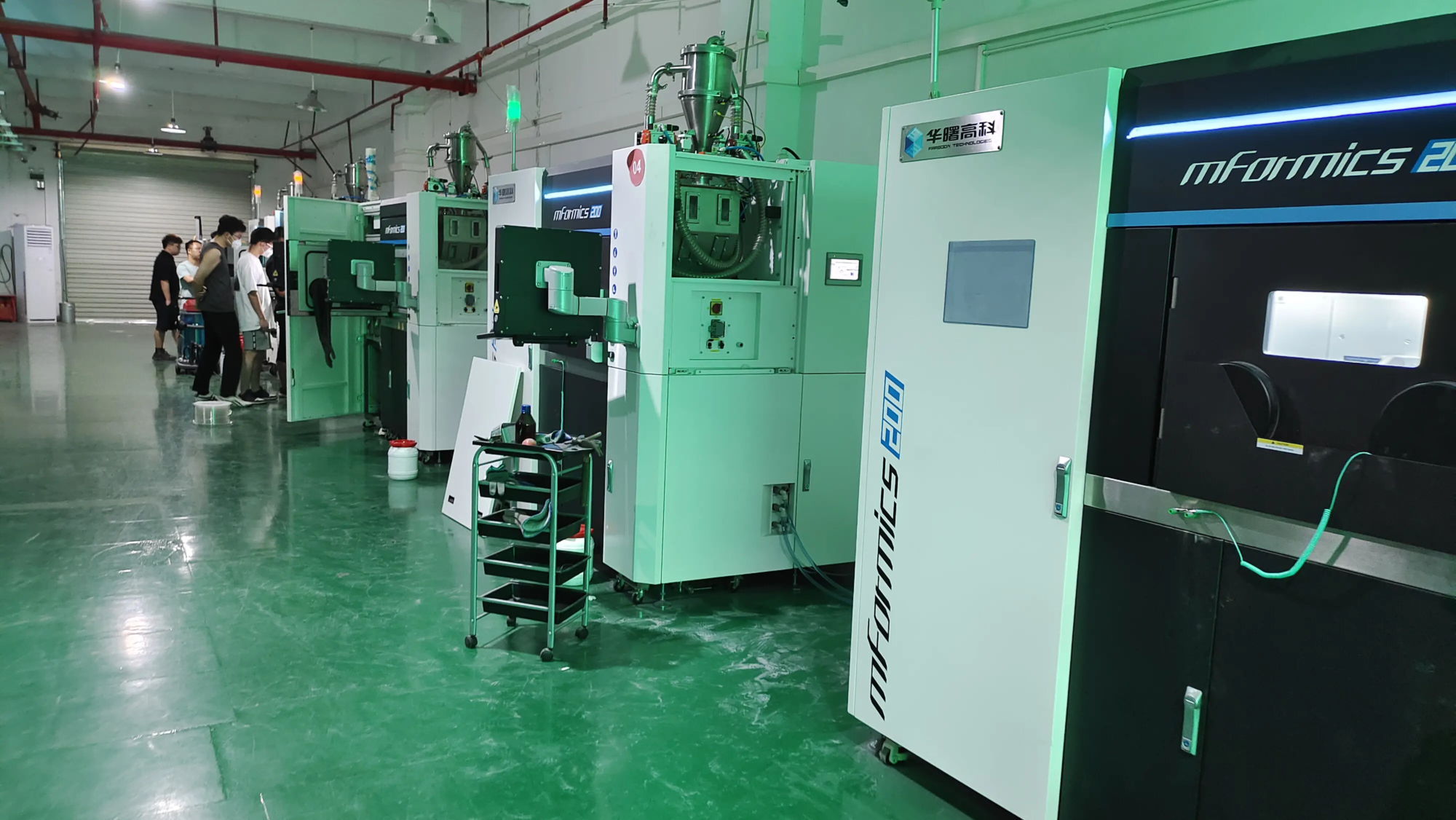
Rather than being forged in traditional molds or via investment casting, Bryson’s irons are forged in complex in-house Selective Laser Melting (SLM) 3D Printer. This additive manufacturing process creates complex geometries unique to its design philosophy:
- Digital design: Engineers create complex 3D CAD models that define the precise internal lattice structure and weight distribution required for each iron head.
- Powder preparation: Fine metal powders, usually high performance Titanium alloy (such as Ti-6Al-4V) because of its strength-to-weight ratio or advanced maraging steelsparsely distributed on the build platform within the printer.
- Laser accuracy: A high-power laser beam selectively melts the metal powder layer by layer, carefully tracing the designed cross-section as required by the CAD file.
- Fusion layer by layer: The build platform is lowered slightly, the new powder layer unfolds, and the laser melts the next section, fusing it firmly to the layer below. This is repeated thousands of times.
- Post-processing: printed "green" The parts are carefully removed of excess powder and undergo critical post-processing:
- Relieve stress: Heat treatment removes residual stress from the laser melting process.
- Hot isostatic pressing (HIP): Critical to aerospace-grade parts, HIP uses high temperatures and pressures to eliminate any tiny internal pores, ensuring maximum density, strength and structural integrity under impact.
- CNC machining: Key surfaces such as the face, hosel and sole are precisely machined to achieve the perfect face, loft/lie angle and finish. Grinding and polishing achieve a final aesthetic and functional surface.
Why choose 3D printing? Compelling Advantages
Traditional methods such as forging and casting made it difficult to achieve the radical design Bryson required. SLM brings unprecedented benefits:
- Radical internal lattice structure: This is the Holy Grail. The ability to print complex internal lattices allows Unparalleled fine-tuning of weight distribution. Weight can be placed strategically exactly The need to achieve optimal launch, spin control and forgiveness (such as maximizing MOI – moment of inertia) or moving lower and deeper for higher launch angles – is not possible with a solid head, or limited by traditional manufacturing limitations. Essentially, designers can engineer the center of gravity location with surgical precision.
- Beyond cosmetic customization: While hosel adjustability exists, 3D printing allows Personalized head design Tailored to the player’s specific biomechanics and preferences. Bryson’s clubs were likely fine-tuned for his unique swing mechanics and required ball flight profile in a way that a mass-produced club could never do.
- Complex geometric and organic shapes: Designers freed themselves from manufacturing constraints to achieve truly optimized aerodynamic shapes and structures that increase speed or stability without sacrificing strength, resulting in more efficient energy transfer.
- Material efficiency: For complex geometries, additive manufacturing is inherently less wasteful than subtractive CNC machining because unused powder can be recycled.
Overcoming challenges: The role of manufacturing expertise
Creating functional, reliable golf clubs with SLM isn’t simply plug-and-play. Only the manufacturer owns Deep expertise in additive manufacturing, metallurgy and advanced post-processing Key challenges can be overcome:
- Material integrity: Ensuring that printed metal achieves the required density, strength, fatigue life and no serious defects requires precise control of printing parameters and strict post-processing (especially HIP and heat treatment).
- Surface finish and precision: The surface of the produced SLM parts is rough. Achieving precise face flatness, groove accuracy (within regulations), hosel size and overall smoothness requires a high degree of skill CNC machining and finishing ability.
- Cost and scalability: SLM remains a relatively slow and expensive process compared to cast/forged high-volume production. Although the technology continues to advance, currently it is financially viable primarily for elite players or the niche customization market.
GreatLight: Empowering advanced prototyping and production
Achievements such as Bryson’s 3D printed irons highlight the Highly specialized advanced manufacturing supplier. company likes huge light Help turn these groundbreaking concepts into reality. As a professional rapid prototyping manufacturer, Gretel utilizes state-of-the-art technology SLM 3D printer technology and comprehensive production expertise to address complex metal part challenges.
Their expertise extends far beyond printing. glow offer Integrated one-stop post-processing and finishing servicesensuring prototypes or end-use parts meet the most stringent functional and aesthetic requirements. This includes fine CNC machining, heat treatment, HIP, grinding, polishing, coating and more. Crucially, they are good at Customized various metal materials Fast and efficient, providing the flexibility design innovators need.
For engineers and designers pushing boundaries in demanding industries such as elite athletic equipment, aerospace, medical devices or automotive, partnering with a rapid prototyping leader like GreatLight provides the advanced capabilities needed to solve complex problems and reliably manufacture complex components – One of the true first choices for customized precision rapid prototyping in China.
in conclusion
Bryson DeChambeau’s 3D printed irons represent more than just a unique set of golf clubs; they are proof of a technological revolution. By harnessing the precision of Selective Laser Melting (SLM), designers can create irons with previously impossible internal structures, allowing for levels of weight distribution customization and performance optimization unimaginable just a decade ago. While challenges remain in cost, scalability and ensuring the integrity of aerospace-grade materials through complex post-processing, the trajectory is clear. The success of these clubs proves that additive manufacturing is a powerful tool for elite-level device design, moving beyond standardization toward hyper-personalization.
Integral to realizing such an ambitious project was securing the support of an expert manufacturing partner. Companies with advanced SLM capabilities, deep metallurgical knowledge and comprehensive post-processing solutions including CNC machining, HIP and finishing are driving this new field. The fusion of visionary design and industrial manufacturing capabilities promises an exciting future for golf and potentially countless other fields that require complex, optimized metal parts.
FAQ: Bryson 3D Printing Irons
Q: Are Bryson’s 3D printed irons legal for tournament play?
A: Yes, as of this writing, Bryson DeChambeau’s custom 3D printed irons have been submitted to and approved by golf’s governing bodies such as the USGA and R&A. Manufacturers must ensure that components such as grooves and overall dimensions comply with regulations.
Q: What exactly are his irons made of?
A: While the exact alloy may be proprietary, reports strongly suggest he primarily used Titanium alloy (such as Ti-6Al-4V) are used in primary structures and end inserts because of their high strength-to-weight ratio. Early prototypes may use complex maraging steel.
Q: Can the average golfer buy 3D printed irons like Bryson’s?
Answer: Not yet. Bryson’s clubs are custom-made for him and manufactured using the expensive and complex SLM process. Ordering the same technology and precision machining at scale for the mass market remains prohibitively expensive. However, elements of the design philosophy inspired by this technology may trickle down to more accessible forged/cast designs.
Q: What is the biggest advantage of 3D printing golf club heads?
Answer: Yes Unprecedented control over internal weight distribution through complex lattice structures. This allows designers to strategically place mass to maximize forgiveness (MOI), optimize launch conditions (move the center of gravity low/deep), or fine-tune feel in ways that are strictly limited by traditional manufacturing.
Q: Are 3D printed irons more durable than forged clubs?
A: Durability depends largely on the material, print quality, and especially Post-processing. Properly printed and HIP treated titanium or maraging steel clubs, along with the proper face inserts, can result in excellent durability that is on par with, or possibly exceeds, high-end forged irons. Rough printing and inadequate heat treatment/HIP can cause problems.
Q: How did Huite become involved in similar types of projects?
A: Companies like GreatLight offer professional Industrial-grade SLM 3D printing capabilities Essential for prototyping and producing such complex components. Their expertise spans the entire workflow: advanced SLM printing using a variety of metals, critical post-processing steps such as stress relief, HIP, precision CNC machining For use on the face/hosel, and final finishing. They solve the core manufacturing challenges required to transform innovative designs into functional, high-performance metal parts.