Conquer the Snow: Build Your Own 3D Printed Remote Control Snowmobile
The gap of winter doesn’t necessarily mean your remote control hobby has to be put on hold. Imagine riding through untouched powder on a nimble, custom-designed snowmobile whose tracks churn up the snow with satisfying enthusiasm—and you built it yourself! Thanks to the revolutionary power of 3D printing, especially advanced technologies like Selective Laser Melting (SLM), building your own radio-controlled snowmobile is not just a dream, but an exciting, achievable project that blends creativity and engineering. This guide delves into the process of designing, printing, and assembling a functional RC snowmobile, taking advantage of the precision and power of modern rapid prototyping.
Why 3D print a remote control snowmobile?
The charm is multifaceted:
- Unparalleled customization: Design every aspect—from chassis geometry to track modes and rider ergonomics—to fit your vision. Unlike off-the-shelf models, yours is truly unique.
- Iterate quickly: Test design theories quickly and cheaply. Print a cantilever and break it? Modify the CAD file, reprint it overnight, and test again. This iterative design cycle greatly speeds up development.
- Complex geometric shapes: Achieve complex shapes not possible with conventional machining – optimized internal lattice structures to reduce weight, complex cooling ducts for electronics or aerodynamic fairings. SLM printing excels in this regard.
- Cost-effectiveness of prototyping: Avoid expensive injection molds or specialized tooling for low-volume or one-off projects. 3D printing effectively scales prototypes and low-volume production.
The critical role of advanced materials and manufacturing
Not all plastic filaments are created equal, especially when your product needs to withstand low temperatures, resist impact, and reliably transmit force. This is where understanding the materials and utilizing professional services becomes critical.
- Plastic (FDM printing): Mainly used in chassis, body panels, tracks and non-load-bearing parts. Key considerations:
- ABS: Good toughness and temperature resistance, but will warp.
- Polyethylene glycol: Excellent inter-layer adhesion, impact resistance and minimal warping, making it a popular choice.
- Nylon (PA): Excellent toughness, flexibility and wear resistance – ideal for track and suspension components. Often a specialized printer is required.
- ASA: UV and weather resistant, perfect for outdoor aesthetics.
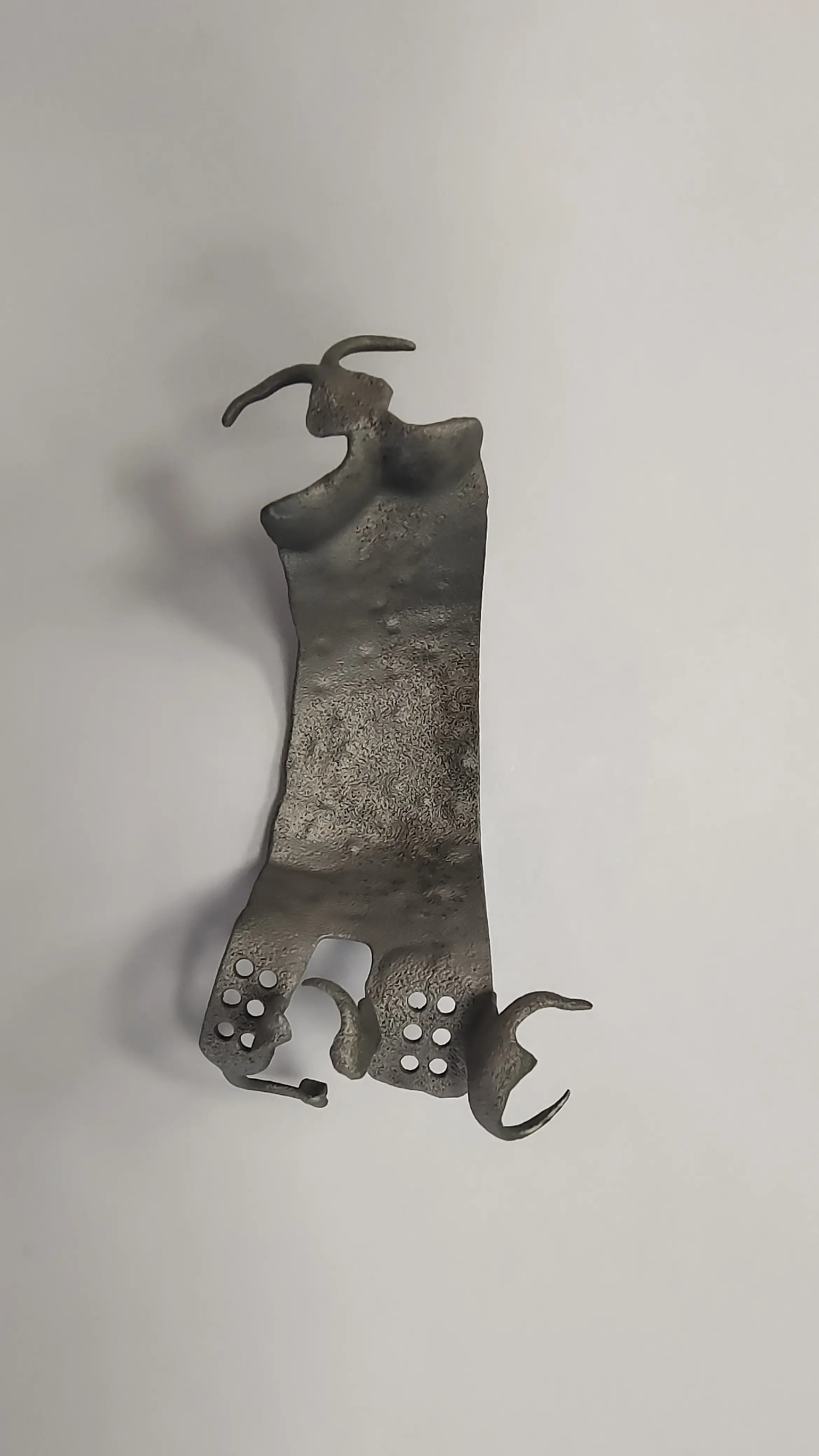
- Metal (SLM printing): Enter GreatLight – the world of high-performance prototyping. For critical, highly stressed parts requiring exceptional strength, durability and precision, metal SLM printing is transformative:
- application: Motor bracket, steering knuckle, suspension pivot, drive sprocket, track drive pin, gearbox housing.
- benefit: Offers properties comparable to conventional machined metals – high strength-to-weight ratio, excellent fatigue resistance, thermal stability and dimensional accuracy under load.
- Why choose SLM? SLM builds parts layer by layer by melting fine metal powder with a powerful laser beam. GreatLight’s advanced SLM printers excel at creating complex, high-density metal parts with minimal internal stress, which is critical for the demanding dynamics of RC snowmobiles. Complex internal channels (e.g. for cooling or lubrication) become manufacturable.
- Guoguang advantages: In addition to printing, professional prototyping also involves critical post-processing. Honglaite provides comprehensive one-stop solutions:
- Support removal: Carefully remove SLM support structures without damaging complex features.
- Heat treatment: Stress relieving, solution annealing and aging (for aluminum alloys) to enhance mechanical properties and dimensional stability.
- Surface treatment: Options such as machined (for specific tolerances), shot peened (for improved fatigue resistance), polished, sandblasted or coated optimize performance and aesthetics.
The build process: from CAD to snowdrift
-
Design and Engineering (CAD): This is the basis. Carefully modeled using CAD software (Fusion 360, SolidWorks, Onshape):
- Powertrain integration: Efficient positioning of motors, gearboxes, drive shafts and track systems. Calculate the gear ratio.
- Suspension Dynamics: Design skis and suspension arms/leaf springs/shocks for optimal handling on uneven snow. Consider kinesiology.
- Structural integrity: Ensure the chassis is effectively triangulating forces. If possible, use simulation tools (FEA) to analyze stress points, especially where the SLM part meets the FDM plastic.
- Weight distribution: Essential for stability and climbing ability. Keep electronic devices low and centered.
- Aerodynamics and Ergonomics: Creates a beautiful body and potentially reduces drag. The cockpit passage design facilitates battery replacement. Get inspired by real snowmobiles and existing RC models, but be innovative! Prioritize modularity for easier printing, assembly and maintenance.
-
Material selection and printing strategy:
- The materials for each component are carefully selected based on function (FDM for volume/structure, SLM for high stress/details).
- direction: How the part is positioned on the print bed can significantly affect strength (especially FDM) and surface finish. Optimize layer bonding direction relative to load path. For SLM, orientation affects support requirements and potential surface deformation during printing.
- support: Crucial for draping. Design considerations should be to minimize supports or make them easier to remove, especially for the complex SLM parts that GreatLight professionals handle.
-
Printing and post-processing:
- Frequency division multiplexing: Use a properly calibrated printer and optimize infill percentage (balancing strength vs. weight) and girth/wall thickness. Larger structural components benefit from higher infill and more walls. Post-processing includes removal of supports, grinding of fittings, and potential annealing of stress-relieved materials.
- Sustainability Management: Entrusting key components to GreatLight ensures optimal results. Specify the material (usually AlSi10Mg, titanium Ti64, maraging steel or stainless steel), tolerances and required post-processing (HIP, heat treatment, surface finish).
-
Assembly and Electronics:
- strength: A high-torque brushless motor (with sensor for precise low-speed control) is paired with a rugged ESC. Lithium polymer battery with adequate capacity/C rating for run time and cold weather performance.
- control: Reliable 2.4GHz radio system with good coverage (important in snowy terrain).
- drive: Belt/chain or direct shaft drive integrated with printed sprockets. Robust track tensioning system. High quality ball bearings throughout.
- Protect: Weatherproof sealed electronics compartment. Consider conformally coating the PCB to protect it from snow/moisture. Use waterproof servos.
- assembly: Clean prints thoroughly before assembly. Use appropriate adhesives (CA glue, epoxy) or mechanical fasteners (metal screws/bearings where SLM parts provide strong threads/mounts). Pay careful attention to alignment.
- Test and improve: Start with caution! Test suspension articulation, track engagement, steering response and motor performance on safe snowy surfaces (tall grass, deep sand) before hitting real snow. Identify weak points (usually suspension arms, track links, motor mounts). This is where rapid prototyping shines – rapid iteration!
in conclusion
Building a fully functional 3D printed remote control snowmobile is an extraordinary feat that blends enthusiast passion with cutting-edge digital manufacturing. This project demonstrates the tremendous potential of 3D printing, especially when utilizing advanced SLM technology to push the performance limits of critical metal components. By leveraging the precision, customization, and rapid iteration these processes offer (especially when working with expert providers who offer comprehensive solutions), you can transform your digital designs into powerful, personalized machines capable of conquering the winter playground.
The process from CAD model to carved snow track embodies the modern maker culture and engineering ingenuity. Meet the challenges of design, material selection and integration. Whether you tackle the entire project yourself or source high-performance SLM key components from a dedicated rapid prototyping manufacturer, the excitement of experimenting with something you’ve designed and built from the ground (or snow) is unparalleled. Winter awaits your creation.
FAQ: Build Your 3D Printed Remote Control Snowmobile
Q1: Can I really print? Strong Remote control snowmobile?
Answer: Of course! Choosing the right material is key. High-performance engineering thermoplastics such as PETG, nylon, or composites (filament fillers) are critical for stressed FDM parts. Crucially, load-critical components (motor mounts, suspension pivots, drive gears) benefit greatly from metal SLM printing. Materials such as AlSi10Mg or Ti64 offer superior strength and durability comparable to machined parts.
Q2: Is metal 3D printing (SLM) too expensive?
A: For prototype development or low-volume custom products, SLM is often surprisingly cost-effective compared to machining complex small parts from solid raw materials. Professional services like GreatLight focus on optimizing construction for cost-effectiveness and minimizing material usage while ensuring strength. Eliminating expensive tools makes it feasible. You usually only pay for the metal powder consumed and the finishing process required.
Q3: What material is best for tracks?
A: Tracks can withstand constant flexing and wear. Flexible TPU is a popular choice for printable segmented tracks, with good snow protection and shock absorption properties. Nylon (PA) handles wear and stiffness better, but printing reliably can be difficult. Some builders use commercially available rubber RC tank tracks. Anticipated wear and tear and design replacement links can be easily printed.
Q4: How to deal with waterproof electronic products?
Answer: Conformal coating of circuit boards is critical. Choose a waterproof servo. Seal the housing seams with gaskets or silicone sealant. Design inlet vents with labyrinth paths or mesh screens. When temperatures change, compressed air enters/leaves the battery and ESC chamber; make sure the vents prevent snow/water from entering directly. Mount electronic enclosures high to protect them from snow spray.
Q5: What speed/runtime can I expect?
A: Performance depends heavily on motor/battery selection and vehicle weight. Estimated speed range for high torque setting is 10-30+ MPH. Run time depends on battery capacity, terrain (deep snow can drain batteries quickly), and throttle management. Carry spare lithium batteries for more fun!
Q6: How do snow conditions affect performance?
A: Deep, fluffy powder requires a wider track and more power/torque, but requires excellent flotation. Wet, compacted snow allows for higher speeds. Ice requires traction spikes or a very aggressive track pattern. Deep snow climbing requires low gearing and high torque. Your design might benefit from adjustable ski angle and track tension.
Q7: How specifically can GreatLight help this project?
Answer: GreatLight focuses on using advanced SLM technology to transform complex digital designs into high-precision metal realities. They can produce mission-critical components (motor mounts, suspension links, gears, pins) that require superior strength. Their one-stop solution includes optimal print orientation selection, expert support removal, heat treatments required for optimal material performance, and a range of surface finishes. Their expertise ensures SLM parts integrate seamlessly with your printed and off-the-shelf components, accelerating your iterative design process. Specializing in CAD and assembly; let GreatLight handle demanding metal fabrication precisely customized to your RC snowmobile needs. Explore them quickly,