Forged from plastic and steel: creating the ultimate 3D printed fight stick
The world of fighting games requires precision, speed and control. While commercial arcade sticks offer reliable performance, they often lack the deep personal touch and tailored ergonomics that competitive players crave. Enter the DIY Fightstick revolution with easy-to-use 3D printing technology. Building your own allows for unparalleled customization—perfect for your holding style, button layout preferences, and aesthetic vision. When you move beyond basic plastics and require unparalleled precision, resilience, or complex metal geometries, working with a professional rapid prototyping company can elevate your project to championship-grade hardware.
Why build instead of buy?
- Super customized: Shape physical form into your hand. Experiment with button placement (Vewlix, Noir, Sega), control stick distance, stick angle, palm rest, and even finger grooves. No longer adapting to existing constraints.
- Cost effectiveness: For simpler designs (especially plastic casings), printing the parts yourself can be much cheaper than high-quality commercial sticks. The cost of customizing through retail channels is often prohibitive.
- Repair and upgrade simplicity: Breaking out custom plastic panels? Print a new one. Downgrade your desk? Make new feet. Upgrade components? Modify CAD designs and reprint compatible parts. Your cane becomes infinitely adaptable.
- Manufacturer satisfaction: There’s an undeniable sense of pride you’ll feel when using a tool you’ve conceived, designed, and put into practice.
- Learning experience: Delve into CAD modeling, electronics integration, materials science and manufacturing processes – these are valuable skills that extend far beyond the realm of battle sticks.
Power Source: 3D Printed Fighting Sticks
Modern 3D printing opens up possibilities not possible with traditional woodworking or metal fabrication. Here’s why it’s transformative:
- Free form: Create complex internal routing channels, complex lightweight mesh structures, ergonomic curves that fit seamlessly into the palm of your hand, or a striking, artistic look that matches your brand—all can be realized in CAD and printable.
- Rapid prototyping: Iterate quickly! Low-cost plastic prototypes were printed overnight to test ergonomics, component fit and button placement. Iteratively improve your design without wasting a lot of time or materials before settling on potentially more expensive final materials, which is especially important with complex metal parts.
- Material Versatility:
- PLA/ABS/PETG: A good entry point. PLA is easy to print, ABS has slightly better heat/impact resistance, and PETG balances toughness with ease of use. Ideal for lighter enclosures, panels and stress-free components. Careful design of rigidity is required.
- Nylon (PA): Tougher and more flexible than PLA/ABS, with better impact resistance – ideal for parts that require light impact.
- Resin (SLA/DLP): Delivers an ultra-smooth surface finish and superior detail resolution. Ideal for intricate button hats or decorative tops that require a premium feel. Easily brittle under severe impact.
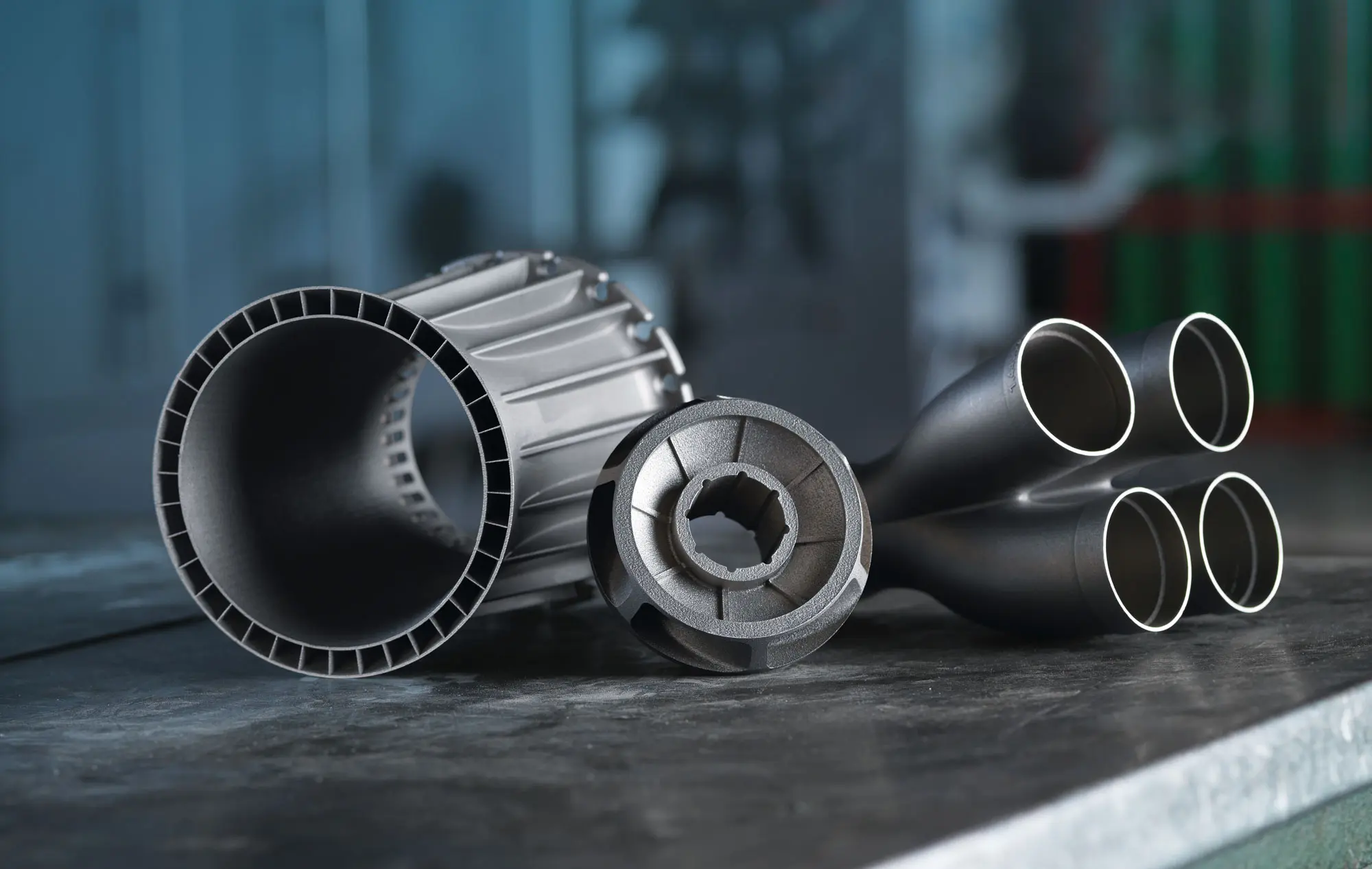
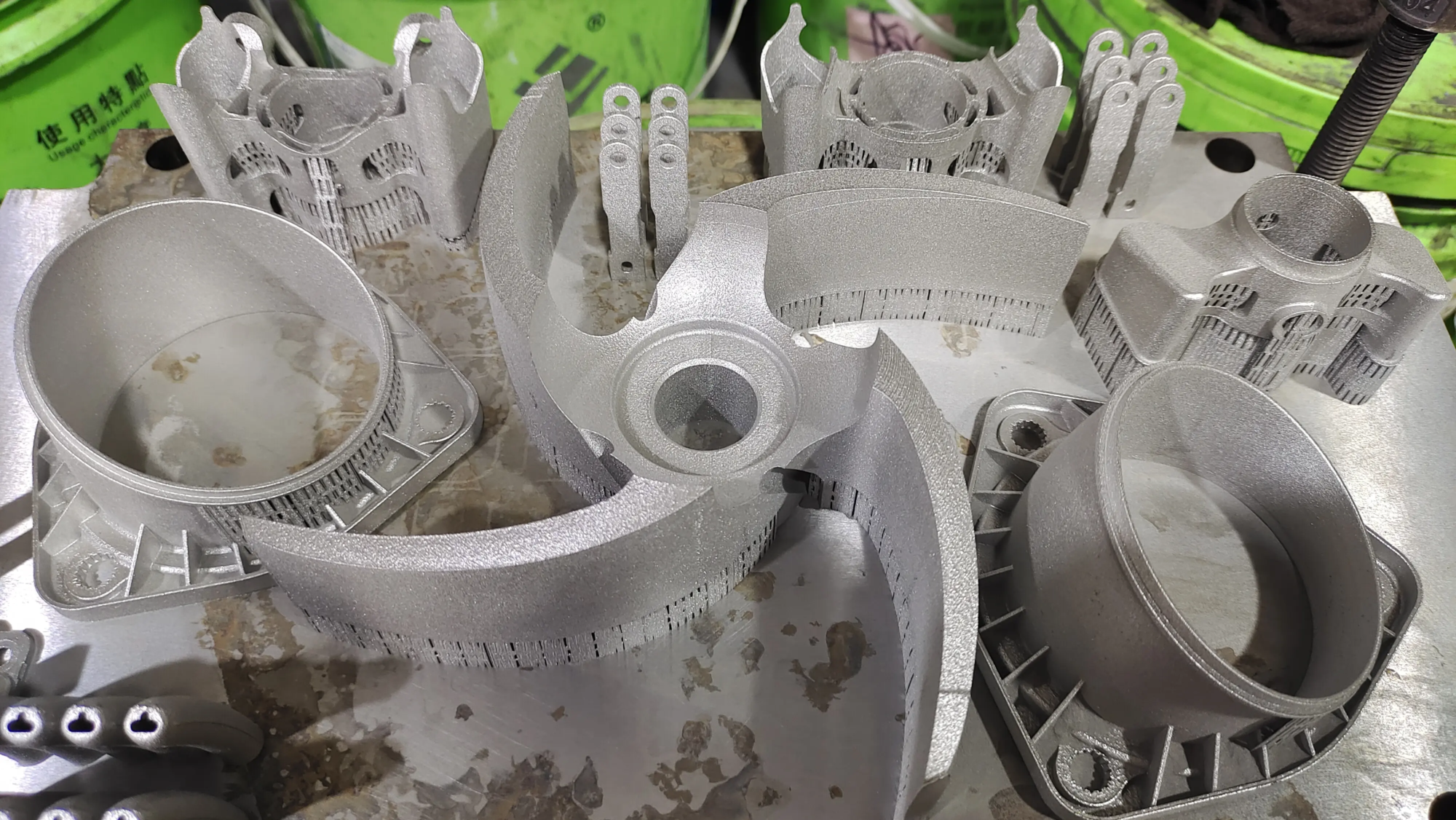
- Metal production: This is where professional manufacturing shines. When your design requires unwavering structural integrity, thermal dissipation, premium weight, shock absorption, or complex thin-walled metal geometries that cannot be achieved with filament/resin printing, Solid-state metal additive manufacturing, specifically selective laser melting (SLM), has become critical. company likes huge lightutilizing advanced SLM 3D printers and deep production expertise to transform CAD designs into high-strength metal realities for critical combat pole components:
- Sturdy Base/Chassis: SLM-printed stainless steel or aluminum alloy provides a rock-solid foundation, eliminating flexing and enhancing stability during intense gaming.
- High Stress Mounting Bracket/Bushing: Metal parts ensure that the lever assembly or PCB mount remains absolutely secure during fast execution.
- Complex internal reinforcement structure: A lightweight yet strong internal metal mesh is integrated into the plastic shell to increase rigidity without adding bulk.
- Heat sink: Crucial for cases integrating powerful LEDs or circuit boards that require cooling.
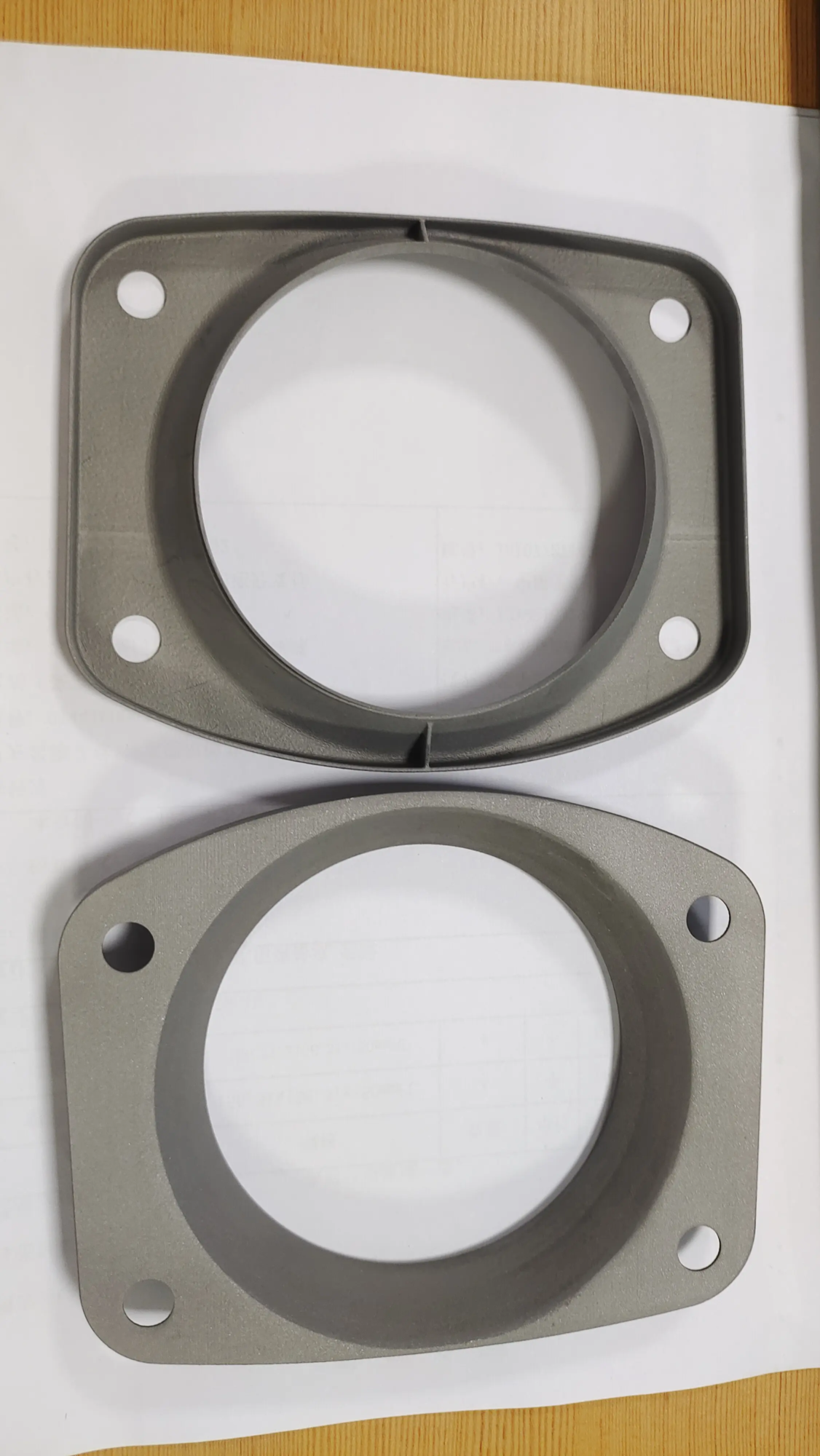
- Permanent, durable components: SLM metal prints offer unparalleled durability over plastic prints. Gretel’s abilities One-stop post-processing Ensure that these metal parts are not only strong but also have perfect surface finish (precision machining to tolerances, smoothing, polishing, anodizing coloring, electroplating).
- Design optimization: Advanced CAD software enables topology optimization to create structures that use minimal material for maximum strength, ideal for reducing weight while maintaining rigidity, especially important when integrating metal profiles economically.
Build your champions: a step-by-step framework
-
Concept and design:
- Define requirements: Hand size, joystick preference (Japanese/Korean), button layout (6 buttons? 8 buttons? Noir, etc. configuration?), weight preferences, internal component sizes (Bruker board? Arduino?).
- CAD modeling: Use software such as Fusion 360, SolidWorks or FreeCAD. Model enclosure panels (top, bottom, sides), lever mounting, button holes, PCB mounting and wire management features.
- Key considerations: Include proper clearance for buttons (snap rings) and levers (room for movement). Design mounting points (PCB, levers) with sufficient strength/thickness. Add internal ribs/corner blocks to resist bending. Plan cable entry/exit.
- Manufacturability factors: Understand printing limitations (drapes, supports, warp). Design the walls to be thicker than the print minimum. For the metal SLM parts GreatLight designs for production, their engineers can advise on optimal designs for manufacturability and maximizing strength-to-weight ratio.
- Build Phase – Printing and Fabrication:
- Plastic/resin parts: Print it yourself (carefully calibrate your printer!) or utilize an online service for specific materials/finishes. Anticipated post-processing: sanding, filling layer lines, priming.
- Metal parts: This is the core advantage of Huileite. Upload optimized CAD designs for key structural components (base plates, brackets, custom mounts).
- Material selection: Discussion Options – Stainless Steel (316L), Aluminum (Al