Build Your Own Masterpiece: The Ultimate Guide to 3D Printing Custom Gunpla
The allure of Japanese science fiction’s iconic giant robot Gundam has captivated fans for decades. While store-bought model kits (Gunpla) are popular, there’s an even more exciting area: designing and 3D printing your own custom Gunpla. This journey blends artistic passion, engineering skills and cutting-edge technology to create a truly unique piece that reflects your vision. Whether replicating a favorite mobile suit from Universal Century or designing your own original design, this guide will unlock the entire process.
Why go the 3D printing route?
Traditional Gunpla kits offer accessibility, but they limit customization. 3D printing breaks these limitations:
- Unlimited customization: Rescale parts, modify armor designs, create unique weapons, and even sculpt a completely original mobile suit. The only limits are your imagination and CAD skills.
- Accessibility of rare designs: Recreate an unknown or fan-favorite mobile suit, but not available as an official kit. Online communities offer shared STL files for countless designs.
- Material selection: Choose plastics like PLA for bright colors and ABS/ASA/PETG for toughness and heat resistance. For ultra-realistic frames or heavy-duty joints, metal printing become crucial.
- Repair and replacement: Break a fragile antenna? Just reprint quickly and affordably.
- Scale flexibility: Print large 1/60 scale centerpieces or table-friendly 1/144 versions without relying on kit availability.
Your journey: from concept to physical reality
Building a 3D printed Gundam isn’t plug-and-play; it’s a rewarding multi-stage project:
-
Concept and design:
- Source file: Take advantage of platforms like Thingiverse, Cults3D or dedicated Gunpla forums. Make sure the file is optimized for printing (waterproof model, reasonable polygon count). Look for pre-separated components.
- CAD Design (Advanced): For true originality, learn CAD software (Fusion 360, Blender, SolidWorks). Design parts from scratch, modify existing files, or create intricate details. Focus on design for printability – overhangs need support and part orientation is critical for strength.
-
Printer and material selection:
- printer: Fused deposition modeling (FDM) printers are affordable and suitable for most armor shells and larger parts. They offer decent resolution. Stereolithography (SLA/DLP) resin printers deliver perfect detail and are ideal for intricate greebles, pilot figures, and small arms, but require more post-processing.
- Material:
- People’s Liberation Army: Easy to print, colorful and relatively crisp. Great for display.
- Polyethylene glycol: Tougher, more heat-resistant, and less susceptible to deformation than PLA. Better for joints.
- ABS/ASA: Higher heat resistance and durability. Bed/room needs to be heated; smoke needs ventilation.
- Resin (for SLA): Incredible detail and will be brittle unless an engineered/tough resin is used. Great for ultra-fine features.
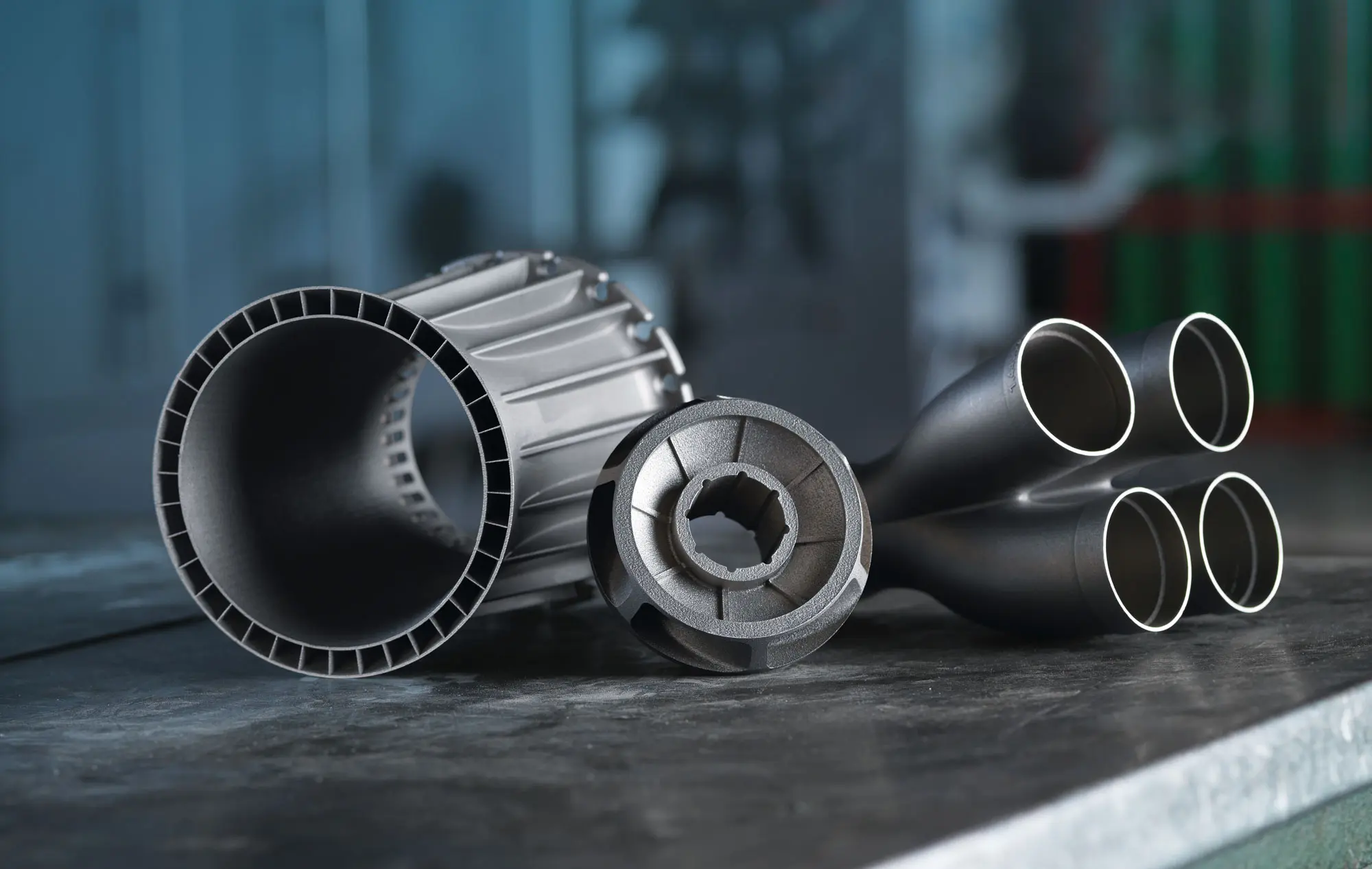
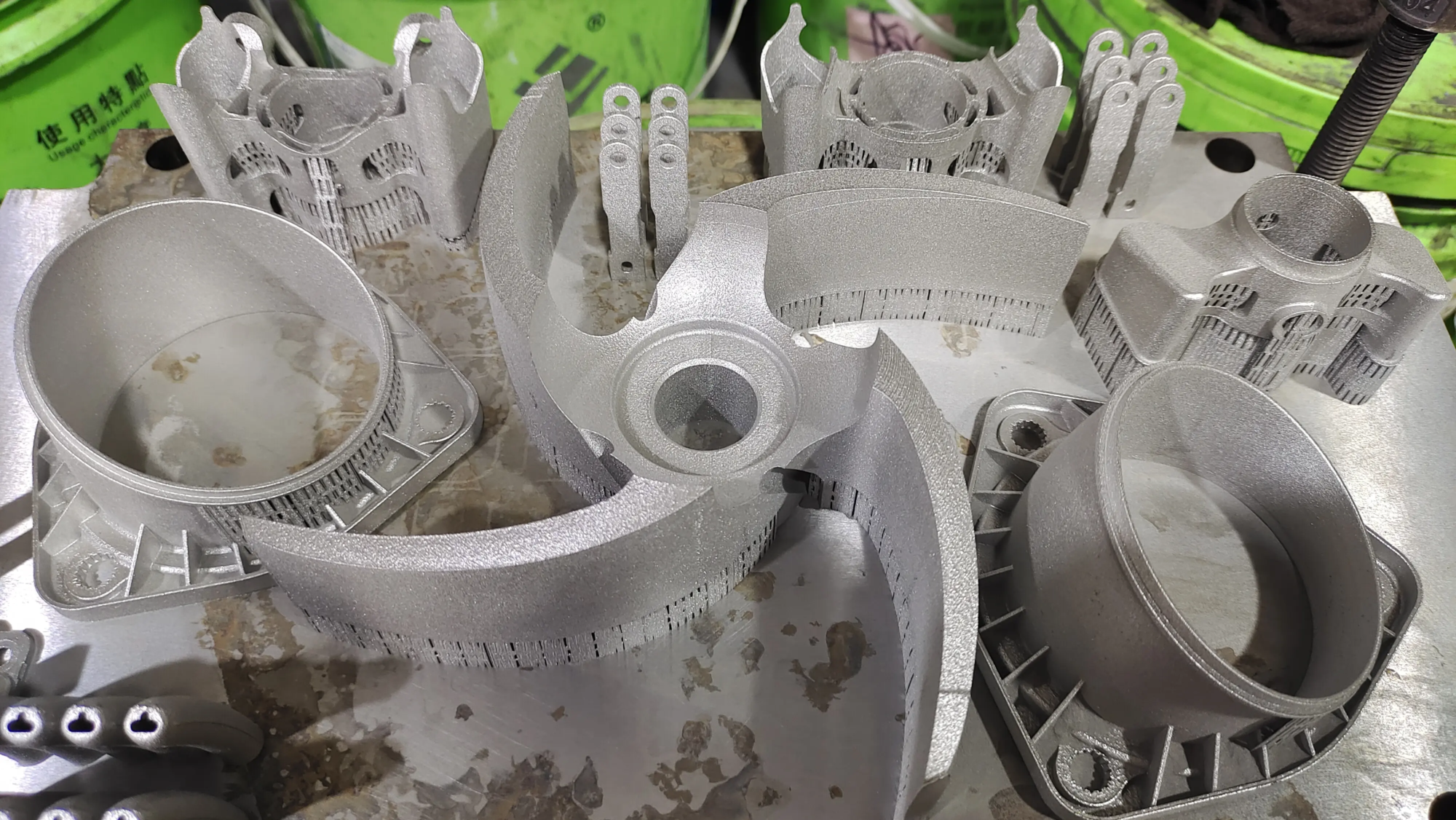
- Metal: For critical frame sections, highly stressed joints or ultra-realistic metal finishes that require unparalleled strength and durability, advanced laser powder bed fusion (such as SLM – Selective Laser Melting) metal printing can come into play. This requires professional skills.
-
Slicing and printing preparation:
- Import STL files into slicing software (PrusaSlicer, Cura, Lychee for resin).
- Position parts strategically: Minimize overhangs that require support.
- Support strategy: Choose support structures strictly (tree supports on organic shapes are usually easier to remove). Use support interfaces. For resin, ensure adequate support without damaging small details.
- Set layer height: Lower heights (e.g., 0.1 mm FDM, 0.03 mm resin) produce a smoother surface but significantly increase print time.
- Optimized Filling: 15-30% for most armor; may be higher for structural components.
-
Print run:
- Make sure printer calibration (bed leveling, Z-axis offset, extrusion step) is perfect.
- Monitor initial layers closely to prevent warping or peeling.
- Patience is the key! Printing a full suit piece by piece can take days or even weeks.
-
Key post-processing:
- Remove supports: Carefully peel/cut off. Use a flat end mill and hobby knife. Residual resin requires an alcohol bath to cure.
- Polishing: Sand the part incrementally (starting with a coarser grit and moving up to a finer grit) to remove layer lines and imperfections. Wet sanding minimizes dust.
- filling: Use putty or primer filler to treat layer lines, gaps, or small imperfections.
- Clearance installation/assembly: Test mating parts. It may be necessary to slightly modify the file or re-drill the nail holes. Use plastic cement (for ABS/PLA/etc.), super glue or special adhesive. If you plan to magnetize, drill small holes to integrate the magnets.
- Surface preparation: Clean thoroughly before painting. For resin use IPA and for FDM use soapy water.
-
Painting and finishing (bringing it to life):
- Primer: Apply plastic/rubbing primer. Essential for paint adhesion and revealing final surface imperfections (sand again if needed).
- Primer: Spray paint or airbrush acrylics in core color.
- Panel lining: Specialized inks/washes are used to emphasize panel lines and details.
- Detailed description: Hand-draw smaller components, vents, sensors. Add dry brushing or edge highlighting. Use water slide decals.
- Topcoat: Seal everything with clear varnish (matte, satin or gloss – choose based on functionality and aesthetics).
- Final assembly: Carefully assemble the painted parts, attach weapons and accessories. If required, LED kits can be integrated for lighting effects.
Address common challenges:
- Warping/Failure: Ensure bed adhesion (glue stick, hairspray, PEI/build surface), correct bed temperature, ABS/ASA casing. Avoid large flat sections that are parallel to the print platform.
- Bad bridging/cascading: Optimize printing cooling, temperature, and retraction settings.
- Intricate detail breakdown: Reduce layer heights and optimize supports to ensure precise resin exposure settings.
- Weak joints: Orient parts to maximize print strength along stress points, increase infill/wall count, and consider using SLM to print metal parts as load-bearing areas.
- Sanding/painting headaches: Invest time in polishing. Use masking tape for intricate paint jobs.
When your vision calls for metal: The role of advanced manufacturing
For builders who push the boundaries—perhaps designing complex articulated frames, ball joints under high torsional stress, realistic all-metal limbs, ultra-durable weapons, or custom mechanisms—the limitations of plastic become apparent. This is where professional metal additive manufacturing is revolutionizing.
GreatLight: Enhance your custom builds with metal precision
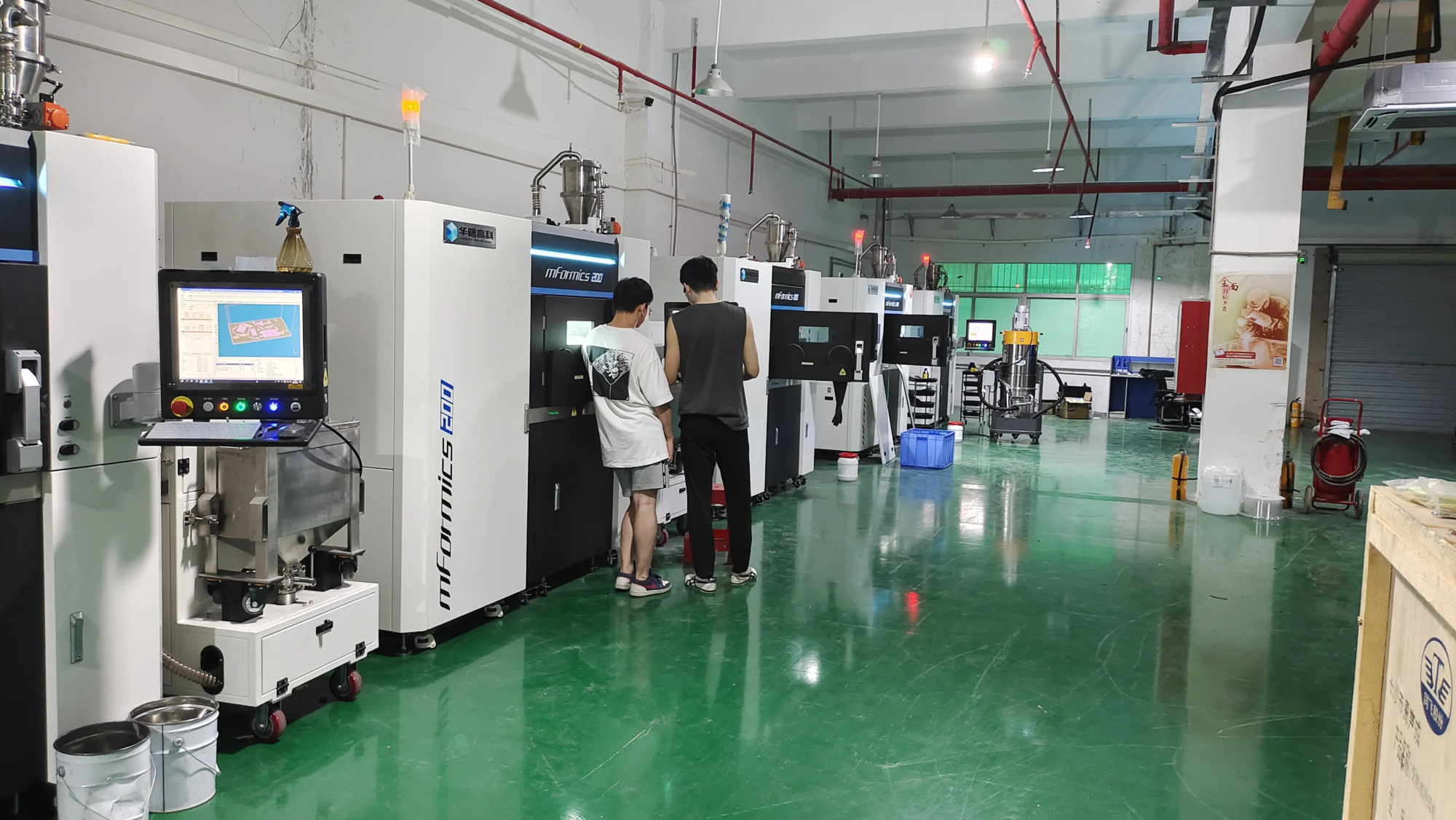
Imagine forging parts not just out of plastic, but out of solid titanium, stainless steel or aluminum with the structural integrity and aesthetic durability that only metal can provide. GreatLight specializes in bridging this gap. As a leading rapid prototyping manufacturer, we bring:
- Advanced SLM (Selective Laser Melting) Technology: Our state-of-the-art industrial metal 3D printers use high-powered lasers to melt layer by layer with unparalleled precision to create complex, dense metal parts from powdered metal. Achieve geometries that are impossible with traditional machining.
- Extensive materials expertise: From strong aluminum and stainless steel alloys for frames to lightweight titanium for complex joints (or wear-resistant tool steel for components), we can customize a variety of specifications to suit your Gundam needs. Are special alloys needed? We can customize.
- Professional solution to prototype problems: We understand the complexities of designing parts for additive manufacturing. Our engineering team specializes in helping optimize designs (supports, wall thickness, tolerances) for successful metal 3D printing.
- Seamless post-processing: In addition to printing, we offer a one-stop shop for critical finishing: expert support removal, precision CNC machining of critical interfaces, fine polishing, media blasting (bead/shot peening), heat treatment for required material properties, and protective coatings.
- Speed and flexibility: We quickly turn concepts into high-quality metal prototypes and end-use parts. Need a set of key titanium joint parts for your MG scale Gundam quickly? We provide high-precision customization at competitive prices.
Whether it’s supplementing plastic printed armor with a real metal core skeleton or creating stunning metal weapons systems, GreatLight empowers builders to realize ambitious projects Once considered a cottage industry dream. Customize your precision rapid prototyping metal parts today – explore the potential [Awesome! Due to platform restrictions, we can’t include direct links here. Intention is to link to a GreatLight Services Page].
Conclusion: Embrace the challenge and revel in the results
Designing and 3D printing your own Gundam is much more complicated than assembling a Gundam model kit. It requires a lot of preparation, patience for troubleshooting, and dedication to mastering skills from CAD to finishing. The frustration of a distorted print or a stubborn support structure is matched tenfold by the profound satisfaction of owning a unique creation created entirely through your own vision and technical prowess. Seeing a single component transform into a fully articulated, painted mobile suit is an otherwise unparalleled experience.
By leveraging resources such as shared model files, improving printing technology and collaborating with professional services such as huge light For mission-critical metal parts, you can delve deeper into the rewarding frontier of personalized mecha creation. Your next masterpiece is waiting – start designing, start printing,