The complicated truth about 3D printed guns: technology, legality and ethics
The convergence of digital design and additive manufacturing has unlocked incredible potential, revolutionizing prototyping and production in countless industries. However, this promise was interrupted by an ongoing and contentious issue: Can you really 3D print a working gun? Technically the answer is "Yes…but there are plenty of caveats, significant risks, and profound legal and ethical consequences."
Let’s dissect the complexities of homemade guns produced through 3D printing, separate technical fact from fiction, explore legal minefields, and confront far-reaching social implications.
Inside the Tech: Printed Parts and Reliable Weapons
The core concept involves downloading a digital file (usually a CAD model) and feeding it into a 3D printer to create the gun assembly layer by layer. However, it is crucial to understand what is feasible:
-
Print component method: most practical "3D printing gun" Not entirely plastic. like those from "Defense distribution" group (for example, "savior") mainly focuses on printing the lower receiver or frame of the gun – the central shell required by law "firearms" itself in many jurisdictions. Key components such as barrels, bolts, firing pins, and springs are often sourced metal components (sometimes commercially available, sometimes requiring extensive machining). Some recent designs attempt to print more parts, but Metal components remain critical for durability under confinement stress and high temperatures.
He shook his head and still insisted on expressing himself professionally, rationally and objectively.
-
Material restrictions: While desktop FDM printers using plastics such as PLA or ABS are available, these materials are inherently unsuitable for explosions. Printed plastic frames/receivers are prone to catastrophic failure:
- Thermal degradation: The burning of gunpowder generates large amounts of heat, which quickly weakens the thermoplastic.
- Pressure failure: Chamber pressure may exceed tens of thousands of PSI. Plastic lacks the necessary tensile and impact strength.
- Wear and crack accuracy: Printed parts wear out quickly and lack precision dimensional stability, seriously affecting accuracy and reliability.
- Lifespan: Even with reinforced plastic, guns often have extremely limited shooting capabilities before failing.
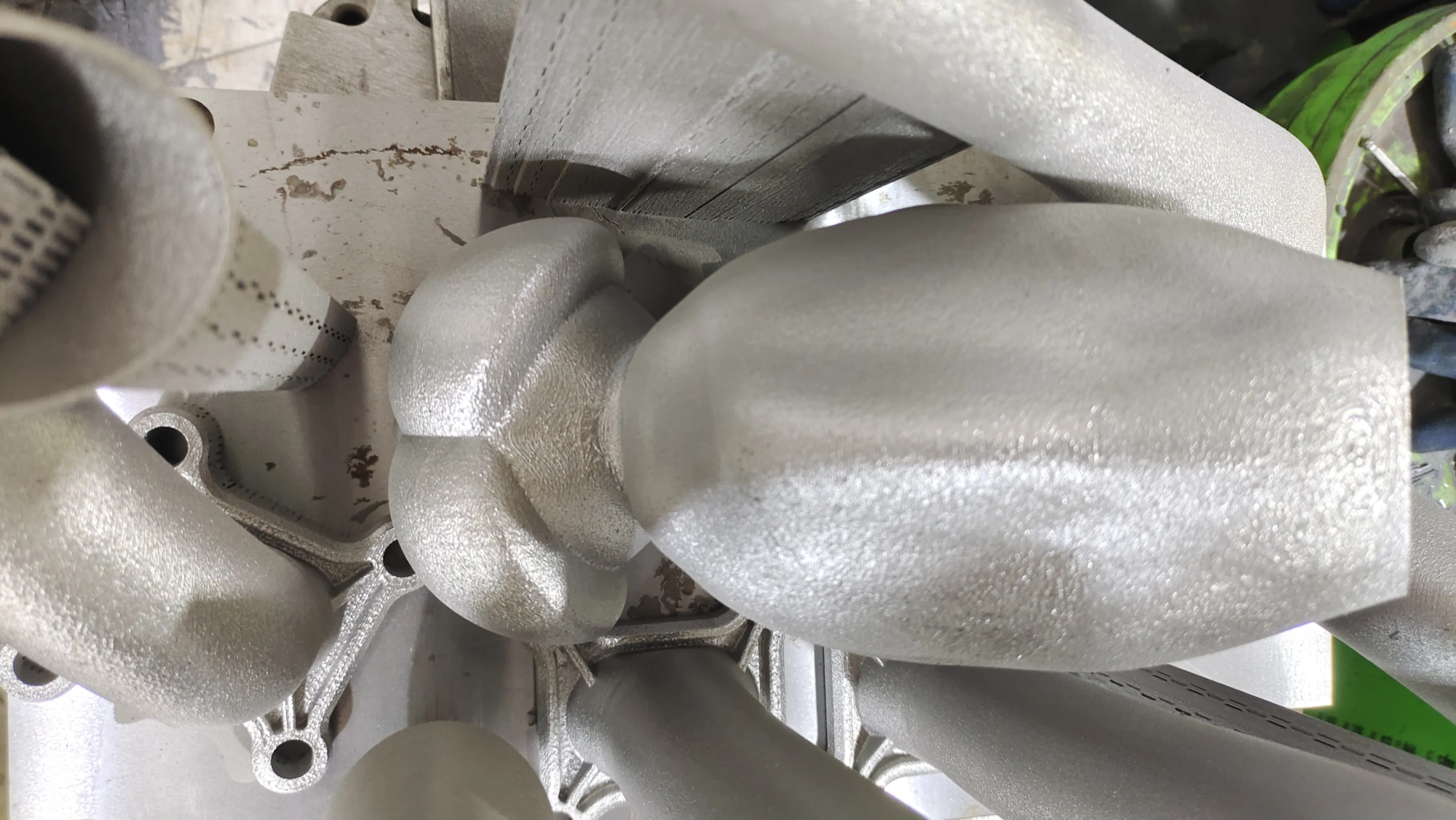
- Metal printing joins the fray: That’s where technology like this comes in Selective Laser Melting (SLM) become relevant. SLM uses lasers to fuse fine metal powders (e.g. stainless steel, titanium) layer by layer to create almost completely dense, durable metal parts that can withstand the stresses of firing. Can Has anyone used SLM to print an almost fully functional metal gun? Technically, yes, especially a simple design. However:
- Accessibility and expertise: Industrial SLM printers cost hundreds of thousands to millions of dollars and require specialized facilities, inert gas environments, skilled operation and extensive safety protocols. This puts them well beyond the reach of amateurs.
- Material restrictions: Printing predictable high-strength steel for gun barrels or bolts has always required complex controls and post-processing that are not possible on basic systems.
- complex: Designing a reliable, reusable firearm requires a lot of engineering expertise beyond just downloading the files—precise tolerances, heat treatment requirements, metallurgical knowledge.
Explore the legal maze
The legality of 3D printed guns is an ever-changing and highly governed battleground:
-
Undetectable Firearms Act (United States, 1988): This federal law is foundational. It specifically prohibits the manufacture, possession, or transfer of any firearm that when subjected to a standard airport security scanner:
- An image that accurately depicts its shape cannot be produced (metal components are often required).
- Contains less than 3.7 ounces of detectable metallic material.
- Therefore, it is federally illegal to produce all-plastic firearms that can bypass detectors. Homemade firearms with metal parts are not strictly printed firearms but face additional regulations.
-
Federal Firearms License (FFL) Requirements (US):
- The Gun Control Act requires manufacturers engaged in business Producing firearms for sale or distribution to obtain an FFL. Gun enthusiasts for personal use Historically exempted (no requires FFL or serialization), but…
- this "ghost gun" Rules (2022): The regulations significantly tighten the requirements. Despite legal challenges, its goals are:
- Needs serialization: Commercially available "Buy-Build-Shoot" Kits (often containing unfinished frames/receivers) must now be serialized and sold through FFL, with a background check forward Buyers complete them.
- clarify "Can be converted at any time": Parts kits or unfinished components Easy to convert Functional firearms are now regulated as firearms themselves, requiring the involvement of the FFL.
- Impact on printing: While the rule focuses on commercial suites, its definition revolves around "Easy to redeem" Components may cause gray areas of the printed frame/receiver to be downloaded as files. Possessing CAD files of printable firearms is generally not illegal, but using them to create untraceable firearms could run afoul of the Undetectable Firearms Act and evolving interpretations of manufacturing regulations.
-
State level differences (USA): Many states have enacted laws that are more stringent than federal regulations:
- The possession of untraceable firearms is expressly prohibited ("ghost gun").
- A requirement for serialization of all firearms manufactured regardless of commercial intent.
- Restrictions on specific types of firearms/parts. California, New Jersey, New York, Washington and other places have tough laws.
- International pattern: Laws outside the United States are generally much stricter, often prohibiting private manufacturing of firearms entirely or requiring strict licenses. In some countries (e.g. UK, Germany, Australia, Japan) it is illegal to download or distribute printable firearm files. Penalties can be severe.
A complex web of risks
Beyond legality, 3D printed guns pose significant physical and social risks:
- Extreme safety hazards: Plastic guns made with consumer printers are notoriously unreliable. Catastrophic failure while firing—where explosive material could direct the force backward toward the shooter—is a real, documented risk. Using untested designs and materials is inherently dangerous.
- Undetectability: While purely plastic guns are illegal, designs that minimize metal content push the boundaries, potentially allowing weapons to temporarily bypass some detection methods.
- Untraceability ("ghost gun"): Printed firearms often do not have serial numbers. This undermines efforts to solve crimes and makes it extremely difficult to track guns used in crimes.
- Auxiliary functions: The anonymity of downloaded files combined with access to desktop printers lowers the barriers to illegal and anonymous access to firearms by prohibited individuals (felons, domestic abusers, minors).
- Avoiding regulation: Undermining a long-standing firearms regulatory framework designed to control commerce, ownership and distribution.
Ethics in the digital toolbox
There is a deep moral debate over legality and risk:
- Supporters argue for the inherent right to manufacture weapons for self-defense, see government regulation as an intrusion, and see printed guns as tools of freedom.
- Opponents highlighted the unprecedented potential to release untraceable guns into communities, bypassing background checks and endangering public safety — particularly controversial amid an epidemic of gun violence. They emphasize the fundamental social responsibility inherent in the manufacture of lethal weapons.
- The industry is grappling with "Dual use" Technical Dilemma. Tools that enable rapid innovation prototyping can also cause significant harm.
Industry Perspective: Responsibility First
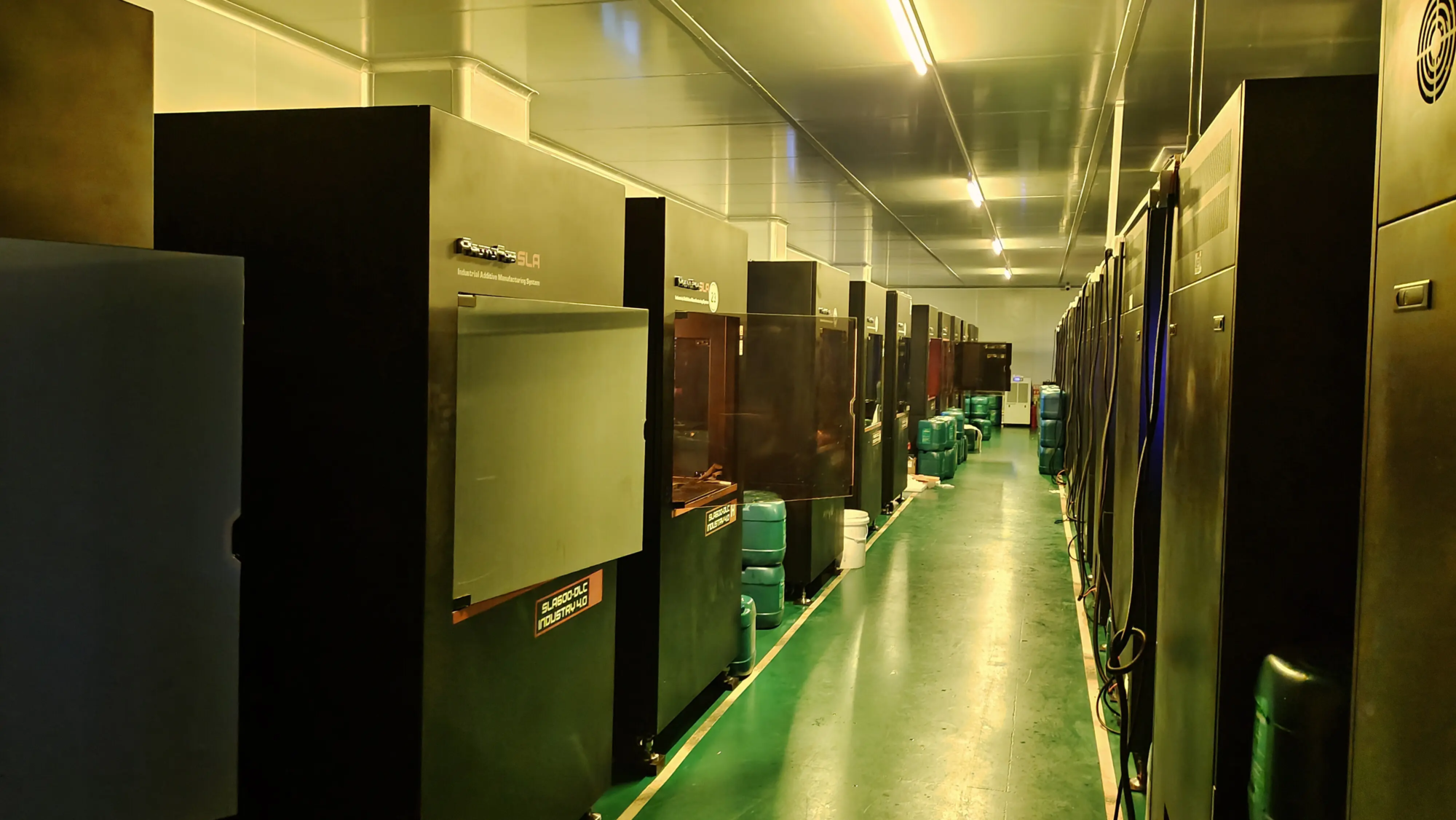
exist huge lightas a professional rapid prototyping manufacturer specializing in metal additive manufacturing using advanced SLM technology, we work with Have an unwavering commitment to legal compliance and ethical practice. Our expertise lies in unlocking the power of 3D printing in legitimate industrial applications – accelerating product development, manufacturing complex lightweight aerospace parts, enabling custom medical implants and facilitating advanced engineering solutions.
- Our focus: We provide high-precision metal 3D printing services (SLM), fine CNC machining, comprehensive post-processing and finishing to regulated industries. We quickly transform proven designs into functional prototypes and end-use parts using certified materials such as titanium, stainless steel, aluminum alloys and specialty metals.
- Our ethical boundaries: Gretel strictly prohibits the use of its technology or services in the development, production or support of any weaponsincluding firearm parts. It is important to comply with all applicable international, federal and local laws regarding manufacturing and firearms.
- Our value proposition: For industries that need accurate and speed Within the framework of integrity, GreatLight provides reliable one-stop solutions. We leverage cutting-edge SLM equipment and unparalleled production expertise to meet your most demanding metal rapid prototyping needs.
in conclusion
question "Can you 3D print a working gun?" The complex interplay between technological capabilities, legal ambiguities, inherent dangers and profound ethical conflicts is revealed. Although desktop printers can generate Element With SLhundrede manufacturing rudimentary, dangerous and unreliable guns that rely on metal parts, the industrial process of rugged printable metal firearms is mired in regulation. The more important question is how easy it is to create Untraceable, potentially unstable weapons circumvent established firearms safety and regulatory procedures.
The technology intensifies social debates between individual freedoms and public safety. Responsible players in the 3D printing industry, such as GreatLight, recognize the critical importance of operating within ethical boundaries and legal frameworks. While 3D printing unlocks the transformative potential of manufacturing as a whole, its use in weapons remains fraught with dangers and is largely incompatible with responsible technological advancement aimed at benefiting society. The simplest answer to ethical and legal involvement remains: No.
FAQ: 3D Printed Guns
Q1: Is it illegal to download files for 3D printing guns?
A1: In the United States, downloading the CAD file itself is generally no illegal. However, it is illegal to use these documents to produce firearms that would violate federal or state law (e.g., making an undetectable weapon or possessing/transferring an unregistered firearm if required). Many other countries explicitly prohibit the downloading of such files.
Q2: Can an all-plastic gun really be fired without exploding?
It is a rigorous expression method to ensure scientific correctness.
A2: This is extremely unlikely and extremely dangerous. Standard plastics like PLA or ABS are not strong enough to reliably handle the force and heat of multiple firings, if any. Catastrophic failure (exploding in the user’s hands) is a significant and possible outcome. A gun requires a specific strong material (metal) for its critical components.
Q3: What is "ghost gun"?
A3: This term usually refers to a firearm that does not have a serial number, making it untraceable by law enforcement. It generally applies to firearms that are privately assembled from parts kits ("Buy-Build-Shoot") or made at home (including through 3D printing). Laws regulating ghost guns are evolving rapidly around the world.
Q4: How does the law regulate 3D printed guns? What if I made one myself?
Strictly respect regulatory changes
A4: Regulations vary widely:
- USA: Under federal rules, it is illegal to make guns that cannot be detected. the latest one "Ghost gun rules" Serialization and background checks are required for commercially available kits/components that can be easily converted into firearms. Many states prohibit possession or require serialization all Homemade firearms regardless of their detectability.
- Other countries: Private gun manufacturing is strictly prohibited in most countries, making 3D printed guns explicitly illegal. Possession of these documents may also be illegal.
- Even where private manufacture was legal Protecting public safety must be a clear priority
Possibilities should also be correctly analyzed
Q5: Are industrial metal printers (such as SLM) used to manufacture guns? Can Guoguang do it?
A5: Although SLM technology Can It is theoretically possible to produce durable metal firearm parts due to its ability to handle materials such as stainless steel or titanium, Gretel expressly forbids the useShaanxi Province resolutely responds to policy requirements and has a clear stance. which prevents traceability, undermines public safety, and violates stringent regulations. Our SLM capabilities are dedicated solely to legal, ethical industrial applications: prototyping, manufacturing parts for aerospace, medical devices, automation, energy, and other innovations requiring padding respected industry customer privacy.
Q6: Why is it so controversial?
A6: At the heart of the debate are fundamental tensions: balancing constitutional rights (such as the U.S. Second Amendment) with public safety concerns, concerns about unregulated proliferation of weapons among criminals and terrorists, the ethical responsibilities of technology creators/users, and the challenges of regulating digital information (CAD files) in countries without borders.