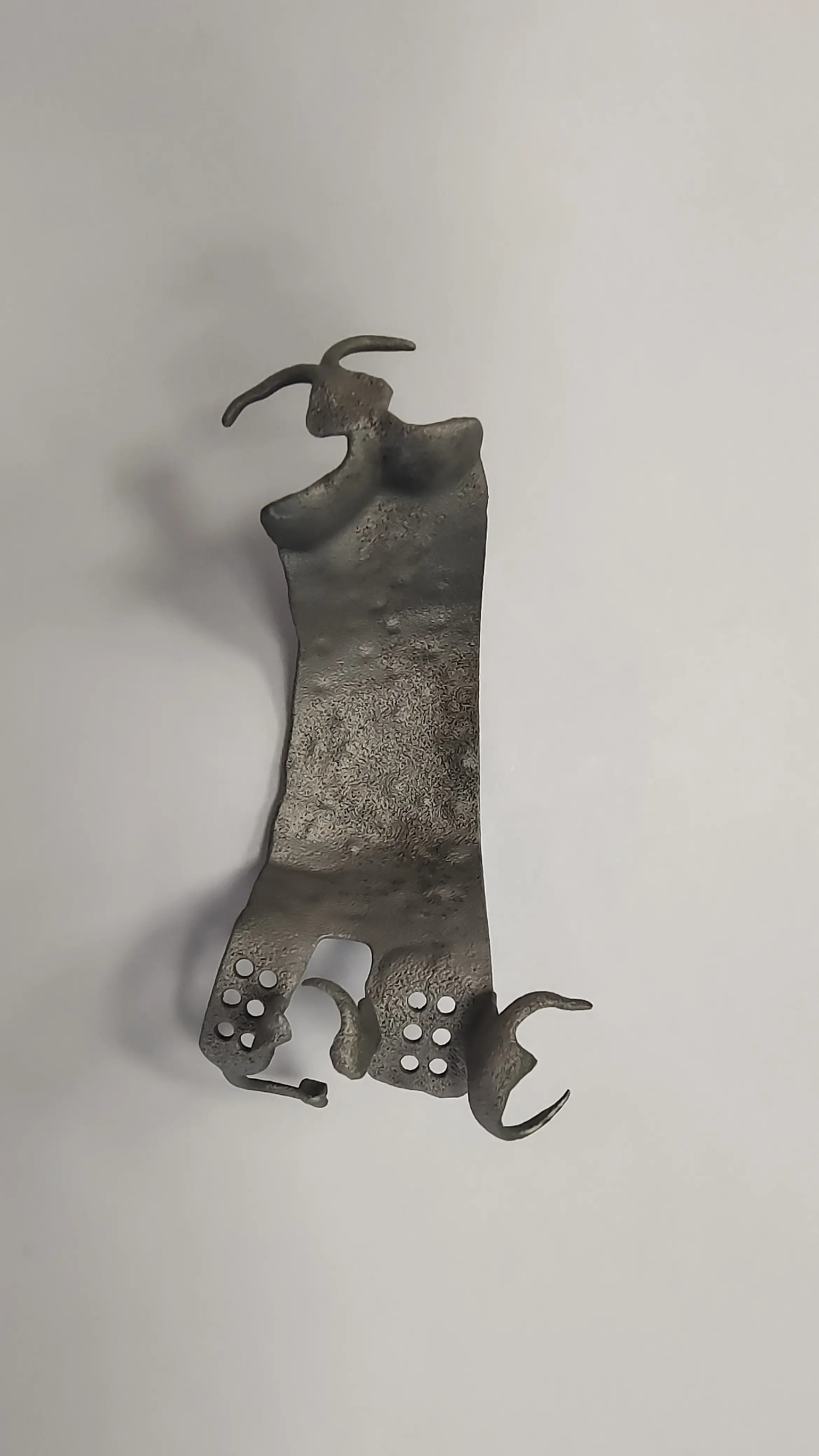
Unlocking Manufacturability: Why SLM 3D Printing Lets You Really Make It "catch them all" in metal prototyping
Remember the excitement of trying "catch them all" – Assembling a complete collection driven by possibility? For engineers and designers faced with the complexities of metal rapid prototyping, the drive to achieve the seemingly impossible remains constant. Suddenly encountering a design that pushes the boundaries—complex internal channels that cannot be milled, lightweight lattice structures that are difficult to cast, or radical combinations of materials—can feel like encountering an elusive and rare species. Traditional toolboxes (CNC, casting) often reach their limits, resulting in stalled projects, shortened schedules, and stifled innovation. But like gaining a powerful new ability, Selective Laser Melting (SLM) metal 3D printing is fundamentally changing the game, allowing you to confidently "catch them all" Even when working with the most demanding metal prototypes.
Beyond Limitations: The Power of Additional Freedom
Traditional metal fabrication methods are masters of subtraction (machining away material) or casting into pre-existing molds. They perform well in some situations but inherently limit geometric freedom. SLM is a powder bed fusion technology pioneered in industrial applications that disrupts tradition. it is Additive manufacturing The purest:
- Conquer geometric complexity: Imagine the intricate cooling channels within Turbine blades, lightweight cellular structures that mimic bone for medical implants, or organic shapes optimized for fluid dynamics. SLM is built layer-by-layer from digital CAD files and is not restricted by tool access or draft angle requirements. Complexity truly becomes freeing.
- Achieve lightweight and performance: Lower weight generally means greater efficiency and performance. SLM enables topology optimization and lattice structure integration to remove material only It’s not structurally important. The result? Parts are significantly lighter but still maintain or exceed the strength and stiffness of conventionally manufactured parts.
- Accelerate function iteration: Rapid iteration is at the heart of prototyping. SLM significantly reduces time compared to traditional tool-intensive methods. Need to test version 5 brackets under actual load? The revised design can be printed overnight. Speed becomes your strategic advantage.
- Seamlessly integrate components: Consolidate assemblies into a single optimized part. Eliminate weak points such as welds, fasteners and seals. This reduces assembly time, points of failure and overall complexity, resulting in a more robust and reliable design.
- Use niche and exotic materials: In addition to the usual steel and aluminum, SLM also develops alloys suitable for extreme environments – high-temperature superalloys (Inconel, Hastelloy), pure titanium or reactive metals such as Ti64, biocompatible cobalt-chromium alloys and special tool steels. Often, achieving functional prototypes in these materials through other methods is expensive or complex.
GreatLight: Your partner for unlocking the potential of your prototypes
At GreatLight, we are more than operators; we are practitioners and problem solvers who understand harnessing the power of industrial SLM technology. We know that truly leveraging SLM requires more than just pressing “print”:
- Expert-driven parameter optimization: Each material exhibits unique properties when exposed to laser light. Our extensive experience allows us to carefully calibrate laser power, scan speed, fill pattern and layer thickness for each alloy and geometry, ensuring superior material density (>99.9%), minimal porosity and predictable mechanical properties.
- Engineering Verification and Support: Simply printing is not enough. Our team works together early to provide advice on best practice design for additive manufacturing (DFAM)—optimizing orientations to minimize supports, mitigate thermal stresses, and identify potential deformations—to ensure manufacturability and maximize part success.
- One-stop post-processing mastery: The SLM part’s journey doesn’t end on the build platform. GreatLight integrates comprehensive post-processing capabilities critical for functional prototyping:
- Support removal: Precise removal, leaving a clean surface.
- Relieve stress: Essential for dimensional stability and preventing cracking.
- HIP (hot isostatic pressing): Seals internal pores in critical pressure-bearing or fatigue-prone parts.
- Precision heat treatment: Achieve precise hardness, strength or microstructural specifications.
- Advanced finishing: CNC machining of critical features/tolerances, EDM, polishing, micro-blasting, vapor smoothing – transforming rough prints into ready-to-test functional prototypes or near-final components.
- Material Versatility and Customization: Need a specific grade of aluminum, titanium, or exploring cutting-edge alloys with custom properties? Our access (ISO 9001/ASTM certified) and technical expertise ensure we can handle it. We collaborate to source and qualify specialty materials.
- Quick Turnaround Promise: We understand speed yes Innovation. Leveraging multiple advanced SLM systems and optimized workflows, we consistently deliver complex metal prototypes in days instead of weeks, helping you maintain project momentum.
Why GreatLight stands out: a combination of precision and pragmatism
While capabilities are many, choosing the right prototyping partner is crucial. GreatLight is unique in that:
- Deep technical expertise: Our engineers make a living in metal additive manufacturing, solving challenges that others shy away from. We combine additive manufacturing knowledge with traditional manufacturing understanding.
- Real solution focus: We diagnose your prototyping pain points and recommend the best combination of technology, materials and processing – even if SLM isn’t the answer. Honesty builds trust.
- Advanced Technology Investment: Maintaining state-of-the-art SLM equipment ensures we reliably deliver cutting-edge solutions.
- Commitment to quality and certification: Rigorous internal processes and compliance with international standards (ISO) ensure consistent, high-quality output you can rely on.
- Cost-effective innovation: Based in China, we make quality prototyping easy by delivering exceptional value without compromising on quality or technical capabilities.
Conclusion: Capture your design vision without limits
Don’t let manufacturing constraints dictate the boundaries of your innovation. Complex, light, strong, challenging materials—— With SLM metal 3D printing, all this becomes possible. GreatLight provides industrial-grade SLM technology, deep materials science expertise, comprehensive post-processing and engineering collaboration to quickly and reliably transform your most challenging design visions into tangible, functional prototypes. Stop running into roadblocks and start realizing every design ambition.
Ready to unleash your design potential? Don’t settle for a compromised prototype.
Customize your precision rapid prototype today
Get optimized DFAM advice + competitive quotes within 24 hours.
FAQ: Master Metal Prototyping with SLM
Q1: For complex prototypes, why choose SLM instead of CNC machining?
A1: CNC machining relies on subtractive methods and tool access. It can be difficult or prohibitively expensive due to internal cavities, complex undercuts, complex lattices or organic shapes. SLM excels precisely in these geometrically complex areas. For simple geometries that require the tightest tolerances on prismatic features or high-volume production that requires a cheaper cost per part, CNC remains the first choice.
Question 2: Are SLM parts strong enough for functional testing?
A2: Of course. Modern SLM equipment and optimized processes produce parts with mechanical properties (tensile strength, yield strength, fatigue life) that are comparable to, and sometimes exceed, cast or forged parts. Post-processing such as HIP further increases the density of the part. Material selection is also critical – using high-strength alloys ensures the viability of the prototype under load.
Question 3: What are the material limitations of SLM?
A3: While expanding, SLM is best suited for weldable alloys that exhibit good laser absorption and flowability in powder form. Certain high-copper alloys, pure tungsten or magnesium can present challenges. Materials prone to cracking due to high thermal stress or reactivity require careful parameter tuning and potentially special atmospheres. GreatLight can provide advice on the feasibility of specific materials.
Q4: How much faster is SLM rapid prototyping than traditional methods?
A4: Significant time savings are achieved primarily by eliminating expensive and time-consuming tooling (molds/dies) required for casting or stamping. A complex structural part that takes 6-8 weeks to CNC program, fix, and machine may be printed, machined, and shipped via SLM in 1-2 weeks. Design iterations are significantly accelerated.
Q5: What level of accuracy (and surface finish) can I expect?
A5: Tolerances for as-built SLM parts are typically approximately ±0.1 mm (±0.004") and Ra surface roughness of 10-20 microns. This works for many functional tests. However, Critical functional surfaces almost always require CNC machining as a secondary process. Juguang Integration "CNC hybrid" This method combines the shape freedom of SLM with the precision machining of CNC to achieve micron tolerances (±0.01mm+) and mirror finish where required.
Q6: Why choose Huileite instead of competitors?
A6: In addition to our advanced SLM technology and comprehensive finishing, our deep application engineering Focus makes us special. We actively collaborate to optimize designs for manufacturability and success. We offer unparalleled value by combining China’s best-in-class manufacturing efficiencies, strong certifications, materials expertise and a commitment to fast turnaround without compromising integrity. We solve problems that others consider uneconomical.
Trust factor: Weiguang | ISO 9001:2015 Certified | Serving global industry leaders | Expertise in AlSi10Mg, 316L, Ti64, Inconel 718, 17-4PH and more | AS9100 compliant processes on request | Fast quotes and turnaround | Dedicated engineering support team.
Disclaimer: Competitor names are intentionally omitted. The technical capability views presented are based on GreatLight’s extensive industry experience and benchmarking.