Revealing the Basics of 3D Printing: The Road to Success in Rapid Prototyping
(Experts focus on metal applications)
Manufacturing has undergone a sea change, driven largely by additive manufacturing, commonly known as 3D printing. 3D printing isn’t just about making plastic jewelry; rapid prototypingaccelerate innovation cycles and eliminate traditional design bottlenecks. It is critical for engineers, designers and businesses to understand the core principles, especially regarding strong metal parts. Let’s get into the gist.
What exactly is rapid prototyping and why is 3D printing its cornerstone?
Rapid prototyping is the rapid creation of physical models or functional parts directly from digital design data. What is its goal? Visualize designs, test functionality, validate concepts, and gather feedback forward Working on expensive mass production tools. Prototyping has historically been slow and expensive, and its accelerator pedal lies 3D printing technology. Unlike subtractive methods (machining) that remove material, 3D printing builds objects layer by layer, providing:
- Unparalleled speed: Conversion from CAD files to physical parts takes hours or days instead of weeks.
- Design freedom: Create complex geometries (internal channels, lattice structures) not possible with traditional methods.
- Cost efficiency: Eliminate expensive tooling/tooling costs for low-volume production and prototypes.
- Iterative agility: Easily modify and reprint CAD models for rapid design improvements.
- Material Versatility: Prototypes of materials that mimic final production are particularly important for functional testing.
Metal Magic: Understand the key technologies of metal 3D printing
Although plastic 3D printing is common, Metal Additive manufacturing opens up prototyping in high-performance industries: aerospace, automotive, medical devices and energy. Two leading technologies leading the metal frontier:
-
Selective Laser Melting (SLM): The powerhouse for dense, complex parts
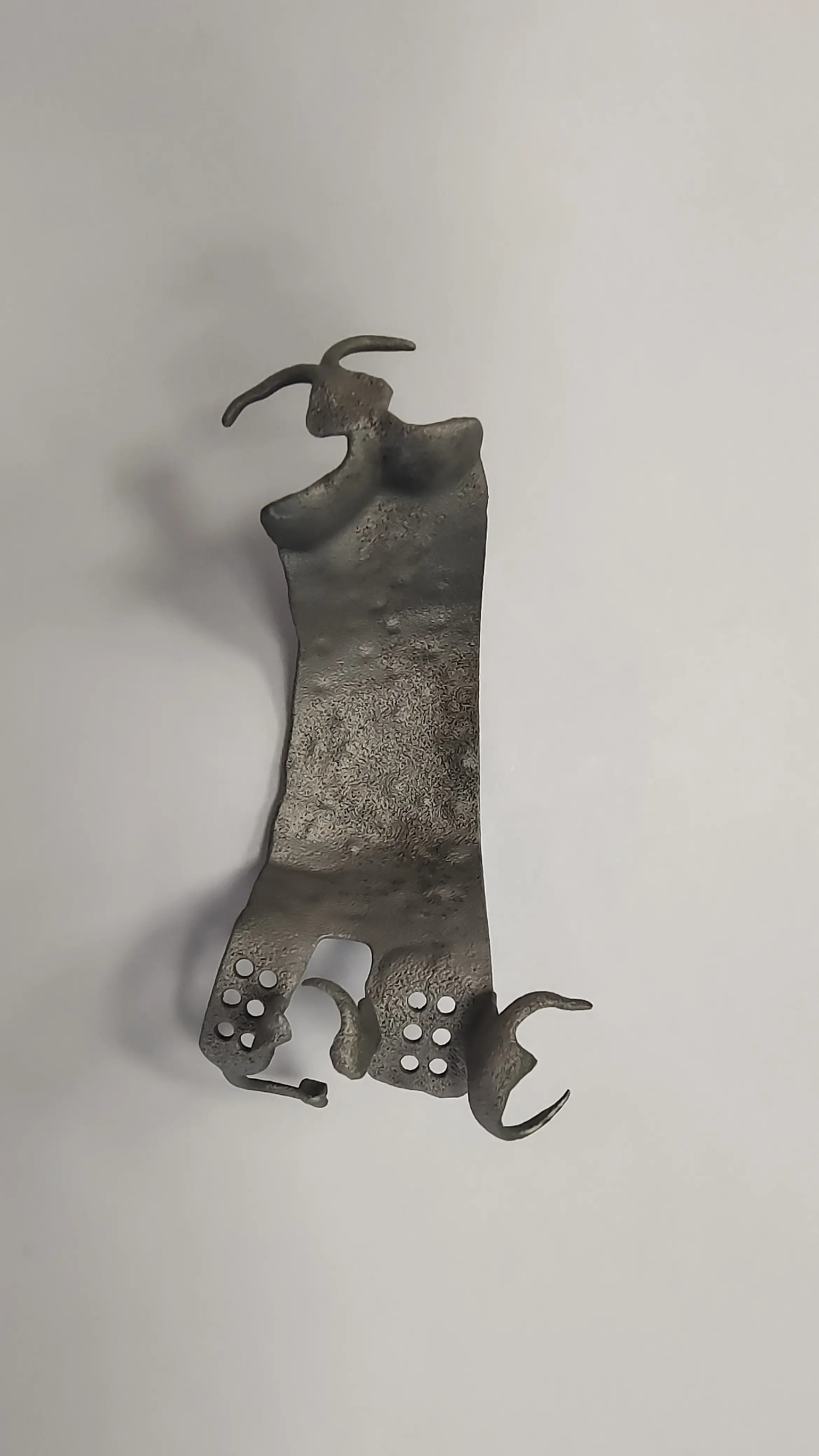
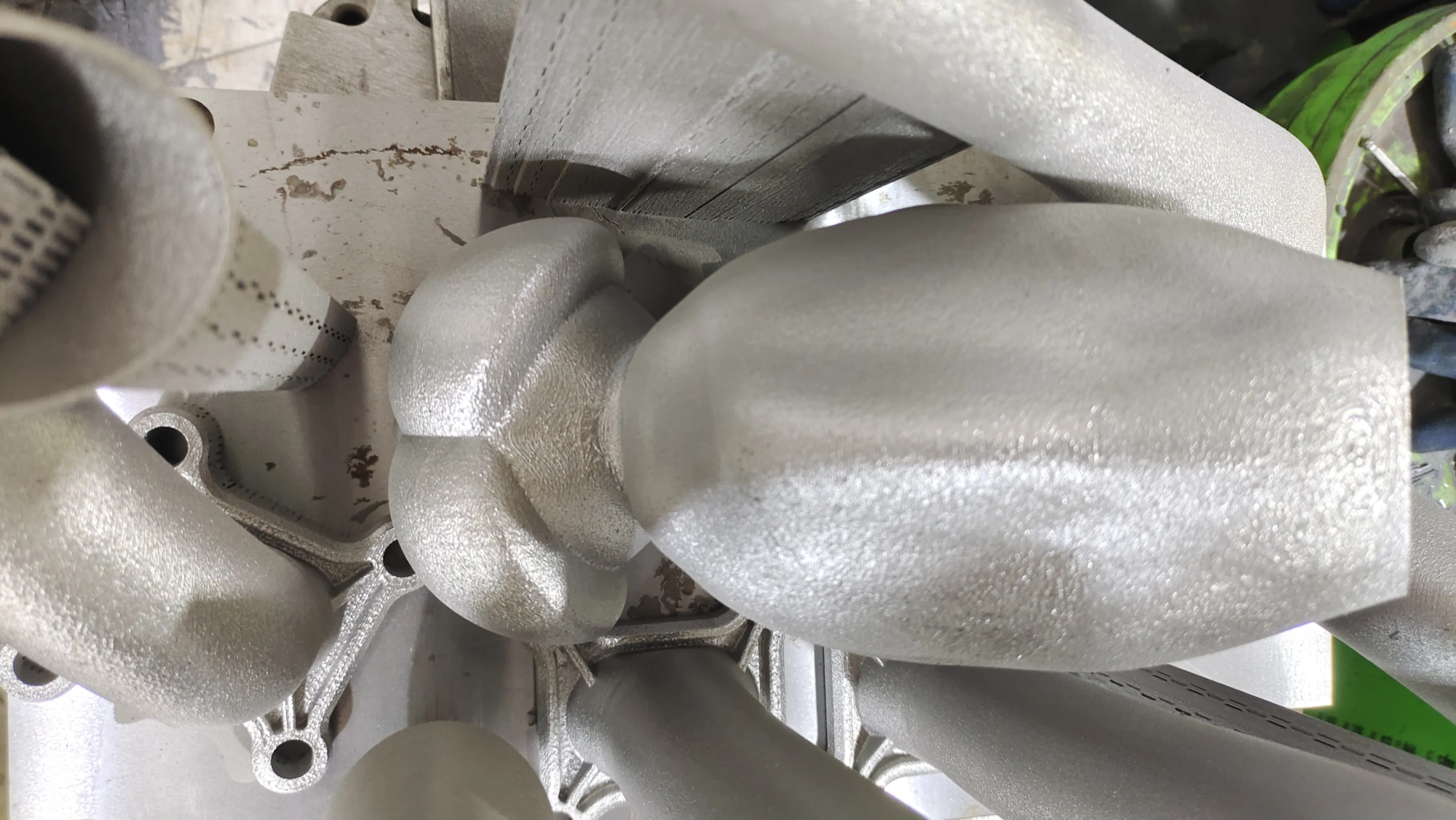
SLM involves spreading a thin layer of fine metal powder (stainless steel, titanium, aluminum, nickel alloys, etc.) onto a build platform. A high-power laser beam then selectively scans and completely melted Powder particles flow along the cross-sections of the parts, fusing them tightly together. The process is repeated layer by layer.
Why it glows: Create parts with excellent mechanical properties, near full density and superior detail for functional prototypes and end-use parts that require strength and precision. - Direct Metal Laser Sintering (DMLS): Multifunctional Bonding
Technically often used interchangeably with SLM and DMLS sinter powder. Rather than completely melting, the laser heats the powder particles enough to create bonds at the molecular level while maintaining their original shape to some extent.
Why it glows: Particularly suitable for a wider range of alloys, including metals with different melting points (such as cobalt-chromium alloys), and can often speed up build times slightly.
Why choose metal for your rapid prototyping needs? unlock potential
- Function verification: Test prototypes under realistic stresses (heat, pressure, mechanical loads) to ensure performance before investing.
- Uncompromising sophistication: Validate complex lightweight designs optimized for stress distribution.
- Shorten delivery time: Consolidate components into a single printed part, eliminating machining and assembly steps.
- Mass customization: Economically prototype custom components (medical implants, custom tools).
- Material properties: Obtain high-strength, corrosion-resistant, heat-resistant alloys critical for demanding applications.
Navigating the metal 3D printing workflow: from design to completion
Success depends on understanding key steps:
- Design for Additive Manufacturing (DfAM): This is more than just reverse engineering a traditional design. It utilizes software tools to optimize printing geometry: minimizing support structures, managing thermal stresses, ensuring self-supporting angles, and utilizing topology optimization to reduce strength and weight. Ignoring DfAM can lead to failure and high costs.
- Material selection: Match alloys to prototype functionality: titanium (Ti6Al4V) for strength-to-weight ratio; stainless steel (316L) for corrosion resistance; aluminum (AlSi10Mg) for lightweight conductivity; nickel superalloy (Inconel) for extreme hot environments. Consulting an expert is crucial.
- print: Precise control of laser power, speed, layer thickness, build direction and atmosphere (inert gas) in a dedicated SLM/DMLS machine determines part quality and performance.
- Post-processing: Metal parts are rarely ready fresh off the printer. Key steps include:
- Support removal: Carefully remove the support structure used during the printing process.
- Heat treatment: Relieve internal stresses and achieve desired microstructural/mechanical properties.
- Surface treatment: Machined, polished, sandblasted, electropolished to achieve dimensional accuracy, smooth surface or specific aesthetic/functional requirements.
- Hot isostatic pressing (HIP): Optional step for critical components that significantly increases density and fatigue life by eliminating residual porosity.
Avoid common pitfalls: Maximizing prototyping success
- Ignore DfAM: Costs skyrocketed due to excess supports, failed prints, and unusable parts. Talk to your printer early!
- Underestimating post-processing: Consider the time and cost of necessary decluttering. Clearly detail your requirements.
- Material misalignment: Selecting materials based solely on cost without considering functional requirements can lead to prototype failure.
- Poor supplier selection: A lack of advanced equipment, expertise or quality control can affect results.
Spotlight: Why GreatLight is Your Metal Rapid Prototyping Partner
At GreatLight, we specialize in turning complex metal prototype concepts into tangible reality. Our core strength lies in the fusion of advanced technology and deep expertise:
- Cutting-edge SLM arsenal: Equipped with state-of-the-art SLM 3D printers, we consistently achieve superior part density, mechanical performance and intricate details critical to functional prototyping and production.
- Material mastery: We process a variety of industry standard metal powders and welcome custom material challenges. Please consult us for material selection guidelines.
- Engineering partners: Our team works closely with customers on DfAM optimization to ensure manufacturability from the design stage and prevent costly mistakes.
- Comprehensive one-stop solution: In addition to printing, our comprehensive in-house capabilities span the entire chain – expert support for design/removal, advanced heat treatments (annealing, solution treating, aging), precision CNC machining for critical dimensions/tolerances, and a full suite of surface preparation options (machining, grinding, polishing, sandblasting). This eliminates supplier fragmentation.
- Speed and agility: Prioritizing fast turnaround times without compromising quality can speed up iteration cycles.
- Cost-effective precision: Leverage our economies of scale and optimized processes to obtain high-quality metal prototypes at competitive costs. We perform precision machining and finishing within the same production ecosystem, ensuring seamless results.
Conclusion: Embrace iteration and accelerate innovation
3D printing, especially advanced metal processes like SLM, is no longer futuristic; it is the cornerstone of modern rapid prototyping. Understanding the basics—from DfAM principles and technology options to materials science and post-processing imperatives—enables you to realize its full potential. Adopting this iterative approach can unlock unprecedented agility, reduce risk, and significantly accelerate time to market for innovative products.
For complex metal prototypes that require precision, functionality, and reliability, working with proven experts is critical. GreatLight is ready with advanced SLM technology, deep materials knowledge, integrated post-processing and a commitment to collaborative success. We empower you to confidently push boundaries and transform visionary designs into proven realities efficiently and cost-effectively.
Customize your precision metal rapid prototyping parts today – experience the benefits of GreatLight.
Frequently Asked Questions (FAQ) – Metal 3D Printing and Rapid Prototyping
Question 1: What is the real difference between SLM and DMLS? Does it matter?
A: Fundamentally, sustainable land management aims to Melt the powder completelyproducing very dense, uniform parts with excellent mechanical properties similar to forged materials. DMLS sinter Particles, technically can create diffusion bonds while the particles retain a more independent shape. Although often used interchangeably, this distinction is important for material compatibility and final part metallurgy. SLM dominates pure metals and alloys such as titanium/aluminum where high density is required. DMLS specializes in handling a wide range of alloys, especially those with mixed compositions. Discuss your specific alloy and application needs with your supplier!
Q2: Are metal 3D printed parts strong enough for functional testing?
Answer: Of course, if it is produced correctly using mature processes such as SLM/DMLS. Assuming appropriate material selection, printer calibration, process parameters, and post-processing (especially heat treatment), post-processed SLA/DMLS parts will typically meet or exceed the mechanical properties (tensile strength, yield strength, fatigue resistance) of their conventionally manufactured counterparts. This makes them ideal for rigorous functional testing and validation.
Q3: What are the biggest design limitations of metal 3D printing?
Answer: The main restrictions include:
- Support requirements: Overhang features require temporary supports, which must be removed (increased cost/time, may leave surface marks).
- Thermal deformation: Uneven cooling can lead to warpage/stress deformation; mitigating DfAM is critical.
- Minimum feature size/accuracy: Determined by laser spot size and powder particle size – intricate details below approximately 100-200 microns become challenging.
- Construction room dimensions: Parts are limited to the printer’s build volume. Large parts may require sectioning/welding.
Question 4: How does the cost of metal prototyping via 3D printing compare to CNC machining?
Answer: Highly dependent on complexity and volume:
- Complex/low volume: 3D printing wins hands down as it requires no tools/setup and is able to create complex parts without the need for multi-axis machining/hours of machining time.
- Simple shape/large volume: CNC machining is generally becoming more economical. For low-volume functional prototypes, especially complex geometries, SLM/DMLS is often more cost-effective than CNC when considering total time and capabilities. Be clear about your requirements and quantities so you can make an accurate comparison.
Q5: What level of surface finish and tolerance can I expect directly after printing, and how can it be improved?
one: When printing: Roughness similar to sand castings (~Ra 15-35 µm), sharp corners/overhangs may occur "stepped" texture. Typical accuracy tolerance is ~ ±0.1mm (±0.004") or 0.1% of size (whichever is greater), subject to part geometry/printer quality. Post-processing: Significant improvements are standard. Machined to tight CNC grade tolerances (< ±0.025mm), polished to produce a mirror surface (Ra < 0.8μm), sandblasted for a uniform matte finish - pre-specified to your functional/aesthetic needs! HIP enhances internal integrity.
Q6: Can GreatLight handle prototypes that require ultra-precise dimensions/fitting surfaces?
Answer: Yes, without a doubt. Our integrated approach combines SLM printing with our extensive in-house precision machining capabilities. Critical functionality, tight tolerances, and bearing/seal/bonding surfaces machined to printed near-net shape are core competencies. We coordinate print orientation and finishing strategies to achieve the most important optimal dimensional accuracy and surface quality.
Ready to transform your next metal prototype concept? Contact Gretel today for an expert consultation and quote!