Understanding COBOD 3D Printer Pricing: Strategic Analysis of Businesses
In the rapidly growing world of additive manufacturing, Corbod’s massive structure 3D printers have become a game-changer, allowing everything from residential houses to commercial structures to be automatically created. But getting this cutting-edge technology represents a huge investment. Let’s uncover the factors driving Cobod pricing and explore how businesses can strategically leverage industrial 3D printing without a burden of capital.
Why are Corbod printers so expensive?
Corbod’s system is located at the advanced end of the building’s 3D printing range, with prices from $500,000, more than $1.5 million. This reflects several non-negotiable cost drivers:
- Engineering Complexity: These gantry printers feature industrial-grade robotics, precise motion systems and proprietary extrusion mechanisms designed to handle tons of concrete. Structural frameworks alone require high tolerance engineering.
- Scale and customization: The construction volume usually exceeds 10m x 10m x 5m. The printer can be modularly expanded, thereby increasing the complexity of the machinery/software and material costs.
- Material innovation: Compatibility with specialized concrete mixtures (fiber reinforcement, rapid curing) requires R&D investment in machine pricing.
- Software ecosystem: Including BIM integration, real-time monitoring and print path optimization tools represent many years of software development.
- Regulatory compliance: Meet global building safety standards and increase engineering overhead.
Hidden cost exceeding the price
The initial purchase is just the entry point. Operational costs significantly affect ROI:
- Maintenance contract: Technical support and component replacement products for extruders (such as extruders) may exceed $70,000.
- Material logistics: Bulk delivery/pumping of proprietary concrete requires infrastructure investment.
- Labor and training: Operators need weeks of professional training; the construction/engineering teams need to improve their skills in parameter design.
- On-site preparation: Foundation, utility access and environmental control volume increases deployment costs by 15-30%.
- Scalability Challenge: Expanding the printing capacity may require purchasing other modules.
Smart Alternatives: Work with Expert Service Providers
For companies seeking industrial 3D printing precision and innovation without a seven-figure investment, Greglight offers turnkey solutions. As leaders in rapid prototyping and additive manufacturing, we bridge the gap:
✅Advanced manufacturing infrastructure
Our facilities are equipped with state-of-the-art SLM (Selective Laser Melting) Metal 3D Printer And multi-matter polymer systems that can be produced:
- Huge prototypes up to 1m³ with tolerance of ±0.1mm
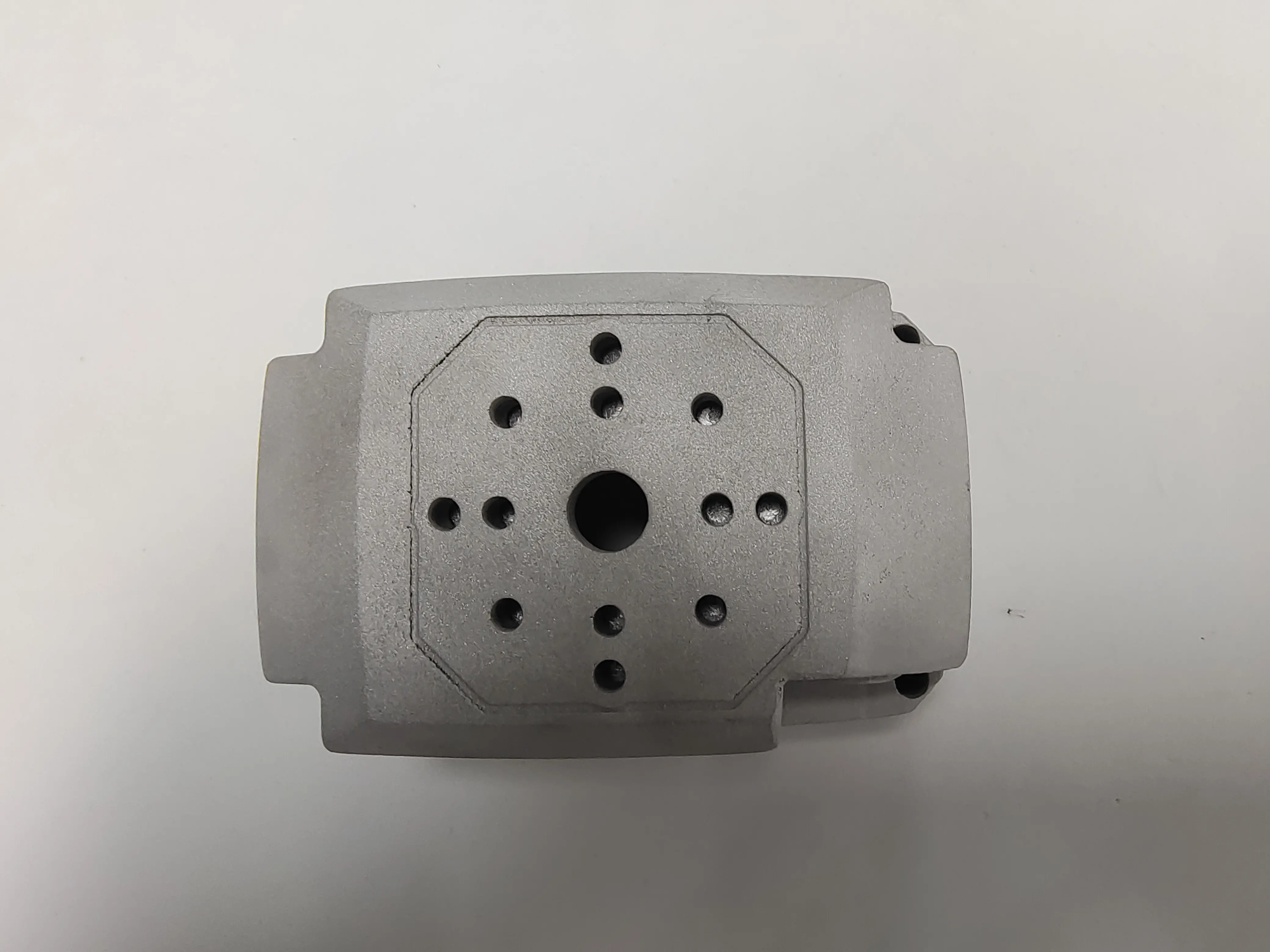
- Functional construction components (brackets, connectors) in titanium, aluminum or tool steel
- Complex architectural models of internal geometric shapes that are impossible by traditional methods
✅Real end-to-end expertise
Gremblight eliminates workflow fragmentation:
- Design optimization: Our engineers optimize models for printability, weight reduction and material efficiency
- Materials Science: Internal formula of synthetic/cement mixture matches Corbod grade performance
- Excellent post-processing: CNC processing, heat treatment, surface finish (shooting, painting)
- Quick turnaround: Standard delivery of large components for 3–5 days with months of equipment procurement
Case Study Impact: Cost Savings in Practice
A European construction company recently collaborated with Greatlime to prototype a 12m bridge structure. By avoiding the acquisition of COBOD printers ($850K) and operational settings (approximately 200k $200k), they saved over $1 million while implementing:
- 45% less weight with topologically optimized metal joints
- 3-week production schedule (more than 6 DIY printers deployed, while more than 6 months)
- ISO 2768-m Tolerances for Load Compatible Parts
Conclusion: Strategic adoption of capital expenditures
Corbod printers are revolutionary, but are a niche investment for dedicated construction companies that continue to be large-scale projects. For most businesses exploring architectural innovation or functional prototyping, Work with experienced rapid prototyping providers to provide greater agility and ROI. At Greatlight, we combine industrial-grade machinery, certification process (ISO 9001) and deep materials science expertise to turn complex designs into reality without locking capital into fixed assets.
Customize your next breakthrough project: Explore our features and submit designs for instant reference.
FAQ: COBOD printing and rapid prototyping services
Q: Can I use Greatlight’s service to print concrete structures?
A: While we do not use corbod-sized printers, we produce precise molds, reinforcement composition and functional prototypes in polymer/metal composites that mimic concrete properties. For a comprehensive construction, we consulted on the printing strategy and optimized parts.
Q: What is the typical lead time for large parts?
A: Most orders are in 2 weeks– i.e. for components > 1 ton. Complex components can take 3-4 weeks, including post-processing.
Q: How does Greatlight ensure part accuracy without owning a CORBOD printer?
A: Our SLM printer implementation 20–30 micron layer resolution Have the favorable tolerances of CMM. For construction projects, we combine 3D printing with CNC machining to achieve critical dimensions.
Q: Are your materials suitable for structural applications?
A: Yes. We print the following prints:
- Metal: 316L stainless steel, TI6AL4V, ALSI10MG
- polymer: Carbon fiber PA12, glass-filled polycarbonate
- Custom blending: Custom-made cemented composite material (compressive strength > 60 MPa)
Q: Which file format do you accept?
A: The preferred format includes steps, IG and STL. Our engineering team handles topology optimization upon request.
Q: How do I compare costs: Purchase COBOD vs. Outsourcing?
one: Rules of thumb: Outsourcing becomes cost-effective for projects with $500,000 or intermittent demand. With over 2-3 main jobs/year, internal equipment can justify the return on investment. Contact us for a customized TCO analysis.
Transform additive manufacturing ambitions into execution – industrial scale capabilities without overhead. Ask for your project evaluation immediately.