Unleashing creativity: A comprehensive guide to building custom-made compact ITX PCs using 3D printing cases
The temptation to build compact, high-performance PCs has led to a surge in small-shape (SFF) designs, while ITX forms have the highest effect. But why solve the ready-made case when 3D printing gives you unique tailored shells? This guide uses 3D printing (from design principles to materials science) to delve into the world of DIY compact ITX cases – providing your Powerhouse components with a performance-friendly home. For those seeking industrial-grade precision, we will also explore how professional additive manufacturing can increase possibilities.
Why 3D printing a compact ITX box?
- Final customization: Customized per millimeter according to your components, aesthetics and cooling needs.
- Innovative form: Design vertical towers, console-style layouts or hexagonal masterpieces that cannot be found in traditional manufacturing.
- Quick iteration: Test, adjust and reprint parts within a few days instead of waiting for mass production.
- Cost-efficiency: Avoid custom design tool fees, especially for small batch projects.
Design Points: Project Your Cases
-
Material selection:
- PLA: Affordable and easy to print; best suited for low thermal construction (TDP <65W). Suffering thermal creep above 50°C.
- Petg: Heat resistance (~80°C), impact resistance and medium flexibility. Perfect for most air-cooled ITX rigs.
- ASA/ABS: High-TDP builds higher temperature/UV resistance, but requires closed printer and ventilation.
- Nylon and composite materials: For extreme durability; special printer is required.
- Metal (SLM): Aluminum alloys have unparalleled thermal conductivity/stiffness; ideal for passive cooling or SFF water rings.
-
Thermal management:
- Integrate airflow channels and exhaust modes early (hexagonal/cellular grid maximize strength to airflow).
- Allows a ≥15mm gap between the thermal component (CPU/GPU) and the wall.
- Supports 40–120mm fan or radiator mount; avoids "Closed box" design.
-
Structural integrity:
- A wall thickness of 2.5–4mm with 25–40% thyroid/cubic fill thickness to achieve stiffness.
- Strengthen stress points with brass thermal setting inserts (e.g., GPU/PSU mount).
- Use finite element analysis (FEA) software to simulate loads if metal is printed.
-
Compatibility standards:
- Motherboard: Mini-ITX (170x170mm), standoff hole for each PCI-SIG specification.
- PSU: SFX/SFX-L or Flex ATX (depth ≤130mm).
- GPU: Maximum Length/Height (Study your model – some RTX 4090 hits 336mm).
- Storage: Dual M.2 mounts reduce cable clutter; include a 2.5-inch SSD tray if needed.
- Software and Modeling:
- Tools: Fusion 360 (parameter design), agitator (organic shape) or OpenSCAD (code-based).
- Resource: Get pre-tested templates from Github or Printables to start the project.
Printing and post-processing: Professional technology
- Layer resolution: 0.1-0.2mm layer height balances details and speed.
- direction: Print the panel plate to avoid layering under shear stress.
- Support structure: Tree supports minimizing scars on the angular surface.
- Post-processing:
- Grinding: Start with P120 grit and end with P400.
- Fill primers: Eliminate the layered lines behind 2-3 coats.
- Vapor Smoothing (ABS/ASA): Use acetone for a smooth finish.
- Metal Prints: CNC milling, anodizing or bead blasting for quality texture.
Advanced Boundary: SLM Metal Printing Box
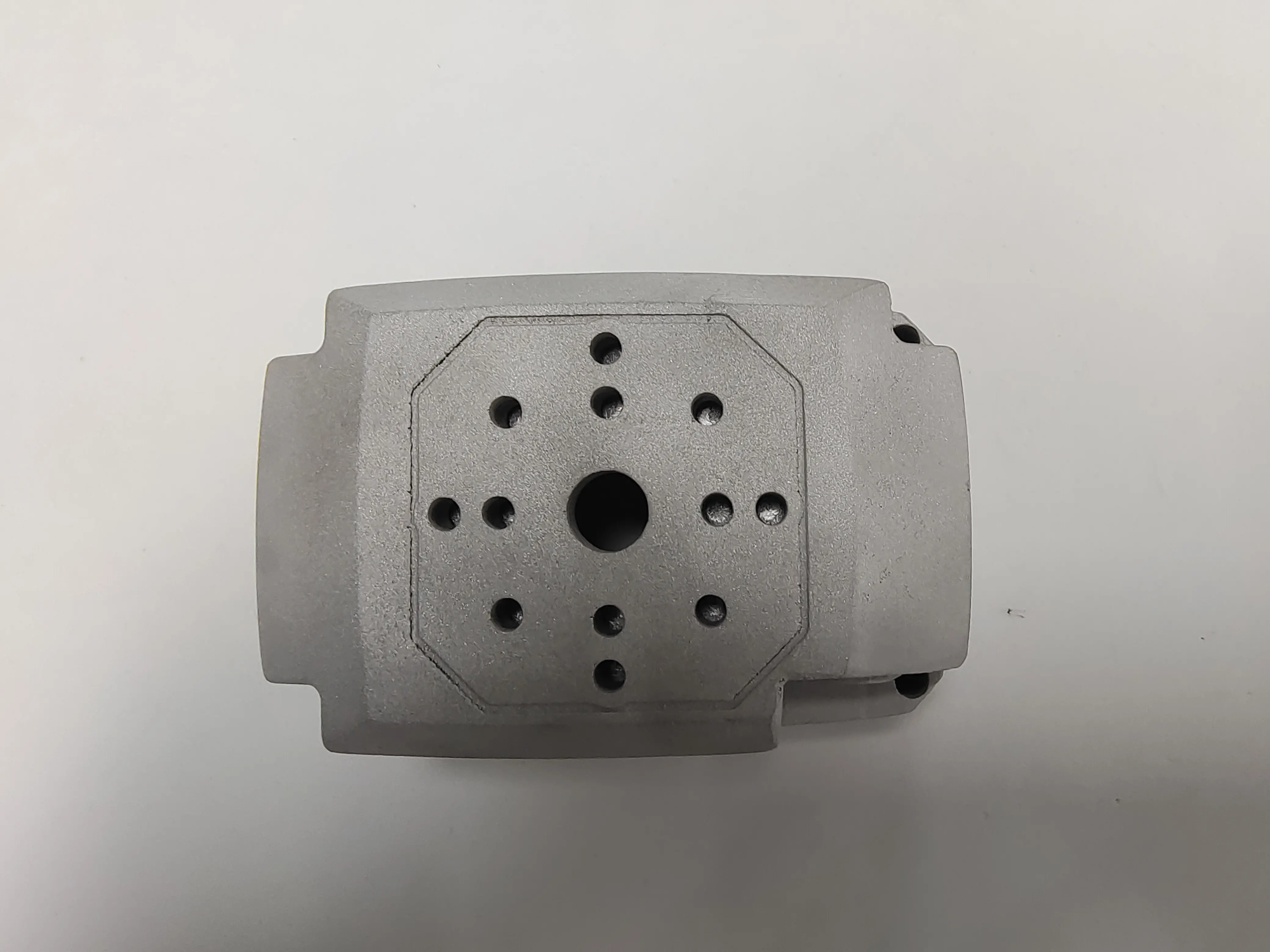
For fans of priority thermal performance and zero-rotation design, selective laser melting (SLM) metal 3D printing converts compact ITX possibilities. Aluminum alloy (ALSI10mg) emits heat 5× faster than plastic, enabling fanless construction or overclocking rigs without throttling. The accuracy of the SLM also allows the internal lattice structure to reduce weight while maximizing airflow – something that is not possible with CNC machining.
Why choose professional metal 3D printing?
Although desktop FDM printers handle plastics, metal case production requires industrial grade SLM systems to be able to:
- Metal powder melted with 1070°C+ laser.
- Achieves ±0.1mm tolerance on complex geometries.
- Provides UL certified material properties (Tenable strength of ALSI10MG > 330 MPa).
Enter Rapid prototyping:
As a leader in industrial additive manufacturing, Greatlight has deployed state-of-the-art SLM 3D printers with experienced engineering expertise. In addition to prototypes, we also provide:
- Material versatility: Aluminum, titanium, stainless steel and inconel alloys.
- Integrated post-processing: Buoyant annealing, CNC surface refinement and custom anodization.
- Quick turnaround: Functional prototypes are fully produced within 5 days and within 2 weeks.
- Accurate certificate: Layer-by-layer quality control ensures the structural integrity of mission-critical construction.
Real world inspiration
- project "Zero-G": SLM printed aluminum vertical ITX housing with integrated liquid cooling channels and weighs only 1.8 kg.
- open air "relation" frame: The PETG hexagonal design is designed with a three-slot GPU with a volume of 7L.
- Invisible cubes: A noise-reducing ABS with a hidden air intake baffle for silent operation.
in conclusion
3D printing makes compact ITX case design democratic, combining forms and functions in ways that traditional manufacturing cannot match. Whether trying consumer-grade printers or debugging SLM metal masterpieces, the power of innovation is in your hands. For projects that require aviation-grade precision and heat excellence, work with experienced rapid prototyping experts Great Ensure a case as powerful as your components. Ready to redefine the SFF boundaries? Your custom shell is a print file.
FAQ: 3D Printing ITX Cases
Q1: Is 3D printing boxes safe for high-end components such as RTX 4080?
Absolutely. Use PETG/ASA for a 300W TDP GPU with strategic ventilation. For 400W+ GPUs (for example, the RTX 4090), SLM-printed aluminum ensures heat dissipation and prevents warping.
Q2: How much does a metal 3D printed shell cost?
SLM printed aluminum cases range from $300 to $800 depending on complexity, quantity and post-processing. Greatlight offers scalable pricing for prototypes and batch processing.
Q3: Can I 3D print a box without a CAD background?
Yes. Platforms like Thingiverse offer free ITX case templates. Before printing, modify them in user-friendly tools such as Tinkercad.
Question 4: Will 3D printing cases interfere with Wi-Fi or Bluetooth?
PLA/PETGs are radio transparent; they do not block signals. Metal cases Will be Intervention – Add external antenna installation to the design.
Q5: How to ensure EMI compliance?
The plastic box requires copper shielding tape on the inner panel. Greglight’s metal box will naturally inhibit EMI.
Q6: What is the average printing time for PETG ITX cases?
Perform a 6-liter mid-composite design of 6-liter ~40–60 hours on a 0.4 mm nozzle printer.
Question 7: Can Greatlight assist in design optimization?
Yes. Our engineering team provides DFAM (Design for Additive Manufacturing) analysis to optimize weight, strength and thermal performance preprinting.
Prepare the prototype? Explore Greatlight’s 3D printing solution – free up accuracy without limits.