The future of thermal management: 5 successful innovations in 3D printed coolers
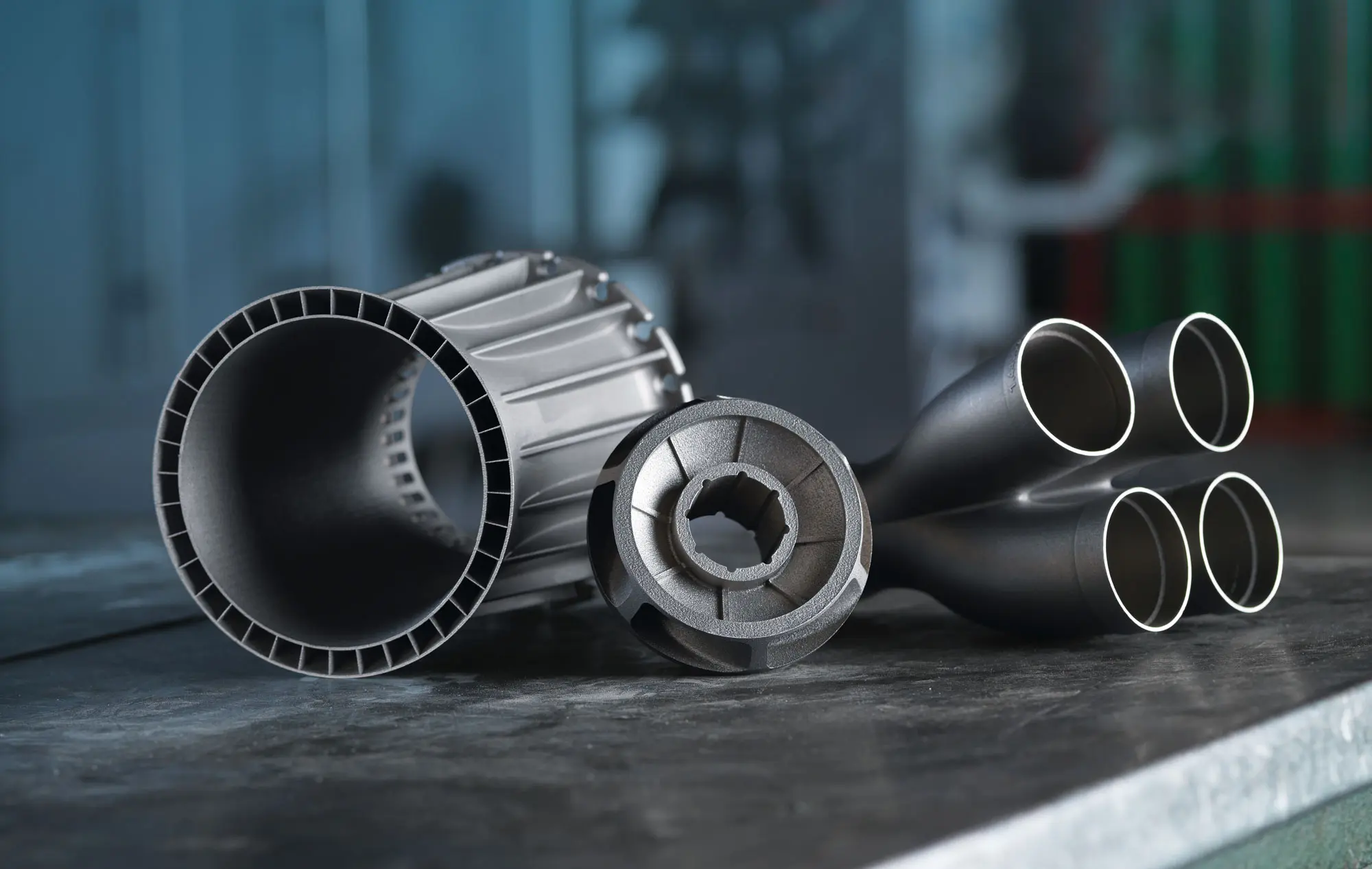
hot. It is the nemesis of peak performance in countless industries. From processors in gaming PCs and data centers to the motors that power electric vehicles and components deep inside satellites, managing heat effectively is critical. Traditional cooling solutions are often limited by traditional manufacturing and may sometimes fall short. Additive manufacturing (3D printing) is a revolution that unlocks radical designs that were previously impossible to produce. This blog dives into 5 compelling examples of how 3D printing is redefining cooler technology, showcasing results in cooling efficiency, weight savings and unprecedented customization. Witness how this technology pushes boundaries and unlocks previously unachievable thermal solutions.
Why 3D printed coolers?
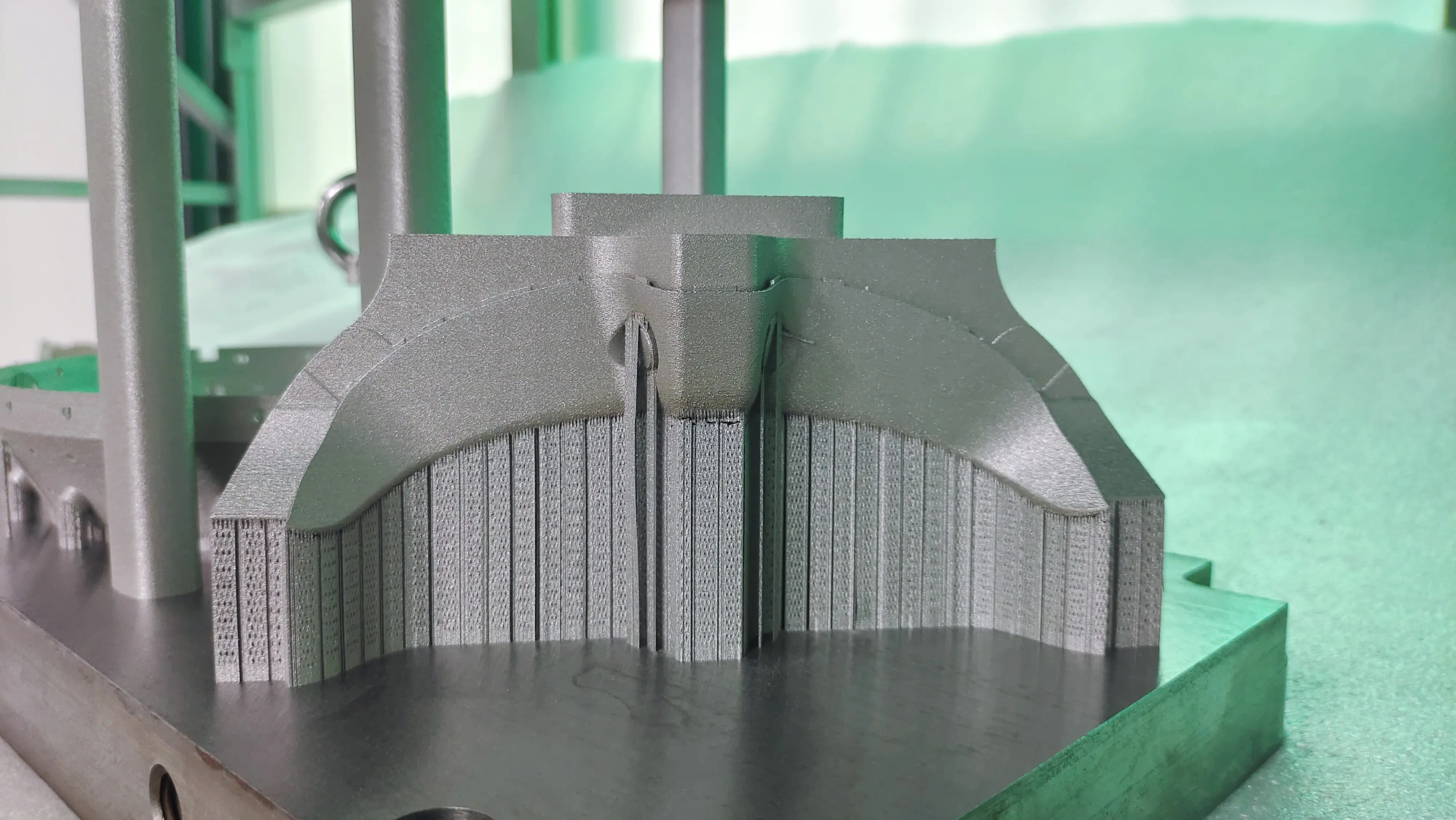
Before exploring the specific benefits, it is important to understand the core benefits of 3D printing (especially metal additive manufacturing such as Selective Laser Melting – SLM) in cooling applications:
- Geometric degrees of freedom: Create complex internal microchannels, lattice structures and conformal geometries that are precisely tailored to the contours of the heat source – something not possible with machining or casting.
- Performance optimization: Topology optimization algorithms generate ideal material layouts that minimize mass while maximizing surface area and coolant flow efficiency.
- Partial merge: Converts an assembly of multiple brazed or assembled components into a single, leak-proof whole, increasing reliability and reducing manufacturing steps and potential points of failure.
- Lightweight: Precise material placement and internal lattice structures allow for significant weight savings without sacrificing structural integrity or thermal performance – critical for aerospace, drones and electric vehicles.
- Rapid prototyping and customization: Rapidly iterate designs based on testing, create custom solutions for niche applications, and quickly transition to volume production.
5 Success Stories of 3D Printed Cooler Breakthroughs
1. Vortex Micro Channel CPU Cooler
- challenge: Achieve ultimate cooling in compact spaces with limited surface area, such as high-end laptops and overclocked desktop CPUs.
- victory: Using SLM printing, engineers designed a heat sink that features complex spiral microchannels directly underneath the heat sink. These channels create controlled vortices that greatly enhance turbulence and boundary layer disruption. This maximizes heat transfer from the solid surface to the coolant (air or liquid) flowing through the channels.
- Materials and Benefits: Aluminum alloys (AlSi10Mg or AlSi7Mg) have excellent thermal conductivity and lightweight properties, making them suitable for cooling electronic devices. Compared to similarly sized pin-fin designs, advantages include up to 40% improved heat dissipation, significantly lower junction temperatures, quieter operation due to potentially lower fan speeds, and a very compact form factor allowing for sleeker device designs.
2. Topology optimized liquid cooling plate for electric vehicle controllers
- challenge: Designing lightweight, high-performance cold plates for electric vehicle power electronic modules such as inverters and DC-DC converters ensures even heat distribution while minimizing pressure drops in the coolant loop.
- victory: Using topology optimization software integrated with SLM capabilities, engineers developed a cold plate with an organically branched internal channel structure. This minimizes resistance to coolant flow while maximizing contact with critical hot spots identified through thermal simulations. Optimized designs use materials only where they are structurally and thermally necessary.
- Materials and Benefits: Copper alloys (such as CuCr1Zr) are usually preferred due to their excellent thermal conductivity, but high-strength aluminum alloys (scandium modified) are used where extreme lightweighting is critical. Key Benefits: Significant weight reduction (>60% compared to traditional machined panels), uniform cooling to prevent hot spots that cause degradation, optimized pressure drop to increase system efficiency, and enhanced reliability with monolithic one-piece construction.
3. Aerospace turbine blade conformal cooling jacket
- challenge: Effectively cools the complex internal passages of high-pressure turbine blades operating in the extreme temperature environments of jet engines to extend service life.
- victory: SLM printing can create cooling jackets that perfectly reflect the complex serpentine cooling channels cast inside the turbine blades. These sheaths are filled with complex needle fins and turbulators that surround the blade core. Coolant flows through channels that precisely map the blade’s outer contours and internal complexities that traditional machining methods cannot machine.
- Materials and Benefits: High-temperature nickel-based superalloys such as Inconel 718 or Inconel 625 provide the required creep resistance and strength at high temperatures. Benefits include significantly improved cooling efficiency, reduced blade material stress, higher turbine inlet temperatures to increase engine efficiency and thrust, extended component service life, and reduced fuel consumption through reduced weight.
4. Integrated air/liquid hybrid cooling system for high-power GPUs
- challenge: Addressing the extreme thermal loads generated by next-generation GPUs used in AI training, rendering and scientific computing requires solutions beyond standard liquid cooling blocks or large air coolers.
- victory: Breakthrough design uses SLM to create a hybrid cooling unit that combines two tiny liquid cooling channels directly above the GPU chip and Highly structured air-cooling fins are integrated into the same unit. The liquid quickly transfers the initial intense heat, while the optimized fin structure effectively dissipates the waste heat into the airflow.
- Materials and Benefits: Copper is often chosen for its unparalleled thermal conductivity in the direct heat path area. Benefits include enabling previously impossible overclocking potential, significantly reducing thermal throttling under sustained load (critical for AI workloads), enhancing system stability, and providing a more compact solution than a separate liquid+air system.
5. Lightweight lattice-filled radiator core for Formula E/Satellite applications
- challenge: Achieve unparalleled specific cooling performance (performance per kilogram) in radiators crucial for Formula E racing cars (where every gram counts) or satellites (where launch costs per kilogram are astronomical).
- victory: Instead of a traditional tube-fin assembly, SLM printing builds a radiator core in which coolant flows through optimized integrated channels that are integrated directly into a lightweight internal lattice structure that acts as an extended fin. The lattice enhances surface area and turbulence while greatly reducing mass.
- Materials and Benefits: Typical are high-performance aluminum alloys (such as AlSi10Mg optimized for thermal properties) or titanium alloys (for extreme lightweighting and corrosion resistance in space). Benefits include significant weight savings (>50% compared to conventional designs), superior thermal efficiency per unit mass, enhanced structural integrity and resistance to vibration/g-forces (critical in racing/space), and potential reduction in coolant requirements.
Conclusion: Unlocking the best performance through advanced manufacturing
These five examples crystallize a transformative reality: 3D printing does more than just make coolers; It is redefining what is possible in thermal management. By breaking through traditional manufacturing constraints, SLM technology unlocks geometric complexity, enables performance-driven topology optimization, enables unprecedented lightweighting, and facilitates rapid prototyping and customization. Whether improving electronic performance, extending aerospace component life, making electric vehicles more efficient, or supporting next-generation satellites and high-performance systems, metal 3D printed coolers are a compelling solution.
At GreatLight, we are at the forefront of this revolution. As a leading rapid prototyping manufacturer specializing in metal additive manufacturing, we have state-of-the-art SLM 3D printers, deep production expertise and the comprehensive materials knowledge needed to turn innovative thermal solutions into reality.
- Precision and expertise: We specialize in solving complex metal part rapid prototyping challenges, solving complex geometries such as microchannels and internal lattices that are critical to winning coolers.
- End-to-end solution: From initial design consultation utilizing simulation and optimization, to production on our advanced SLM systems, to expert One-stop post-processing (Including heat treatment, surface finishing – CNC machining, sandblasting, polishing – and rigorous quality control), GreatLight streamlines your process from concept to functional prototype or short-run production part.
- Material Versatility: We quickly customize and machine a variety of materials, including aluminum alloys (AlSi10Mg, AlSi7Mg), copper alloys (CuCr1Zr), titanium alloys (Ti6Al4V), nickel superalloys (Inconel 718, 625) and high-strength steels.
- Commitment to excellence: Combining cutting-edge technology with deep engineering expertise, Greite is recognized as one of China’s premier rapid prototyping companies. We deliver precision, reliability and innovation.
Embrace the future of thermal management. Contact GreatLight today to discuss how our advanced SLM 3D printing and comprehensive services can quickly and accurately turn your winning cooler concept into reality at the best price. Get a quote for custom precision rapid prototyping parts.
Frequently Asked Questions (FAQ)
- **It’s metal