

Imagine opening your kitchen utensil drawer, office supply cabinet, or workshop tool box only to see a jumbled mess of items. You dig through spatulas, screws, or sticky notes, wasting precious time. Off-the-shelf organizers rarely fit perfectly, leaving awkward gaps or failing to accommodate oddly shaped tools. This common frustration has a surprisingly complex solution: Custom 3D printed drawer dividers.
Unlike generic plastic bins, custom 3D printed dividers are carefully designed Specifically Fits your unique drawer size, contents and aesthetic preferences. Whether you need complex compartments for tiny electronic components, reinforced sections for heavy-duty wrenches, or a sleek integrated system for a minimalist kitchen, 3D printing can bring unparalleled flexibility to drawer organization.
Why customized solutions outperform generic ones:
- Perfect fit guaranteed: Measure your drawers once. Provide accurate interior dimensions (length, width, height). Through CAD design, each divider is generated to utilize every inch free space, eliminating wobble and wasted gaps. Curves, hardware notches and sloping bottoms? complete.
- Content-centered design: Don’t force your tools into mismatched slots. Design compartments that fit exactly the shape of your items – hexagonal cavities for sockets, narrow slots for screwdrivers, deep wells for tall bottles. Optimized for commonly used items placed front and center.
- Unparalleled durability and material selection: Forget flimsy, cracked plastic. 3D printed partitions utilize advanced materials based on your needs:
- Plastic (PLA, ABS, PETG, nylon): Ideal for most home, office or light workshop use. Impact-resistant, simple and beautiful, and cost-effective.
- Industrial polymers (PEEK, PEKK): Suitable for high temperature environments (such as near stoves), chemical resistance or extreme stability.
- Metal (stainless steel, aluminum, titanium): Consider heavy machine tool storage, professional laboratories, demanding industrial environments, or just an ultra-premium feel when ultimate strength, stiffness and weight are critical. Metal partitions can easily resist crushing, deformation and extreme external forces.
- Design freedom and integration: Complex geometries, internal lips to stop items from rolling out, variable wall heights, integrated labels, handles, and even mounting features are all simple with CAD. Design your organizational masterpiece without manufacturing constraints.
- Scalability and replication: Do multiple drawers or locations need the same divider? Digital files ensure perfect reproduction every time. Easily expand the design or adapt individual compartments to meet changing needs.
The power of precision manufacturing:
Creating these custom organizers requires more than a hobby printer. Professional grade Additive Manufacturing (AM) Technology provides the precision, repeatability and material properties necessary for functional storage pieces:
- Fused Deposition Modeling (FDM): The most common is plastic. For cost-effective functional plastic partitions requiring moderate strength and detail.
- Stereolithography (SLA)/Digital Light Processing (DLP): Ideal for intricate designs that require high-resolution surfaces, smooth surfaces, and capturing fine details.
- Selective Laser Sintering (SLS): Create strong, complex nylon parts without the need for support structures, ideal for durable integrated designs.
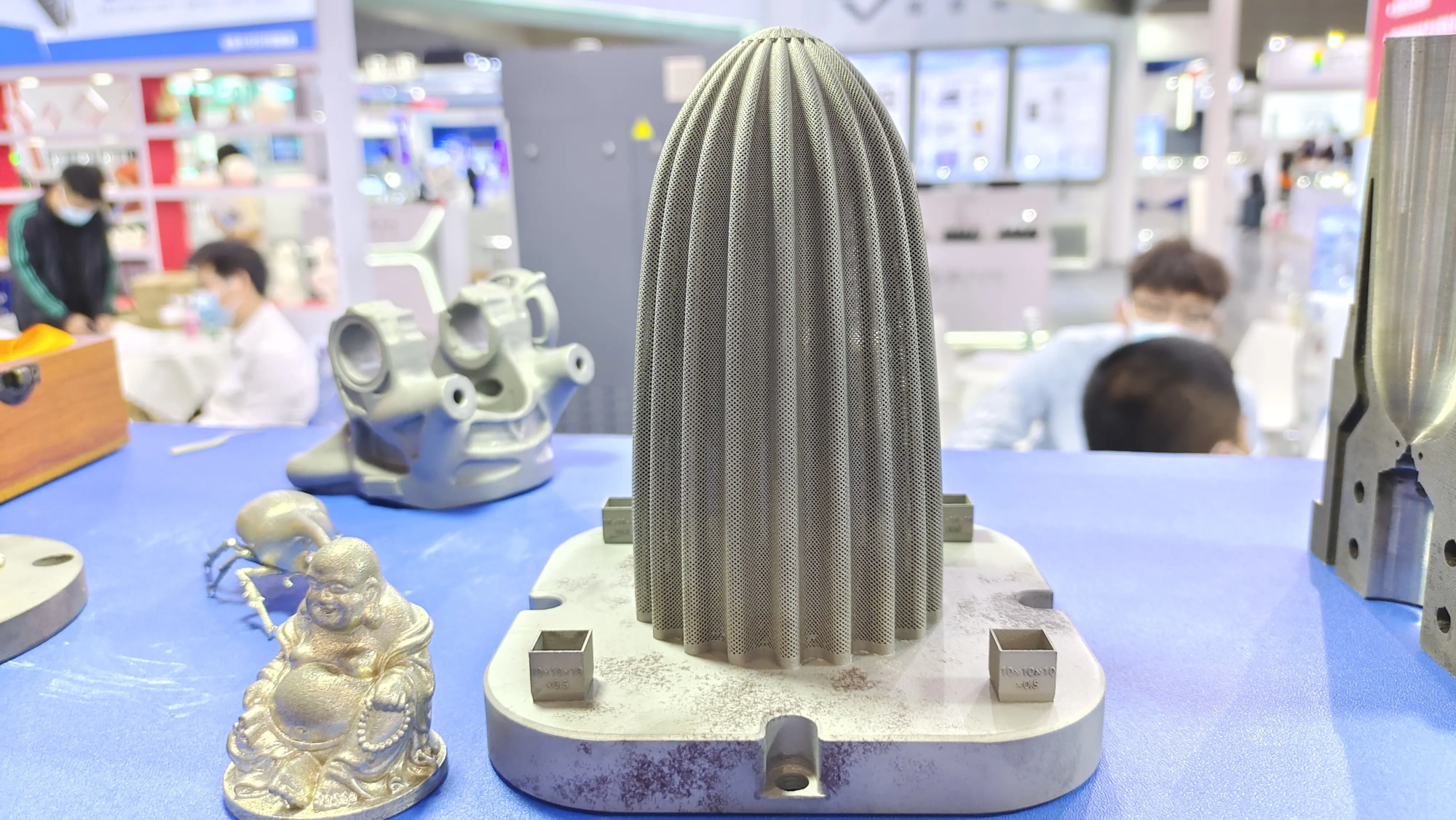
- Selective Laser Melting (SLM) – Metal Benchmark: Essential for producing dense, high-strength metal partitions. SLM uses a high-precision laser to melt fine metal powder layer by layer, creating parts with mechanical properties that often exceed those of traditional cast metal. This is critical for separators that are subject to heavy loads or harsh environments.
From sketches to organized drawers – process simplified:
- Measurements and definitions: Measure drawers accurately (inside dimensions). Identify key items that require compartments. Pay attention to special requirements: heavy objects, chemical contact, food contact? Draft a rough layout of what you need.
- Expert design: Work with a professional prototyping service. Experienced designers use software to convert your sketches and measurements into optimized 3D CAD models


