Embrace personalized support: the revolutionary potential of custom 3D printed wrist brackets
The pursuit of effective, comfortable wrist support has long challenged people who recover from injuries, manage chronic diseases, such as chronic diseases or seek increased stability during demanding activities. Traditional ready-made braces often bring frustrating compromises. They may be too bulky, too restrictive, to be anatomical, or do not provide the target reinforcement required for a particular problem at all. However, advances in 3D printing technology drive a revolution in personalized healthcare. Custom 3D printed wrist brackets offer a transformative solution with promising unprecedented comfort, functionality and therapeutic benefits.
The decline of mass production solutions
Universal braces in "Single type" Principles, ignoring the unique profile, volume and specific medical requirements of a single wrist. This inevitably leads to:
- Poor fit: A gap or pressure point can cause slips, pain, or skin irritation.
- Reduce compliance: Discomfort can get discouraged and wear, hindering recovery.
- Invalid support: General designs cannot adequately meet complex biomechanical needs or specific damage patterns.
- Too much bulk and reduced flexibility: Overengineering of universality often sacrifices comfort and usability.
- Limit ventilation: Poor air circulation leads to sweating, overheating and skin problems.
Advantages of custom 3D printing
3D printing unlocks new paradigms in orthopedic design and manufacturing:
- Perfect anatomical fit: Using 3D scanning or detailed casting techniques, an accurate digital model of the patient’s wrist is created. Then print the bracket Exactly To match the bone structure, tendon path and soft tissue profile, distribute pressure evenly and eliminate hot spots.
- Lightweight and breathable strength: Advanced printing processes, such as selective laser sintering (SLS) and multi-jet fusion (MJF), build braces from durable, flexible polymers such as nylon PA11/PA12 or TPU. These materials provide the necessary structural stiffness to provide support while ensuring minimum weight. Complex lattice structures and strategic perforations are easily integrated to maximize airflow and breathability without compromising durability – a feat of traditional molding is impossible.
- Targeted features and dynamics: Custom extensions to not fit Function. Designers can design areas with different flexibility and rigidity:
- It is the situation where instability occurs (e.g., the thumb base of CMC arthritis) that enhances stability.
- Allows controlled range of motion (ROM) to protect ligaments while facilitating mobilization.
- create "Channel" Avoid sensitive areas such as trigger points or healing incisions.
- Promote specific treatment goals that are determined by an occupational therapist or physician.
- Enhanced patient experience: The good comfort of truly customized greatly improves patient compliance. Reduced volume improves dexterity and wear resistance under clothes. Custom aesthetics, including personalized colors or patterns included in the design phase (especially using technologies such as ColorJet Printing -CJP), especially among younger users.
- Quick iteration and accessibility: Digital designs can be quickly modified and reprinted, and as stents are adjusted during recovery as swelling decreases or treatment progresses. This speeds up delivery compared to traditional custom manufacturing methods.
Your journey to custom stand: How to work
- Evaluation and Prescription: Medical experts diagnose wrist condition and define support levels and functional objectives of the stent.
- Digital Capture: Wrist and forearm geometry are captured using 3D scanning technology (fast, comfortable, highly accurate), or more commonly fine gypsum castings. This creates exact numbers "Negative" Limbs.
- Biomechanical Design: Design the strut using a dedicated CAD software, an orthopedic, prosthetic or biomechanical engineer. This stage defines pressure areas, flexibility areas, support positions, belt positions and ventilation modes based on prescription and scan data.
- Advanced 3D printing: The digital design file has been processed and sent for printing. For medical applications that require precision, biocompatibility and strength requirements, industrial grade processes such as SLS or MJF are often used. These technologies are provided by professional rapid prototyping manufacturers:
- Use medical grade materials: Certified, sterilizable skin-safe polymer.
- Provides high resolution: Capturing complex design functions is crucial.
- Ensure isotropy: The uniform strength of the entire part is crucial to reliability.
- Professional post-processing and completion: Printed parts undergo a detailed finish:
- Supports disassembly (for SLS/MJF).
- Stain to smooth the inner surface into contact with the skin.
- Potential surface sealing treatment.
- Assemble with hypoallergenic straps, buckles or padding if needed.
- Clean strictly and sterilize if necessary.
- Installation and adjustment: Clinicians install the finished stent to the patient to ensure perfect function and comfort. Smaller adjustments can usually be made digitally, and if major modifications are required, new parts will be printed out quickly.
Why work with experts like Greatlime
Ensure the functional, reliable, safe and comfortable custom wrist hinges using the correct manufacturing technology and expertise. Greglight stands out in this complex field:
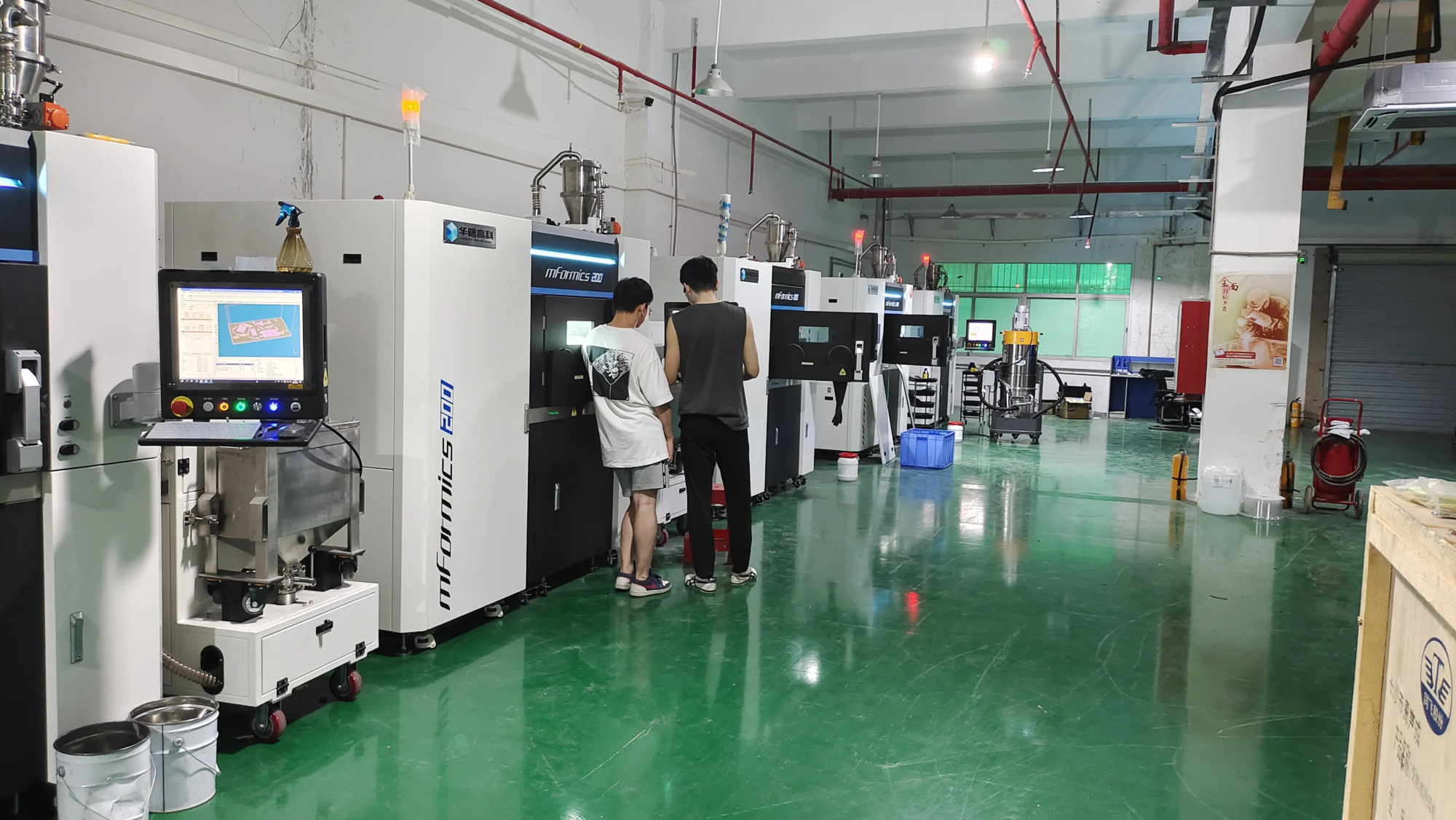
- Advanced manufacturing capabilities: Equipped with state-of-the-art industrial SLS and MJF machines, Greatlight produces parts with excellent accuracy, mechanical integrity and surface quality – the basic quality of effective orthotics. They understand the required tolerances.
- Excellence and Choice: Access a wide range of medical grade, biocompatible polymers for prolonged skin contact and repeat for daily use. They guide material selection (PA12, durability, TPU for flexibility) based on the specific requirements of the stent design and patient needs.
- Rapid Prototyping DNA: Experienced engineers specialize in transforming complex digital designs into precise functional parts under tight schedules. For iterative support development, Greatlight excels in providing functional prototypes and final production parts quickly and reliably.
- Comprehensive post-processing: With one-stop solution, Greatlight offers key finishing services such as precision cleaning, smoothing skin comfort (vapor smoothing for SLS, detailed manual completion) and assembly preparations – making sure the printed stand is ready.
- Engineering Consulting: They bring valuable insights to design of manufacturing (DFM), helping to optimize the printability, strength and comfort of braces, and potentially reduce weight or assembly complexity.
- Commitment to accuracy and reliability: As China’s leading rapid prototyping expert, Greatlight understands global quality expectations. Adhering to a strict process ensures consistent quality that is critical to medical support equipment. Their optimized supply chains enable unparalleled cost efficiency and speed, which are critical to timely patient care.
in conclusion
Customized 3D printed wrist brackets represent a significant leap in musculoskeletal support. They go beyond the limitations of universal solutions to provide personalized comfort, targeted functionality and empowerment. By embracing digital workflows and advanced additive manufacturing, clinicians can now offer tailored interventions for wrist condition, but arrive Unique people wear them. This synergy between medical expertise, biomechanical design and cutting-edge manufacturing resources ensures faster recovery, higher compliance and excellent user experience. As materials and design tools continue to evolve, the potential of more complex, lightweight and integrated orthopedic solutions has become unlimited.
Frequently Asked Questions about Custom 3D Printed Wristbands (FAQs)
Question 1: How long does it take to get a custom 3D printed wrist stand?
A: The process has multiple steps: evaluation, scan/cast (min/hour), design (hour/day), 3D printing (hour/1-2 days) and completion (hour/day). With effective providers, such as Greatlight, specializing in rapid prototyping, the entire process from scanning to final stent delivery can usually be completed in 5-10 business days, much faster than traditional custom orthotic manufacturing.
Q2: Are 3D printed wrist braces as strong as traditional plastic or metal braces?
A: Yes, usually stronger. Industrial 3D printing processes such as SLS and MJF use high-performance polymers such as nylon PA12, TPUs that provide excellent strength-to-weight ratios. The ability to create complex internal lattice structures optimized for load-bearing loads results in braces lighter than traditional braces while providing equal or superior target support. Greatlight specializes these advanced materials and technologies in demanding functional parts.
Question 3: Can the material be safe for long-term skin contact?
A: The well-known manufacturer uses certified medical grade, biocompatible materials for orthopedic applications. These polymers (e.g., medical grade PA11, PA12, PP, TPU) are non-toxic, biologically, and designed for skin contact. Make sure your provider explicitly uses materials certified to relevant standards (e.g., ISO 10993). Greatlight Source materials are suitable for medical applications and provide advice on biocompatibility.
Question 4: How much does it cost to customize a 3D printed wrist stand?
A: Costs vary according to design complexity, required materials, manufacturing technology and finishing. They are often more expensive than ready-made braces, but are comparable to (or sometimes cost-competitive) custom thermoplastics made in traditionally. Costs are effectively managed through partners such as Greatlight to optimize production and supply chains. Consider long-term value: Possibly better outcomes, improved adherence, and fewer alternatives due to poor suitability.
Question 5: Can I adjust the stent if my wrist size changes (reduce swelling or weight changes)?
A: Major adjustments usually require rescanning and printing new support. However, the key advantage of digital processes is its speed of iteration. Use fast experts to quickly reverse modifications. During initial appointments, padded inserts or belt adjustments may sometimes be used to solve smaller fitting problems. During the design phase, discuss the possibility of adjustment with your clinician and manufacturer.
Q6: Can 3D printed braces be wet or washed?
A: Most of the polymers used (PA12, TPU) are highly resistant to water and sweat. Surface treatments, such as SLS’s vapor smoothing, can make them easier to wipe and clean and prevent bacteria from hiding. Generally, it is recommended to wipe gently with a damp cloth and gentle soap. Unless it is certified, immersion and harsh chemicals should generally be avoided. Always follow manufacturer’s care instructions.
Q7: How do I start with a custom 3D printed wrist stand?
A: Consult with your doctor, orthopedic or licensed occupational therapist/hand therapist. If they offer or collaborate on 3D printing solutions, they will guide you. If not, discuss your interests; they may know the provider. Professional orthotic/prosthetic clinics increasingly offer this service, often working with technicians who manufacture custom parts based on clinic specifications.
Ready to experience the future supported by wrists?
If precise customization and excellent comfort are critical to your recovery or ongoing support needs, then exploring a custom 3D printed stand is a compelling step. Work with clinicians experienced in digital workflows and leverage A’s advanced manufacturing capabilities Trusted Rapid Prototyping Expert Ensure you get high quality, practical and durable support, designed for you.