Beyond the measure: Unleash creativity with custom 3D printing rulers (DIY guide)
A humble ruler. Basic tools found in classrooms, workshops, design studios and offices around the world. But if that ruler could have so many More? What if it would perfectly match your specific project, integrate unique features, showcase the brand or conform to unconventional shapes? This is magic Custom 3D printing ruler Work. Forget the limitations of ready-made options; 3D printing enables you to design and create truly personalized measurement tools.
Whether you are a fan, educator, engineer or artist Great Elevate the project from prototype to precision instrumentation.
Why print your own ruler?
The benefits go far beyond simple novelty:
- Perfect fit and function: Design ruler for designing specific curved surfaces, oversized parts or unique fixtures that require custom measurement solutions.
- Integrated features: Use measurements in conjunction with other tools! Insert pencil stand, angle guide, spirit level, mold or clip directly into the ruler.
- Enhanced Ergonomics: Craft rulers with custom grips, contours or textures are optimized for comfort during long use.
- Branding and customization: Add logos, personalized prints, unique scales (metric, empire, user-defined units (such as pixels or game scales) or bright colors.
- Material Specificity: Select plastics with specific characteristics – Flexible TPUs that bend around curves, rigid PLAs for everyday use, heat-resistant materials for seminar environments, and even Special metal For final durability and accuracy through the SLM/SLP process.
- Demo and Learn: Excellent project for teaching CAD design, measurement principles and 3D printing fundamentals.
Your DIY 3D Printing Ruler Toolkit: Getting Started
Ready to create your first custom measuring device? Here is your roadmap:
-
Concept and design sketch:
- Definition purpose: measure straight lines? angle? curve? Specific project?
- Determine the scale and unit: standard inches/cm? Professional (e.g., proportional model ratio, thread pitch)? Double scale?
- Sketch features: length, width, thickness, hole position, integrated tool, grip area, logo. Consider the angle used to measure marks.
-
CAD software selection:
- Beginner friendly: Tinkercad (Web-based, intuitive).
- In the middle: Fusion 360, Freecad, Sketchup (more features of complex shapes, constraints).
- Key elements of modeling:
- Basic geometry (long rectangular prism of standard ruler).
- Graduation mark: Accurate line (e.g., main mark at 1 cm, 1 mm small). Use the software’s array or pattern tool!
- Numerical labels: Accurate placement is crucial.
- Custom features: Holes, outlines, add tools, logos (using embossed/extruded on text).
-
Precision design considerations:
- Tolerance consciousness: Understand the inherent tolerances of the printer (±0.1mm to ±0.3mm on FDM). Don’t make the markers reliably breed more fine than the printer.
- kerf&line width: Slicer settings (nozzle diameter, extrusion width) influence Actual Printing line thickness. If you use a 0.4mm nozzle, your 0.2mm design line may print to 0.35mm. Adjust the CAD line or test print calibration marks accordingly.
- Thermal expansion: Especially for longer rulers. The material shrinks when it cools (coefficient of thermal expansion – CTE). To obtain critical long-term accuracy, study the CTE of the material or Consider professional metal printing. The change in PLA over 100mm is about 0.05mm. Nylon or abdominal muscles.
- direction: The print ruler is placed flat on the build board. Vertical print layer separation and less accurate marking under force.
- Layer height: Use a thinner height (e.g. 0.1mm or 0.15mm) for clear marking and edges.
- Clear: Ensure that any integrated holes or moving parts have sufficient printer functionality to clear.
-
Material Selection (DIY Focus-FDM Plastic):
- PLA: Rigid, easy to print, width range. Suitable for desktop rulers, prototypes. Easy to warp/soft in heat/sun.
- PETG: Stronger than PLA, higher temperature and chemical resistance, excellent layer adhesion. Shiny finish. Print slightly strict. A good DIY all-rounder.
- ABS: Durable, high temperature resistance, but requires walls and heated beds due to warping. It can be smoothed with acetone vapor.
- TPU: (For flexible rulers) Perfect for curved surfaces. Challenging printing; requires slow speed and direct drive extruder. Tags can be difficult to read.
-
Slicing and printing:
- Powerful slicer settings:
- Optimize the first layer of adhesion (bed, extra/raft if needed).
- Increase the surrounding/wall (e.g. 3+) to increase stiffness.
- Medium filler (20-40% grid or capacity).
- Sharp features and markings that reduce exterior/peripheral speeds (e.g. 25-40 mm/s).
- Enable "Ironing" The top surface is smoother on the measuring surface.
- consider "Avoid crossing the surrounding area" For travel movements to reduce the strings/spots nearby marking.
- calibration: Print a simple calibration cube and measure the test strip to check dimensional accuracy before the ruler. Adjust the scaling factor in CAD if necessary.
- Print: Carefully monitor the first floor!
- Powerful slicer settings:
- Post-processing:
- Cleaning support: Carefully remove all support materials (scissors, tweezers).
- Grinding: Smooth edges and measuring surfaces for comfort and accuracy (start rough ~120 grit, finish fine ~600+ grit). Be careful not to Round Measure the edge at the beginning.
- Calibration check (again!): Verify key marks (e.g. 0, 10cm, 1 inch) Accurate ruler. Record any consistent offsets.
- Elective: Painted, steam smooth (ABS), apply protective clear jacket.
When DIY reaches its limits: Cooperate to gain the ruler of precision and professional engineering
While DIY FDM printing provides fantastic flexibility for prototypes, hobby tools and educational programs, some applications require precision, high-end materials and durability to outweigh desktop functionality. This is Professional rapid prototyping and manufacturing partners such as Greatlight become essential.
Improve your custom ruler with Greatlight’s expertise:
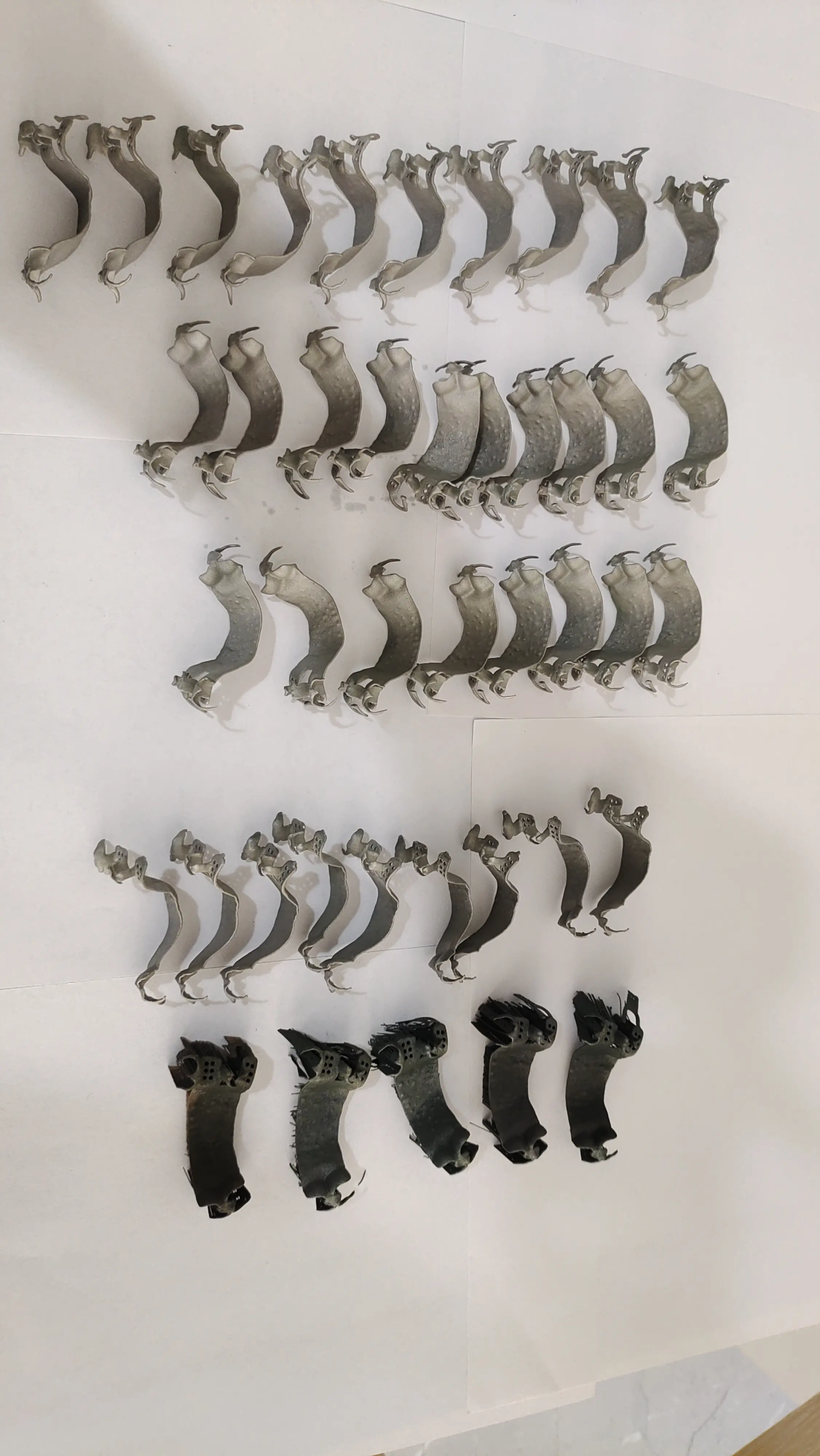
- Industrial grade metal printing (SLM/SLP): For instruments, caliper surfaces, fixtures, templates or store floor rulers, extremely high accuracy (with ±0.05mm tolerances), excellent wear resistance, thermal stability and dimensional integrity are required. Stainless steel, titanium, aluminum, tool steel, nickel alloy and other materials.
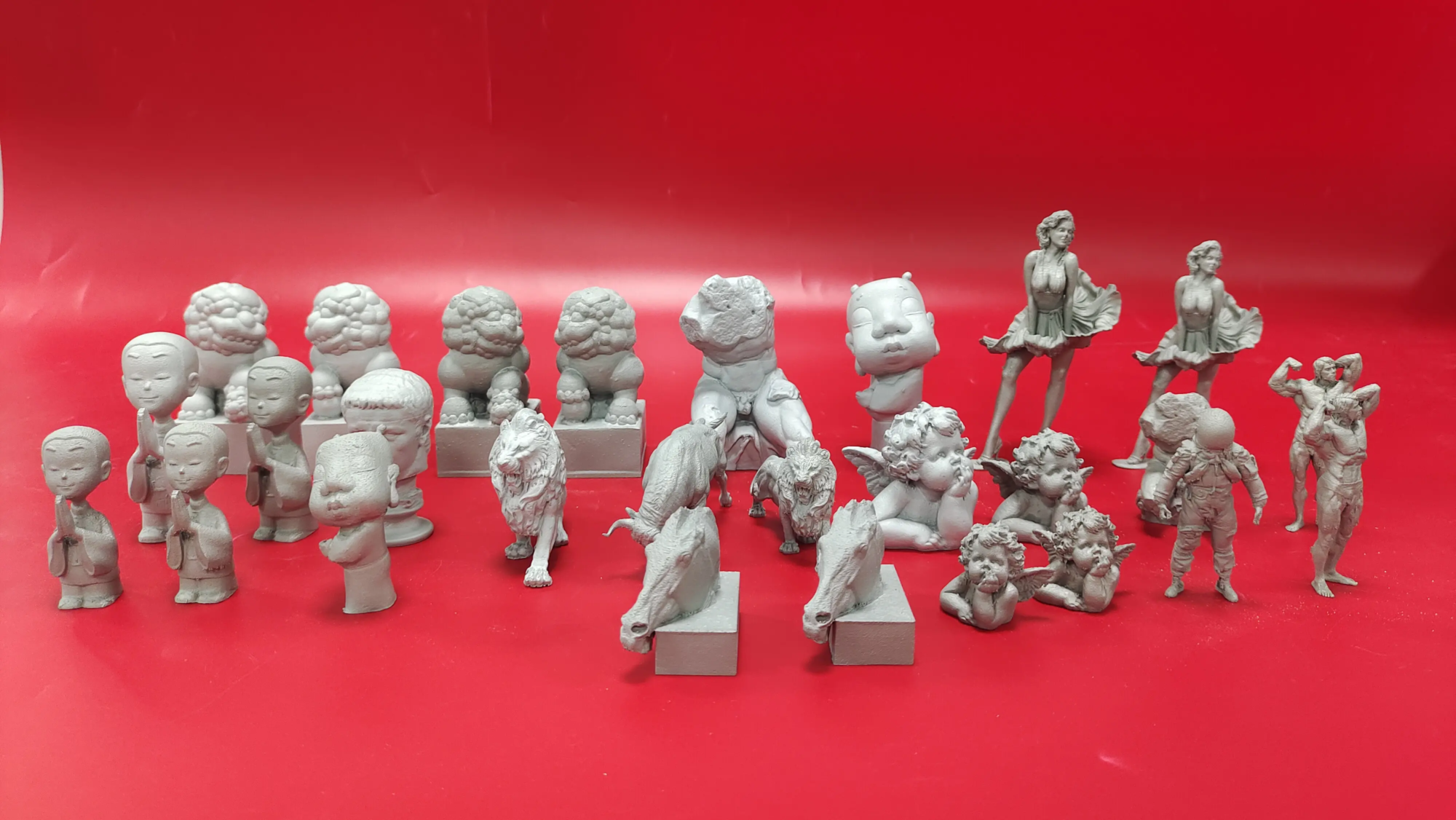
- Advanced polymer technology: Industrial FDM/SCP utilizing high-resolution SLA/DLP for ultrasmooth, detailed labeling or engineering grade polymers (PEI, PEEK, PPSU, Nylon 12 CF) to achieve chemical resistance, disinfection ability or high temperature stability.
- Extreme accuracy and size: While maintaining flat and tolerance, deal with rulers of length (> 1m), or micro-rulers for niche applications, leveraging industrial calibration and process control.
- Excellent comprehensive post-processing: Our one-stop service provides the final product:
- Precision CNC machining of key surfaces.
- Professional finishes (polishing, bead blasting, plating, anodizing, powder coating).
- Permanent, clear laser engraving for scales and logos.
- Carry out strict quality control and calibration verification in a controlled environment.
- Cleaning room for medical or optical applications.
- Engineering Solutions: Work with our engineering team to incorporate larger assembled fixtures, professional inspection tools or aerospace/medical applications that require proven performance.
Conclusion: Measuring your imagination
Customized 3D printing rulers represent the power of modern digital manufacturing. DIY paths provide access to, creative channels for personalized tools, learning and quick problem solving. Embrace design freedom, master the nuances of desktop printing for accuracy and bring your unique measurement concept to life.
But when your project requires surgical precision, industrial durability, professional materials or perfect professional finish, you recognize the value of expertise. Professional rapid prototyping manufacturers, such as Greatlime, are equipped with advanced SLM/SLP metal printing, state-of-the-art polymer process, strict QC and comprehensive post-processing, transforming the concept of custom scales into a reliable, high-performance tool worthy of critical applications. Whether it is a student’s project or a calibration component in an aviation tool, create What you need to measure now is now.
FAQ (FAQ)
-
Is 3D printing rulers actually accurate?
- DIY (FDM): Can be accurate Relative Measurement and low precision tasks (prototyping, craftsmanship) if carefully designed and printed. Due to material behavior and printer tolerances, deviations of ±0.2mm are expected to exceed ±0.2mm in moderation. Not suitable for critical metrology.
- Professional (metal/high resolution): Absolutely. The tolerance of using SLM/SLP metal or high resolution resin/in combination with professional calibration is greater than ±0.05mm. A certified process ensures the applicability of strict industrial regulations.
-
What is the best material for a durable ruler?
- DIY: A hard PLA or PETG balances durability and printability well. PETG has better thermal/chemical resistance.
- High demand/professional:
- Extreme wear/force: Tool Steel (SLM), Stainless Steel (SLM), Carbon Fiber Reinforced Nylon (SCP).
- Cleaning/sterilizing: Stainless Steel (SLM), PEEK, PPSU (SCP/SLS).
- Lightweight power: Aluminum (SLM), Titanium (SLM), PEKK (SCP/SLS).
-
How to make 3D printed markers easy to read?
- design: Use a large enough (~1mm+) mark. Contrast colors (print insert?) helps.
- Post-processing: Paint the grooves (wiped off surfaces) with thin filaments or sharp layers. Select a printing direction and the top surface is marked.
- Professional: Precision laser engraving creates sharp, permanent high contrast markings on metal. Embossed resin markings have a physical feel.
-
Where is Greatlight suitable? When should I DIY?
- Select Greatlight when you need it:
- Unrivaled accuracy and repeatability (±0.05mm or more).
- Industrial durability (heat, chemicals, effects) in harsh environments.
- Functional metal ruler (instrument, fixture, fixture).
- Specialized high performance polymer (heat resistance > 100°C, sterilized, low gas).
- Large format ruler (> 0.5m) with guaranteed flatness.
- Permanent, crisp laser meter on metal.
- Official calibration certification/traceability.
- Select Greatlight when you need it:
-
Can 3D printed rulers handle moisture or chemicals?
- DIY Plastic: PLA absorbs moisture and degrades, and PETG is ideal for general chemicals and moisture. Avoid having strong solvents for both.
- Professional: Stainless steel, titanium, Peek, ppsu, uletem (PEI) has extremely high resistance to chemicals, solvents, moisture and sterilization. Specify your environmental requirements.
- Is the customized metal printing ruler food safe or medically safe?
- Material is very important! Non-porous materials that can be made by appropriate post-processing and cleaning solutions, such as highly polished stainless steel 316L/SLM (electrically capable). Medical grade thermoplastic polymers (PEEK, PPSU, ULTEM) certified ISO 10993 is suitable for use. Greglight can handle biocompatible materials according to relevant standards for medical tool components. Request details of your application.