Bryson DeChambeau The Rise of 3D Printed Clubs: Revolutionizing Golf Equipment Design
Bryson DeChambeau isn’t just known for his amazing ball striking or scientific approach to golf, he’s also at the forefront of an equipment revolution driven by additive manufacturing. His adoption of custom 3D printed irons was not a fleeting experiment; It represents a fundamental shift in the way golf clubs are conceptualized, prototyped and manufactured. The combination of elite sportsmanship and cutting-edge technology gives us a glimpse into the future of sports engineering, where mass-produced gear will give way to hyper-personalized performance tools.
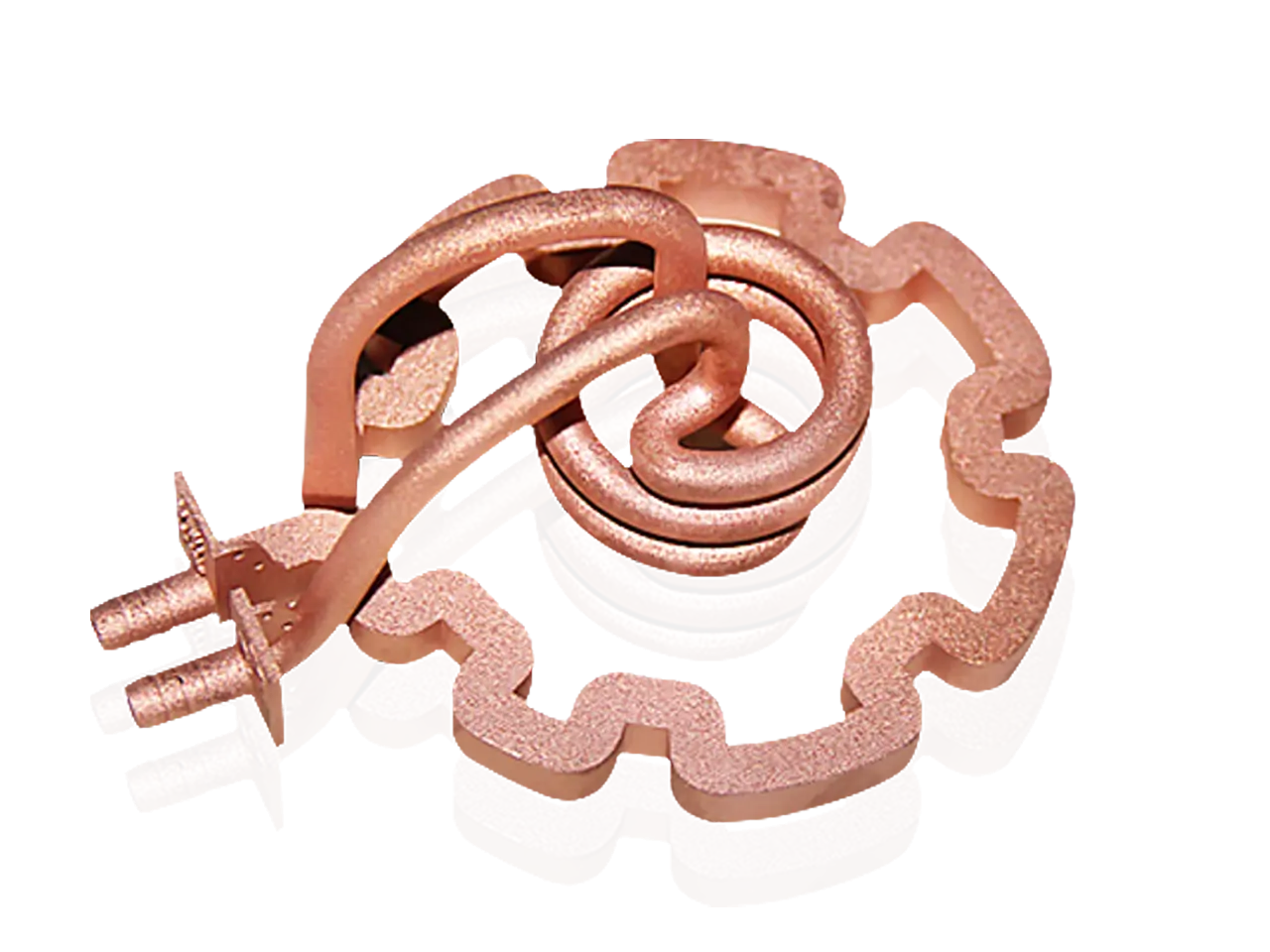
DeChambeau’s journey to 3D printed clubs stemmed from his relentless pursuit of optimization. Unsatisfied with the limitations of traditional wrought iron, his team turned to additive manufacturing, primarily using selective laser melting (SLM). This advanced metal 3D printing process allows them to create complex, weight-optimized club heads that cannot be milled or forged. The design prioritizes perimeter weighting to maximize forgiveness and optimize launch characteristics, specifically targeting Bryson’s unique swing mechanics and preferences.
The science behind swings: How 3D printing enables unprecedented customization
- Complex internal geometry: SLM builds layers using fine metal powders that are melted by a high-power laser. This freedom allows the designer to reset the weights to exactly Creates ultra-stability where it’s needed – deep in thick cavities, low on the toes and heels "Zone of forgiveness." Traditional casting leaves cavities, but SLM can achieve complex internal lattices or channels that optimize mass distribution well beyond the cast equivalent.
- Accurate weighing: DeChambeau’s clubs are carefully balanced, sometimes differing by just a few grams per iron, to achieve consistent swing weight throughout the set. SLM allows the wall thickness, lattice density and material distribution of the head’s internal structure to be adjusted during the prototyping process, allowing for unprecedented fine-tuning not possible with subtractive methods.
- Rapid prototyping and iteration: This is what manufacturers like huge light Outstanding. Developing such a radical device requires countless iterations. SLM enables the rapid manufacture, often within days, of fully functional prototypes using high-strength alloys such as maraging steel or titanium. Extensive testing immediately – launch monitors, impact analysis, sensory evaluation. Rapid feedback loops allow players like DeChambeau or designers to refine geometry, adjust mass placement, adjust center of gravity position, and most importantly, improve designs faster than ever before.
- Material freedom: In addition to steel and titanium alloys, SLM also allows the exploration of gradient or composite materials (co-solving plastics is not GreatLight’s focus). For irons, optimizing hardness, flexibility and wear resistance in key face areas such as tungsten inserts will become feasible with precision-printed multi-material solutions in future iterations.
Overcoming challenges: Prototyping partners are imperative
Moving from CAD concepts to PGA Tour-sanctioned clubs requires exceptional expertise in additive manufacturing design, materials science and rigorous finishing:
- Design verification: Simulating real-world stresses (impact forces in excess of 15,000 grams) is critical. GreatLight utilizes advanced simulation software and physical testing to ensure structural integrity before printing begins.
- Precision post-processing: Finished SLM parts require expert finishing: heat treatment for optimal metallurgical properties, precise CNC machining of critical interfaces (hosel, USGA-compliant face grooves), meticulous surface smoothing to ensure consistent turf interaction and aerodynamics, detailed polishing, and durable plating or coatings. Juguang Integration One-stop post-processing Features ensure these intricate steps meet Tour-level precision and finish quality.
- Material properties: Ensuring that printed metals perform as reliably as wrought metals under extreme repeated impacts requires a deep understanding of SLM parameters and alloy behavior.
Big picture: Optimizing democratization?
While DeChambeau is primarily responsible for R&D costs, the technology signals a broader shift:
- Beyond customization for elite professionals: As costs decrease, custom fittings may expand beyond tilt/lie adjustment. this internal The structure of the club can be optimized for the amateur swing.
- Faster innovation cycles: Manufacturers can test radical concepts without significant tool investment. This accelerates device development, pushing boundaries faster.
- Changing manufacturing: Large-scale production may eventually incorporate a hybrid approach in which key optimized parts are printed into the cast body.
Conclusion: signs of things to come
Bryson DeChambeau’s 3D printed irons are more than just personalized clubs; they demonstrate the potential of additive manufacturing to revolutionize sports equipment design. The ability to create geometries that fit individual biomechanics and optimize performance down to the gram solves generational constraints in club manufacturing. Rapid prototyping with SLM, executed with the expertise and precision provided by companies like huge lightis the catalyst. While cost and accessibility remain barriers today, DeChambeau’s success validates the paradigm shift toward truly personalized, performance-engineered athletic gear. The ripple effects are expected to extend far beyond golf.
FAQ: DeChambeau’s 3D Printed Clubs and Rapid Prototyping
-
What type of 3D printing does Bryson Dechambeau use in his club?
DeChambeau’s team primarily uses Selective Laser Melting (SLM)a metal additive manufacturing technology. SLM uses a high-power laser to melt multiple layers of fine metal powder to build complex, dense metal parts without assistance, which is critical for strong, complex iron parts. SLM produces near-net-shape metal parts that can be precision machined.
-
Are 3D printed clubs legal on tour?
Yes. The USGA regulates club head size, COR (spring effect), groove specifications, etc., but does not prohibit specific manufacturing methods such as 3D printing. DeChambeau’s clubs undergo rigorous testing to ensure they comply with all rules. The key is in the final geometry and specifications, not how the club head is built.
-
What are the main advantages of 3D printed golf clubs?
- Unparalleled customization: Precisely control internal weight distribution (optimizing MOI and forgiveness).
- Complex geometric shapes: Create shapes that are impossible to forge or cast (internal lattice structure for quality optimization).
- Rapid prototyping: Accelerate design iterations—quickly test functional prototypes to improve performance.
- Weight loss optimization: Strategically placing materials only where the structure needs them can result in significant weight savings.
-
When will 3D printed clubs become available to amateur golfers?
Currently, manufacturing complexity and cost hinder mass market adoption. DeChambeau’s clubs reportedly worth thousands of dollars per person. However, as SLM and post-processing technology advances and costs come down, this element of customization may permeate high-end consumer products, perhaps in dedicated fitting centers or niche market players willing to invest heavily. Technology integration is expected to trickle in before fully printed custom clubs become mainstream.
-
What materials are typically used to 3D print metal golf ball components?
High-strength alloys suitable for SLM are the norm:
- Maraging steel: Extremely hard, strong steel used for critical surfaces and structural elements, often heat treated after printing.
- Stainless steel alloy: For durability and corrosion resistance of the main structure.
- Titanium alloy: Offers an excellent strength-to-weight ratio for driver and weight reduction applications.
Research into composites and gradient materials continues.
-
Why is rapid prototyping critical for innovative sports equipment like Dechambeau’s irons?
Transforming a novel concept into a tournament-ready club requires constant testing and refinement. Rapid prototyping via SLM:
- Greatly shorten the cycle: Go from design tweaks to maintaining/testing a functional metal prototype in days instead of weeks/months.
- Enable incremental optimization: Quickly test small changes in weight distribution, CG position or geometry.
- Reduce risk: Cost-effectively validate key performance characteristics (such as structural integrity or durability under simulated impact) early in development.
- Companies like GreatLight specialize in the kind of high-risk, fast-turnaround prototyping that’s critical to pushing boundaries.
- As a manufacturer, how does Honlite ensure the accuracy of complex metal prototyping?
huge light lever Advanced SLM equipment In addition to deep engineering expertise:- Design cooperation: Start by optimizing the CAD model for manufacturability and performance.
- Materials expertise: The best alloys are selected and qualified based on the functional and durability requirements of the application.
- Parameter optimization: Fine-tune laser power, scan speed, and more to achieve perfect material fusion of complex geometries.
- Comprehensive arrangement: Comprehensive Post-processing – including critical CNC machining, heat treatment, polishing, coating for interfaces such as sockets and face grooves – all expertly performed in-house ensuring dimensional accuracy, flawless performance and cosmetic appeal meet the highest standards, whether prototyping or producing specialized components.
Ready to harness the power of rapid prototyping for your next breakthrough project? huge light Combining cutting-edge SLM technology with unparalleled expertise, One-stop organizing service Transform your innovative designs into precise reality faster and more efficiently. Customize your next-generation precision prototype today.