Up your beverage game: The ultimate guide to designing a custom 3D printed cup holder
Have you ever experienced that sinking feeling when your favorite travel mug is teetering precariously in your car’s poorly sized cup holder? Or is it hard to find stands that fit the uniquely shaped equipment in your shop? Off-the-shelf solutions often fall short. But what if your cup holder could be carefully customized to your exact needs? 3D printing was born – a game changer for creating personalized, functional accessories. Let’s take a closer look at the process of designing your own custom 3D printed cup holder and explore why it changes the way we solve everyday challenges.
Why customization matters: Beyond standard fit
Generic cup holders cater to the average and ignore unique scenarios:
- Vehicle peculiarities: Classic cars, boats, ATVs or custom dashboards lack compatible mounts.
- Accessibility needs: People with limited mobility may need specialized grips or angles.
- Non-standard containers: Insulated bottles, oddly shaped glasses, or lab equipment require unique nesting.
- Harsh environment: Machinery in workshops, factories or outdoor environments requires supports that are resistant to vibration, heat or chemicals.
- Space optimization: Integrating the stand into a tight space requires precise custom design.
This is where custom 3D printing shines, providing unparalleled freedom to completely solve these pain points.
Perfect craftsmanship: custom design process
Designing an effective cup holder requires careful planning and iteration:
-
Define requirements accurately:
- Key dimensions: Measure your cup/bottle size precise Outside diameter at the point of contact (don’t forget the height!). Remember to include the thickness of the insulation on the glass.
- Install: How will it attach? Clamping type? Screw installation? Adhesive? Integrated into another structure?
- environment: Will it face extreme temperatures (such as in the engine bay)? Chemicals? UV exposure? weather?
- Function: Need a drip tray? Non-slip lining? insulation? Hermetic seal?
- Ergonomics: Prioritize ease of insertion/removal and secure fixation (especially important for accessibility).
-
CAD Design: Connecting Imagination to Reality:
Model your bracket using CAD software (Fusion 360, SolidWorks, Tinkercad). Key considerations:
- TIGHT FIT CALIBRATION: Includes small tolerances beyond cup diameter (typically 0.2mm – 0.5mm) to prevent binding and ensure stability. Characteristic analysis confirms reliable support during movement.
- Structural integrity: Use rounded corners (rounded corners) to spread stress and prevent cracks. The rib and lattice structure improves rigidity without the need for excess material.
- Robustness of the mounting mechanism: Accurately simulate load carrying capacity. Component modeling verifies fastener integration points and stress distribution.
- Drainage and ventilation: Strategically placed holes prevent condensation from building up or allowing liquid to escape.
-
Material selection: Match performance to needs:|
- Polymer (FDM/SLS):
- People’s Liberation Army: Affordable and sturdy (ideal for prototyping or indoor use).
- ABS: Good impact and heat resistance (~85°C) for a wide range of uses.
- Polyethylene glycol: Excellent toughness, chemical/UV resistance, food safe options, perfect for vehicles.
- Nylon (SLS): Excellent strength, flexibility (tags/clips), durability.
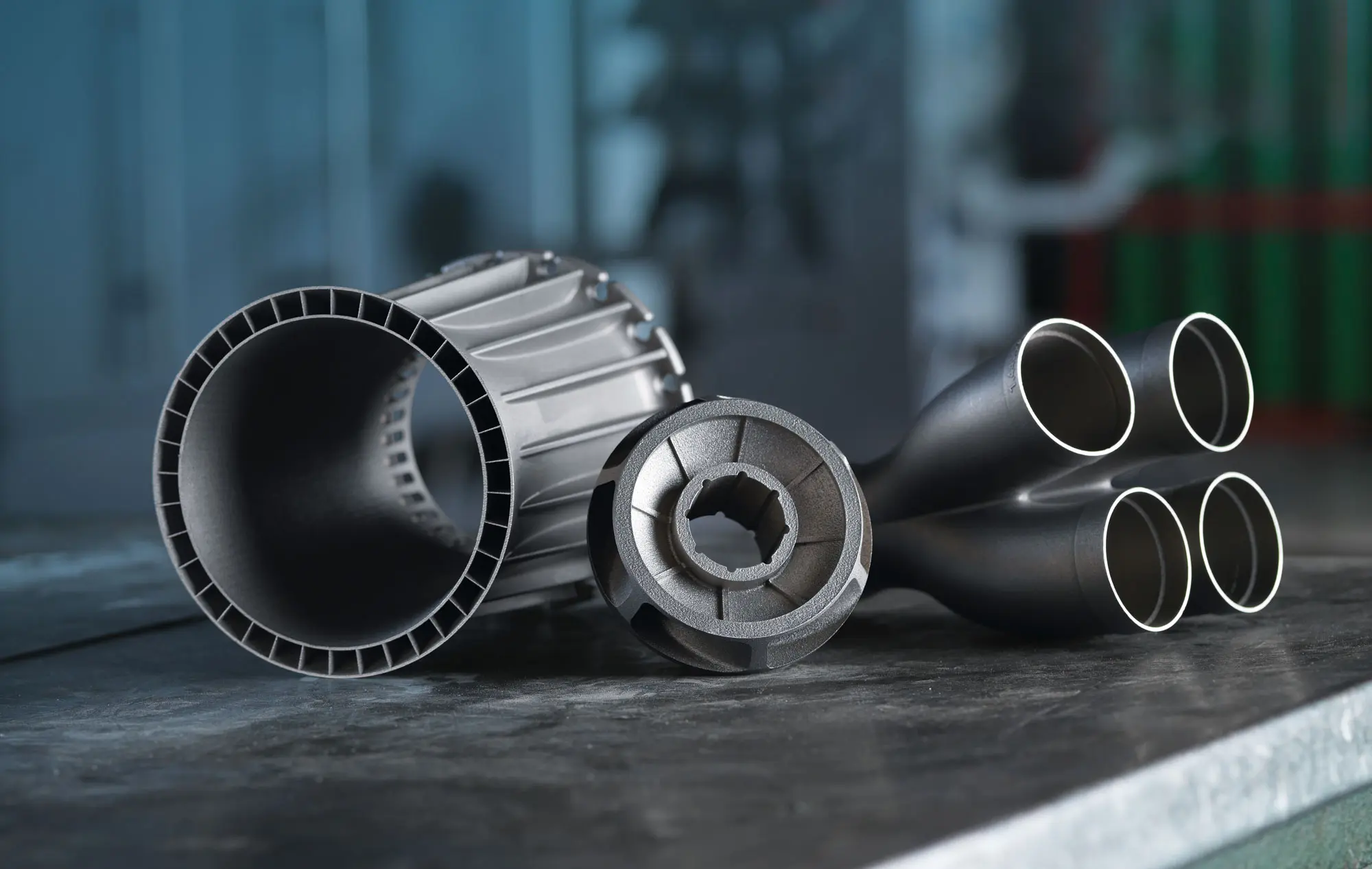
- High Performance Metals (SLM/MJF/Binder Jetting): (Weiguang Specialties) When extreme durability, heat resistance (>150°C), flame retardancy, corrosion resistance or minimal deformation under load are critical:
- Stainless steel (316L): Corrosion resistant, sturdy and food safe. Ideal for outdoor/marine applications.
- Aluminum alloy (AlSi10Mg): Excellent strength-to-weight ratio, thermal conductivity, and good post-printing processability.
- titanium: Ultimate strength/weight ratio, biocompatibility (scratch-resistant inner coating available).
Professionals are faced with the challenge of printing complex hollow structures in the best possible way; expertise is crucial.
- Polymer (FDM/SLS):
- Prototyping and improvements: Iteratively test functional prototypes. Analyze real-world fit, motion stability (simulating bumps/vibrations), usability and reveal design flaws before finalizing structural parameters. metal prototype (Common in GreatLight) performance under extreme conditions is faithfully verified through environmental testing chambers.
Why choose 3D printed custom cup holders?
- Unparalleled Customization: Engineered to perfectly uniquely fit your container and environment.
- speed: Transition from CAD to functional prototype/product, bypassing traditional manufacturing delays.
- Complex geometric shapes: Create complex internal structures (e.g., lattices or conformal cooling paths) that are not possible with traditional machining.
- Cost efficiency: Economical for low-volume/high-value custom parts; eliminates expensive tooling (ideal for metal prototyping where material efficiency is required).
- Material diversity: Choose from plastics to high-performance aerospace alloys with optimized properties.
Unlock expertise: Expert metal prototyping partner
For complex geometries that require functional metal parts – especially where precision engineering determines product feasibility – working with a specialist rapid prototyping manufacturer is critical.
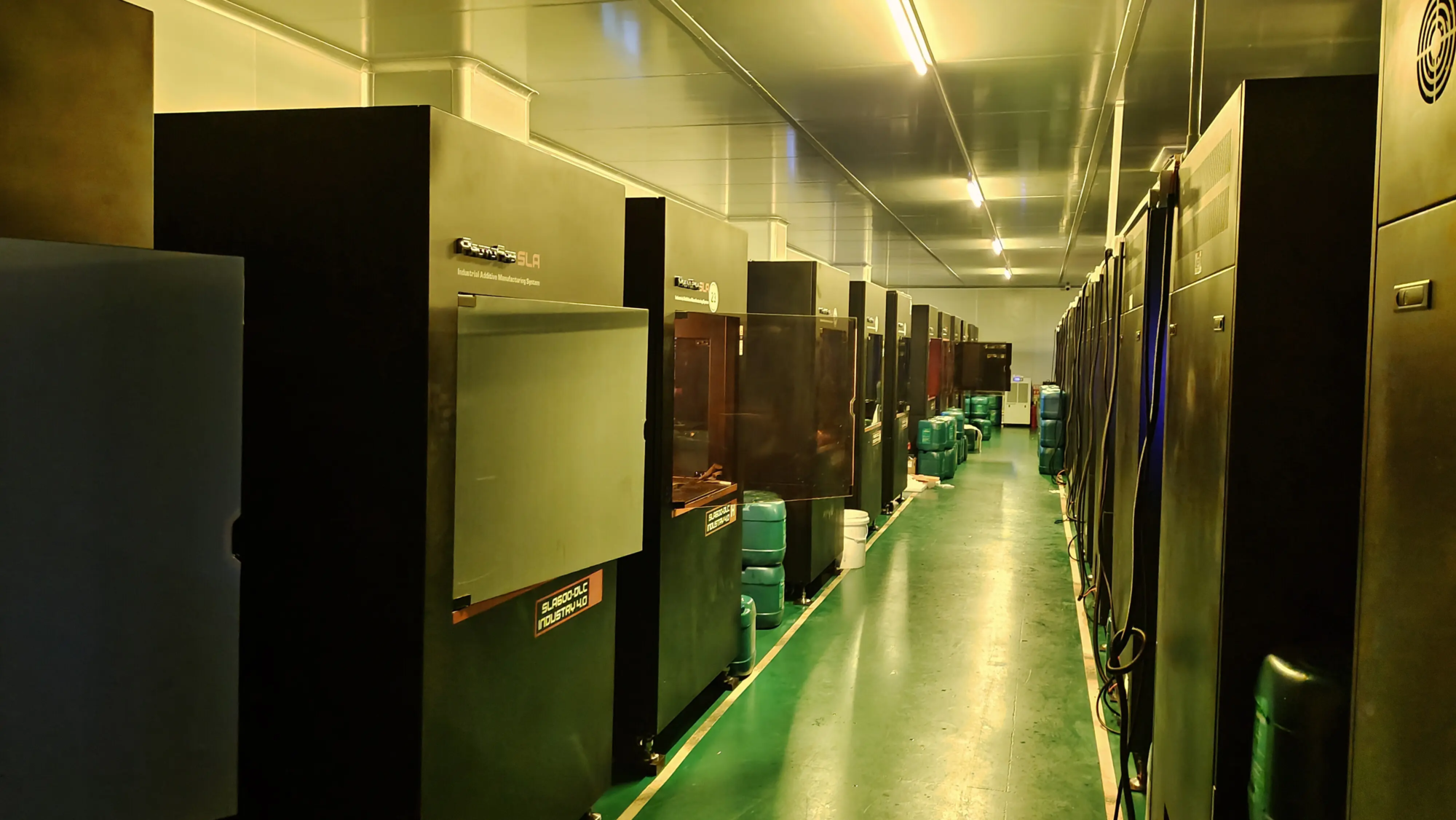
huge light Take advantage of state-of-the-art Selective laser melting (SLM) technologyproviding unparalleled metal additive manufacturing capabilities. Our advanced industrial 3D printers meticulously fuse fine metal powders (stainless steel, aluminum, titanium, Inconel, tool steel) layer by layer under controlled atmospheric conditions. This results in dense, near-net-shape parts with highly isotropic material properties optimized for uncompromising end-use applications.
In addition to printing, GreatLight provides comprehensive one-stop organization:
- Precision CNC post-machining for joining critical surfaces.
- Heat treatment optimization for stress relief/hardening.
- Complex surface finishing: grinding/grinding/polishing/anti-corrosion plating/PVD coating.
- Non-destructive testing (NDT) conformance verification.
as principal rapid prototyping companyGreatLight specializes in expertly solving complex engineering challenges – quickly transforming your concepts into proven functional components at a highly competitive cost. We champion agility without sacrificing quality: work with us on a custom flex cup holder or any precision prototype where uncompromising performance determines success.
in conclusion
Designing and manufacturing custom 3D printed cup holders allows you to permanently resolve worries and precisely enhance functionality. While plastics are adequate for many applications, requirements that induce severe mechanical stress, thermal loads, sterile protocols or critical flame retardancy require professional-grade metal solutions. Strategic integration of industrial additive manufacturing ensures unparalleled fidelity to stringent specifications across diverse industries including automotive, healthcare, scientific instrumentation, heavy industry and more.
Achieving a truly reliable design requires precise collaboration and rigorous engineering verification standards. Prioritize collaborations that faithfully translate creative blueprints into functional products that have been substantively tested under worst-case scenarios.
Ready to turn your cup holder challenge into a perfectly custom reality?
FAQ: Custom 3D Printed Cup Holders
Q: How much does a custom 3D printed cup holder cost?
one: Costs vary based on complexity, size, materials, order quantity and processing needs. Simple plastic stands are affordable to start with. Metal prototyping involves higher material/processing costs but offers superior performance. Working directly with manufacturers like GreatLight optimizes competitive unit pricing through volume discount strategies.
Q: What is the most durable material for car cup holders?
one: PETG plastic is very strong and has high UV/chemical/abrasion resistance. For extreme high temperatures/high loads/maximum life, metals like stainless steel (316L) or aluminum alloys are far superior to polymers in terms of long-term phase stability.
Q: How do I ensure my design prints successfully?
one: Key checks include proper welding geometry tolerances, adding support anchors to prevent warpage during sintering, matching wall thickness to material constraints that are feasible for each technology combined, and effectively incorporating necessary draft angles. Professional DFAM (Design for Additive Manufacturing) evaluation protocols guarantee manufacturability.
Q: Is 3D printed metal food safe?
one: Printing specific stainless steel grades (such as 316L) at full density via SLM produces biocompatible parts that qualify for traditional food processing, where polishing exclusions eliminate bacterial colonization environments. surface