Unleashing the potential: Mastering the design of interlocking parts for 3D printing
In the world of additive manufacturing, creating objects as monolithic structures is not always the goal. Often complex components, large structures or functional mechanisms require components to be built from smaller, cleverly designed components. This is where the art and science of design comes in Interlocking 3D printed parts Sparkling. At GreatLight Rapid Prototyping, we’ve seen firsthand how mastering these designs unlocks the tremendous potential for functional prototypes, innovative products, and complex manufacturing solutions. Let’s dive into the principles, challenges, and best practices of creating parts that snap, slide, twist, and lock together seamlessly.
Why interlock? driving force
Going beyond single-piece printing offers compelling advantages:
- Overcome build size: Additive manufacturing machines have a limited build volume. Interlocking parts allow the creation of structures much larger than the printer bed itself – think architectural models, large-scale art installations or custom tools.
- Functional complexity: Kits that incorporate moving parts, hinges, housings, or user assembly require separate components that interact. The interlocking design ensures these components work reliably together.
- Material diversity: Different parts of the product may require specific material properties (flexible vs. rigid, transparent vs. opaque). Interlocking allows the combination of various materials printed separately.
- Maintenance and repair: The use of interlocking mechanisms makes it easier to design replaceable or repairable subassemblies, thereby improving repairability and extending product life.
- Design flexibility: Breaking a complex model into interlocking parts can sometimes simplify design iterations or modifications to specific parts.
Core Principle: Tolerance is everything (but not the only thing!)
Unlike machined or molded parts that follow standard fits (clearances, transitions, interferences), 3D printing introduces unique variables that require careful consideration:
- Know your printer/materials: This is the most important thing. FDM printers using PLA or ABS exhibit different shrinkage, warping trends, and detail fidelity compared to resin printers (SLA/DLP). Metal printers, like GreatLight’s advanced SLM (Selective Laser Melting) system, are incredibly accurate but still require process-specific margins.
- Rule of thumb: develop For printer Tolerance library. A common starting point for precision FDM printers might be 0.2-0.5mm clearance for a slip fit, while SLM metal parts might start tighter, around 0.05-0.15mm. no way Assume default CAD tolerances apply!
- Gaps and interference: Intentional clearance (positive clearance) is critical for interlocking components that require relative movement (sliders, hinges). For press or snap fits, intentional interference (negative clearance) is used. Find out which one you need!
- Layer direction effects: Layer lines introduce anisotropy. Measurements pass through Layers (XY plane) are often more accurate than measured dimensions along Z axis (build direction). Interlocking features that run parallel to the layers (such as sliding dovetails in XY) generally behave more consistently than interlocking features that rely heavily on Z-axis accuracy.
- Calculation of expansion and warpage: Materials expand when printed thermally and shrink when cooled. The resin cures and shrinks significantly. Uncontrolled warping can cause features to lose alignment. The interlocking design is strong enough to withstand minor deviations.
- Surface treatment and post-treatment: Printed surfaces, especially FDM, have texture. For mating surfaces that require smooth sliding (such as shafts in bearings), you must consider post-processing, such as machining, grinding, or steam smoothing, in the initial clearance design. Anticipated material removal.
Design patterns for secure connections:
Choosing the correct locking mechanism depends on the required strength, durability and assembly sequence:
- Snap-on type: A workhorse for quick assembly/disassembly. A strategic cantilever design is required. Calculate bending stress to avoid fracture:
- hook up: Simple and strong, requires deflection during assembly.
- cantilever: Provides a controlled deflection path. Includes stress relief features (rounded corners!) and designed for multiple cycles if desired.
- Ring/bayonet: Typically provides better load distribution than a single hook.
- Dovetail and T-slots: Ideal for achieving stiffness and shear-resistant alignment. Careful slope angle (usually 45-60°) and clearance design are required. Ideal for assembling large panels along linear paths.
- Mortise and tenon: Classic woodworking joints transformed into additive manufacturing. Provides excellent stiffness. Design mortise walls that are slightly tapered or incorporate conformable features to allow for easier insertion.
- Living hinge: Ultra-thin sections allow for repeated bending. Material selection (flexible resin, PP, nylon) is critical. The hinge thickness is precisely designed based on the material’s flexural modulus and fatigue resistance.
- Threaded joint: Printed threads are available for larger pitches/resolutions. Design a strong root/top and consider using metal inserts for high stress or frequent threading applications.
- Press fit: Deliberate interference provides friction-based locking. Critical for pin/busting. Material elasticity factor. SLM metal parts excel in this regard due to their material strength and precision.
Software tools and simulations:
Modern CAD tools simplify interlocking design:
- Parametric CAD: Essential for iterative tolerance adjustments (Solidworks, Fusion 360, Creo). Easily modify global permissions.
- Assembly tools: Properly constrain parts in CAD assemblies to simulate motion and interference checking forward print.
- FEA (Finite Element Analysis): It is critical to predict stress concentrations in cantilevers (snap fits, living hinges) to ensure that forces during assembly/use do not cause failure.
- CAM/Slicer Verification: Preview slice layers to ensure complex locked geometry renders correctly at the layer height you choose. Avoid using unsupported features in delicate interlocking areas.
Implement complex interlocks with professional prototyping services
Designing successful interlocking components goes beyond theory. Achieving reliable, fully functional components requires expertise across materials, complex processes, precise finishing and rigorous testing.
This is where working with experienced rapid prototyping experts such as huge light become priceless:
- Deep materials and process expertise: We understand how dozens of printable plastics, resins, and metals perform during printing and post-processing. Our engineers integrate this knowledge directly into Design for Manufacturability (DfAM) feedback, providing recommendations on optimal tolerance, orientation and clearance strategies Depends on your material selection and printer type.
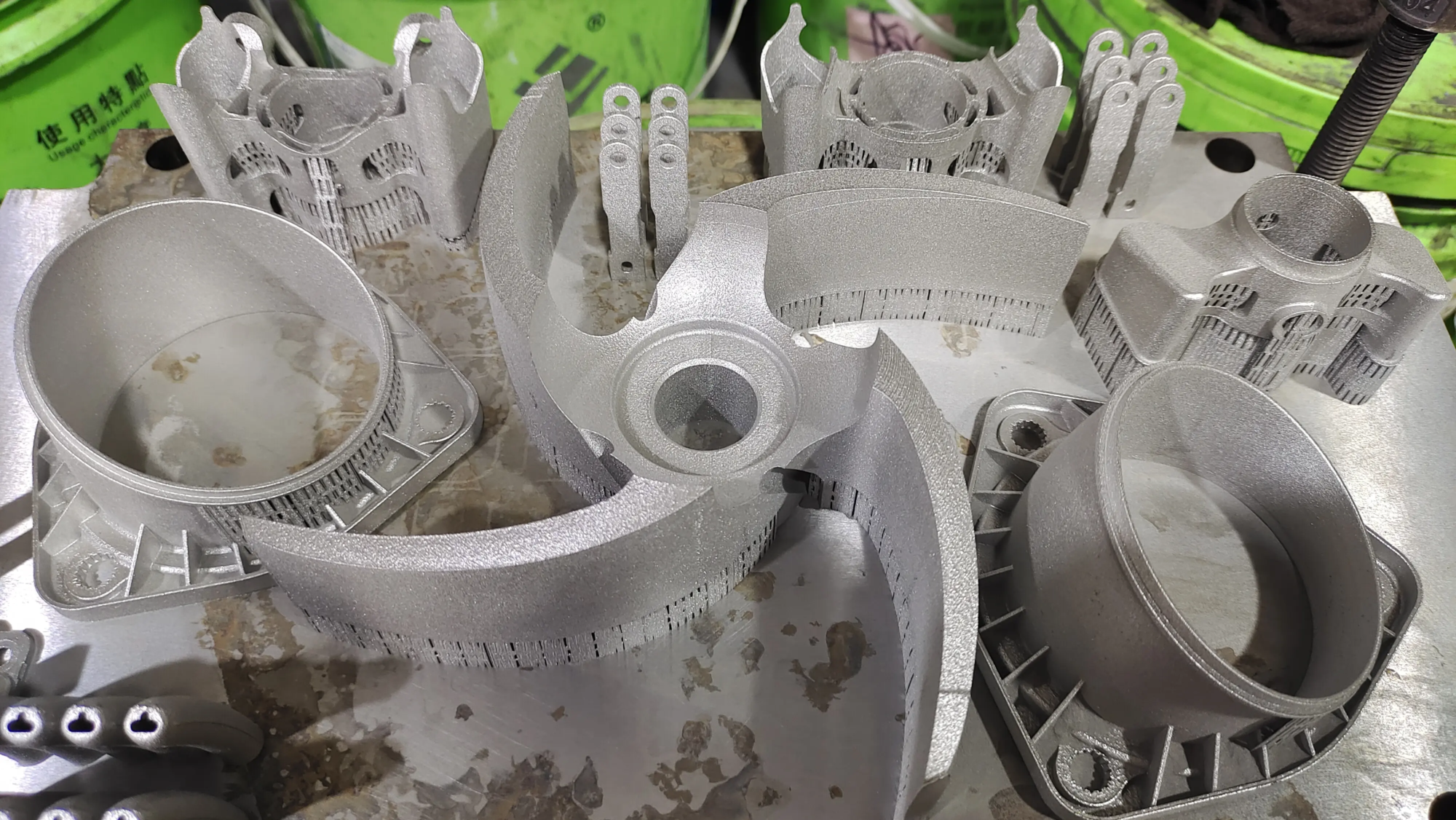
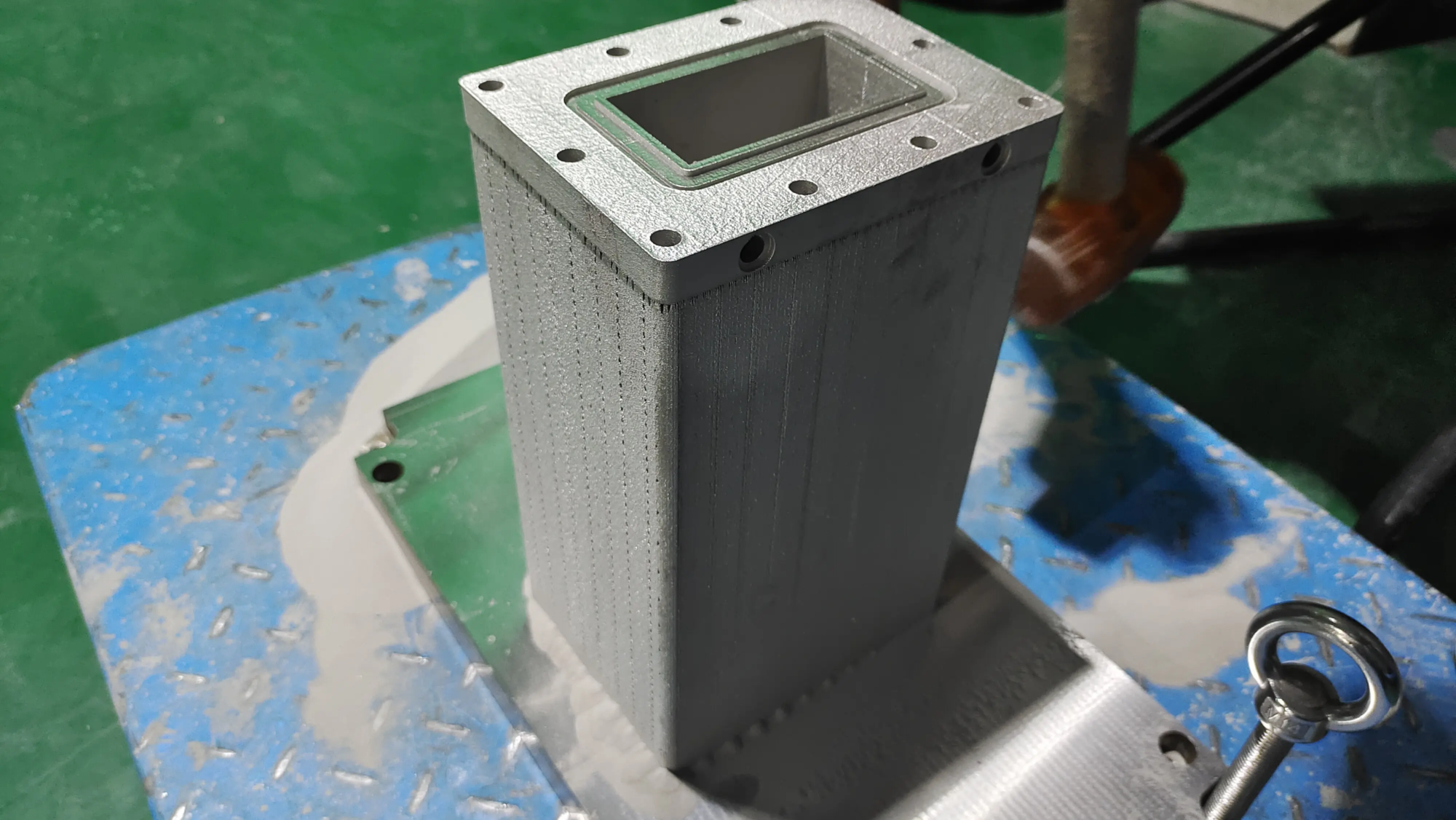
- High-precision production: Take advantage of advanced SLM 3D printing technologyGreatLight produces metal interlocking parts with superior dimensional stability and surface integrity, which is critical for tight tolerance slip fits, press fits and mechanisms requiring repeatability.
- Comprehensive post-processing: Printing double-sided fabrics often requires special finishing:
- Critical mating surfaces may require precision machining or grinding to achieve smooth interaction.
- Support removal must be done with care to avoid damaging the delicate snap features.
- Heat treatment (for metals) or enhanced UV curing stabilizes the part.
- Surface treatments such as polishing or plating can change the coefficient of friction that is critical to moving joints.
- Rigorous inspection and testing: We verify fit and function. Using coordinate measuring machines (CMM) and functional assembly testing, we ensure interlocking parts meet specified tolerances and function as expected before shipping.
- Prototyping speed and scalability: Need quick iterations to refine tolerances? Start with resin or FDM for quick feedback, then seamlessly transition to production-grade metals such as titanium or aluminum alloys on our SLM systems. GreatLight efficiently manages the entire process.
Conclusion: Precision unlocks possibility
Designing effective interlocking 3D printed parts requires a synergy between geometry, materials science, process understanding and precision manufacturing. It’s not just about creating shapes; it’s about engineering interactive Precisely. By employing core principles such as tolerance customization, leveraging basic locking mechanisms, leveraging simulation tools, and conducting iterative physical testing, designers can create robust, functional components and unlock designs previously limited by printer size or manufacturing limitations.
For mission-critical interlocking components, especially demanding metals that require high strength and tight tolerances, leveraging specialized prototyping expertise is critical. exist huge lightwe combine cutting-edge SLM technologydeep materials knowledge and extensive finishing capabilities transform your complex interlocking designs into flawless, high-performance realities. We don’t just print parts; We build functional components designed to succeed.
FAQ: Designing Interlocking 3D Printed Parts
Q: What is the biggest mistake beginners make in interlocking design?
one: Apply common tolerances regardless of them specific Printer, materials and directions. Always test and calibrate the tolerances of your setup or work with your manufacturing partner early on.
Q: Can I reliably print feature lines?
one: Yes, especially on a resin printer or a metal SLM printer like the GreatLight. Use coarse threads (M6+) and design vertical threads (parallel to the printing plate