Breathing new life into performance: Designing a 3D printed intake manifold
The intake manifold is often referred to as the intake manifold of the engine "respiratory system." Its key job is to distribute air (or air/fuel mixture) evenly to each cylinder, directly affecting power output, efficiency and throttle response. Traditionally made from cast aluminum or molded composite materials in a lengthy and expensive process, these components are now ripe for innovation. Additive manufacturing (3D printing), especially metal 3D printing, is transforming intake manifold design from a compromise to the pinnacle of precision engineering. Buckle up and let’s discover how this technology can deliver unprecedented performance improvements.
Why 3D printing is revolutionizing air intake design
The limitations of traditional manufacturing methods—cast molds, machining limitations, welding limitations—often force designers to compromise functionality. 3D printing breaks down these barriers and enables Thoroughly optimized:
- Optimized fluid dynamics: Imagine intricate internal channels carved not for ease of casting, but purely for laminar flow and speed. 3D printing enables complex geometries previously thought impossible—helical paths, converging/diverging sections, mathematically optimized curves—that minimize turbulence and pressure drop, resulting in peak airflow and efficiency.
- Complete weight loss: Lighter components mean better power-to-weight ratio and fewer parasitic losses. Metal printing enables lattice structures, topology optimization and complex internal channels, resulting in significant weight savings compared to large castings while maintaining structural integrity and rigidity.
- Enhanced thermal management: Carefully routed internal channels allow for integrated coolant channels, ensuring consistent inlet air temperature within the cylinder for more predictable combustion and power delivery.
- Integrated features: Individual sensor mounts, throttle body flanges, and even integrated ducting can be integrated into a single printed structure. This simplifies assembly, reduces potential leak points, and increases overall system robustness.
- Rapid prototyping and customization: Testing radical designs became feasible overnight. Performance tuning is accelerated and manifolds customized for specific engines (racing, modified engines, niche applications) are economically feasible, eliminating the need for "the most suitable size" compromise.
Material Selection: Strength Under Pressure and Heat
Intake manifolds are exposed to thermal cycling, vibration and manifold pressure. Material selection is crucial. Metal 3D printing (additive manufacturing), specifically Selective Laser Melting (SLM), excels in:
- Aluminum alloy (e.g. AlSi10Mg): First choice for intake. Offers excellent strength-to-weight ratio, good castability that mimics traditional parts, high thermal conductivity and corrosion resistance. Ideal for complex geometries where lightweight durability is important. SLM can achieve near full density, comparable to cast performance.
- Titanium alloys (e.g. Ti6Al4V): For ultra-high performance or weight-critical applications (motorsports, aerospace). Excellent strength, corrosion resistance and biocompatibility, but much more expensive than aluminum. Its high melting point requires advanced printing expertise.
- High temperature nickel alloy/stainless steel: Sometimes used in extreme environments (turbo inlet, high boost applications), but usually overkill for standard intake manifolds.
Key Design Considerations for Success
Design for Additive Manufacturing (DfAM) requires a paradigm shift:
- First perform a flow simulation: Computational fluid dynamics (CFD) isn’t an afterthought; it’s starting point. Iterate continuously to achieve perfect flow paths, port shapes, plenum volumes, and runner length/taper forward Printing starts. Optimize volumetric efficiency and velocity distribution.
- Wall thickness and self-supporting: Defines the minimum wall thickness achievable with your chosen printer/material (metal SLM is typically around 1 mm). Design angles (>45° from horizontal) minimize or eliminate the need for sacrificial support structures within critical airflow channels.
- Support structural strategies: Drapes require external support. Design with specific support removal methods in mind. Designed with convenient mounting points and strategic geometries to minimize complex support and post-processing challenges.
- Stress analysis: While topology optimization helps reduce weight, finite element analysis (FEA) ensures the lightweight structure can withstand engine vibrations, mounting stresses and potential impacts. Pay special attention to flange bolt patterns and mating interfaces.
- Surface treatment requirements: The roughness of the inner surface directly affects airflow. Decide early on what surface treatment is required. Would the interior benefit from machining/polishing for ultimate flow, or could "at the time of printing" Is that enough? Factor this into design tolerances and sealing/mating surfaces.
- Integration points: Precisely designed mounting bosses, sensor ports (MAP, IAT), injector plugs and throttle body interface. Consider thermal expansion mismatch with add-on components.
The GreatLight Advantage: Critical Expertise
Designing and manufacturing a high-performance, reliable 3D printed intake manifold requires more than just a printer. exist huge lightwe combine Advanced SLM 3D printing technology Have deep engineering and manufacturing expertise to unlock the full potential of additive manufacturing for your project:
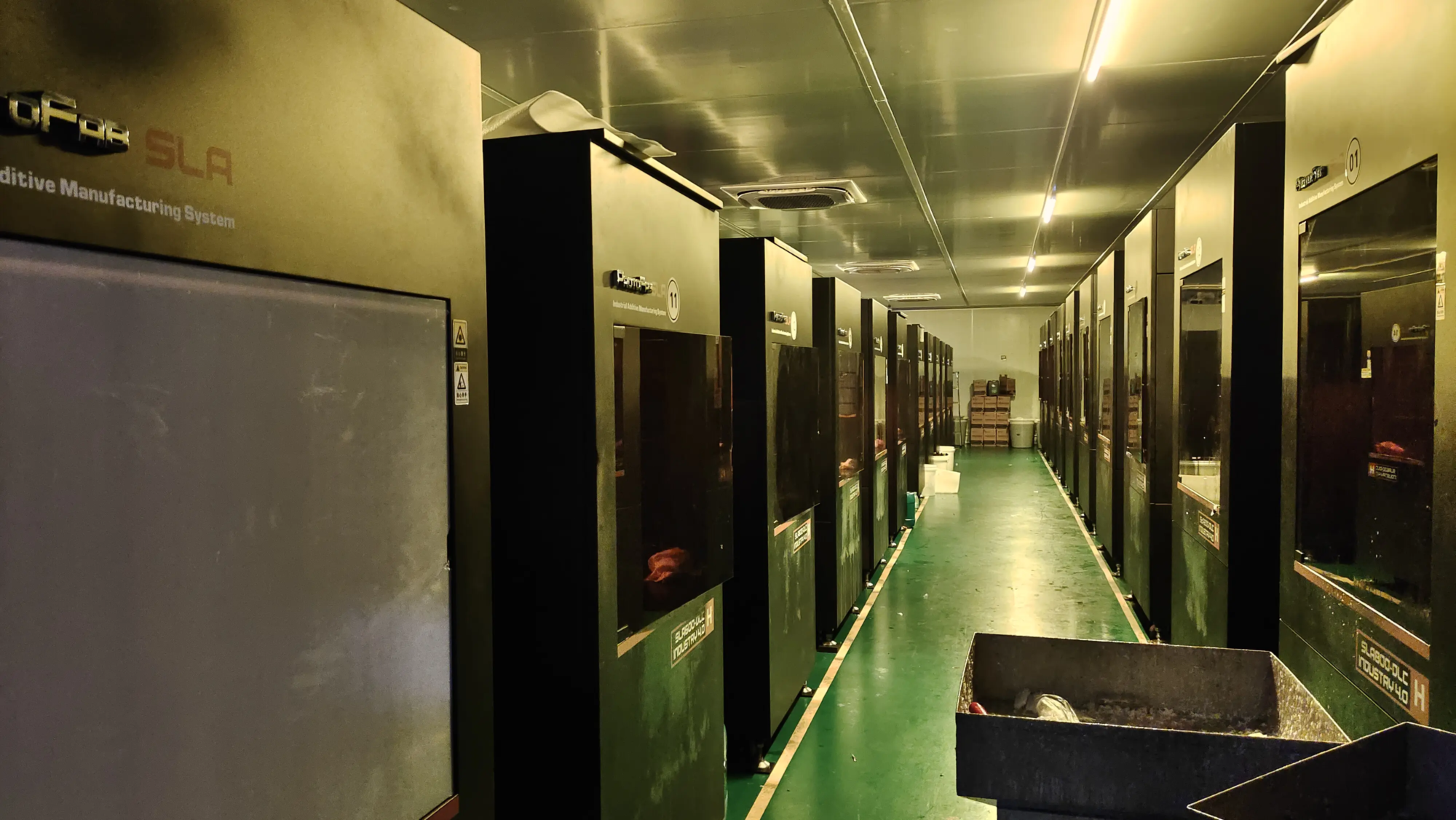
- Advanced Metal SLM Armory: Our state-of-the-art selective laser melting equipment delivers superior resolution, repeatability and material properties for demanding air intake applications. We push the boundaries of complexity with aluminum, titanium and specialty alloys.
- Manufacturing Partner Design: Our engineering team specializes in DfAM for automotive components. We work closely with you to leverage CFD/FEA expertise to translate your performance goals into manufacturable optimized designs that address complex airflow optimization and structural challenges.
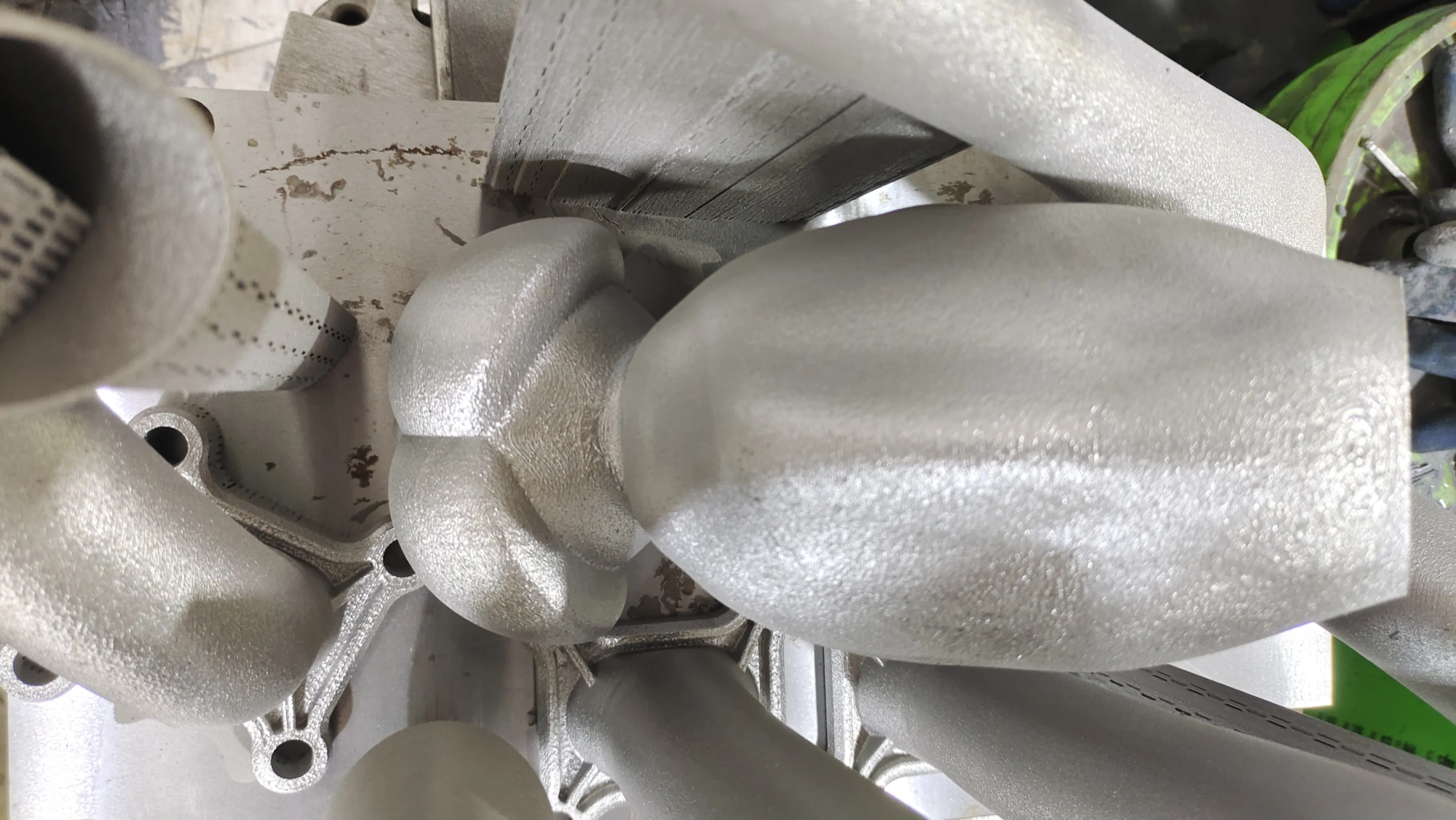
- Comprehensive post-processing: "Print" This is just the first step. provided by Glow Professional one-stop post-processing: CNC machining of critical interfaces and sealing surfaces, precision polishing of internal channels, specialized smoothing techniques (e.g. steam smoothing), vacuum heat treatment (solution treatment and aging of aluminum) and various surface treatments (sandblasting, anodizing). This ensures perfect dimensions and perfect functionality.
- Excellent rapid prototyping: Test iterations quickly and confidently with our streamlined process. Dramatically reduce development time from concept to proven components.
- Scalable metal production: Whether you need a single prototype or low-volume production, our capabilities can bridge the gap.
Beyond printing: post-processing to perfection
The journey to 3D printing a manifold doesn’t end on the printer bed. Post-processing is absolutely critical for functionality and durability, and this is an area where GreatLight excels:
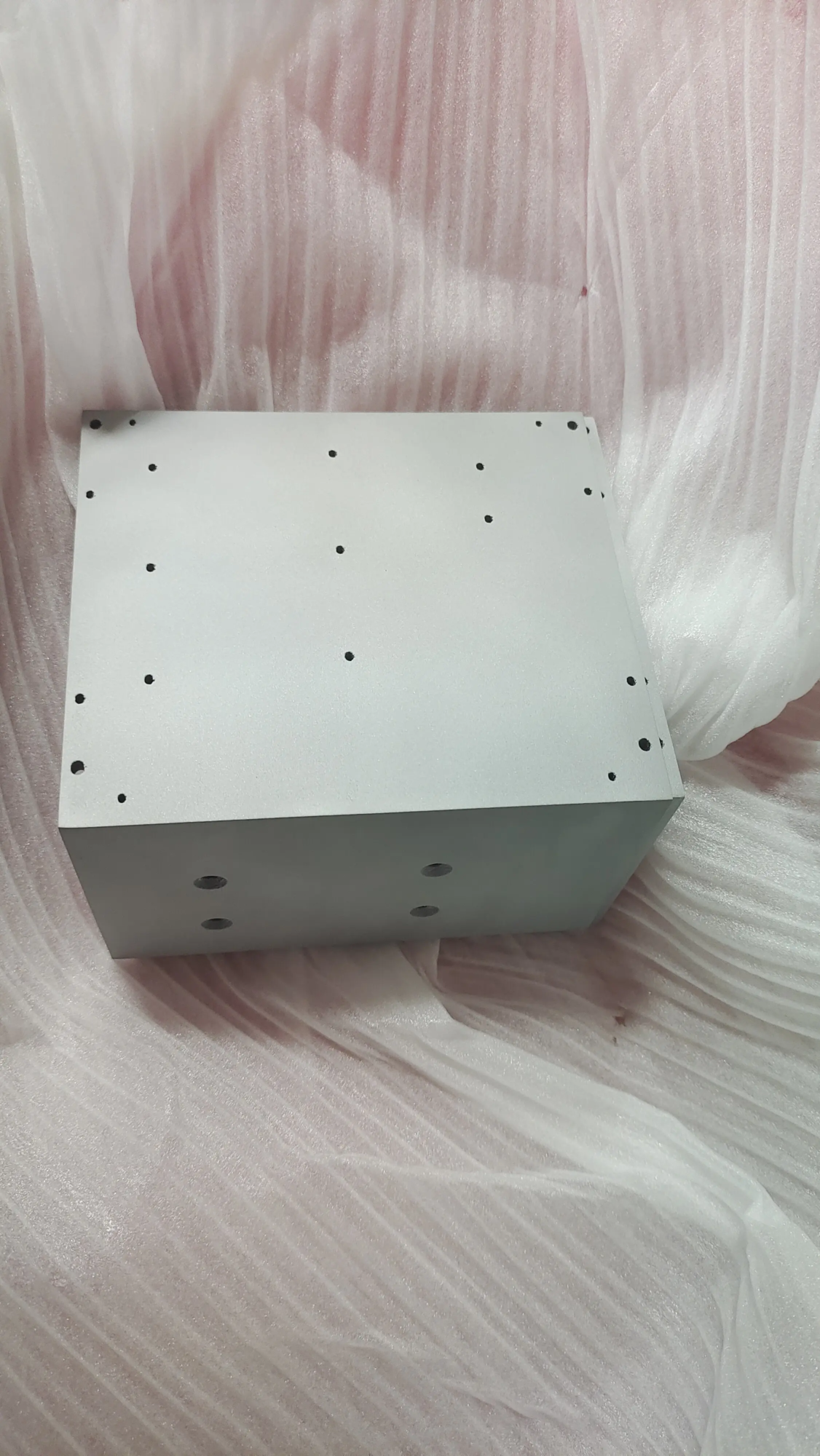
- Key processing: Sealing surfaces (gasket faces), flange bolt holes, throttle body mounts and injector ports require CNC machining to achieve the necessary flatness, surface finish (Ra), dimensional tolerances (extremely tight) and verticality. This is non-negotiable for sealing and assembly.
- Internal channel finishing: Smoothing internal channels (via tumble grinding, CNC hole finishing, chemical polishing, honing or flow polishing) greatly reduces air resistance – which is often the number one reason for choosing additive manufacturing. GreatLight specializes in complex interior geometries.
- Heat treatment: Most aluminum alloys benefit significantly from T6 heat treatment (solid solution heat treatment followed by artificial aging) applied in specialized vacuum furnaces. This maximizes strength, durability and minimizes residual stress.
- Residual powder removal: Ultrasonic cleaning and specialized technology ensure complete removal of residual powder from complex internal cavities, which is vital to the health of the engine.
- Surface enhancement: Anodizing (aluminum hard coating) increases surface hardness and corrosion resistance. Sandblasting creates a uniform aesthetic.
in conclusion
3D printing, and specifically metal additive manufacturing via SLM, represents a fundamental shift in intake manifold design and production. It enables engineers to transcend the limitations of casting and welding to create manifolds optimized for airflow dynamics, weight reduction, thermal management and integration like never before. The results are clear: more power, greater efficiency, and unprecedented customization capabilities.
However, harnessing this potential requires specialized expertise. From complex CFD/FEA-led design thinking to mastering SLM process parameters and advanced multi-stage post-processing – success depends on working with a skilled supplier. At GreatLight, we bring together cutting-edge SLM technology, deep engineering acumen and extensive finishing capabilities. We don’t just print parts; We specialize in solving complex manufacturing challenges, delivering high-performance, reliable air intake solutions – accelerating your innovation from prototype to precision production. Ready to breathe new life into your engine performance? Discover what you can achieve by optimizing airflow.
FAQ – Design and Production of 3D Printed Intake Manifolds
Question 1: Are 3D printed metal intake manifolds actually stronger than cast intake manifolds?
A1: Yes, it is possible. Aluminum alloy parts produced by SLM (such as AlSi10Mg) can achieve material densities exceeding 99.5% and fine microstructures, often resulting in superior mechanical properties (tensile strength, yield strength, fatigue life) compared to some castings. However, careful design (combined with FEA analysis) is still critical.
Question 2: How much weight savings can I realistically expect compared to a cast manifold?
A2: Weight can be reduced using topology optimization and clever design of internal lattice 20% to 40% or more while maintaining equivalent or improved stiffness. Significant reductions depend largely on the complexity achieved and the design of the baseline casting.
Q3: Can you make a fully functional runner/plenum with internal cooling channels?
A3: Of course! This is a key advantage. SLM excels at creating sealed internal channels that cannot be machined. These efficiently deliver coolant to strategically cool the intake air temperature throughout the plenum or runner for improved performance consistency.
A4: How smooth do the inner surfaces need to be to ensure airflow?
A4: Smoothing is generally better at reducing turbulence and boundary layer drag. although "at the time of printing" Metal surfaces (Ra ~10-30μm) flow better than rough castings, and critical applications such as racing can benefit greatly from specialized in-house finishing that reduces roughness (Ra) to <1-5μm.
Question 5: Is 3D printed manifold suitable for high boost forced induction engines?
A5: Yes, with sturdy design and material selection. Aluminum alloys such as AlSi10Mg are commonly used in boost applications. The highly optimized design verified by FEA proved feasible. High boost/high heat applications may use nickel alloys or titanium.
Question 6: What post-processing is essential for a functional intake manifold?
A6: Critical post-processing includes: CNC machining of all sealing surfaces and critical interfaces to tight tolerances; thorough removal of residual powder (especially internally); heat treatment (required for aluminum); smoothing/polishing of internal airflow channels; surface treatments such as anodizing to improve corrosion resistance; rigorous cleaning/testing.
Q7: How does Honglaite ensure dimensional accuracy and leak-proof sealing?
A7: Through strict process control on the SLM printer, all gasket surfaces, flanges and ports are precisely CNC machined, with geometric tolerances typically within ±0.05 mm (±0.002"), meticulous seal surface flatness control, pressure testing capabilities, and expert assembly guidance on using the correct seals/RTVs.
Q8: Is prototyping required first?
A8: Highly recommended. Functional prototypes allow for physical verification of fittings, airflow characteristics (bench testing), structural integrity under simulated loads prior to submission of final material/print setup. GreatLight’s rapid prototyping greatly shortens this iteration cycle.