Bringing prehistoric giants to life: The magic of 3D printed dinosaur models
Dinosaurs capture our imagination like no other creature. From the towering T. rex skeleton to the intricate details of the velociraptor claws, these prehistoric giants are awe-inspiring. But what if you could go beyond static images or mass-produced reproductions? Enter the world Dinosaur print: Using advanced revolutionary methods 3D printing technology Animate museum exhibits, film productions, educational tools, and even custom collections with stunning realism and scientific accuracy.
Why 3D printing dominates dinosaur creations
Traditional modeling methods often struggle to cope with the complexity and scale of dinosaurs. 3D printing solves this problem by offering unparalleled advantages:
- Unparalleled intricate details: Fossil scans or CAD models from paleontological data can be transformed into prints that capture every nuance—bone texture, tooth serrations, muscle attachment points—that cannot be consistently replicated by hand. SLM (Selective Laser Melting) technology, especially for metal parts, allows precise processing of complex internal structures such as spines or lightweight bone components.
- True scientific fidelity: For museums and researchers, accuracy is critical. 3D printing directly replicates CT scans of actual fossils, allowing for faithful reconstructions of bones, scaled models for research, or replacement of fragile specimens.
- Completely customizable: Need a feathered Deinonychus? An enlarged compsognathus? Or a dinosaur skeleton articulated in a specific pose? 3D printing allows for complete customization of size, pose, materials and even inferred features based on customer specifications or the latest paleontological research.
- Speed and Efficiency – Rapid Prototyping Capabilities: Developing a museum exhibit or movie prop traditionally takes months. rapid prototyping Advanced printers greatly reduce time. Rapidly iterate designs, test assembly mechanisms, and produce final displays or production-ready parts in days or weeks instead of months.
- Material Versatility: Dinosaur applications require a variety of materials:
- Plastic (SLA/FDM): Ideal for detailed, lightweight prototypes, educational models, or cost-effective presentations.
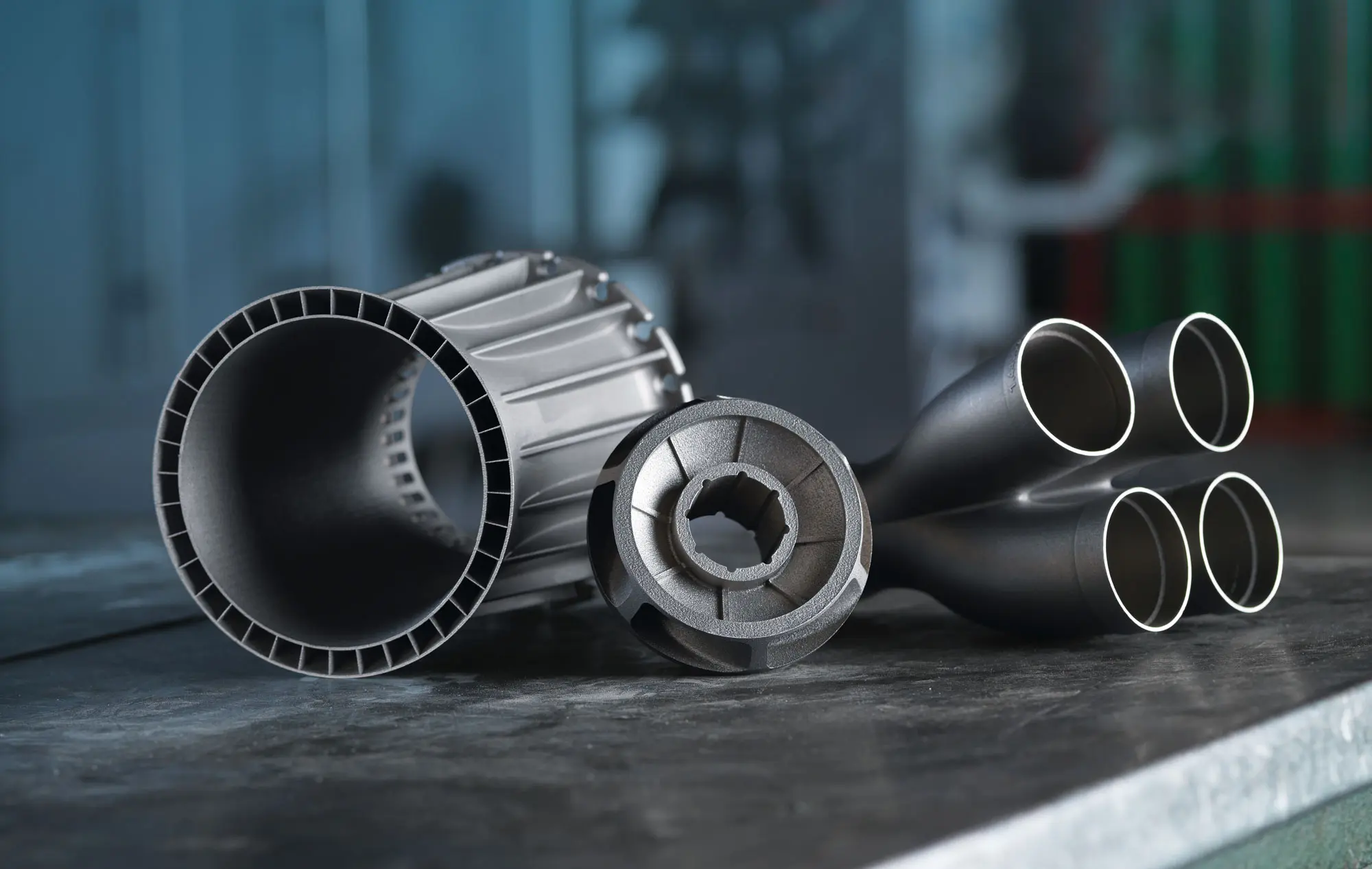
- Metals (SLM – Aluminum, Titanium, Steel): Ideal for well-structured articulated skeletons, durable outdoor exhibits, functional joints, or high-strength movie props that require flexibility. SLM excels at handling complex internal geometries.
- Castable resin: Complex molds used to create bronze sculptures or large reproductions.
- Polymers that simulate tissue: Used for skin texture or muscle reconstruction in photorealistic displays.
GreatLight: Your Titanosaurus-Sized Dinosaur Creation Companion
Transforming digital dinosaurs into tangible, stunning realities requires expertise, cutting-edge technology and meticulous craftsmanship. where is this huge light Sparkling.
as a leading rapid prototyping manufacturerGreatLight specializes in transforming complex design challenges into flawless physical realities – including spectacular dinosaur projects:
- Advanced SLM Power Source: We use the most advanced technology SLM 3D printerspecially designed for high-precision metal parts. When your dinosaur skeleton frame, mounting hardware or metal internal components require unparalleled strength and dimensional accuracy in complex geometries, our SLM technology can meet your needs. Pure metal powders are fused layer by layer using powerful lasers to form dense, strong parts ideal for structural applications.
- Material mastery and customization: We’re not limited to metal. We deal in a wide range of polymers and specialize in Custom material solutions. Do you need bone-like bioresin? Weatherproof nylon for outdoor display? Proprietary metal alloy? We work together to find or identify the best materials for the functionality, aesthetics, and environment of your specific dinosaur project.
- Seamless one-stop service: GreatLight eliminates the hassle of managing multiple vendors. We offer comprehensive One-stop post-processing and finishing services. From necessary support removal and heat treatment (crucial for metal SLM parts) to fine sandblasting, complex hand finishing, expert painting (scientific color schemes, realistic skin textures, artistic tones), assembly and installation engineering – we handle it all from a single source. Your fully finished, ready-to-mount Tyrannosaurus Rex skull or Brachiosaurus femur arrives exactly as expected.
- The combination of speed and precision engineering: Leverage reality rapid prototyping Methodology, we are not sacrificing Precision machining quality. Need multiple quick iterations for articulation? Or a quick full-size replica for an upcoming exhibition? Our efficient workflow and expertise ensure on-time completion and excellent results.
- Solve unique challenges: We thrive in complex environments Rapid prototyping issues. Whether designing lightweight structures for suspension, manufacturing parts several meters in size, developing functional joints that mimic biomechanics, or replicating fragile fossils for transport, our deep technical expertise can provide solutions.
Where do dinosaur prints roam? Endless applications
The applications for 3D printed dinosaurs are wide and growing:
- Museums and paleontology: Create extremely accurate skeletons, interactive displays, tactile models for the visually impaired, fossil replicas for handling/research, and specimen holders. Metal SLM parts are critical for structural support.
- educate: Generate durable, affordable classroom models (such as skull cross-sections), lecture scale models, functional kits demonstrating movement, and even augmented reality triggers.
- Film, TV and Theme Parks: Produce high-detail, flexible props, animated components, sculptural elements, and scenic pieces that can quickly adapt to design changes. Metal printing is the key to a strong mechanism.
- Collections and Artwork: Produce highly detailed limited edition sculptures, custom bone replicas, unique jewelry or custom display pieces for enthusiasts and artists.
- Research and development: Prototype new exhibition concepts, test joinery systems, model soft tissue reconstructions on printed bones or develop educational toys.
Conclusion: Towards the future of paleontology and display
3D printing, especially advanced SLM technology, has fundamentally changed the way we interact with and understand dinosaurs. It bridges the gap between digital