Keep Your Machine Running Smoothly: A DIY Guide to 3D Printing Belt Tensioners
Does your 3D printer sound like it’s playing a haunted tune? Maybe your CNC router seems slightly less precise than before? An often overlooked culprit is improper belt tension. Too loose and you’ll get bounce and skip steps; too tight and you’ll put stress on components, accelerate belt wear, and burn out the motor. Achieving Goldilocks Tension Zone – "Just right" – Crucial. Enter the DIY Belt Tensioner Guide! This article will guide you through why tensioning matters, how a simple 3D printed guide can revolutionize your daily maintenance routine, and how to make your own.
Why belt tension is non-negotiable
The belt (timing belt, GT2, HTD, etc.) is the vital tendon that transmits the motion of the stepper motor to the shaft. Their tension directly affects:
- Accuracy and precision: A loose belt creates backlash—a tiny lag between motor movement and actual shaft movement. This can wreak havoc on dimensional accuracy and surface finish.
- Printing/processing quality: Skipped steps due to loose belts appear as layer shifts in printing or missed steps in CNC machining. Over-tensioning can cause vibrations that degrade surface finish.
- Component life: Excessive tension can put tremendous stress on the motor bearings, idler pulleys, and the belt itself, causing premature failure.
- Noise and Vibration: Improper tension can significantly increase operating noise and vibration.
Traditionally, setting tension has relied heavily on feel or sound—subjective approaches prone to inconsistencies. Belt tensioner guides provide standardized reference points.
Unleashing the Power of 3D Printing: Design Your Guide
The charm of DIY lies in customization. While there are tons of designs available on platforms like Thingiverse or Printables, understanding the core principles enables you to adapt or design your own:
- Function: At its core, the guide acts as a calibration deflector. You apply a force to the midpoint of the belt span, causing it to deflect a specific distance (
d), and measure the force (F). thisFRelated to tension. - Design points: Guidelines must:
- Always fit the belt path of the printer/machine (usually between the two idlers).
- Have precise measurement markings (e.g., 1 mm spaced grating lines).
- Include a clear center point for force application (hook, hole).
- Stiff enough not to bend significantly under measured forces (usually <10N).
- Material selection: While PLA is common in prototyping, for longevity and accuracy, consider the following:
- Polyethylene glycol: It has excellent impact resistance, moderate rigidity and good inter-layer adhesion.
- ASA/ABS: Higher temperature stability and toughness.
- Nylon (PA6/PA12): Excellent toughness and abrasion resistance, ideal for harsh environments where careful printing is required.
- Reinforced filament (such as CF-PETG, GF-nylon): Enhanced stiffness and dimensional stability for demanding applications.
- Printing tips:
- direction: Print flat on the bed for maximum strength in the XY plane (deflection force pressing down). Avoid upright orientations that tend to cause layer separation.
- Filling and walls: 40-60% padding (gyroid generally balances strength and weight) and 3-4 girth are ideal for stiffness.
- Floor height: Medium (~0.2mm) provides a good balance of strength/speed/surface detail.
- calibration: Make sure your extruder steps and flows are calibrated to ensure dimensional accuracy – this is critical for measuring marks.
Build Confidence: Your DIY Tension Workflow
- Find and print: Choose a reputable design for your conveyor type/path, or design a model for your own. Choose your filament and print.
- Cleaning and Preparation: Remove the supports and lightly sand the sharp edges if necessary. Make sure the markings are clear.
- Temporary installation: Place the rail halfway between the two fixed idlers/anchors on the belt span. It should not be installed permanently.
- Measuring deflection: Hang a calibrated dynamometer (a small luggage scale or a digital hanging scale works well) over the center point of the guide. Slowly apply force perpendicular to the belt span until the belt deflects to the rail’s designated measurement mark (e.g., 5 mm, 10 mm).
- Recording power: attention(
FIndicated in Newtons) when the belt contacts the mark. - Consulting specifications: Compare
FDepending on the manufacturer’s recommendations or community standard values for your belt type (for example, Gates recommends a GT2 belt with a deflection width of approximately 0.24 N/cm per millimeter). For the same deflection, a smaller belt requires less force than a wider belt. - Adjust and repeat: Tighten or loosen the belt tensioner (usually the idler pulley screw). Retest until
FBelongs to the recommended range. - Security tweaks: Tighten all locking mechanisms without significantly changing tension. Check carefully
F.
Why DIY? When to Consider Professional Level?
This DIY guide provides hobbyists and tinkerers with low-cost, customizable solutions for dramatically improved accuracy. It’s ideal for desktop FDM printers, CNC routers, and many smaller machines.
However, DIY also has its limitations:
- Complex mechanism: Designs involving torsion springs, fine thread adjustments or integrated bearings are difficult to reliably replicate with FDM.
- Demanding environment: Machines operating under high sustained loads, temperatures or requiring absolute accuracy often require more robust solutions.
- Material restrictions: Standard filament cannot match the strength-to-weight ratio, abrasion resistance or thermal stability of metal.
- Critical accuracy: Applications where failure can have serious consequences require engineered components.
Closing the gap through precision manufacturing
This is where working with professional rapid prototyping manufacturers e.g. huge light become priceless. Our expertise goes far beyond FDM prototyping:
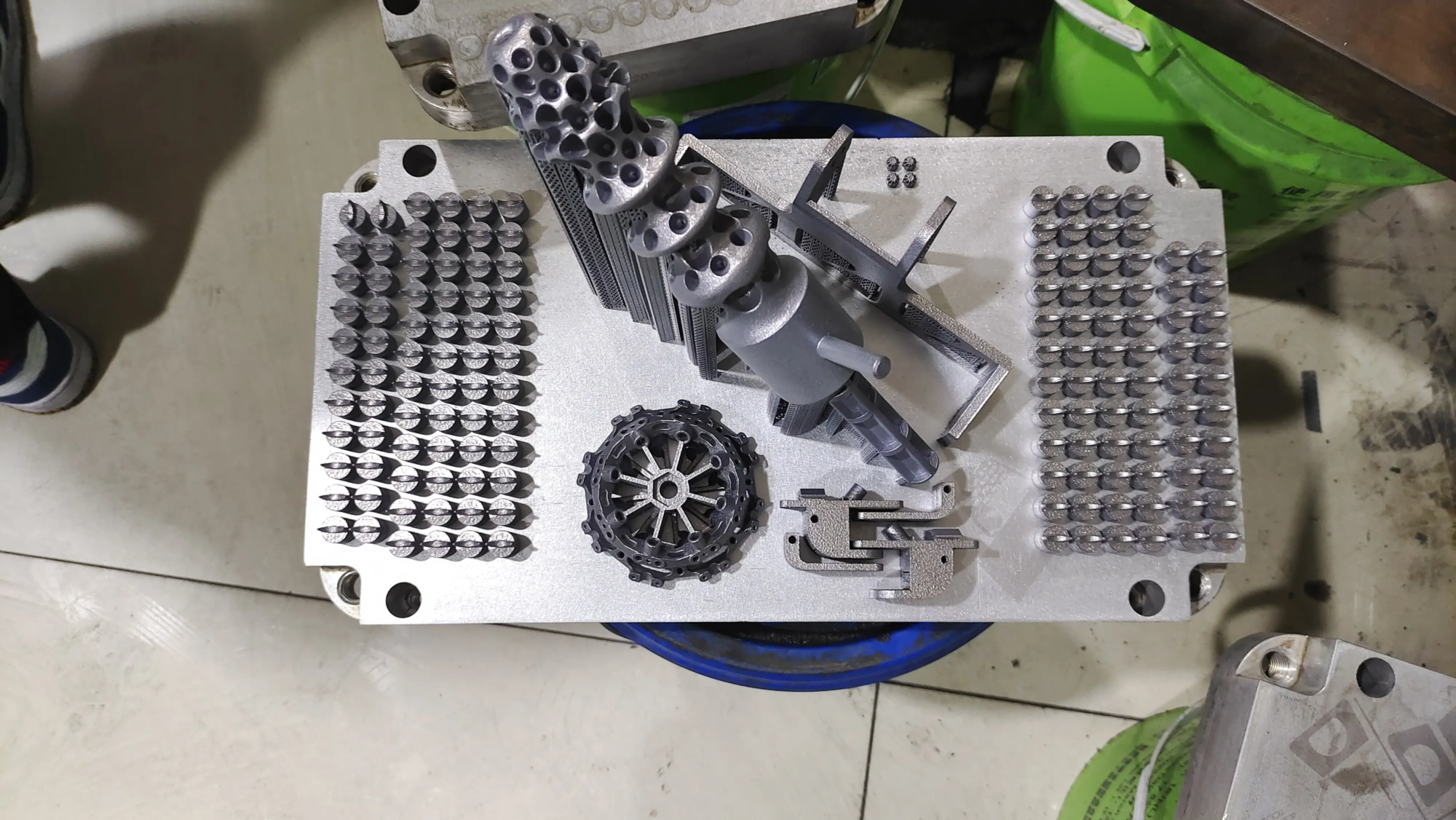
- Metal 3D printing expertise: We use advanced Selective Laser Melting (SLM) technology. SLM uses fine powders (stainless steel, aluminum, titanium, Inconel) to build complex, fully dense metal parts layer by layer. This unlocks geometries not possible with traditional machining.
- Ideal for Tensioners: Metal-printed tensioners offer unparalleled durability, extremely high dimensional stability at varying temperatures, resistance to creep and wear, a high stiffness-to-weight ratio critical for precision positioning components, and reliability in demanding industrial applications. Think robotic arms, high-speed CNC spindles, or automotive belt drives.
-
One-stop service: GreatLight is more than just printing. Our core strength lies in Professional problem solving The entire rapid prototyping process. We offer tailor-made material recommendations, advanced CAD/CAM support, expert print parameter optimization, and most importantly, comprehensive Post-processing and finishing services like:
- Precision CNC machining of critical interfaces.
- Heat treatment (stress relief, quenching, annealing).
- Surface treatment (shot blasting, polishing, electroplating, powder coating, anodizing).
- Thorough inspection and quality control.
- Speed and customization: We focus on quick turnaround and offer deep customization—material selection, geometry, finish—to meet your exact functional needs, not just budgetary needs.
- Unparalleled rigor: With advanced SLM systems and deep engineering knowledge, we confidently solve the bottleneck of complex metal rapid prototyping, ensuring every component delivers performance under stress.
Conclusion: Precision is within reach
Mastering belt tension is a simple but transformative skill for maintaining and improving machine performance. DIY 3D printed belt tensioner guides provide an excellent, easy-to-use entry point vs. "listen" method. It democratizes precision tuning.
However, as ambitions grew and machinery evolved, the need for engineered solutions became critical. When your project requires the strength, precision, longevity, and reliability that only metal can provide—especially complex mechanisms or harsh operating environments—leveraging professional SLM capabilities is critical.
Whether you’re fine-tuning your hobby printer now or designing the industrial machine of the future, understanding tension and having the right tools—from simple printed guides to professionally fabricated metal parts—can ensure your machine runs smoother, quieter, and more accurately than ever.
FAQ: Belt Tension Guide Questions and Answers
Q: Can I real Do you need a tensiometer? Can’t I tighten it? "until it feels tight"?
Answer: Although rough adjustment is possible, "Feel" is highly subjective and inconsistent. Different operators, belt types and machine settings can produce very different results. Guides provide objective, repeatable measurements that greatly improve setup consistency and machine performance.
Q: Which filament is best for my DIY guide?
A: For most desktop machines, PETG offers an excellent balance of stiffness, toughness, layer adhesion, and ease of printing. If the environment is hot (around the printer or CNC housing), ASA or ABS are better. For ultimate durability or if subject to impact, consider nylon-based filament (requires precise printer settings).
Q: What is the tension? "correct"? Where can I find target troops?
A: Target depends on belt type, width and machine design. Always give priority to manufacturer specifications. For ordinary printer GT2 belt, the deflection force (F) About 5-10 Newtons at 5-10 mm deflection often cited (e.g., 10N@10mm for 6mm wide belt). Validate against resources such as VEX Robotics documentation, Gates Conveyor Technical Specifications, or community forums established for your specific hardware.
Q: Can I lubricate the timing belt?
Answer: Generally speaking, No. Most timing belts (GT2, HTD) are designed to run dry. Lubricants attract dirt and debris, forming a paste that accelerates wear and attract grit, causing wear. Keep the belt clean and dry. Some industrial belts may have specific lubrication recommendations – please check with the manufacturer.
Q: Why would I choose metal 3D printing instead of CNC machining to make a tensioner?
Answer: Both have their roles. CNC generally works best with prismatic shapes. SLM metal 3D printing excels when you need:
- Complex geometric shapes: Integration of multiple components (e.g. integrated springs + brackets), internal channels or topology optimization.
- Lightweight construction: Efficient hollow shapes that cannot be milled.
- Rapid prototyping of complex concepts: Iterate on complex designs faster without tools.
- Material flexibility: Get difficult alloys like Ti64 or Inconel.
Q: My printed plastic guide feels flexible when I press it. Is this a problem?
A: A small amount of flex is tolerated if accounted for, but significant flex will affect accuracy. Increase the infill percentage (60%+), add perimeter (4-6), ensure correct orientation during printing, or switch to a stiffer filament (reinforced PETG/nylon). Metal printed rails have close to zero curvature.
Q: When does DIY stop and professional processing begin?
Answer: Conversion occurs under the following circumstances:
- Your plastic rails are wearing/deforming too quickly.
- You need more strength/stiffness than the plastic allows.
- Work environment exceeds plastic limitations (heat, UV, chemicals).
- Fault tolerance is close to zero, otherwise downtime would be costly.
- Mechanisms require tight tolerances, bearings, springs, or integrated complex features beyond FDM’s capabilities.
Ready to push your DIY limits? huge light Focus on turning complex conceptual designs into high performance Precision metal rapid prototyping Reality. Contact us today to discuss how our SLM printing and expert finishing services can solve your most demanding tensioner and motion control challenges. experience Speed, accuracy and reliability This makes us a leading rapid prototyping partner. Let us design your success together!