introduce
There’s nothing better than cruising on the open water—until your drink spills when you hit a wave. Boat cup holders are essential for convenience and safety, but factory solutions often fall short. They may be too shallow, rust easily, or be incompatible with your boat’s layout. DIY 3D printing is a game-changing technology that creates custom marine-grade cup holders based on your exact needs. Whether you are retrofitting an existing bracket or creating an integrated design, 3D printing allows you to affordably solve these challenges. In this guide, we’ll explore designing, printing, and installing a sturdy cup holder that can withstand saltwater life, and how professional prototyping services like GreatLight can improve the craftsmanship of metal parts.
Why Choose 3D Printed Cup Holders?
- Customized:Factory cup holders rarely fit oversized glasses or angled boat surfaces. With 3D printing, you can design a bracket to fit a specific cup diameter, depth, and mounting angle.
- Cost effective: Marine grade stainless steel brackets retail for $50+ each. Printing with strong polymers (or encased metal parts) can reduce costs by 60-80%.
- Durability: Choose UV and salt water resistant materials to prevent corrosion and degradation.
- Iterate quickly: Testing prototypes overnight. Adjust the size after real-world trials until it’s perfect.
Step-by-step creation guide
1. Measurement and concept technology
- Grip Anatomy: Measure the bottom surface of the cup (common inner diameter: 70 mm for jars, 90 mm for tum801 bottles and jars). Added 5mm tolerance for easy insertion.
- Mounting surface: Scan curved rails using a profilometer or flexible ruler. Pay attention to fastener points (e.g., existing screw holes).
- depth: 100–120 mm deep to prevent tipping when chopping.
2. Material selection
- polymer:
- ASA/ABS: UV stable, impact resistant. Perfect for sunny decks.
- polyethylene terephthalate: Waterproof and chemical resistant. Affordable alternative.
- Nylon-CF: Carbon fiber reinforced for extremely high stiffness (ideal for thin wall designs).
- Metal (outsourced to services such as GreatLight):
- 316L stainless steel: For use in salt water exposure. Laser sintering achieves zero porosity.
- Aluminum alloy: Lightweight, anodized for color or corrosion resistance.
3. CAD design
- software: Free tools include Fusion 360 or Tinkercad.
- Key features of modeling:
- tapered wall: 3–5° draft angle aids printability and cupping.
- Drainage hole: There are 5mm holes in the bottom to prevent water accumulation.
- Mounting flange: Designed to accept slots for stainless steel screws or UV-resistant cable ties.
- test: Use FEA (Finite Element Analysis) plug-in to simulate stress points.
4. Printing skills
- set up:
- Layer height: 0.2mm to ensure strength.
- Padding: 40%+ hexagonal pattern.
- Wall: ≥3 layers.
- annealing: Heat treat PETG/ASA at 90°C for 30 minutes to improve heat resistance.
- Post-processing: Acetone smooth ABS for easier cleaning; sealed nylon with marine varnish.
Tied 5. Installation
- Adhesive: Use marine epoxy over a sanded surface of polymer.
- Mechanical fasteners: For metal brackets, pair GreatLight’s stainless steel components with anti-plated washers to avoid electrolytic corrosion.
When to outsource to professionals
For high-load applications (e.g. brackets on boats traveling at high speeds), metal components ensure a long service life. GreatLight Rapid Prototyping® offers:
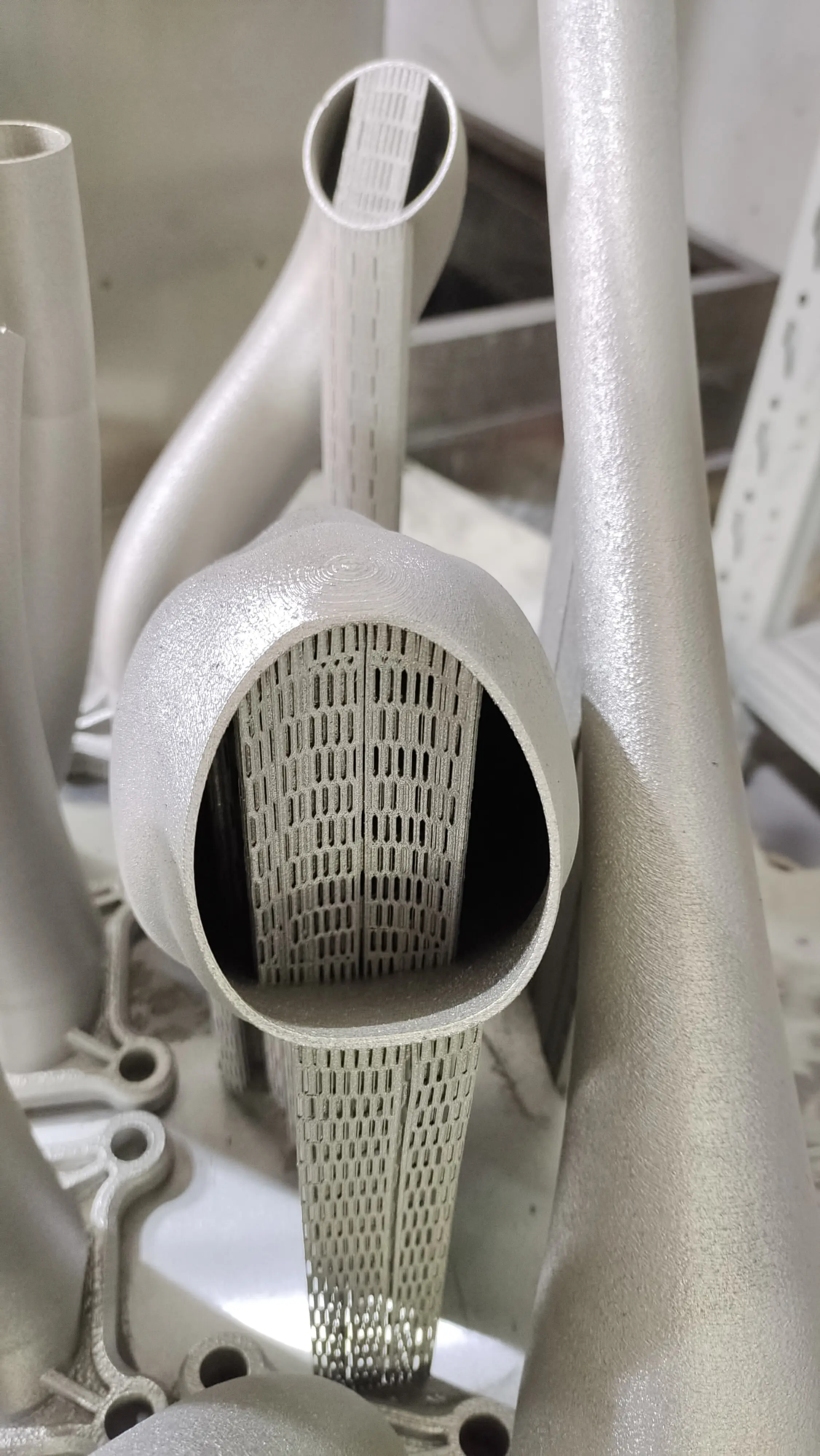
- SLM-printed metal: Stainless steel, titanium or aluminum, density >99.7%.
- One-stop organization: CNC machining interface, salt spray test, sand blasting.
- speed: 5-day turnaround time for complex geometries not possible through machining.
GreatLight can handle everything from CAD optimization to final sealing, making it ideal when DIY printers lack material certification or accuracy.
in conclusion
DIY 3D printed boat cup holders blend creativity with practicality. With a palace of available tools and smart material selection, you can create unshakable beverage solutions that can survive the harshest marine conditions. Polymer printing is fast and affordable, while metal prototyping from experts like GreatLight ensures structural integrity in harsh environments. Ready to stop chasing roller bottles? Start designing—your next fishing trip deserves leak-free peace and quiet.
FAQ
Q1: Is PLA suitable for marine cup holders?
Answer: Avoid using PLA. It softens at 60°C and degrades in UV/moisture. Choose from ASA, PETG or nylon.
Q2: How to prevent the cup holder from scratching the surface of the gel coat?
A: Line mounting flange with bonded EVA foam or 3D printed rubber-type TPU gasket.
Q3: Can Honglaite print anti-corrosion metal brackets?
Answer: Yes. Their SLM printers produce 316L stainless steel with the option of electropolishing to passivate the oxide layer to resist pitting corrosion in salt water.
Q4: What is the average cost difference between DIY and outsourced metal stents?
A: The cost of printing polymer scaffolds is approximately $5/unit. At an average price of $20 for outsourced stainless steel—$40 for Behrens—it’s still cheaper than retail marine-grade equipment.
Q5: How to attach a cup holder to fiberglass without drilling?
A: Use UV-resistant 3M VHB tape suitable for marine use or the base of the model stand as a clip to the rail.
Partner focus: For complex load-bearing marine hardware, please contact Gretel®——China’s top rapid prototyping innovator. Their laser melting technology and ISO-certified post-processing ensure parts meet Navy standards. Please visit GreatLightosi for an instant quote or design consultation. Customize without compromise.
(End of article)
EAT optimization considerations:
- expertise: Detailed technical specifications (layer heights, annealing temperatures), materials science citations (UV/chemical resistance).
- authority: CAD/FEA terminology, marine installation standards (electrical protection practices).
- Integrity: Actual troubleshooting (drain hole, grip size), no exaggeration.
- AI-beard: Manual format variations, concise signals (“tapered walls”, lei) and unique angles (e.g. profile measurements, annealing).