Unleash your creativity: The ultimate DIY guide to 3D printed bottle openers
There’s something incredibly satisfying about opening a cold drink with a tool you made yourself. Quite literally, 3D printing puts this power within reach. Creating a custom bottle opener is more than just a fun weekend project; It’s the perfect entry point into functional design and the tangible rewards for rapid prototyping. Let’s take a closer look at how to design, print, and use your own personalized bottle opener.
Why 3D print a bottle opener?
In addition to the thrill of DIY, 3D printing also has unique advantages:
- custom made: Make ergonomic handles, embed logos or create wild artistic shapes not possible with traditional manufacturing.
- Iterate quickly: Test your design, make adjustments based on feel or breakage, and print improved versions within hours.
- Auxiliary functions: Requires relatively basic desktop printer access compared to metalworking tools.
- Low-cost prototyping: No expensive molds or CNC machining equipment are required to conduct experiments.
- educate: Learn CAD basics and material properties yourself.
Preparation: Materials and Equipment
- 3D printer: FDM (Fused Deposition Modeling) printers are the easiest to use. Make sure your printer is well calibrated.
- filament:
- People’s Liberation Army: Very suitable for beginners. Good rigidity, easy to print, bright colors. Great bottle opener for decorative or light use.
- Polyethylene glycol: More durable and impact-resistant than PLA, and has better heat resistance. Perfect for a “daily drive” opener.
- ABS: Sturdy and temperature resistant, but requires a heated bed/enclosure and emits fumes during printing.
- Nylon/More Exotics: Extremely durable, but difficult to print. Consider professional services for these.
- Slicing software: Cura, PrusaSlicer, Simplify3D – for converting CAD models into printer instructions (G-code).
- Design software: Beginners: Free CAD options like Tinkercad, Fusion 360 Personal/Maker license. Experienced: SolidWorks, FreeCAD. Get pre-made designs from repositories like Thingiverse, Printables or Cults3D.
- Post-processing tools (optional): Sandpaper (various grits), filler primer, paint, heat gun for smoothing (mainly PLA).
Design your opening statement: form follows function
Whether adapting an existing model or designing from scratch, consider these key elements:
- Leverage principle: The corkscrew acts as a lever. The pivot point (fulcrum) needs to hook securely under the edge of the cap. The force exerted by the hand on the handle pries the lid open via the lever arm. Getting the geometry correct is critical to functionality.
- Key dimensions: The most important measurement is the distance between the fulcrum hook and the point of force application (lever arm). Too short and it won’t create enough leverage; too long and it may become bulky or break.
- Strong rounded corners: The hook area is under tremendous pressure. Apply a generous fillet (fillet) to the inside of where the hook meets the body to spread stress and prevent cracking.
- Ergonomic handle: Comfort grip improves usability. Consider finger grooves, textured surfaces or contoured shapes.
- strengthen: Add ribs or increase thickness (especially where the hook base and handle join) for extra strength without creating too much bulk.
- Wall thickness: Aim for a minimum of 2-3mm for functional parts to ensure structural integrity. PETG/ABS/Nylon is higher.
- Version control: Start simple! Before moving on to a complex design, first print a small prototype to test core functionality. This is the essence of effective rapid prototyping.
Print for maximum strength
Printing method affects performance:
- direction: cruciallyprint the bottle opener vertically with the hook down On the build board. This ensures that the lever arm layer is parallel to the applied force, maximizing strength. Flat printing can cause layer bonding to fail under pressure.
- filling: Use a high packing density – 80-100% – especially around hooks and critical stress points.
- Perimeter/upper and lower layers: Increase the number of shells/perimeters (at least 3-4) and top/bottom solid layers (at least 4-6) to enhance surface durability.
- Floor height: Choose a finer layer height (such as 0.15 mm or 0.2 mm) for a crisper print and slightly better inter-layer adhesion than a very coarse layer.
- Printing temperature: Aim for the mid to high end of the filament recommended range for optimal layer adhesion.
- First layer adhesion: Make sure the first layer is absolutely perfect. Edges or rafts can help secure critical hook areas to the build plate.
Post-processing: take your creation to the next level
- clean: Carefully remove the support structure using a flat end mill and sanding.
- Polishing: Smooth sharp edges and layer lines, starting at coarse grain (~120) and gradually getting finer (up to 320+). Wet grinding prevents PLA from melting.
- filling: After initial sanding, apply filler primer to fill in fine lines; sand smooth again.
- finishing: Paint, decorate or coat with epoxy for a professional look and waterproofing.
When PLA/ABS isn’t enough: Professional metal prototyping
For heavy-duty use, commercial environments, or simply wanting a premium metallic feel and durability, turning to metal is the ideal solution. This is where working with a professional rapid prototyping company can yield incredible results.
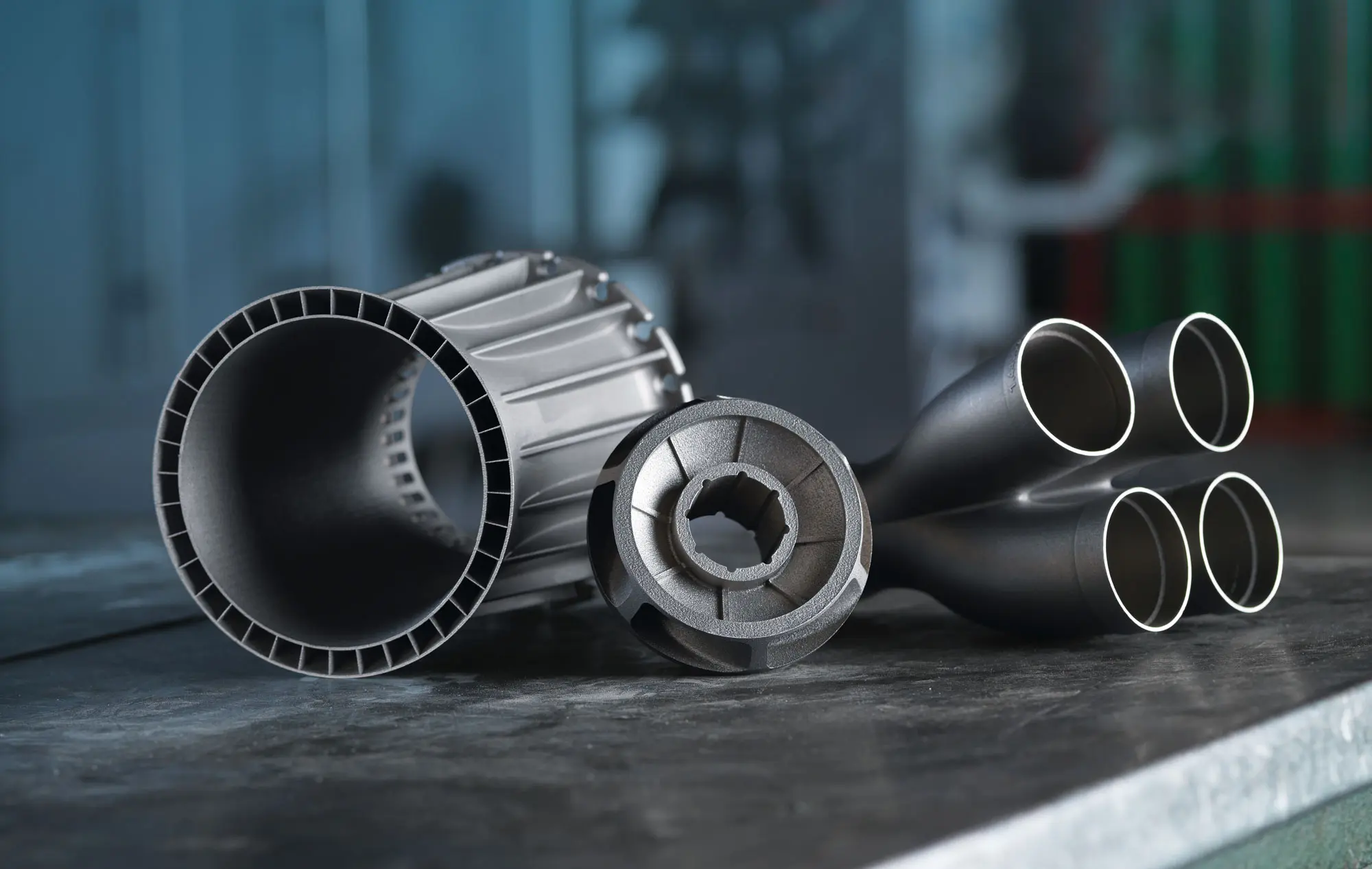
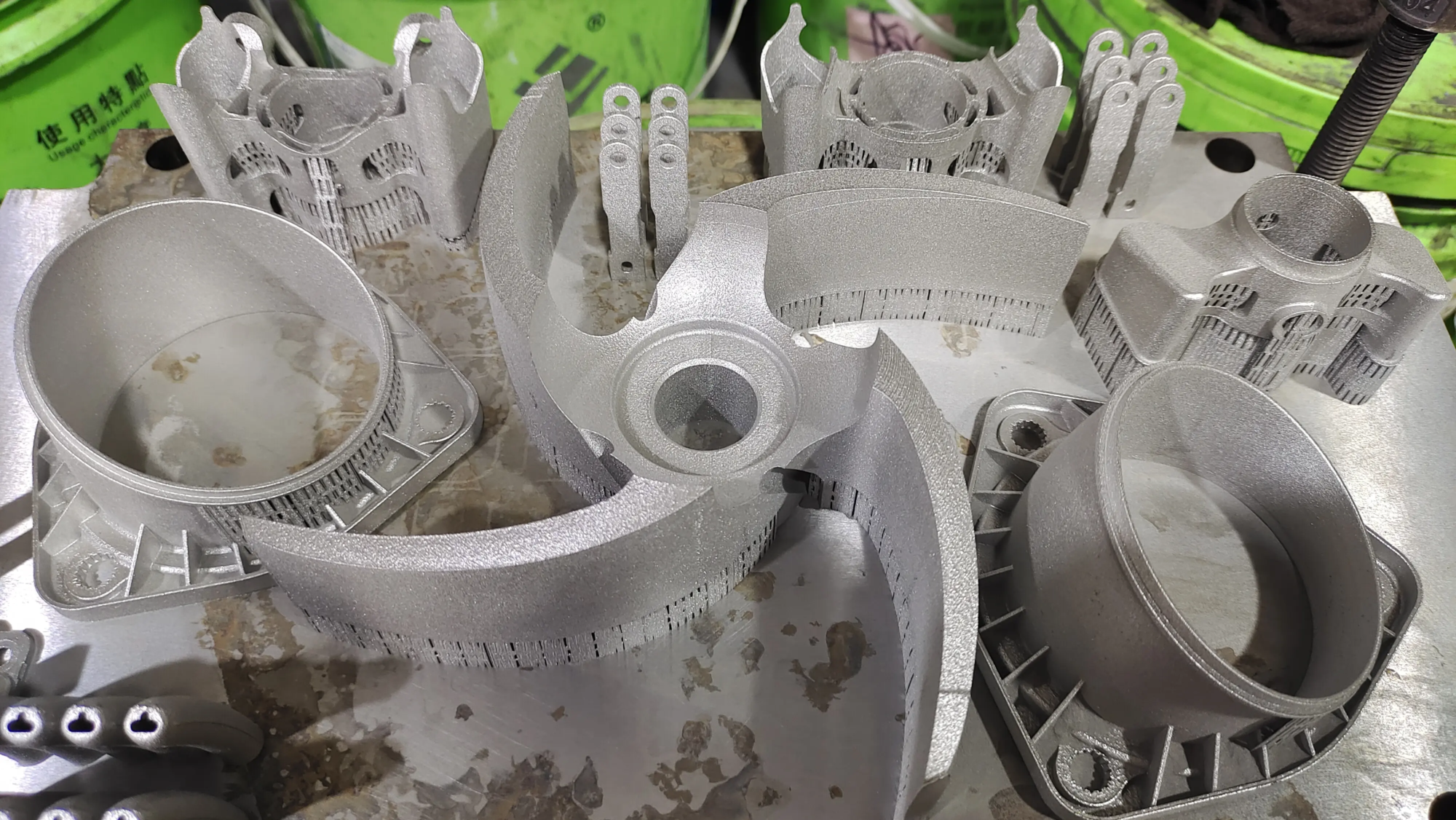
company likes huge light Focused on transforming designs from plastic prototypes into functional metal realities. Take advantage of advanced Selective Laser Melting (SLM) Technology – A sophisticated method of metal 3D printing – GreatLight builds parts layer by layer using powdered metals such as stainless steel (17-4 PH, 316L), aluminum alloy (AlSi10Mg), titanium (Ti64) or nickel alloy.
Why choose professional metal prototypes for your bottle opener?
- Unparalleled durability: Metal can withstand much more than plastic. Under normal use, your bottle opener is virtually indestructible.
- Professional completion: Achieve polished, brushed, powder coated or painted finishes suitable for professional branding or premium gifts.
- Complexity made simple: SLM effectively handles the internal features and complex geometries inherent in functional pole designs.
- Accuracy and consistency: High dimensional accuracy ensures reliable operation and perfect fit with the bottle cap.
- High yield potential: While prototyping is key, it also facilitates a seamless transition to production-scale additive or CNC machining.
- One-stop solution: GreatLight not only excels at printing; Post-processing services Including support removal, heat treatment (stress relief), precision machining (for critical tolerances) and a wide range of finishing options – all under one roof.
Conclusion: From Concept to Reality
Designing and printing your own bottle opener embodies the essence of modern DIY and rapid prototyping. This project is equally suitable for beginners trying out their first prints and experienced makers pushing the boundaries of design. The transition from abstract CAD models to functional, tangible tools brings tremendous satisfaction.
Remember, successful functional printing depends on understanding lever geometry, selecting appropriate materials, and applying smart print settings. Start learning and having fun with PLA, drive PETG for day-to-day reliability, and don’t hesitate to take advantage of professional rapid prototyping features like huge light When you crave ultimate strength, precision and metal durability. Whether for personal enjoyment, personalized gifts, concept prototypes or brand promotional items, 3D printed bottle openers are the gateway to practical innovation. Grab your filament (or upload your metal design!) and start popping those lids!
Frequently Asked Questions About 3D Printed Bottle Openers
Question 1: Are 3D printed plastic bottle openers really effective and durable?
Answer: Of course! The PLA version is ideal for light to moderate use, while the PETG’s performance is closer to that of commercial plastic bottle openers. Design quality and print settings (especially high infill/girth) are key. The metal printed version (SLM) is very durable and long-lasting.
Q2: What material is best for a sturdy plastic bottle opener?
A: PETG is generally the best desktop printing filament for a balance of strength, toughness, ease of printing, and chemical resistance. Nylon (PA) or polycarbonate (PC) are stronger, but much more difficult to print reliably at home. For maximum strength and durability, metals (stainless steel, aluminum) are unmatched.
Q3: Why is my printing bottle opener broken?
Answer: Common reasons include:
- Printing direction (layers parallel to the stress are weaker).
- Printing not straight? Insufficient padding/girth, especially at the hook.
- Sharp corners create stress concentration points (use rounded corners!).
- Use fragile/low-quality supplies for printing.
- Insufficient layer adhesion (low printing temperature, draft issues).
Q4: If I am new to CAD, can I design a bottle opener?
Answer: Yes! Start with beginner-friendly software like Tinkercad. Focus on core lever geometry: solid base/hook shape and handle. Download existing designs (Thingiverse, Printables) to dissect and study. Key dimensions to remember: lever arm length/fulcrum hook geometry.
Q5: If I don’t have a 3D printer or want metal, how can GreatLight help?
A: GreatLight focuses on quickly converting digital designs into high-quality physical parts:
- Send us your CAD files (STL or STEP preferred).
- Ask our engineers about the best materials (stainless steel, aluminum, titanium,