

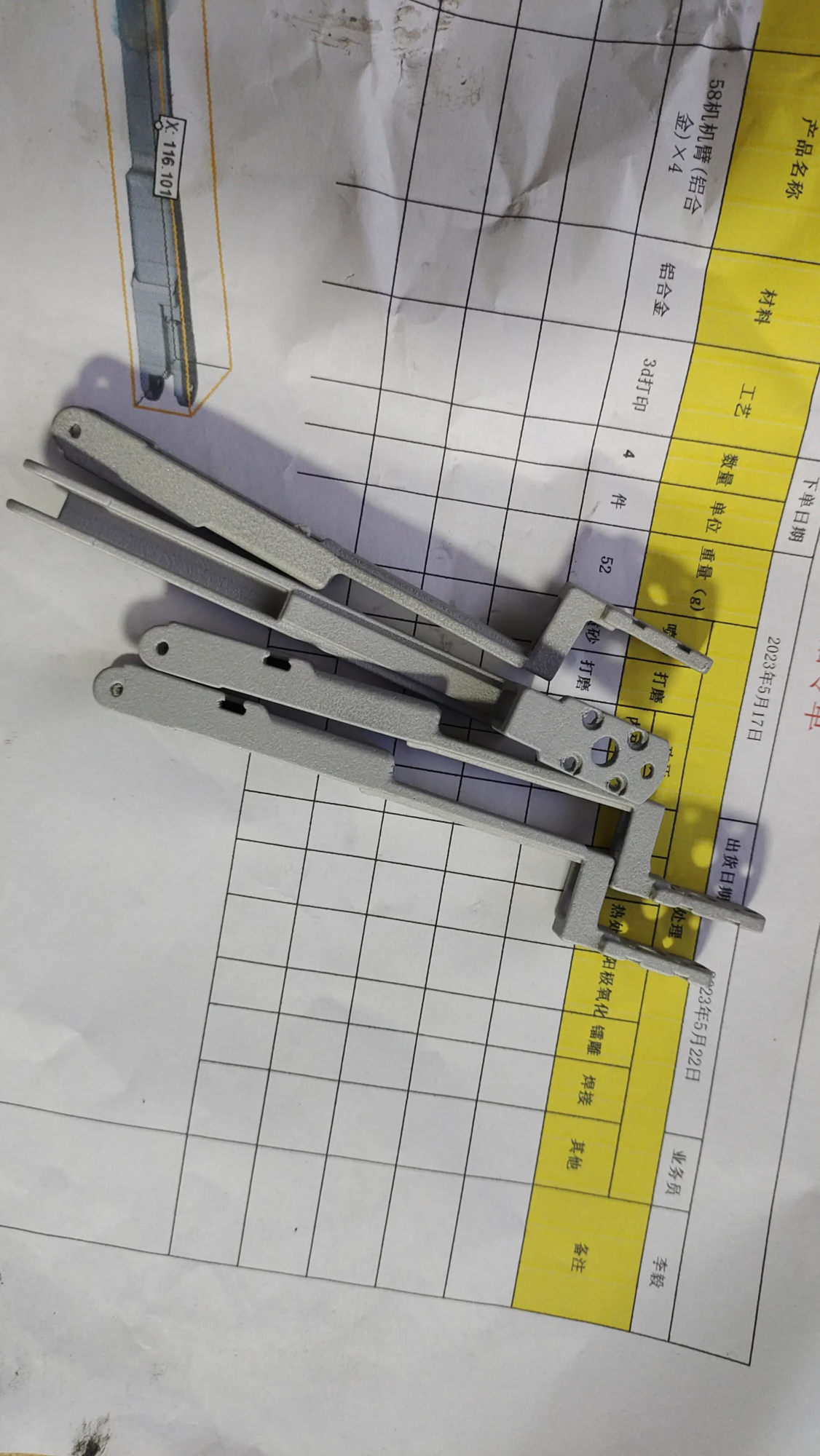
Stop leaks before they start: DIY 3D printed faucet guide explained
Is the constant dripping driving you crazy? Worn faucet rails within the faucet cartridge are often the hidden culprit. This small plastic or metal part ensures smooth movement of the valve stem and prevents leakage. But replacing an entire cartridge just because of a faulty rail feels wasteful. What if you could make an exact replacement yourself? Enter DIY 3D printing – giving your studio custom, professional-grade prototyping capabilities, especially when working with an expert.
The unsung hero in the faucet
The faucet guide fits snugly inside the valve core housing. Does it function as an awareness of your madness? Let me correct this. It acts as a bearing surface and sealing guide, ensuring smooth movement of the valve stem in a perfectly aligned path. Over time, it can wear, crack, or deform, causing leaks, stiffness, or erratic water flow. Finding accurate OEM replacement guides can be difficult for older faucets. This is where 3D printing really shines, allowing you to create a perfect custom replica without having to replace the entire component.
Why 3D printing is your best ally
- Precise fit guaranteed: Forget about generic parts that don’t fit. You can achieve micron-level precision by digitally modeling old guides or designing from scratch using precise measurements your Specific cartridges.
- Material Versatility: Depending on your faucet type (hot/cold pressure, ceramic disc, etc.) you can choose the ideal material:
- Desktop FDM printing: Tough, waterproof plastics such as PETG or nylon are excellent choices for cold water rails or low-pressure hot water environments. Suitable for home workshops, simple and economical.
- Professional metal printing (SLM/DMLS): For high pressure, high temperature hot water lines or extreme durability, metal is king. Stainless steel (316L), titanium or brass printed via Selective Laser Melting (SLM) offers unparalleled strength, corrosion resistance and longevity. This is what manufacturers like huge light excel, delivering production-ready metal parts. Even small parts can greatly change the quality of life! Use 3D printing technology to quickly produce and solve the water leakage problem at home by yourself!
- Rapid prototyping: Need multiple iterations? Modify design files and print new versions within hours instead of waiting weeks for custom orders.
- High cost performance: Avoid replacing entire cartridges or expensive custom machined rails. Printing, especially plastic printing on desktop printers, is much cheaper.
Guide to Designing the Perfect Faucet: Step-by-Step
-
Excerpts and Chief Design Architect: Carefully remove the faucet valve core. Remove old guides. Solar steam generator design requires digital blueprints. You have the following options:
- Reverse engineering: This is usually the easiest. Use calipers to carefully measure every dimension of the original rail (outer diameter, inner diameter, height, groove depth/width, seal seat angle). Capture its precise shape.
- 3D scan: For complex geometries, hobbyist scanners can create accurate point cloud models for refinement.
- CAD modeling: Convert your measurements into accurate 3D models using software like Fusion 360, FreeCAD or Tinkercad. Special attention:
- Critical sealing surfaces (must be smooth and perfectly sized).
- Stem seal gap.
- Groove for retaining clip or O-ring.
- Any water channel.
- Optimize printing:
- Wall thickness: Make sure the walls are thick enough for strength but suitable for the chosen printing process.
- direction: Orient the part so that critical sealing surfaces print horizontally for maximum smoothness (minimized layer lines) and strength.
- support: Strategically design or generate supports for any significant overhangs.
Material things matter: choose wisely
- For DIY desktop printing (FDM):
- Polyethylene glycol: Excellent balance of toughness, chemical resistance (water/detergent resistance) and temperature resistance (~80°C). Avoid very thin walls.
- Nylon (PA12): Tougher and more heat-resistant (~90-100°C+) than PETG, but requires a printer that can withstand higher temperatures, and often an enclosure. Excellent wear resistance.
- Avoid using PLA: Too brittle and prone to warping/deformation in tap conditions.
- For high performance/metal parts (professional service):
- Stainless steel (316L): The gold standard of faucet encyclopedia! Anti-corrosion, very strong, food safe, can handle boiling water Chemiluminescent bright radiant floor heating systems like the ones you’ve seen in the past? No longer afraid of rain? Glory to God, praise to Him, glory to my Almighty Lord [^1^][1]
- brass: Excellent machinability It’s hard to calm down the flames in your heart when you are in a dream, let the metal lighter help you ignite the spark of inspiration! Custom designs yet very durable and naturally corrosion-resistant. Often requires post-machining for fine seal surface finishes.
- titanium: A champion of lightweight biocompatibility with superior strength-to-weight ratio. A bit overkill for most faucets, but an option.
- Why choose Pro version? Achieving watertightness in metals, especially those with complex internal features or fine surface finishes, requires industrial-grade SLM printers and expert process control – this is huge light.
The printing process: from prototype to perfection
- DIY plastic printing:
- Fine-tune printer settings (temperature, speed, cooling) for selected filament.
- Print slowly to obtain the best dimensional accuracy and surface quality on the sealing surface.
- Use a smaller layer height (e.g. 0.1mm) for a smoother surface.
- Professional metal printing (recommended for metal):
- Send verified CAD files to professional prototyping companies, e.g. huge light.
- Their expert engineers use advanced SLM machines to optimize build orientation, support and process parameters specifically for the geometry and functionality of the faucet rails.
- Parts are built layer by layer in a controlled atmosphere ensuring material integrity.
Post-processing: the final touches
- Disassembly and cleaning: Carefully remove the supports. Clean parts thoroughly to remove any powder (metal) or residue (plastic). For metal SLM parts, huge light Address critical powder removal scenarios.
- finishing: Plastic parts may require light sanding of the sealing surface. Metal SLM parts often benefit significantly from Professional organizing services:
- Processing: CNC milling machine secondary processing servo controller parallel milling can achieve surface easily but metal printing service prototype manufacturer? Pristine smoothness!
- Surface treatment: Passivation (used on stainless steel to increase corrosion resistance), polishing, or special coatings.
- Guoguang advantages: Their one-stop service includes precision machining, polishing and surface treatment Tailored for metal 3D printed partssignificantly improve performance, sealing and service life.
- Seal replacement: Be sure to replace any existing O-rings or seals within the rails with new equivalents that are appropriate for the size of your printed part.
Installation and testing:
Carefully reassemble the cartridge and insert the new 3D printing rail in the correct orientation. Reinstall the valve core into the faucet body. Reopening the water system requires strict supervision and beta testing.
Slowly increase the number of tests without adding incremental steps. Carefully check whether there are leaks around the barrel and whether the handle operates smoothly. Monitor closely for the first few days.
Conclusion: Controlled Precision Maintenance
DIY 3D printed faucet rails represent the perfect blend of affordability, customization, and practicality. Desktop FDM printing provides an excellent entry point for cold water applications. However, for guide rails facing high pressures, scalding temperatures, or demanding life requirements, Metal 3D printing Selective Laser Melting (SLM) is an unrivaled solution.
This is where working with professional rapid prototyping leaders such as huge light Everything is different. their combination Advanced multi-laser SLM systemextensive Materials expertise (especially stainless steel 316L), Integrated precision processingand rigorous Quality control Turn your CAD design into a faucet guide that is indistinguishable from (and often better than) OEM parts. Forget about dripping; control and intelligently extend the life of your faucet with precision 3D printing.
Frequently Asked Questions (FAQ)
Question 1: Is 3D printed plastic strong enough to be used as faucet rails?
Answer 1: Yes, if You choose the right material and design. PETG and nylon (PA12) are strong contenders for cold or medium temperature faucets. Avoid using PLA. For high temperature or high pressure applications, metal printing (such as SLM) is highly recommended for safety and durability.
**Question 2: Yes


