Unlocking the workspace Elegance: The Ultimate Guide to DIY 3D Printed Headset Racks
Tired of the tangled headphone rope, or the annoying dent that precious headphones left on the table? A dedicated headphone stand is not only a luxury; it is a game changer for organizing and the lifespan of headphones. While Sleek Stand tang is online, there is a unique and satisfying option: make it yourself using 3D printing. This blend of creativity and technology allows you to design stalls that suit your gear and aesthetics. Let’s explore why DIY 3D printing is revolutionizing headphone organization and how to start this meaningful project.
Why 3D printing is the ultimate DIY solution for headphone racks
The beauty of 3D printing lies in the power it takes to customization directly into your hands. Forgot to place the universal shape and size. Using 3D printing, you Decide:
- Perfect for: Specially designed for cradles, hooks or bases to match the profile and weight your Headphones – Whether they are bulky external ears or sleek IEMs.
- Unleash creativity: From minimalist geometric forms to favorite characters, anime themes and even replicas of complex organic shapes inspired by nature – your position becomes a true personal statement.
- Cost-effective: Printing your own prints with PLA or PETG (such as PETG) is very affordable, especially for simple designs, compared to quality store buying booths. You mainly pay for the materials.
- Scalability and iteration: Need multiple settings representing your collection or game? Print the copy now. Discover defects? Adjust the digital model and print the improved version.
Design for success: Main considerations
Creating a headphone stand that is functionally durable requires a thoughtful plan. Here’s what to remember:
- Stability is crucial: Your stall must offset the richest nature of the headphones. This means:
- Basic Weight/Design: A broad foundation is classic. Hollow bases can be designed with internal cavity to add weight (such as steel bearings or sealed sand shafts). Cantilever design requires careful weight distribution calculations.
- Center of gravity: Make sure to rest the headphones at points vertically aligned in the center of the basic footprint.
- Headphone compatibility:
- Cradle/Hook: The stationary surface must accommodate the headband thickness without pinching filling. Will it shake the band, have wide hooks or use nails? If necessary, include fill slots.
- Clear: Ensure enough space under thick ear cups to avoid scratching the base.
- Material selection: Determine strength, weight, completion and cost:
- PLA: The simplest printing, bright colors, affordable, nice stiffness. Can be fragile for a long time and easily cause fever. Ideal for decorative or lightweight headphones.
- PETG: Stronger than PLA, stronger and more durable. Excellent layer adhesion. Good chemical and moisture resistance. More suitable for heavier headphones and long-term use.
- ABS: Rugged and handles higher temperatures very well. A bed and shell that needs heat to be reliable due to warping and smoke. Great for grinding/polishing/organizing.
- TPU (Flexible): Use strategically (e.g., soft-filled inserts to prevent scratching), but rarely serve as the primary structural material.
- Metal (via services like Greatlime): With the ultimate luxury, robustness and weighted premium feel. Aluminum, titanium or stainless steel offers unparalleled durability and thermal resistance. Seamlessly integrated with high-end headphones aesthetics.
- Ergonomics: Design height, so it’s natural to wear headphones.
Your DIY Journey: From Files to Completed Stand
- Design or source your model:
- Digital design: Use CAD software (Tinkercad, Fusion 360, Blender, or FreeCad for beginners for advanced users) to model your vision.
- Online repository: Explore platforms such as Printables, Thingiverse, Cults3D or Thangs. search "Headphone rack," Filter through headphone brand/model to provide potential preset solutions. Always check the license.
- Select your material: Select filaments (PLA, PETG, ABS) according to your weight/durability needs and printer features. For metals, work with service providers.
- Slice and prepare: Use slicing software (Cura, Prusaslicer) to convert your 3D model file (STL, OBJ) to printer instructions (G code). Key settings:
- Layer height: 0.15mm-0.3mm (lower = smoother finish, longer printing time).
- Fill density: According to the internal design, 15-30% is usually sufficient to achieve structural stability. For very large or heavy loaded brackets or minimum internal structures, increase to 40-60%.
- Perimeter/shell: 2-4 walls add rigidity. It is crucial for thin sections.
- support: A significant overhang is required (e.g., a hook or a complex base).
- Edge/raft: Improves high or narrow print bed adhesion.
- print: Ensure bed upgrades, clean build surfaces (using isopropanol), appropriate nozzle/bed temperature for each filament specification, and a stable environment (especially for ABS). Monitor the first few floors closely.
- Post-processing (elevating your surface):
- move: Carefully remove the support and any edges/rafts.
- clean: Remove support residues and dust.
- Grinding: Starting with coarse sand (~120), it can reach a fine grain size (~800-1000+) to make it smooth. Wet sand can help PLA.
- Fill/start (optional): If necessary, use a filler/primer before painting. Especially useful for visible layer lines.
- painting: Use primer and paint that suits plastic. Painting usually produces the best finish. Acrylic coatings are well used for details.
- Metal Parts Finish (via Service): Professional providers offer advanced options such as bead blasting (matte), polishing (mirror), powder coating (colored, durable), anodized (aluminum, colored, corrosion resistant) or electroplating.
- Increase comfort: Insert felt, leather pads or flexible TPU inserts at the contact points to protect the headband.
Why consider professional services? Take your position to the next level
Although desktop FDM printers democratize creation, their limitations are their limitations. Material selection and realizing true quality, heavy-duty or complex metal design requires industrial capabilities. Here, working with experts like Greatlight becomes a strategic advantage.
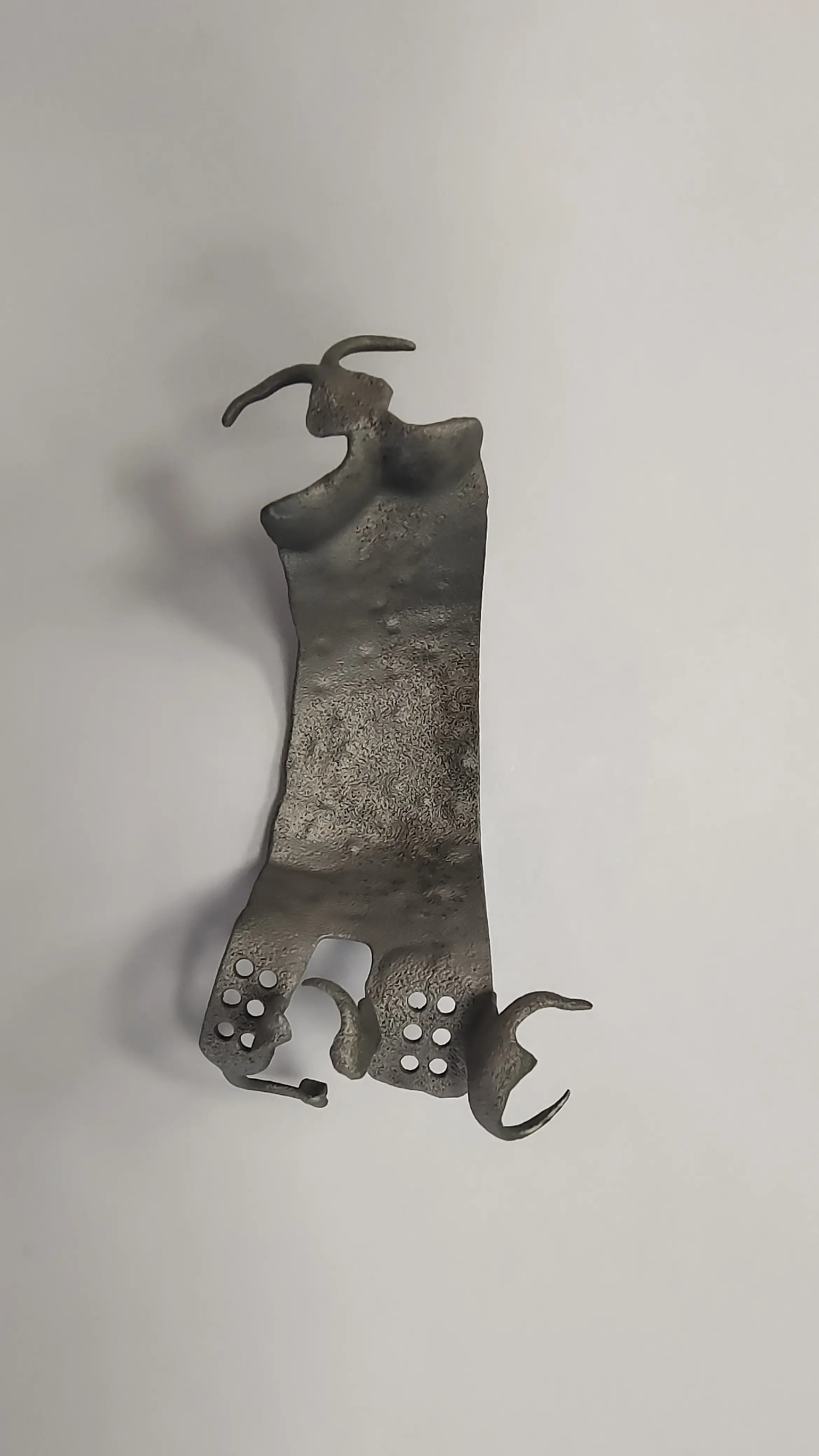
Gremight provides Industrial Selective Laser Melting (SLM) – An advanced metal 3D printing technology capable of producing robust parts with excellent detail and strength. As a major rapid prototyping manufacturer, Greatlight is good at dealing with complex challenges:
- Metal Mastery: Make brackets with high performance materials such as aluminum alloy (lightweight/strong), stainless steel (super-strong/corrosion-resistant) and even titanium (super-light/high-quality)). Perfect for weighted foundations and critical structural components, requiring uncompromising quality.
- Precision Engineering: Utilize its advanced SLM machines and deep expertise to produce typical DIY constraints with complex geometric shapes (e.g., the ideal center of gravity for the internal weight chamber), ultrasmooth surfaces, radical overhangs and impeccable dimensional accuracy.
- End-to-end excellence: Besides printing, Greatlight offers essential post-treatment: expert powder removal, precision CNC machining, for critical interfaces, stress relief, and a variety of beautiful finishes – delicate sandpaper or polish, bead explosion (even matte), vibrant powder coating, durable, durable anode, especially aluminum content (for aluminum content), or mature.
- Speed and professionalism: Facing design challenges? Need a heavy, anti-distortion stance? GRESTLIGHT specialized research Quickly solve complex prototype and small volume production problems. Their simplified process ensures that your custom, high-precision metal parts are prepared faster than you think, and are often surprisingly high in quality, often at competitive prices. They excel in handling delicate internal channels or lattice structures, designed for optimal weight distribution or aesthetic style.
Conclusion: Creating Practicality and Art
Design and print your own headset rack with artwork utilities. It rejects your space, protects your gear and provides a tangible sense of accomplishment. From designing (or purchasing) models to choosing materials and perfecting the finish – it is a meaningful and creative journey.
Whether you are an experienced manufacturer or a newbie starting with a bed-based FDM printer, the potential for customization is huge. When your field of vision requires only the power, weight, or complex beauty provided by metal, work with professional rapid prototyping experts, such as Greatlight Trangement, to see it as a lasting, high-end reality. So start your CAD software, load the filament (or request a quote!), and make the perfect phase for the headset. Your table will thank you.
Headset Rack DIY: FAQ
-
Q: Is the 3D printed headphone stand strong enough?
- one: Absolutely! With the right design (sufficient basic weight/structure) and material choice (PETG, ABS, ASA is perfect for its price; metal through SLM for ultimate robustness), 3D printed stands can be very powerful and durable. Ensuring adequate filling (about 25-40%) and wall thickness (2-4 around) is key to plastic prints.
-
Q: What is the best material for DIY FDM printing booths?
- A: PETG is usually the first choice for most users. It provides an excellent balance of strength, toughness, durability, ease of printing and chemical/moisture resistance. PLA is suitable for decorative or very lightweight headphones, but is more brittle. ABS offers the potential for durability and finishing, but printing is trickier.
-
Q: My stands are swaying! How can I fix it?
- one: This usually indicates insufficient weight distribution.
- Solution: Add weight to the base (e.g., glued into the cavity printed into the base, internally sealed sand/lead mirror, epoxy fills hollow portions or adheres to the heavy metal plate below). The foundation for redesigning is wider. Check that the vertical axis of your design is perfectly aligned on the center of the base.
-
Q: Will the PLA melt if placed near a warm monitor or other electronic device?
- Answer: There are risks. The PLA becomes soft at around 50-60°C (122-140°F). If you are always exposed to a lot of local heat (such as next to a heat source vent or a very warm monitor), able Deformed over time. In an always-warm environment, PETG (65-80°C), ABS (100°C) or metal are better options.
-
Q: Can I create a stall for really big/heavy headphones?
- A: Yes, but design is critical. Use a sturdy material (PETG, ABS or choose metal printing). Design a wider, heavier foundation. Increase the filling density (40-60%) and wall thickness (3-5 surroundings). Consider internal structures such as ribs or lattices for additional support. It is highly recommended to use professional metal printing services (such as SLM from Greatlight) for very large premium headphones.
-
Q: I don’t have a 3D printer. How should I do it?
- A: You have two main options:
- Local printing services: Take advantage of manufacturer space, libraries with printers or local/online printing services for plastic parts.
- Professional rapid prototyping companies (such as Greatlime): Ideal for parts that require higher precision, weight, advanced metal materials, complex geometry or refined effects. Upload your design file and select the material/finish tailored to the requirements of the headphone stand. Their expertise ensures optimal productivity and professional level results.
- A: You have two main options:
- Q: Where can I find a good 3D model for headphone racks?
- one: Popular repositories include:
- Print (Prusa Research)
- Thingiverse
- cults3d
- Tang
- myminifactory
Search with keywords "Headphone rack," Your headphone brand/model or specific theme (minimalism, arcs, etc.). Always check the license type before printing or modifying.
- one: Popular repositories include:
Ready to improve the headphone experience? Great Is a major professional rapid prototyping partner with cutting-edge SLM 3D Printer Technology and deep expertise. We are specialized in solving complex metal manufacturing challenges and delivering Excellent one-stop solution tolerate Customized materials,,,,, Quick turnaround,,,,, Precise processingand a comprehensive suite of Professional post-processing and completion services – Convert your custom headset rack design to advanced reality. Experience great differences – Your excellence is made precisely. Explore how our Rapid Prototyping Service enhances your next project.