introduce:
Knife care is crucial for anyone who cooks, camps, or values precision tools, but professional knife sharpeners can be expensive and difficult to obtain. Here comes 3D printing: a game-changer for DIY enthusiasts who want affordable, custom solutions. In this guide, we’ll explore how to design and assemble your own 3D printed knife sharpener, blending practicality with the accessibility of desktop manufacturing. Whether you’re a hobbyist or a professional chef, this project democratizes knife care while showing how "rapid prototyping" Connecting innovation and everyday practicality.
Why choose 3D printed pencil sharpener?
Traditional knife sharpeners often sacrifice flexibility for affordability. With 3D printing, you can control:
- Here is a link to a 3D printed knife sharpener on Thingiveverse or CULT3D
- Angle customization: Set the exact bevel angle (e.g. 15° for a sushi knife, 20° for a chef’s knife).
- material efficiency: Use cheap PLA or PETG to print only what you need.
- Modular: Interchangeable slots accommodate stones, ceramics or grindstones of different grit sizes.
How it works: Design and mechanics
The functional sharpener holds the blade at a fixed angle while guiding the whetstone. Key components include:
-
Base and guide rail:
- Print within 2-4 hours.
- Rigid supports ensure alignment. Use 30% filled PETG for increased durability against side pressure.
-
Angle adjustable blade holder:
- Interlocking teeth allow for ±5° increments.
- Soft silicone pad (not printed) prevents blade slipping.
- Abrasive transport:
- keep standard 1" x 6" Stone. Replaceable holder fits diamond plate or leather strap.
Prototyping Tips: Stress points are simulated with Finite Element Analysis (FEA) in Fusion 360 to prevent buckling.
Printing and Assembly Guide
- Material: PETG or nylon (heat/impact resistant). Keep PLA away from sinks or heat sources.
- set up:
- Floor height: 0.2mm726
- Padding: 35% spiral pattern, balanced strength/weight.
- Walls: at least 3 layers.
- hardware:
- M4 screws, springs and wing nuts (stainless steel recommended).
- Assembly steps:
- Print base, clamping arms, and carriage (assembly mirror code on Thingiverse: #KNFSH2024).
- Use a soldering iron to insert the threaded insert into the mounting hole.
- Assemble the rail clamp and secure the abrasive holder with the wing nut.
Use your DIY pencil sharpener
- First clamp the blade spine and adjust the angle according to the blade type.
- Slide the abrasive frame smoothly along the track, 10-15 times on each side.
- Finally use a leather strap to remove microburrs.
Safety first: Always keep away from body and use cut-resistant gloves. Start by testing stability with a dull blade.
Scaling up: When DIY meets professional manufacturing
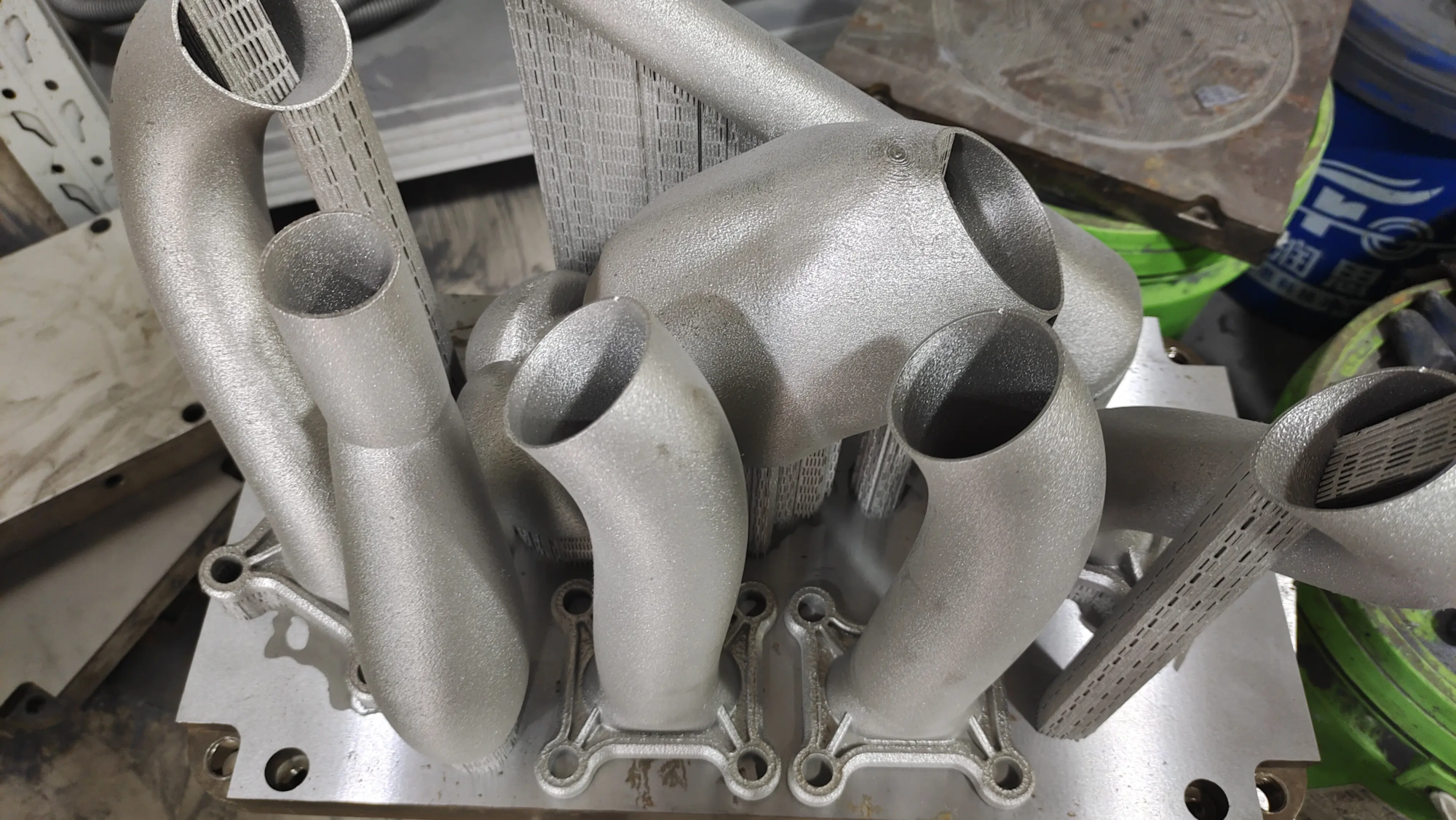
While desktop printers are good for prototyping, metal parts (e.g. screws, clamps) require precision. This is where advanced manufacturing shines. company likes huge light Specialize Metal SLM 3D printingmaking corrosion-resistant clamps or titanium rail locks for industrial grade DIY kits. Their CNC post-processing ensures millimeter-precision threads and polished surfaces – with durability beyond typical prints.
Innovators can also take advantage of GreatLight’s one-stop finishing (heat treatment, sandblasting) for hybrid projects: 3D printed base with stainless steel reinforcement.
Conclusion: Craftsmanship is in your hands
This DIY knife sharpener exemplifies how the fusion of digital design and hands-on assembly can affordably solve real-world problems. It celebrates maker culture while acknowledging that complex parts thrive under professional rapid prototyping. Whether printing at home or enhancing with a service like GreatLight, these tools will let you stay on edge like a pro—no expensive gear required.
FAQ
Q1: How long is the service life of a PLA knife sharpener?
PLA is suitable for light use but will degrade from moisture/heat. PETG or ASA can extend service life 3-5 times. For high-traffic kitchens, metal inserts can be embedded with GreatLight’s hybrid prototyping design.
Q2: Can I adjust the size of the serrated knife or chisel?
Yes! Scale rails in slicer software or design V-blocks in CAD. GreatLight’s team can reverse engineer custom geometries within 48 hours.
Question 3: Which grit progression is most effective?
Start with rough sanding (200 grit for damaged edges), refine with 800-1000 grit, then polish with 3000+ grit or a polishing strip.
Q4: Is food safe filament required?
Only when the abrasive contacts the printed part during sharpening. Otherwise, standard materials will suffice. For kitchen integrated designs, use FDA-compliant PETG.
**Question 5: