Embrace the future of paintball shooting: Your DIY journey 3D printing
The world of paintball is being merged with cutting-edge technology, and 3D printing is at the forefront. DIY enthusiasts now use this technology to build custom paintball markers, tailoring each curve and component to the play style. But here is a crucial note: Security is not negotiable. 3D printing unlocks creativity, while critical stress-bearing components require professional precision and materials. Let’s explore how innovation and responsibility are integrated.
Why 3D printed paintball guns?
- custom made: Design an ergonomic grip, lightweight body or tactical track, and ready-made options cannot match.
- Cost-efficiency: Print non-structural parts yourself, cut costs and purchase new equipment.
- Quick iteration: Test the prototype within hours and refine the design based on field performance.
Design Blueprint: First of all, safe!
Navigating the project is not like printing a statue. Paintball guns operate under high pressure pneumatic (200-800+ PSI). Failure can lead to serious injury. Here is a clever way to design:
- Key components to avoid printing:
- Pressure vessel: Air box, regulator, valve. These are legally regulated. must Production commercially to withstand stress.
- Bolt and hammer assembly: The high impact area under pressure should be metal.
- Non-critical parts for 3D printing:
- Body shell, trigger, scope, hopper adapter, grip and aesthetic shroud.
- Software and Modeling:
- Prototyping using CAD tools (Fusion 360, SolidWorks). Integrate stress simulation plug-ins to detect weaknesses.
Material selection: Beyond basic plastics
Your filament selection determines durability and safety:
- Nylon (PA12): Impact resistance – ideal for grip/body frame.
- Carbon fiber PETG: Flexible but strong tension parts.
- TPU: Flexible friction point is prohibited.
- ✋ Key Warning: Avoid PLA/ABS for structural parts. Under pressure, their low heat/impact resistance has a catastrophic failure.
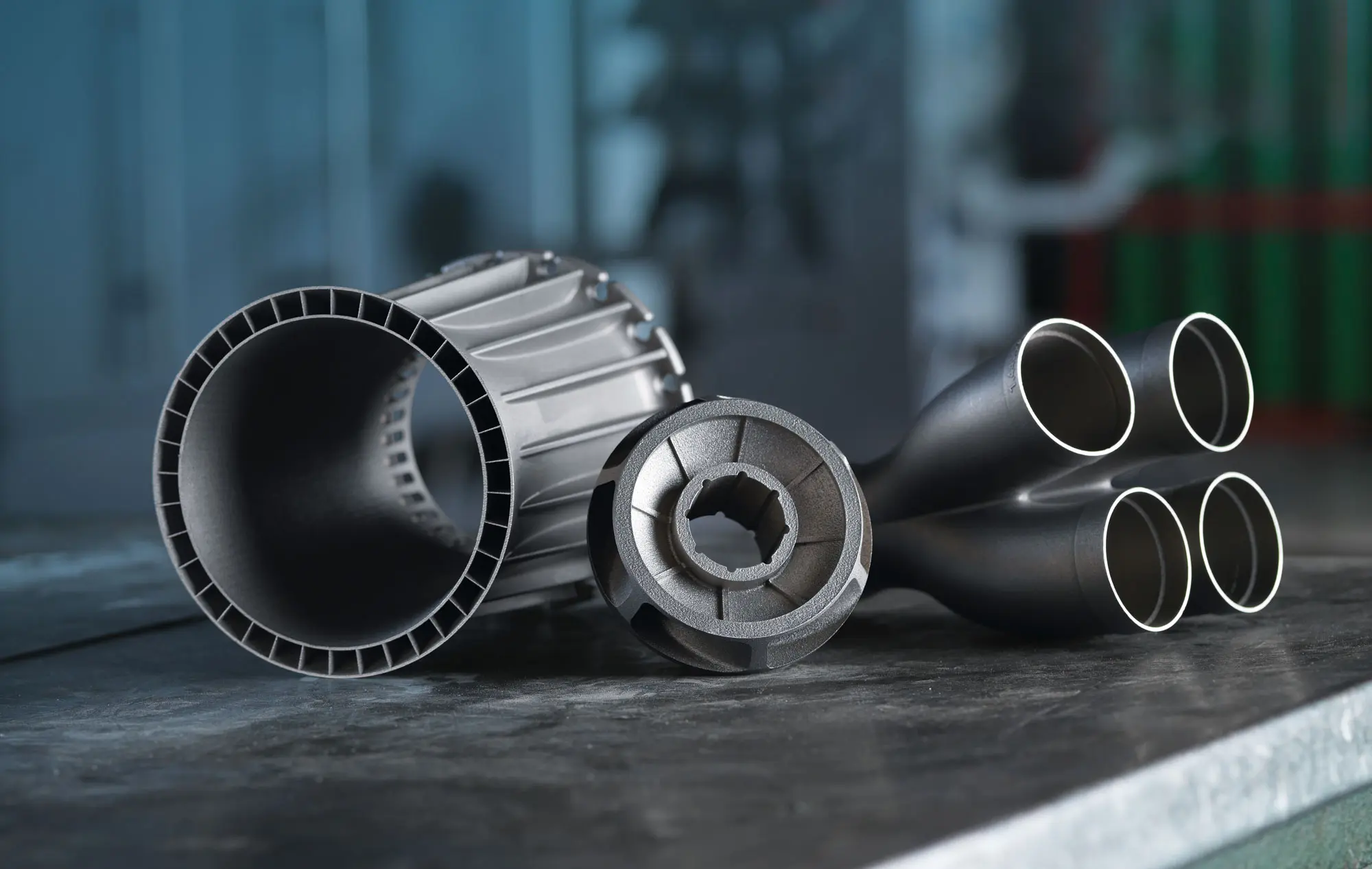
for Key Metal Components (such as Sears or Valve Casings), consider SLM (Selective Laser Melting). This industrial technology incorporates metal powders (stainless steel, titanium) into dense sealing structures. Professional Services Great Tolerances within ±0.1mm are crucial to pressure integrity.
Manufacturing: From document to site preparation
Step 1: Print non-critical parts
- Use an FDM/desktop printer for cosmetic parts. Best settings:
- Layer height: 0.1-0.2mm
- Fill: 60% + hexagon pattern
- Wall thickness: 2–5mm (adjusting stress analysis)
Step 2: Professional SLM for Metal Parts
For pressure constituting elements:
- Design optimization: Minimize support; optimize topology for weight and strength.
- Material selection: Stainless steel (corrosion resistant) or titanium (strength to weight king).
- Post-processing: Precision CNC machining for thread/seal, followed by bead blasting and polishing fatigue. (Greglight’s integration workflow stands out here.)
Step 3: Assembly and Test
- Assembly using commercial valves, O-rings and certified air sources.
- Remote testing (e.g. behind the shield) leaks/cracks on a rated PSI. Do not skip multiple low → high pressure tests.
Legal and moral
- Compliance is key:
- The airbox must be point/TC certified.
- Pressure systems face legal scrutiny – study local regulations.
- Always wear safety equipment during testing.
- Unregulated DIY guns have ruined the sport’s reputation. Prioritize engineering best practices.
How your project speeds up your project
As a top fast prototype partner, Great Solve complex challenges:
- Industrial grade SLM: High-density metal parts through EOS M400 printer.
- One-stop post-processing: Heat treatment, CNC milling, surface finish (+/- 0.02mm accuracy).
- Quick production: Most metals are prototyping in 72 hours.
Work strategically to ensure that your key components are secure, consistent and ready.
in conclusion
3D printing broken paintball block design limitations make creators dream big. However, this power requires caution: Never compromise on critical component safety. Plastic prints out the aesthetic and lightweight features of Excel, while thriving with professional SLM metals. By balancing DIY creativity with expert partnerships, you will pioneer revolutionary and safe both safe. Ready to design responsibly? Dive into the CAD Suite – The future of paintball awaits your blueprint.
DIY 3D Printed Paintball Gun FAQ
Q1: I can print All Paintball gun at home?
no. Pressure parts (air box, valve) require special alloy manufacturing and certification. Print only non-structural components such as cosmetic covers and low pressure grips.
Q2: What is the best material for printing gun components?
For non-pressure parts: nylon PA12 or carbon fiber reinforced filaments. The critical stress component must be a metal – Stainless steel or titanium printed through industrial partners.
Question 3: Is it legal to build a 3D printed paintball marker?
The laws vary. Most areas regulate pressure vessels. Use only certified air systems and valves. Consult local gun authorities to avoid illegal classification.
Question 4: Why choose SLM printing for metal parts?
FDM wire is not really solid. SLM (Laser Melting) creates functionally dense alloys with mechanical properties matching the forged metals. Stress durability is crucial.
Q5: Can Greatlight print custom paintball components?
Yes. We specialize in precision parts printed by SLM, such as trigger frames or bolted housings with certified materials and complete post-machining (machining, smoothing). Submit your design query on Greatlight.cn.
Question 6: How do I make sure my printing gun does not fail under pressure?
- Stress testing design in CAD software.
- Use professional SLM printing for key parts.
- Assembled system that gradually conducts stress testing.
- Replace suspicious parts immediately.
Are you ready to prototype responsibly? Work with experts to push the borders safely.