Unleashing young engineers: Build their own 3D printed rubber band car
There is a unique magic to transform digital design into tangible, moving works. For educators, parents and amateurs who seek an engaging way to explore physics, engineering and hands-on production, making rubber band cars using 3D printing offers an unparalleled blend of fun and learning. This is a classic project that reimagines modern technology and provides an excellent platform for understanding energy conversion (potential dynamics), friction, propulsion and mechanical advantages. As experts who transform ideas into reality through advanced manufacturing, we Great Knowing this project perfectly emphasizes why 3D printing is revolutionizing prototyping and the creation of functional models.
Why make 3D printed rubber band cars?
Forget fragile cardboard and straws. 3D printing allows:
- Durability: Create reusable reusable components to withstand repeated testing.
- accurate: Design complex gear trains, lightweight chassis and manual manufacturing of impossible wheel hubs.
- Custom: Easily iterate the design – Try to use car length, gear ratio, wheel diameter or aerodynamic adjustments with just a few clicks.
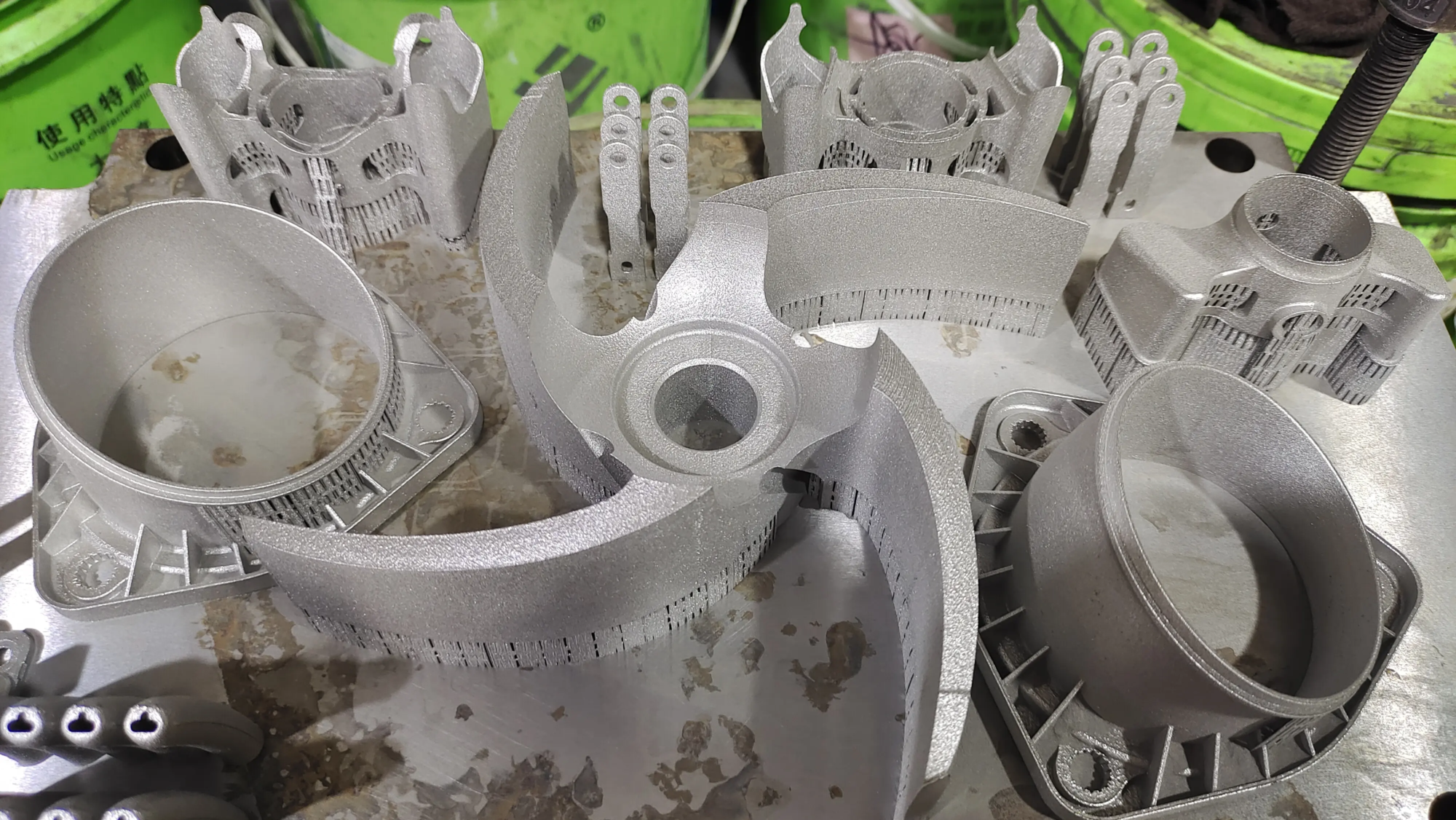
- Scalability: Once the plastic is perfected, functional elements (such as gears or shafts) can be scaled into metal prototypes using Greatlight’s services. SLM (Selective Laser Melting) Technologyperfect for testing at higher pressures.
- Deep Learning: Connect CAD skills, physics and problem solving in a tangible project.
Materials and tools required
- 3D printed parts: Designed with CAD software (free options: Tinkercad, Fusion 360). Basic parts include:
- Chassis/body
- Wheels (x4)
- Axle (x2)
- Drive gear (connected to rear axle)
- Propeller/axle hook (for anchoring rubber bands)
- Optional: bearings of shafts, differential mechanisms.
- Non-printing ingredients:
- Rubber bands (various sizes/thickness for testing)
- Round wooden pin or shaft metal rod (common diameter: 3mm or 4mm)
- Basic material for propeller/shaft hooks (e.g., solid hooks or small dowels if not printed)
- Fishing line or string (connect hooks to drive gears/axis)
- Lubricant for shaft/bearing (e.g. graphite powder) (optional)
- tool:
- 3D printer (FDM printer is recommended)
- Sandpaper or file (for post-processing)
- Pliers, super glue/epoxy (for optional assembly reinforcement)
- Measuring tape/rue
Building a stimulating machine: a step-by-step guide
-
Design and Printing:
- concept: Brainstorm. Will the speed be fashionable and low? Heavy duty torque? Consider weight distribution.
- CAD Modeling: Design your components. Priority:
- Lightweight chassis: Remove unnecessary materials, but ensure structural integrity around the shaft and hook.
- Comfortable axle hole: Design holes are 0.1-0.2mm smaller than your pin/rod diameter to fit friction.
- Gear ratio: The drive gear attached to the rear axle should be Smaller than the circumference of the propeller hook (or larger gear rotation). The larger difference means more rotations when relaxing, which may increase the speed.
- Wheel grip: Add tread or soft TPU (flexible wire) tire sleeve for better traction.
- print: Unless flexibility is required, use standard PLA for most parts. Recommended settings: 20% of the chassis fill, 80-100% of the gear/axle/wheel hub. Pay attention to layer adhesion.
- Post-processing: The sand shaft holes are smooth for minimal friction. Clean any support material residues. For professional-grade finishes other than basic polishing, Greglight’s one-stop post-processing service (Grinding, steam smoothing, painting, etc.) Effortlessly elevate the prototype into a ready aesthetic.
-
assembly:
- Wheels and wheels: Insert the pin/rod through the chassis shaft hole. Connect the wheels firmly to the axle (friction fit, glue or design locking function in CAD). Make sure the wheels rotate freely and align! Failure to align the wheels can cause huge friction losses.
- Propulsion system: Secure the printed or unprinted propeller/hook to front Chassis. Connect one end of the rubber band to this hook. Secure the other end to Rear shaft Or preferably a drive gear fixed to the rear axle. The rubber band should be tight but not fully stretched when still. hint: Use loop knots or small screws/eyelids integrated into the print for safe accessories.
- Gears (if used): Fix the pinion to the rear axle. Connect the larger gear or spool to the propeller hook shaft. Circulate around the rubber band around the larger gear/spool and secure it to the drive gear on the shaft.
-
Winding and Starting:
- Hold the chassis firmly. Rotate the rear wheel backward. This wraps the rubber band onto the rear axle (or smaller drive gear). The wind is until the band is coiled tightly. Place the car on a smooth, flat surface and release it! The relaxed rubber band converts stored elastic energy into kinetic energy, spins the rear wheels and pushes the car forward.
- Troubleshooting and Optimization:
- Not moving/almost no moving? Check to drag the wheels (align/smooth the holes), excessive friction on the shaft (the lubricated thin layer of graphite), insufficient tension (using stronger/longer rubber bands), wheel sliding (adding tread/TPU tires), or gear ratio moving too slowly. Lose overall weight!
- Turn to one side? Make sure all wheels are the same diameter and the shafts are completely parallel. Check chassis symmetry.
- Band snapshot? Use thicker/more elastic bands. Secure any sharp edges to the hook/gear. Mechanically limit the frequency band to prevent the gear/axis edge from exceeding/disassembly.
- experiment! Systematically change the amount: wheel size, gear ratio (if used), rubber band type/length, chassis weight reduction, different surface types. This is the essence of engineering!
Conclusion: Creativity fits in advanced manufacturing
Design, printing and racing your own rubber band power is more than just a weekend project. This is an in-depth study of basic engineering principles and a powerful licensing process for rapid prototyping. The beauty of 3D printing lies in its flexibility – it can be developed from plastic prototypes. Imagine optimizing the car’s lightweight chassis geometry in an iteration printed overnight, or using SLM technology to make high-strength titanium gears to handle heavier torque and ambitious designs.
This project perfectly illustrates why Great Standing at the forefront of rapid prototyping and custom manufacturing. Our Advanced SLM 3D Printer and extensive Post-processing function Whether you are a student, turn the concept into reality, whether you are a refining design, an entrepreneur developing new toys or mechanical systems or an engineer who needs robust custom metal parts. We solve complex prototype challenges and provide a wide range of Materials customized for sexual energy bodies,,,,, speed Accelerate your development cycle, accurate Need for success. Today, your plastic rubber band cart can evolve into a prototype of an engineered commercial product and make it to the highest standard with tomorrow’s Greatlight.
Ready to break through the limitations of your DIY project or professional prototype? Customize your precise rapid prototyping section with Greatlight (recognized as one of the premier rapid prototyping companies in China) and achieve outstanding results at the best prices. [Contact Us Today] Bring your next vision to life!
FAQ: Your 3D printed rubber band car question has been answered
-
What is the best type of wire for a rubber band car?
- PLA: The most common, easy to print, rigid, suitable for chassis, gears, wheels. Standard selection.
- ABS: Slightly hard, better heat resistance, but harder to print (bed/shell that requires heating).
- PETG: Provides good strength, durability and flexibility – overall great.
- TPU: Flexible. Great for adding grip tires to rigid hubs for excellent traction.
-
Why does my car only travel short distances? How can I make it go further?
- Check friction: This is the biggest enemy. Make sure the axle rotates freely (smooth holes, graphite!). Perfectly aligned wheels. Reduce chassis weight.
- Improve traction: Add TPU tires or texture to the wheel surface.
- Optimize the band: Using longer or higher quality rubber bands, this rubber band can store more energy without capturing. Experimental tensile ability and thickness.
- gear: Smaller drive gears on the shaft relative to the idle spool/hook gear will allow for more turns, thereby increasing the potential distance.
-
If I don’t have a 3D printer or print metal parts, can I print parts for my design?
- Absolutely! Upload STL files to Greatlight’s platform. We can quickly Print plastic parts Materials of various professional quality. It is crucial if your project requires Metal components (e.g., hardened steel gears or aluminum chassis for advanced models), our industry SLM 3D Printer Is ideal. We provide experts Manufacturability (DFM) feedback design And full Post-processing service (Smoothing, Painting, Assembly, Hardening) Both plastic and metal parts create true complete prototypes.
-
My axle holes are too tight/loose. How to fix this for the next print?
- This is a common prototype iteration! Redetermine the pin diameter. Adjust the hole size in the CAD model:
- for Suitable friction: Make the hole light Smaller Compared to pins (for example, 3.0mm holes of 3.1mm pins). Start with a size of 0.1mm and test printing.
- for Bearing suitable: Integrated for designs to fit bearings (standard sizes are available).
- Print a small test piece with different hole sizes (e.g. 2.9mm, 3.0mm, 3.1mm) to find the best fit for your specific printer/fiber before printing the large part.
- This is a common prototype iteration! Redetermine the pin diameter. Adjust the hole size in the CAD model:
- What are the advantages of using Greatlight compared to other prototype services?
- Advanced equipment: We use the latest SLM Metal Printer For demanding applications, as well as high-precision polymer systems.
- Deep material expertise: Visit a wide range of investment portfolios Customizable plastic and metalselect for optimal performance. We guide material selection.
- Complete process control: From prototype concept to final completion (One-stop post-processing), we manage the entire workflow.
- Speed and reliability: us Effectively solve the problem of rapid prototype problemsquickly provide high-quality parts to accelerate your development.
- Cost-effective: Competitive prices achieved through advanced technology and process optimization.
Build, test, learn and iterate. That is the spirit of the creator and the core of the engineering. Whether you’re tinkering at home or developing the next big innovation, tools like desktop 3D printing and partners make turning potential energy into groundbreaking movements easier to access than ever. Happy production!