Reels in Innovation: Your Comprehensive Guide to Your DIY 3D Printed Bait Molds
For enthusiastic anglers, the pursuit of perfect bait is endless. What if you can bypass off ready-made restrictions and create custom baits that are perfectly tailored to target species and fishing conditions? Enter the exciting DIY 3D printed bait mold – a game changer that modern technology with timeless bait art production. This guide takes a deep dive into how to use 3D printing to create unique functional molds on the workbench.
Why 3D printing is revolutionizing DIY bait mold manufacturing:
Traditional mold manufacturing, whether from wood, silicone or metal, usually requires a lot of skills, professional tools and a lot of upfront investment. 3D printing makes this process democratic:
- Unleash creativity and customization: The design accurately attracts your imagination – specific shapes, complex details such as scales or ills, custom weight rooms or unique diving expense geometry that cannot be found commercially. Software like Tinkercad, Fusion 360, or Blender becomes your digital clay.
- Rapid prototype and iteration: Test the design on screen, print it overnight, pour the bait the next day, and then test it on the water before the weekend! Quickly adjusting and reprinting the design based on performance is much faster than manually engraving the new main pattern.
- Cost-effective (especially prototype): For complex single-use or small-batch molds, desktop 3D printing may be much cheaper than CNC machining aluminum molds or buying expensive commercial equivalents. Print only what you need.
- Accessibility: Modern desktop FFF/FDM printers are affordable and user-friendly. The barrier to entry is lower than ever.
- No compromise complexity: Inner channel pouring springs and ventilation holes? Need a complex divider bottom cut? 3D printing handles these geometric complexities with relatively easy ease compared to manual methods.
Choose your path: 3D printing technology and materials for bait molds
Not all printers and materials are equal in this task. Key considerations include heat resistance and durability during casting:
-
FDM/FFF (Desktop filament printing):
- advantage: The easiest to obtain and affordable; wide selection of materials; large-scale builds available.
- Material:
- PLA (Getting Started Option): Easy to print and cheap. Best for very low temperature casting materials (such as certain soft plastics) or cold silicone molds. It can be severely twisted with hot lead or resin.
- PETG (Balanced Choice): Good mix of ease of use and improved temperature/chemical resistance (approximately 80-90°C). Suitable for resin casting and possible Limited, cautious lead pouring (please be careful and expect a shorter mold life).
- ASA/ABS (higher temperature options): Better heat resistance (~100-110°C VICAT) and chemical resistance than PETG. A closed printer is required for best results. Ideal for resin casting and provides more elasticity for small batch lead casting. (ASA has better UV resistance).
- Advanced Polymers (Prosumer): Materials such as polymer PC Max or Nylon (such as the Taulman Alloy 910) offer excellent heat resistance and durability, but require a specialized printer (high temperature heat table, enclosed chamber) and careful calibration.
- shortcoming: The layer lines need to be post-treated (sanded, steam smooth) to make the bait surface completely smooth. Material properties inherently limit high temperature casting endurance.
- SLA/DLP/MSLA (resin printing):
- advantage: Produces incredible surface details and smoothness, perfect for complex bait features. Minimum post-treatment required for mold surface.
- Material: Engineered resins formulated for high temperature resistance (such as Siraya Tech Blu or rigid) are crucial (~100-200°C HDT). Standard resins can fail catastrophically due to heat. There are also resins (based on methacrylate) used for mold manufacturing.
- shortcoming: Smaller build volume than FDM; resin requires careful treatment and post-treatment (washing, curing); higher material costs; advanced engineering/casting resins are required; molds may be brittle.
Create your DIY 3D Printed Bait Mold: A Step-by-Step Guide
-
Concept and design:
- definition: Species, depth, action.
- sketch: Vintage paper or digital tablet.
- CAD Modeling:
- Design the main shape of the bait.
- Crucial: Design practical Mold Tools.
- This involves dividing the host into mold/core inserts.
- Design gates (funnels for pouring in) and ventilation holes (air escape holes/channels – essential!). Material shrinkage.
- Document preparation: Export STL files at high resolution.
-
Slicing and printing:
- set up: Optimize strength and durability. High filler (50-100% recommended), peripheral/wall increase. Ensure excellent bed adhesion. Complex molds usually require support structures.
- Print: Use appropriate materials. be patient!
-
Post-processing mold:
- FDM: Be careful to remove the support. The surface of the sand cavity starts to lower the grit and move to high grit (e.g. 120->400->maybe 1000+). The square mold is half during the design process to minimize support to the critical cavity surface. Solvent smoothing (for example, for ABS/ASA/IPA vapor) can achieve glass finishes.
- SLA: Wash thoroughly in IPA (or manufacturer’s cleaner) and completely cure. Staining may be required on the separation line. Use mold to release!
- Both: Make sure to be completely clean/dry. Apply high temperature mold release agent (silica spray, PVA release) Each casting.
- Cast your bait:
- Clamping: Secure the mold halfway together! Use strong clips. First of all, safe!
- Material preparation:
- Soft plastic (clip head/worm): Safely melt Plastisol (140-180°C). Add pigment/odor.
- Solid resin: Carefully mix epoxy/polyurethane resin and catalyst.
- lead: Extremely cautious in exercise! Molten lead (~327°C) is dangerous. Use appropriate PPE (leather gloves, face masks, respirators for smoke, highly refractory aprons). Work in super ventilated areas (ideally outdoors, away from any moisture). Preheat the mold slightly (prevent splashing). Start with a small amount of lead.
- pouring: Slowly fill through the gate. Allow lead or resin to cool completely. Let the resin be completely cured according to the instructions. The soft plastic cools relatively quickly.
- Disassembly: Carefully separate the mold halfway. Trim and vents.
- finishing: Sand, add hardware (hook, ring, eyes), paint and sheer coat.
Upgrade: From DIY desktop to professional-grade prototypes
While desktop printing is great for amateurs and rapid prototyping, pushing performance envelopes requires industrial solutions. Enter advanced metal additive manufacturing.
Greglime: Your portal to industrial-grade mold solutions
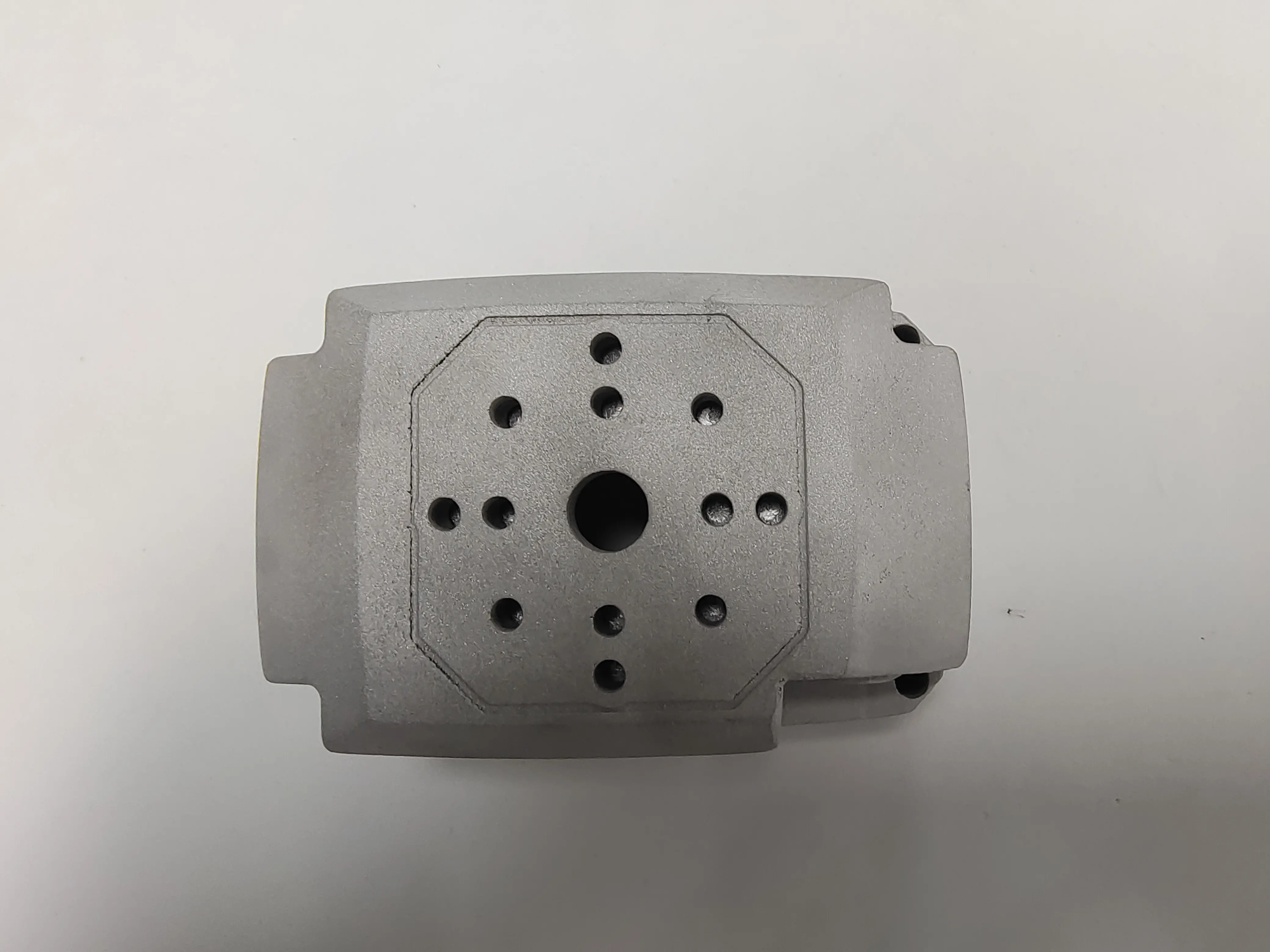
When your bait design requires ultimate precision, the durability of high-quality lead castings or the exploration of complex internal geometric shapes that are not suitable for plastic printing, Great Ready. As a leading and professional rapid prototyping manufacturer based in China, we specialize in the possible boundaries of metal additive manufacturing.
- Cutting-edge SLM technology: We leverage state-of-the-art selective laser melting (SLM) 3D printers to make complex, fully dense metal parts directly from digital designs.
- Prototypes like professionals: Need a functional prototype mold that can withstand hundreds of molten lead pours for rigorous testing? SLM printed metals such as stainless steel 316L, Maraging Steel, tool steel or aluminum alloys offer unparalleled heat and mechanical strength.
- Complexity without compromise (metal version): SLM overcomes the geometric limitations that are often faced with traditional CNC machining, and is used in complex molds to achieve next-level cooling channels, conformal features and optimized internal structures.
- One-stop solution: Greatlight provides comprehensive support – from expert design optimization recommendations to high-precision printing and a complete set of post-processing services (pressure relief, heat treatment, precise finishing such as CNC machining, EDM, polishing).
- Speed and customization: We provide a fast turnaround for tailored materials and custom materials and processed finishes suitable for mold applications. Efficiently obtain high-performance, custom precision prototyping parts.
- Economic Bridge: For proven designs on desktop plastics, transitioning to high-quality SLM metal molds is a logical step in productivity when transcending the prototype stage.
Looking for precision and performance outside of desktop? Explore possibilities with Greatlime Rapid Prototyping Service. Please give your custom mold challenge quote today!
Conclusion: The future of bait making is in your hands (and printers)
DIY 3D printed bait molds give anglers unprecedented creative freedom and fast prototyping. Start with accessible FDM printing and materials such as PETG or Advanced ASA, you can quickly design, print, test and perfect unique bait shapes. For resin lovers and finer details, MSLA comes with engineered resins to offer another compelling path, although usually at higher material costs.
Safety, especially in lead castings, is crucial. Start with softer materials, give priority to exhaust gases and be cautious when venturing into molten metals. Although desktop plastics have limitations on long-term, high-temperature lead casting, they are amazing design tools. When your prototype is ready for use in robust, high-performance metal molds, Great Provide industrial-grade SLM technology and expertise to turn your perfect digital design into a mass production reality. Embrace the fusion of tradition and technology – pleasant design, printing and fishing!
FAQ (FAQ)
-
What is the best 3D printer for making bait molds?
- No single "The best." Start with a Known reliable If you want cost-effectiveness and versatility, FDM printers for PETG/ASA. If surface details are your top priority, choose a high-resolution MSLA printer and you are ready for engineering resin costs. The printing mechanism building volume should match your target bait size.
-
Can I safely cast lead in a 3D printed mold?
- Proceed with caution and ensure safety (see step 4: Casting). Use only high temperature FDM materials such as nylon, PC mixtures or specialized ABS/ASA formulas Special rating Significantly above the 327°C melting point of Lead and realize that these are pushing the filament limit. SLM metal molds are a safe, durable solution for careful lead casting. no way Use PLA or standard resin.
-
How to ensure my inverted bait is released smoothly from the mold?
- Mold release agents are not negotiable! Apply roomy high temperature spray or PVA to release before each pour. Keyarin is painting everything. Make sure your cavity surface is as smooth as possible (sand/smooth FDM printing). Proper exhaust can prevent air pockets that may lead to adherence.
-
How many baits can I project from a plastic 3D printing mold?
- Depend heavily on the material, casting media and process:
- PLA: Rare, maybe 1-10, then before major warping/damage (heat pouring is not recommended).
- PETG: Perhaps 5-20 low-temperature pour (resin/cool plastic) or cautious lead may be less.
- ASA/ABS: Resin/soft plastic 20-100+; 5-20 lead (expected degradation).
- Engineering Resin (SLA): Highly variable based on specific resin formulations – 10-50 of resin/soft plastics; usually not suitable for repeated lead casting.
- Metal (SLM): Hundreds to thousands of leads poured.
- Depend heavily on the material, casting media and process:
-
Where can I find or learn CAD software for bait mold design?
- Free options: Tinkercad (web-based beginner), Fusion 360 (free amateur/startup – powerful), agitator (free, steep learning curve for hard surfaces).
- Paid Options: SOLIDWORKS, RHINO3D. Online tutorials are all over YouTube. It’s easy to get started!
-
Greatlight prints parts for mold inserts or traditional mold frames?
- Absolutely! Greatlight’s SLM technology specializes in the production of highly detailed, durable cores, cavity or complex inserts designed to be installed in standard metal mold chassis. This can be a highly cost-effective solution for adding complex geometry to conventionally machined molds. Please contact us to discuss your specific insertion requirements.
- What are the key design considerations for the mold itself? (gate, ventilation hole, draft corner)
- SPRUE: Must be large enough to fill quickly, but not too big, it will waste material or create huge doors. Conical gates are common.
- Ventilation: Basic Escape! tiny channels at the end of the mold cavity or through the divider. Plastics/resin at depths of 0.1-0.3mm are typical. Without vents, you will get a gap.
- Draft angle: The small taper on the vertical surface (1-3 degrees) greatly relaxes the lowered and protects the exquisitely printed mold wall. FDM printing molds are crucial. If the finish is perfect, it is crucial for very rigid SLA resin molds.
Diving into the beneficial world of DIY 3D printed bait molds. Experiment, innovation and lines!