Lighting up your treasure: The final guide to DIY 3D printed display cabinets
Display cabinets are more than just containers; they are miniature stages that display precious possessions – collections, rewards, fossils or exquisite artifacts. Traditionally, buying a custom display solution means high costs or compromises. Input 3D Printing – Game-changing people are able to make custom displays with unprecedented ease and creativity. This blog explores the world of DIY 3D printing presentation cases, revealing why, how and exciting possibilities.
Why choose 3D printing for display cabinets?
- Final Customization: forget "close enough." Design a case Perfect Tailored to the size, shape and aesthetics of your item – whether it’s a massive LEGO bio plant, fragile insect specimens or irregular sports trophy. Embedded, internal installation and unique geometry make it simple.
- Cost-effectiveness of prototypes and low capacity: Especially for single-use or small-batch projects, 3D printing eliminates the expensive tool costs associated with injection molding or traditional manufacturing. Iterative design is cheap.
- Design freedom and complexity: Create complex lattice structures, integrated light channels, articulated hinges or interrelated parts that are impossible or too high compared to other methods.
- Material versatility: Match the material to the requirements. Want clear visibility? Choose a transparent PLA or resin. Need durability? Use PETG or ABS. Looking for high-quality, dust-proof seals with optical clarity? Acrylic (PMMA) is like Greatlight’s biggest competitor in printing through services. For maximum strength or heat resistance, metal or engineered thermoplastics can be used.
- Manufacturing on demand: Print exactly what you need when you need it. No inventory. It is easy to reprint damaged parts later or create links for larger display systems.
Designing your masterpiece: Key considerations
- Accurate measurement: Start with accurate measurements of the project, including any bracket or mount required. Add tolerances – usually 0.2-0.5mm per side – for a comfortable, non-binding fit.
- Purpose and function:
- Right to use: It will have doors, lids, movable panels or slide out of the tray? The hinges can be printed on site or separated. Magnets provide elegant hidden closure.
- visibility: Choose transparent materials and maximize window size. Consider tilted panels or integrated lighting solutions (LED bars/lights).
- Stability and security: Ensure a broad and stable foundation. Plan the fixing points (screws, adhesive pads) if the wall/table is installed. For valuable items, consider lockable designs.
- Dust and environmental protection: A tightly designed sealing panel meets. Acrylic has excellent impermeability.
- Structural integrity: Use appropriate shell thickness (usually 1.2mm-3mm+ depending on size/material), for ribs and logical layer orientations of large flats to avoid weaknesses. Simulation software (even basic slicer previews) helps to detect stress risks.
- aesthetics: Smooth finishes, integrated textures (wood, facets), branded prints or strategic closures enhance visual appeal. Post-processing is the key.
Printing process: From file to physical case
- Previous design: Sketch your thoughts! Define core dimensions and functions.
- 3D Modeling: Use CAD software (Tinkercad for beginners, Fusion 360/Freecad for middleman, mixer/SolidWorks for advanced). Design components (base, wall, cover, hinge, mount). Boolean operations help create precise cutouts.
- Prepare to print (slice):
- Select the best material (see below).
- Oriental Parts: Maximize structural strength along the expected load. Minimize the required support structure (usually at overhang > 45 degrees).
- Setting parameters: layer height (0.1-0.3mm of detail/speed tradeoff), fill density (15-30% in most cases, higher load parts), printing speed, temperature. Transparent printing often benefits from slower speeds and careful temperature control to ensure clarity.
- Generate support (if required): Try supporting types and interfaces. Trees or organic support usually minimizes footprints.
- print: Execute your tiling file. Ensure a clean build board, a stable temperature environment (especially for ABS, nylon), and carefully monitor the first layer.
Material Important: Choose the right plastic (or metal!)
- PLA: Advantages: Easy to print, width range (including transparent/transparent), low cost, aesthetically pleasing finish. Disadvantages: brittleness, poor heat resistance, biodegradable (not ideal for long-term/heating environments). Suitable for basic indoor displays.
- PETG: Advantages: Excellent layer adhesion, good impact strength, better heat resistance, water resistance, decent transparency than PLA. Cons: Bigger strings, trickier than PLA. Great all-rounder for durable cases.
- ABS: Advantages: Very durable, excellent impact strength, good heat resistance. Disadvantages: Easy to bend (need a closed printer, heating bed), smoke needs ventilation, poor UV resistance (Yellows). Ideal for tough cases where high heat resistance is required.
- Asa: Advantages: Similar strength/calorie as ABS, but much better UV/weather resistance. Disadvantages: Similar ventilation printing conditions are required. Ideal for exposure to sunlight (e.g. near windows).
- Transparent resin (SLA/MSLA): Advantages: Excellent clarity and fine detail to achieve smooth surfaces. Disadvantages: UV light degrades over time compared to thermoplastics and requires extensive post-processing (washing, curing). Best for small crystal clear miniature or jewelry boxes.
- Acrylic acid (PMMA): advantage: Optical clarity is available with commercial watches, excellent UV resistance, excellent durability and dustproof seal. It can be achieved through advanced polymer/material injection technology. Disadvantages: Professional printing service is required Great. Ideal for museum-level clarity and conservation.
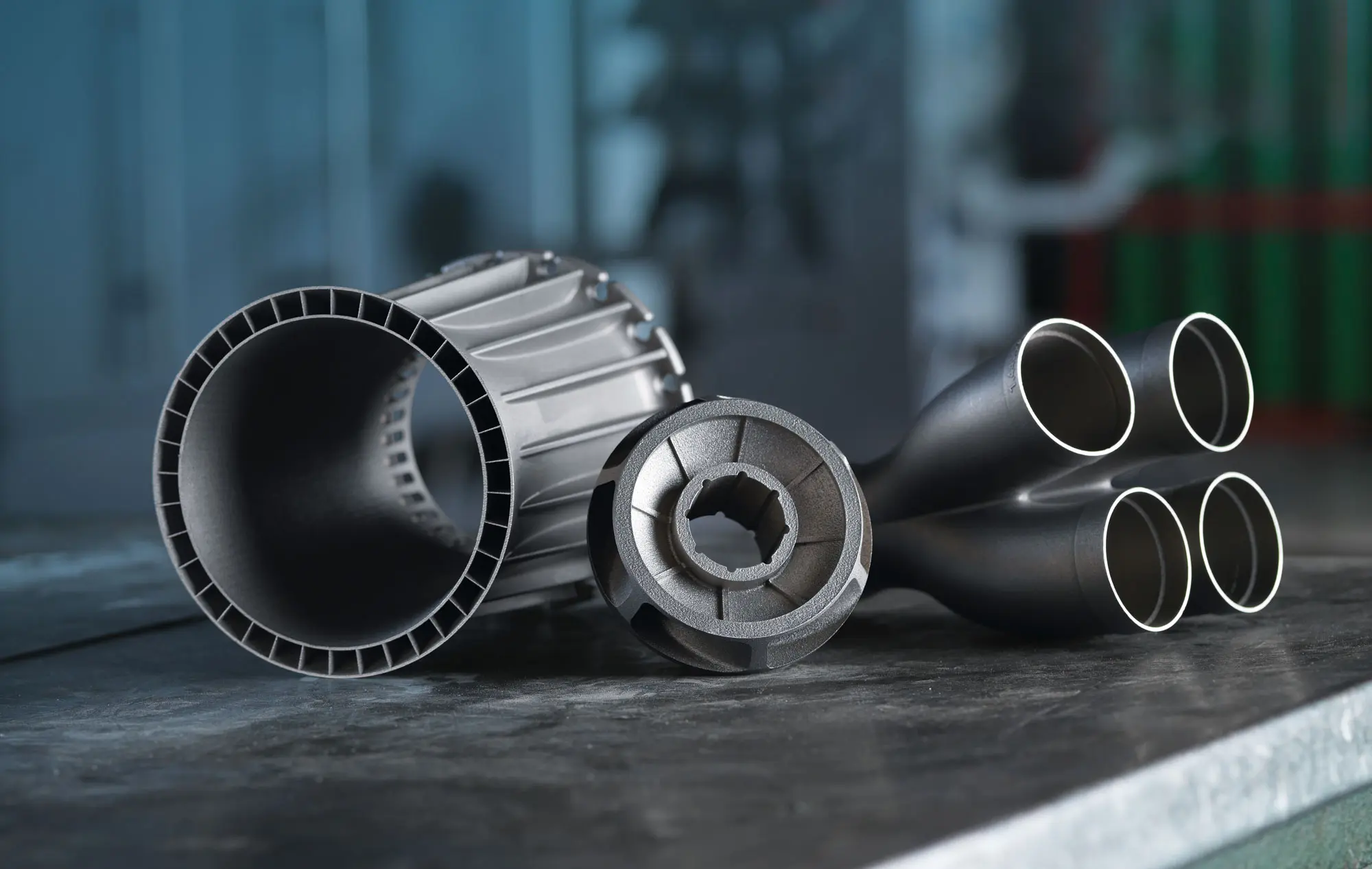
- Metal (aluminum, stainless steel): Advantages: Final strength, durability, heat resistance, high quality aesthetics (polished, brushed). Disadvantages: The huge cost requires industrial SLS/SLM/DML printing. Companies like Greatlight use advanced SLM (Selective Laser Melting) technology to enable professional implementations to enable powerful precision metal components. Ideal for high safety, high value or high temperature industrial display applications.
Improve your project: Post-processing and professional help
Your printed shell is rarely the final product on the bed:
- Basic finish:
- Support removal: Carefully cut/scrape support. The pliers and rinse cutters help.
- Grinding: Gradually sand (wet sand helps thermoplastic), from coarse sand to invisible layer lines and smooth connections. Filling primers helps hide blemishes.
- Glue: Super bonded (CA) bond pla/petg. Solvent soldering (ABS/acetone slurry) creates near-seamless bonds for compatible plastics.
- Polishing: Clear parts benefit from flame polishing (Short Flame Pass – Risk!) or polishing compounds for optical clarity.
- Painting and decoration: Starting is crucial. Use acrylic coatings that are suitable for plastics. Clear jacket protective finish. Vinyl decals add talent.
- Add hardware: Epoxy magnet, install hinges, add felt pads to the base, and integrate LED lights.
- When DIY encounters Pro: For really great results, especially in challenging materials like Clear Acrylic acid (PMMA) or metal (Aluminum, stainless steel), cooperation with professional services is transformative. This is Great shine.
Why consider your presentation case?
Although DIY is licensed, obtaining museum-quality clarity, precision metal manufacturing or complex, powerful geometry can surpass hobby abilities. Greatlight is a leader in professional rapid prototyping and manufacturing, providing the capabilities to take your vision for presentation cases to the next level:
- Advanced Materials: Print with high transparency Acrylic acid (PMMA) For amazing clarity and impermeability or robustness Metal (aluminum, stainless steel, titanium) Through their state-of-the-art SLM (Selective Laser Melting) technology.
- Unrivaled precision and power: Professional-level SLM printers and processes ensure excellent dimensional accuracy, detail and material integrity, which is essential for valuable items on display cabinets.
- Comprehensive post-processing: Greatlight offers in-house finishing services including professional polishing (optical clarity is not achieved through DIY), powder coating, anodizing, heat treatment and precision machining – ideal for adding threaded inserts, perfect seals or achieving high-end surface finishes.
- Speed and scalability: Need multiple copies of a fast and complex design? Greglight’s industrial workflow ensures fast turnaround times, even in small batches, One of the best rapid prototyping companies from China For professionals and picky enthusiasts.
- Materials and process expertise: Navigate material selection for optimal clarity, UV resistance or specific durability needs? Greatlight’s experts provide guidance from design (DFM) to final completion.
in conclusion
3D printing democratizes the creation of custom presentations, turning imagination into tangible reality. From simple PLA box protection trinkets to exquisite, transparent acrylic or metal boxes made for museum standards, the possibilities are limited only by your design. Embrace the DIY process for fun to create, learn and perfectly customize. When your project needs clarity, durability or the pinnacle of materials science, such as optical grade acrylic displays or indestructible metal housings – remember, professional partners like Great Just click. They bring industrial firepower (advanced SLM printing and expert finishing) to solve complex metal prototyping challenges and elevate your concept to a truly professional presentation solution, all at competitive speed and price. So start your CAD software, select your filament (or material grade!), and start the ideal stage for designing your treasure.
FAQ: DIY 3D Printing Showcase
Q: What is the best material for beginners in DIY presentation cases?
one: PETG is usually the best choice. It offers significantly better durability and resistance than PLA, better handling pressure, water resistance, and some varieties have high transparency. It requires more tweaks than PLA, but avoids the twisted headaches of ABS.
Q: How much does it cost to 3D print a small display box?
one: Costs vary greatly. The filament cost for a small (100x100x100mm) PLA/PETG case may be $2-$10. Printer wear/ELEC breakdown may double. Resin costs more ($5-$15+). Professional professional printing services (Clear PMMA, Metals) will be higher (above hundreds of dollars), reflecting material costs and expertise.
Q: My transparent print is cloudy or unclear! How can I solve it?
one: Clouds are common in filament printing. Solution:
- Increase the extrusion temperature slightly (experiment).
- Print Very Slow (especially peripheral/filling overlap).
- Increase the layer height (0.3mm+ can have a cleaner layer).
- use "Vase pattern" Pure shell spiral design.
- Post-treatment: Start with fine sanding (more than 600 gravel wet sand) and end with a clear acrylic spray or polishing compound. For true optical clarity, professional PMMA printing (as Greatlight offers) is a reliable solution.
Q: How thick should the walls of my 3D printed display cabinet be?
one: A good starting point is 1.2mm to 3mm. Smaller boxes/shorter walls may be thinner (1.2-2mm). Larger panels or load-bearing components require 2mm-3mm+. Add thicker ribs or edges to the base and make stability in large designs. Fill density (15-30%) is also considered.
Q: Can I really make a fully functional transparent case?
one: Achieve authentic, reliable, DIY ray seals with silkscreen are very challenging due to the limitations of layer adhesion. You can get close by with precise design, smooth finish, integrated gaskets (printed or silicone) and glue, but there may be microscopic gaps. For museum standard dustproof/airtight monitors, professional Acrylic (PMMA) printing service Due to the impermeability and seamless, optically clear structure, it is necessary.
Q: When should I consider using professional 3D printing services such as Greatlight in a display cabinet?
one: Consider the following situations:
- You need a sharpness similar to optical glass (Acrylic/PMMA).
- Use robust or high temperature Metal (SLM printing).
- Needs accuracy beyond the capabilities of hobby printers.
- Advanced post-treatment (polishing/processing/anodizing) is required to obtain a premium finish.
- High batch consistency or faster industrial turnover is required.
- Your design complexity requires professional-level reliability and material properties.
Ready to create it? Whether it’s DIY on the desktop or through professional partners like Greatlight, the perfect display cabinet is waiting!