Unleashing Storage Freedom: The Ultimate Guide to Building a DIY 3D Printed NAS Case
For tech enthusiasts and tinkerers alike, network-attached storage (NAS) is a must-have—centralizing files, media, and backup. However, commercial NAS devices are often expensive and have limited customization. What if you could design a NAS based on your specific needs using a tool as easy to use as a 3D printer? This guide takes an in-depth look at how to create a custom 3D printed NAS case that combines affordability, flexibility, and innovation.
Why bother with a DIY 3D printed NAS?
Commercial NAS solutions limit hardware choices, charge high fees for additional drive bays, and offer generic designs. DIY methods can solve this problem:
- cost savings: Assemble your own components – no branding.
- Customization: Need 8 drive bays? Triple fan cooling? Design it.
- Upgradeability: Freely replace parts without worrying about compatibility issues.
- ecological awareness: Repurposing old hardware (such as retired PC motherboards).
- Skill development: Master CAD design, printing and Linux-based NAS software.
Plan your build: components first
A NAS lives or dies by its hardware. Start here:
- Motherboard and CPU:
Choose low-power chips (Intel Celeron, AMD Ryzen Embedded). Mini-ITX boards save space. - Memory:
Minimum 8GB for a basic NAS; 16GB+ if running applications (Plex, VM). - storage:
Use a NAS-grade HDD (WD Red, Seagate IronWolf) or SSD for speed. Pre-plan bay capacity. - power supply:
80 Plus Gold efficiency (eg SFX format for compact builds). - cool down:
Quiet fan (120mm+) and radiator. Avoid liquid cooling – the complexity isn’t worth it. - networking:
2.5GbE NIC enables faster transfers.
Design your case: Precision matters
Once the components are finalized, design the case around them:
- software tools:
Fusion 360 (parametric design), FreeCAD (open source) or TinkerCAD (for beginners). - key design elements:
- drive tray: Vibration-absorbing mount protects disks. Ensures tool-free disassembly.
- air movement: Separate compartments for HDD (cold) and CPU/PSU (hot). Direct airflow path.
- structural integrity: Reinforce stress points (drive base, motherboard tray).
- right to use: Removable panel for maintenance.

(Concept: design the internal structure first, then "wrap" Chassis. )
Ontology: Start with an open source NAS case design on Thingiverse, then modify the dimensions using calipers to measure the components.
Materials and printing: the right choice
Material selection affects durability, heat resistance, and print success rate:
| Material | most suitable | warn |
|---|---|---|
| People’s Liberation Army | Prototyping, low heat | Warpage >50°C – Risk near HDD |
| polyethylene terephthalate | budget final build | Heat resistant (~80°C), sturdy |
| ABS | High temperature resilience | Requires shell, annealing |
| Metal | Industrial grade | Requires SLM/DMLS printing |
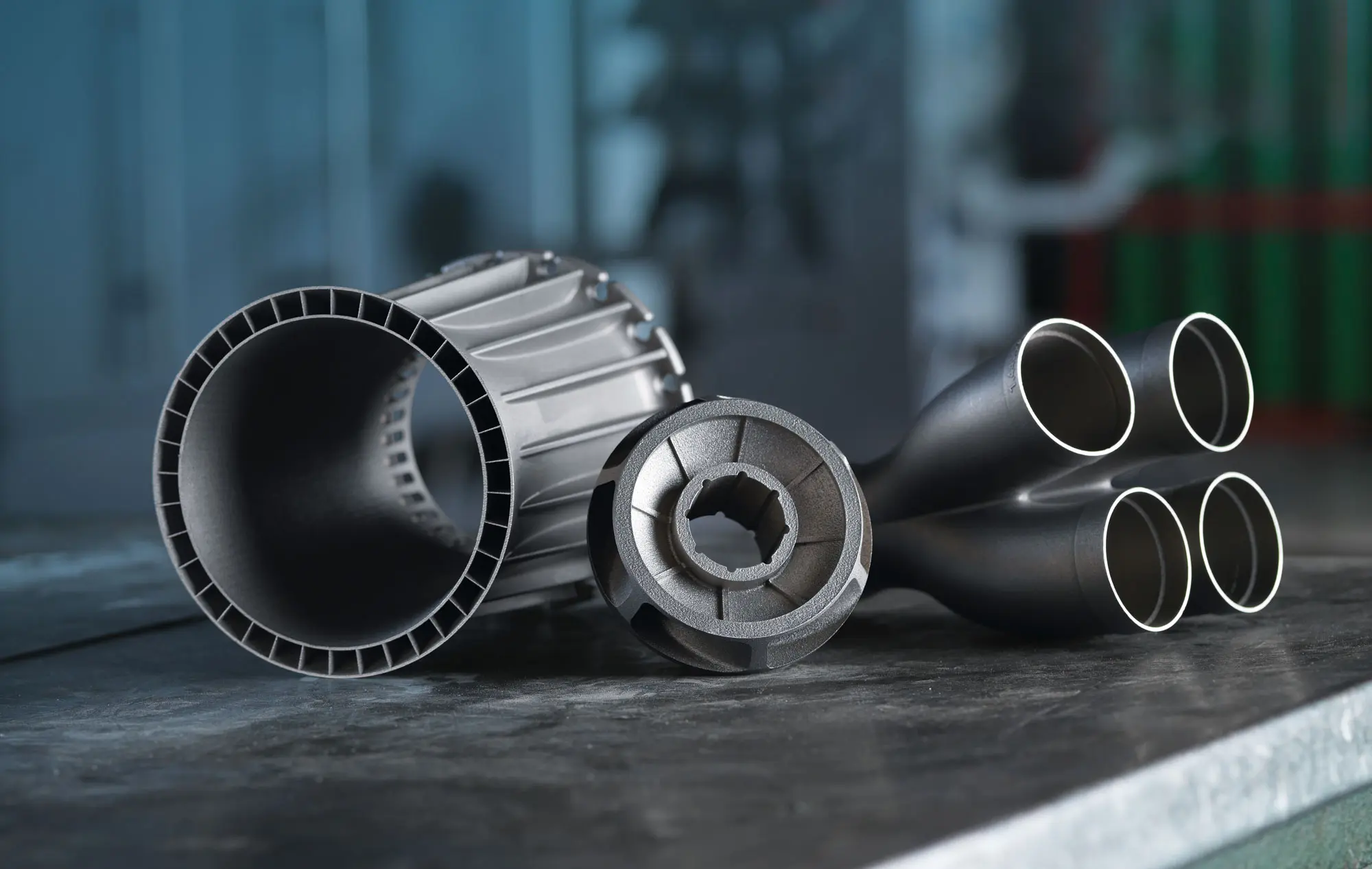
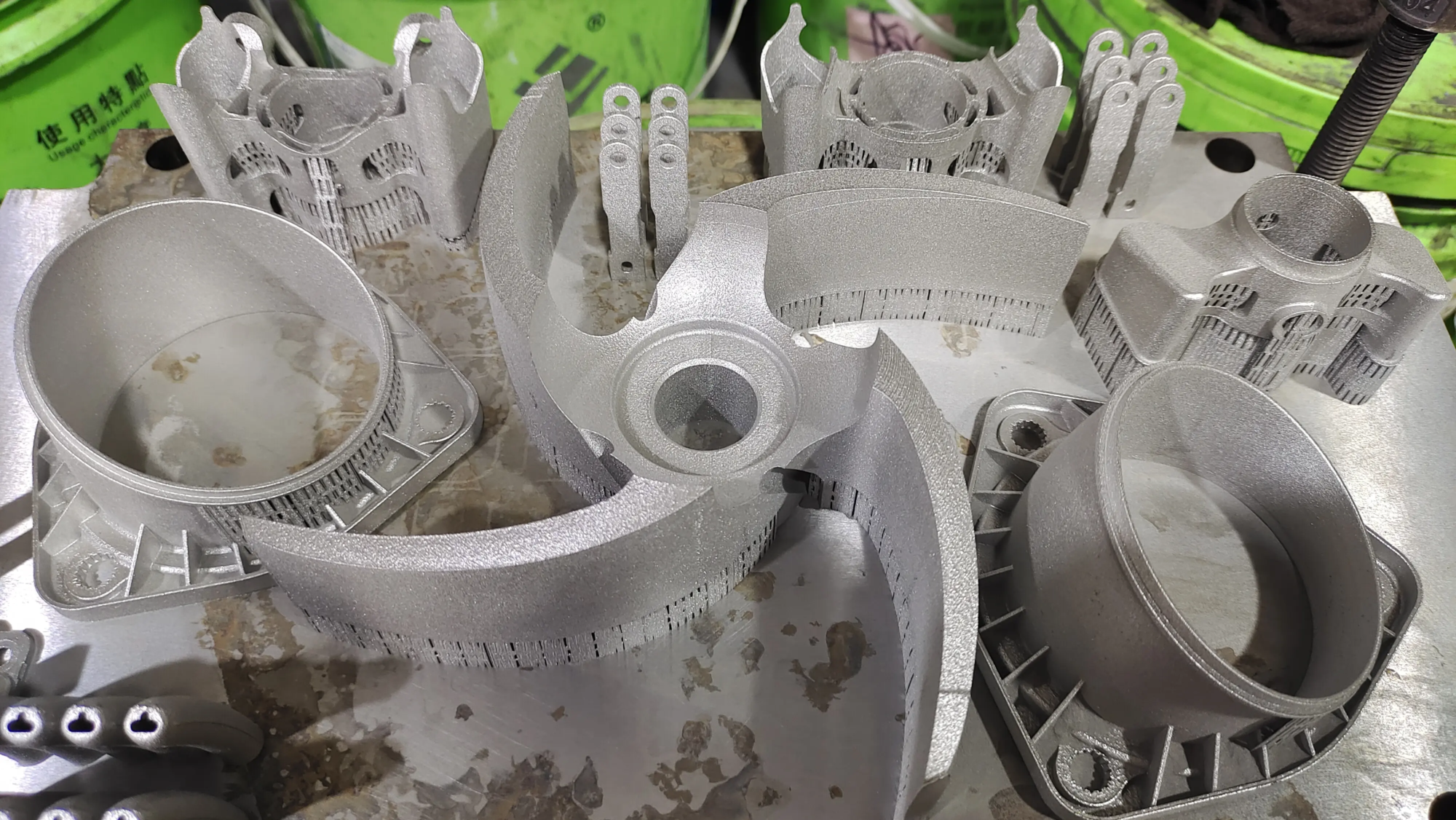
Does PLA deform under the high temperature of NAS? PETG solves this problem. For mission-critical builds (or complex geometries like airflow ducts), metal 3D printing reigns supreme – think aluminum or stainless steel. company likes glow rapid prototyping Specialize in this. Using an industrial-grade SLM (selective laser melting) printer, they transform the CAD design into a heat-resistant, ultra-precise metal housing. Outsourcing complex parts ensures thermal stability and EMI shielding – ideal for 24/7 operation.
Printing process: Dial in your settings
Printing parts have strict requirements:
- Printer settings:
Calibrate the bed level and use a heated bed (70-80°C for PETG/ABS). - Key settings:
- Layer height: 0.2mm (balance detail and speed).
- Padding: Rigidity 20-30%; 100% at screw points.
- Support: Avoid complex supports on internal installations; design self-supporting angles.
- Post-processing:
Sand textured surfaces, vapor-smooth ABS, or apply conductive paint to reduce EMI.
Don’t have a printer? Services like GreatLight handle everything from file optimization to post-processing, perfect for near-perfect dimensional accuracy in plastic or metal.
Assembly: giving it life
Using printed parts, assemble systematically:
- Test fit components: Verify clearance, no screws required.
- Install components:
- Use brass inserts over the molten plastic wire.
- Use silicone gaskets to insulate the HDD to dampen vibrations.
- Cable routing: Design internal channels preprint. Use modular PSU cables.
- Hot verification: Run a stress test (monitoring temperature under load) using HWiNFO.
Software: The brain of NAS
Refresh the drive and install:
- TrueNAS Core:ZFS data integrity, enterprise grade.
- open media library: User-friendly plugin ecosystem.
- Cancel RAID: Mix and match drive sizes (paid).
Configure RAID (RAID 5/6 for redundancy), SMB/NFS shares and automatic backups.
So…is it worth it?
undoubtedly. The project doesn’t just store data, it reclaims control of the hardware. For $200 to $500 (not including drives), you can have a NAS that’s more scalable than a $1,000 off-the-shelf unit. Plus, it looks unique. While 3D printing plastic casings is possible, metal fabrication needs to be done by professionals, e.g. huge light Improved durability. They remove the friction of prototyping—material networking, surface preparation, and metal printing to tight tolerances—so you can focus on functionality. Ready to innovate?
FAQ
Q: How much does it cost to DIY 3D printed NAS?
A: Without drive: $200-$500. Plastic wire: ~$20/kg. Outsourcing metal printing increases cost but extends service life.
Q: Will PLA melt inside the NAS?
A: It’s possible – HDDs operate at 40-50°C. PETG or ABS are safer. For high-density construction, metal is unbeatable.
Q: Can I retrofit an old computer case?
A: Yes, but the print offers superior size optimization and customized cooling. The scrap box lacks drive airflow specialization.
Q: How difficult is this for a beginner?
Answer: Moderate. CAD skills take practice, but the community (Reddit’s r/DataHoarder) can help. Outsourcing printing can minimize obstacles.
Q: Is metal 3D printing practical for DIY enthusiasts?
Answer: Of course. Working with a rapid prototyping manufacturer like GreatLight, you don’t need to own a $500,000 printer to get industrial SLM/DMLS quality. They process heat treated metals and generate CNC-ready files.
Get rid of bland, overpriced boxes. Design it. Print it—or have an expert make it. Your data, your rules.