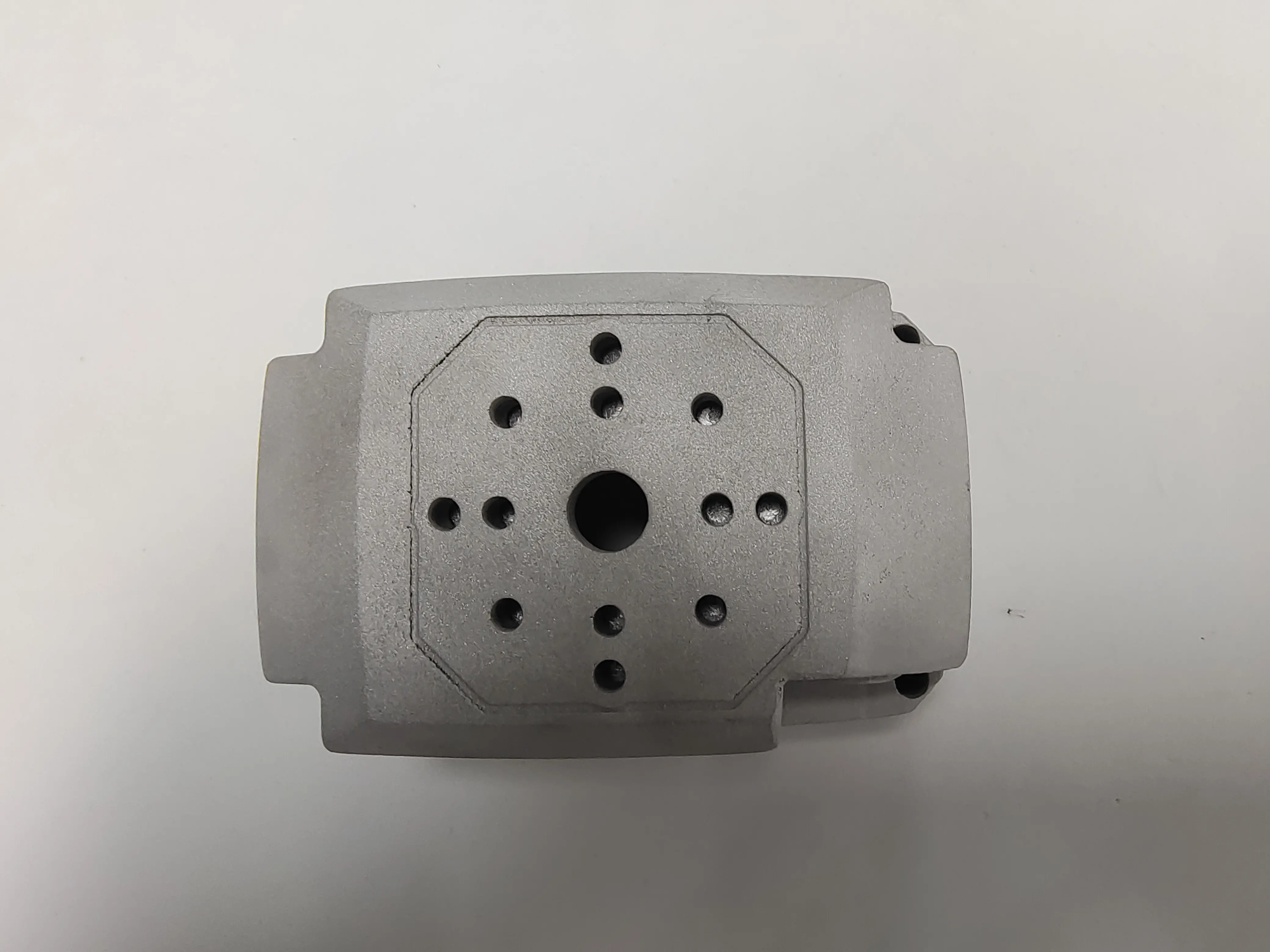
The Rise of Home Gunmaking: DIY AR with 3D Printing
The democratization of manufacturing through 3D printing has revolutionized countless industries, and firearms are no exception. Enthusiasts are increasingly exploring printing their own AR-15 lower receivers—the basic components that nicely house the trigger assembly and magazine. While this promises unprecedented customization and accessibility, it requires strict attention to legality, security, and technical precision. Let us analyze this (u00a0) trend pragmatically.
Why consider 3D printing your lower body?
- Cost effective – Commercial printing can be expensive; use affordable supplies or easy-to-use metal printing services to reduce printing costs.
- Customized – Tailor-made ergonomics, aesthetics or lightweight designs not possible with mass-produced parts.
- educational value – Deepen your understanding of firearms mechanics and additive manufacturing principles.
Legal minefield
Please proceed with extreme caution. In the United States:
- The Undetectable Firearms Act requires that all firearms contain detectable metals.
- Laws vary widely from state to state: Some ban homemade firearms entirely; Others require federal permission.
- If the design is shared internationally, ITAR (International Traffic in Arms Regulations) restrictions apply.
Always consult local law or legal counsel before proceeding. Ignorance is not a defense.
Materials matter: from filament to industrial alloys
For plastic prototyping:
- PLA/PETG: Common starting material, but prone to cracking under pressure.
- Nylon (PA6/PA12): Excellent impact resistance. Requires professional printing to avoid warping.
For functional durability:
Plastic lowers are still limited in nature. Metal is non-negotiable for reliable performance:
- Aluminum alloy (6061-T6/7075-T6): Standard for AR lower block. Lightweight yet tough.
- Stainless steel: Extremely durable at the expense of weight.
- titanium: Best strength-to-weight ratio, but expensive and complex to print.
This is where you work with experts, e.g. huge light Change the results. our industry SLM (Selective Laser Melting) The printer produces high-density, void-free metal parts with a precision comparable to that of forged parts—ideal for pressure-bearing downtubes.
Steps: Print the lower rail
-
design procurement:
looking for Legal compliance CAD files (eg Fosscad Community). Never change critical dimensions such as bolt snap geometry. -
Preparing for printing:
- Pl province asteristic: Use 100% filling, high temperature setting, and shell to prevent layers from separating.
- Metal: Entrust professionals. GreatLight optimizes support structure, orientation and heat treatment for perfect results.
-
print execution:
- Polymer printers must use chamber heaters and hardened steel nozzles to handle abrasive materials like carbon fiber nylon.
- Metal printing requires SLM/DMLS machines – layer resolution below 30μm prevents stress points.
- Post-processing:
- annealing: Plastic parts stress relieved in oven (~100°C).
- metal processing: Including CNC machining (GreatLight provides a one-stop shop for mil-spec reaming, threading and heat treatment).
Why Specialty Fabrication Wins with Metal Lowers
DIY metal printing remains impractical for most hobbyists. Challenges include:
- Equipment cost: Industrial SLM printer over $200,000.
- security risk: If left untreated, residual stress can cause cracking.
- regulatory risk: Improper manufacturing reduces the risk of catastrophic failure.
by outsourcing to huge lightyou use:
① Aerospace-grade SLM machine minimizes pore defects.
②In-house processing to ensure military specification dimensional accuracy.
③Certified heparin post-processing (shot peening, T6 heat treatment).
④Material traceability and batch inspection documents.
Innovative design skills
- Integrate lattice structure Access non-critical areas to reduce weight without sacrificing integrity.
- Apply Anti-rotation pin hole Designed to prevent trigger group walking.
- use Reinforced buffer tower: Usually the first point of plastic failure. Metal hybrid solutions extend part life.
Conclusion: Knowledge is your best tool
3D printing AR reduces the integration of innovation and responsibility. While polymer variants can serve as educational projects, Metal lower receivers require industrial-grade precision for safety and legality. That’s what makes GreatLight so great. Our combination of SLM expertise, ISO certified machining and end-to-end post-processing ensures lowers meet or exceed ATF standards – all quickly customizable and competitively priced.
Whether you are conducting an experimental design prototype or pursuing a cottage industry production process, respect engineering and regulatory ethics. The future of gunsmithing is evolving; safely evolving within it.
FAQs about printing AR lowers
Q1: Is 3D printing lower body legal?
A: At the federal level, yes—if detectable and ranked for personal use. However, state prohibitions (e.g., California, New Jersey) apply. Always prioritize compliance.
Q2: How many bullets can the plastic lower cylinder withstand?
Answer: High-quality nylon prints can handle u00a0~500 bullets after reinforcement, but metal materials generally have a superior service life.
**Q3