The Enchanting World of Dragons 3D Printable Files: Your Ultimate Guide
Dragons have captured the human imagination for centuries – symbols of strength, wisdom and mythical beauty. Thanks to 3D printing, these legendary creatures can now appear directly on your desk. Whether you’re a hobbyist, artist, or engineer, dragon 3D printing files offer endless creative possibilities. But creating a flawless miniature Smaug or an elegant Chinese dragon requires more than just hitting "Print." In this guide, we’ll take a deep dive into optimizing dragon printing, leveraging cutting-edge technologies like metal SLM printing to achieve unparalleled durability and artistry.
Why Choose Dragon 3D Printing? beyond aesthetics
The Dragon model is one of the most popular 3D printed designs, and for good reason:
- intricate details: Scales, horns and wings test your printer’s accuracy as well as your design skills.
- cultural significance: From European flying dragons to Eastern dragons, these documents celebrate folklore from around the world.
- functional potential:** In addition to sculptures, dragon patterns can be used as gears, brackets, or custom industrial components when crafted from engineering-grade materials.
Browse Dragon file formats: STL and 3MF
Not all files are created equal. Choosing the right format ensures your dragon retains its ferocious beauty:
- STL (stereolithography): Universal standard. Simple but complex geometries, such as overlapping wings, are prone to errors.
- 3MF (3D Manufacturing Format): Newer and more advanced. Preserves color, texture and multi-material data – perfect for multi-part dragons.
For tips: Use slice files from Ultimaker Cura or PrusaSlicer "tree support" to minimize scarring on the delicate abdomen.
Designing for success: scale, support and direction
A poorly oriented dragon may suffer broken claws or droopy wings. Master these design principles:
- Scale wisely:
- Small print (below 10cm):** Shows fine detail, but risks fragility.
- Large print (20cm+):** Stable, but may expose layer lines. Use epoxy to smooth the surface after printing.
- Optimization direction:
- Position the wings parallel to the build plate to avoid resting on visible surfaces.
- Rotate the serpentine vertically to reduce support scarring.
- Support strategy:
- Disable "everywhere" support. ** Use custom supports only under wings, tail, or extended limbs.
Materials matter: from PLA to titanium
Your dragon’s purpose determines its physical soul:
- Polylactic acid/PETG: Affordable decorative pieces. PETG provides flexibility for thin wings.
- Resin (SLA/DLP): Unparalleled for miniature dragons (<15 cm), with jewel-like clarity.
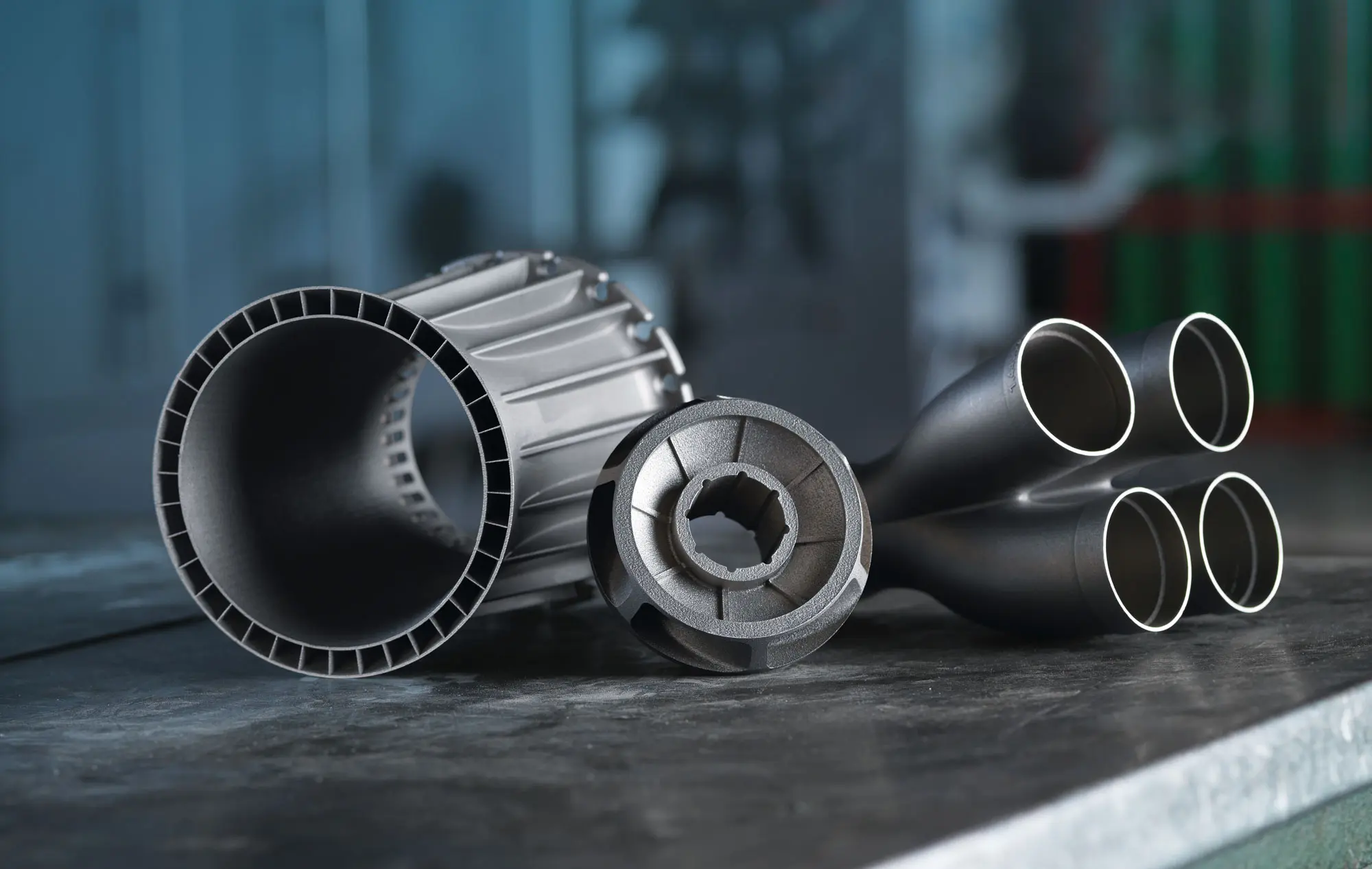
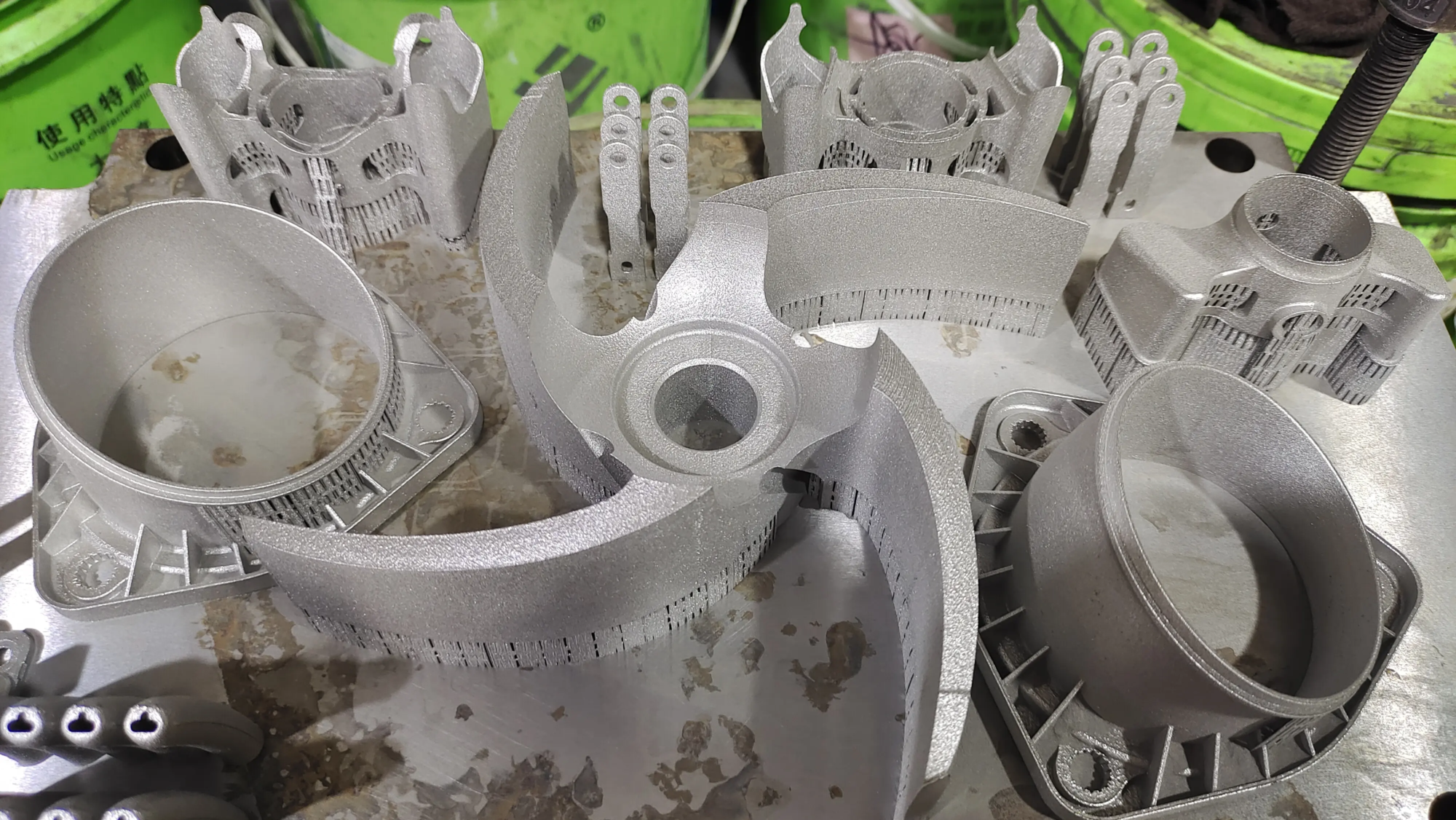
- Metal SLM printing: When dragons must withstand stress, such as automotive or aerospace components, metal is king. At GreatLight we employ Selective Laser Melting (SLM)** technology prints dragons at:
- Stainless steel: Outdoor sculptures are corrosion-resistant.
- titanium: Lightweight yet strong, perfect for wearable art or robotics.
- aluminum: Balance cost and durability of functional parts.
Post-processing magic: giving life to dragons
Raw printing is just the beginning. Level up your dragon with these expert tips:
- Sanding and priming: For resin/PLA use 400–2000 grit sandpaper. For metal dragons, Honglaite CNC assisted polishing Achieve mirror effect.
- painting: Primer with filler primer to hide layer lines. Airbrushing enhances scale depth.
- metal surface treatment:**
- Electropolishing the stainless steel dragon to prevent oxidation.
- Titanium is sandblasted to create a matte tactile texture.
- Powder coated for bright colors and shatterproof.
- assembly:** For segmented designs, epoxy welding ensures seamless joints.
Unlocking industrial potential: dragons beyond decoration
Dragons are more than just works of art—they’re engineering marvels in disguise:
- gear system: Dragon gears add whimsy to machinery (printed in durable nylon or metal).
- Heat dissipation: Dragon pattern heat sink utilizes surface area geometry (ideal for aluminum SLM printing).
- architectural features: Bronze-plated dragons are used as load-bearing brackets in custom interiors.
exist huge lightwe focus on turning these concepts into reality. Our SLM 3D printers deliver accuracy down to ±0.05 mm, and our One-stop post-processing– Including heat treatment and EDM wire cutting – ensuring unparalleled structural integrity.
Conclusion: Where myth meets precision manufacturing
3D printed dragons connect ancient stories with modern technology. By mastering file handling, direction, materials, and finishing, you can create stunning pieces, whether displayed on a shelf or integrated into a satellite chassis. When your vision requires industrial-grade resiliency? that’s there huge light Sparkling. As a leading rapid prototyping company rooted in the forefront of manufacturing in China, we integrate SLM printing expertise Make your dragon last for centuries—both metaphorically and literally—with comprehensive finishing services.
Customize your dragon, scale it to conquering proportions, and drive material science magic today.
FAQ: Dragon 3D Printing Revealed
Question 1: How to prevent the wing tips on the FDM printer from breaking?
Adjust settings: Increase the infill density to over 30%, reduce the printing speed of the wings to 40 mm/sec, and use PETG/TPU filament.
Q2: Can printing dragons eat printing nozzles?
Yes, tiny details can clog the nozzle. For fiber-filled materials or sheet metal, use a hardening nozzle.
Q3: Why choose metal printing dragon?
Ideal for functional applications (e.g. robotic joints) or permanent outdoor installations where plastics/resins will degrade. SLM-printed titanium dragons can survive in extreme environments.
Q4: How expensive is metal 3D printing?
Quantity matters. A 15cm stainless steel dragon sells for about $120 at GreatLight – optimized by nesting multiple parts in one build.
Q5: Is Smooth Resin Dragon poisonous?
Yes – resin requires ventilation and PPE. However, GreatLight’s UV smoothing eliminates the risk of manual processing.
Q6: Do you provide manufacturable design feedback?
Absolutely. Forward your dragon files to huge light;We will optimize the support structure and tolerances free of charge.
Unleash your dragon. Crafted not just printed. huge light– Prototypes become legends.