Unleashing Lost Sheen: An Expert’s Guide to Elden Ring 3D Printed Models
The land in between holds unspeakable wonders and horrors, presented in stunning detail in FromSoftware’s masterpiece, Elden Ring. For enthusiasts who want to bring a tangible part of this complex world into their own, 3D printing offers an incredible medium. Whether you dream of towering tree sentinels, intricate staffs like Lusaat’s Amphibolite Staff, or Malenia’s brooding figure, the Blade of Miquela, this guide is your map. We’ll work through finding models, selecting materials and techniques, overcoming printing challenges, and achieving truly amazing results worthy of the Lord.
The hunt begins: finding valuable models
- Model repository: Start your exploration on popular platforms:
- Thingiverse and print: Large free collection available. search "Elden Ring" And browse carefully categorized categories (Boss, Weapons, Characters, Creatures). Quality varies so please check reviews and print successful reviews.
- Cults3D and MyMiniFactory: Typically features high quality models, often for a fee. Artists such as Nacho_SG, LordAlec, and Printed Obsession have created incredibly detailed and finely tuned Elden Ring sculptures and busts.
- CGTrader and Gambody: Premium quality, highly detailed STL source, ideal for experienced painters and collectors. Typically includes pre-support files for resin printing.
- Community power: Reddit subreddits such as r/3Dprinting and r/EldenRing often showcase prints and share model sources. Discord communities dedicated to game prints or specific artists are a goldmine of tips and discoveries.
- Optimization and adaptation: Raw game assets (extracted through tools such as UE Viewer) are not always printable. It usually requires a lot of cleanup, polygon reduction and support generation in software like Blender or Meshmixer before printing.
Choose your weapon: printing technologies and materials
The best printing method depends largely on the characteristics of your desired model:
-
Fused Deposition Modeling (FDM/Filament):
- Best for: Large props (weapons, helmets), terrain fragments, simpler character models.
- Material: PLA (simple, affordable, colorful), PETG (tougher, heat-resistant functional parts), ABS/ASA (higher strength and heat resistance, more complex printing).
- advantage: The cost per part is lower, the build is strong, large build volumes can be achieved, and the materials are safe.
- shortcoming: Compared to resin, visible layer lines require extensive post-processing, making it difficult to handle extremely fine details and delicate features.
- Tip: Use fine layer heights (0.1-0.15mm), carefully calibrate, and utilize tree or organic supports in a slicer like Cura or PrusaSlicer.
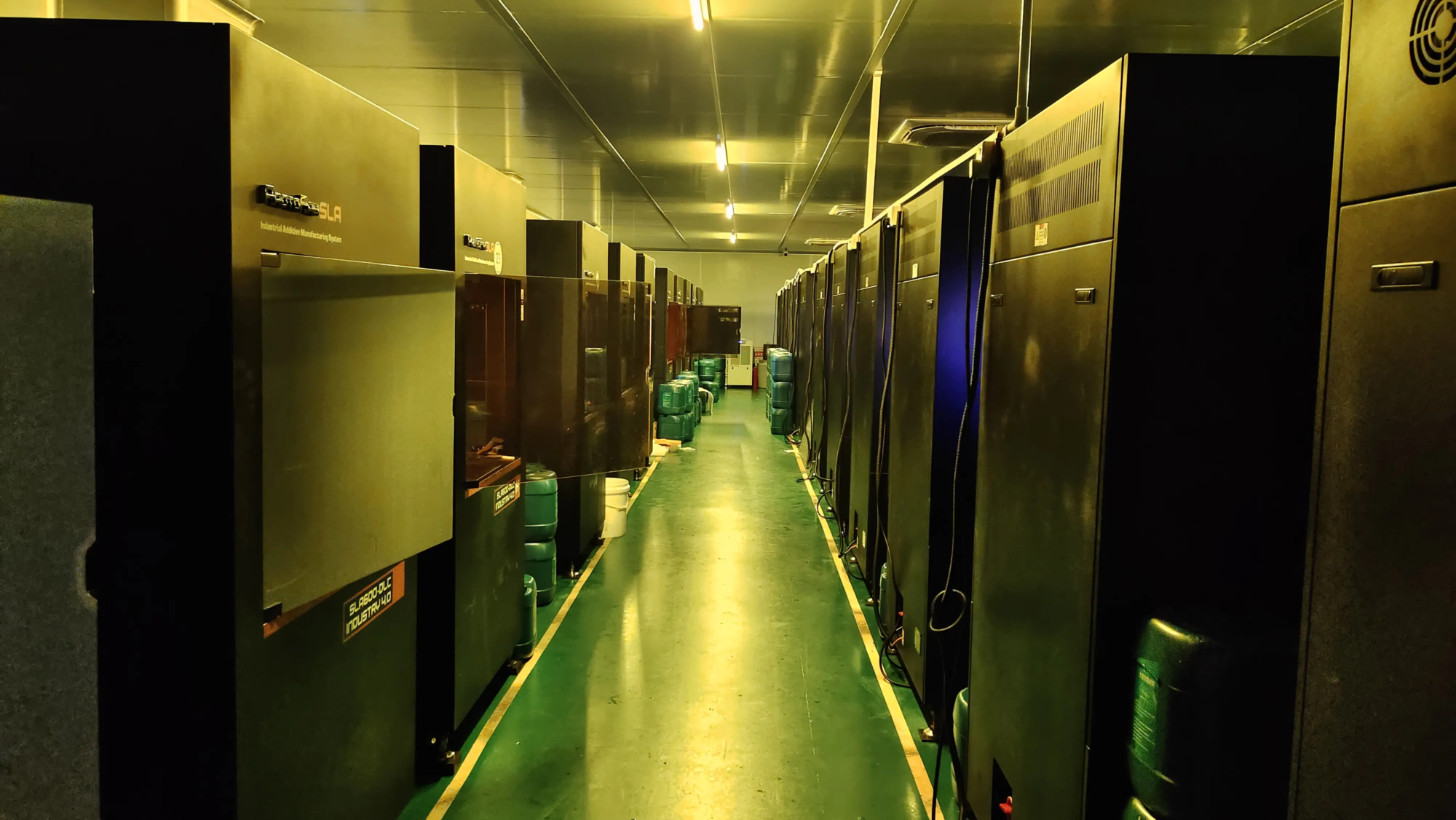
- Stereolithography (SLA/Resin):
- Best for: Highly detailed miniatures (bosses, characters), complex weapons, jewelery quality items, busts.
- Material: Standard resin (good details,"affordable"), ABS-like resin (tougher, less fragile), flexible/tough resin (weapons/handles that require flexibility), specialty resin (transparent, luminous).
- advantage: Excellent surface quality and precision, invisible layer lines are ideal for painting and ideal for fine features.
- shortcoming: Higher cost per part, messy workflow involving liquids, extensive post-processing (washing, curing), smoke/toxic cleanup materials requiring ventilation and PPE.
- Tip: Make sure supports are adequate and optimized (usually the heavy-duty supports required for one-pass printing), and hollow models strategically conserve resin and reduce suction. Cure time significantly affects final strength and appearance.
Expansion Legend: Why Size Really Matters
- Details reserved: Resin works great at small scale (1:10 busts or smaller figures). FDM Modifier Printing larger models requires a lot of detail preservation skills.
- Structural integrity: Tall, thin elements (character limbs, weapon blades) can be easily damaged if the print is too small or the material is not strong enough. Increased size often improves durability.
- Printing time and cost: Larger models exponentially increase print time and material consumption (especially resin). Printing with reduced detail can improve feasibility.
- Functional and decorative: Planning on wearing a printed Blaidd helmet? Material selection (strong PETG/ASA/Nylon), internal structure and fit proportions become critical compared to purely decorative pieces.
Master Craftsman: Post-processing to perfection
Converting original prints into exhibits is crucial:
- Support removal: Carefully snip, cut and sand away the support marks. Resin requires fine precision; hot knife or needle file suitable for FDM.
- Polishing: Smooth layer lines are crucial for FDM. From coarse (120 grit) sandpaper to fine (600+ grit) sandpaper. Wet sand resin for best results.
- Primer: Basic! Creates a uniform surface to improve paint adhesion and reveal defects requiring filler. Spray primers for plastic/metal are best.
- Fill and gap correction: Use auto body filler to fill FDM layer lines, or model putty to fill gaps/joints. Thin layers and sanding are key.
- Assembling and fixing: Multi-part models require solid assembly. Secure the joint with a small metal rod or drill/insert to ensure stability and alignment. Be careful with epoxy or superglue/cyanoacrylate.
- painting: Acrylic model paint is standard. Master techniques such as dry brushing highlights, washed shadows, and glazing. Seal with varnish (matt/satin/gloss).
The test of ambition: overcoming common challenges
- Super complex geometric shapes: Malenia’s windswept hair, Maliketh’s swirling cloak—these push the printer to its limits. Complex support, strategic positioning, and potential model segmentation are all solutions.
- Scale strength: Large FDM weapons require strong internal structure (packing density/pattern), careful orientation to optimize layer adhesion, possibly metal reinforcing rods. Resin prints require adequate thickness and a supportive resin type.
- Material imitation: Achieving a metallic look requires coatings/materials technologies: Metallic coatings, weathering