

Upgrade your ESP32 project: Master 3D printing case design
With versatility and power, ESP32 is a staple for IoT and DIY electronics. However, bringing your project from a wire on the bench to a polished functional device depends on one key element: the fence. 3D printing provides an incredible solution to perfectly tailor-made custom cases for your ESP32 boards and applications. However, designing a truly effective printed case requires going beyond the basic frame. Let’s dive into the nuances of ESP32 case 3D printing to improve your design from good quality to professional quality.
Why 3D Print Your ESP32 Case?
- Perfect customization: Match the exact size of ESP32 boards (DevKitc, nodemcu, wroom, etc.), sensors, displays, buttons and cables.
- Quick iteration: Rapidly prototype and refine form and functionality without expensive tools.
- Cost-effective: Ideal for small batches or one-time items.
- Free design: Creating complex geometric shapes, mounting points, ventilation holes and aesthetic features is impossible to use traditional shells.
- Material selection: Choose specific needs from different plastics (PLA, PETG, ABS, ASA, nylon), such as toughness, temperature resistance or aesthetics.
Key ESP32 case 3D design tips:
-
Accuracy is the most important: Explanation of actual factors
- Tolerance is the key: Your CAD model cannot With precise component sizes. you must Combined with tolerances.
- Internal fit (comfort): For tight wood boards, add 0.2mm -0.4mm clearance ESP32 PCB and each side around the component. The risk of being too tight can break or impossible to assemble; too loose can cause rattle.
- Pore tolerance (loose): For switches, buttons, LEDs, connectors, USB ports or fasteners, add 0.2mm -0.5mm Extra radius/diameter (or more, especially for inner hole covers). Test fitting prototypes are strictly strict.
- Component height: Accurately measure the highest components On your specific board (usually a USB connector or title). Don’t rely solely on data tables. Add to 0.5mm- 1mm clearance above. Underestimating the height can cause the cover to expand or pressure on the component.
- Those corners: The sharp inner corner is a stress concentrator that is prone to cracking during assembly or use. Where all inner corners contain small rounded corners (for example, radius of 1mm), walls intersect with the base plate or the planks sit. This also improves layer adhesion during printing.
- Tolerance is the key: Your CAD model cannot With precise component sizes. you must Combined with tolerances.
-
Notes on antennas: Do not cover signals
- Know your antenna: Determine whether your ESP32 module uses an onboard PCB antenna or an external antenna connector (such as an IPEX/U.FL socket).
- PCB antenna area: If using a PCB antenna, make sure the plastic is in the case Not covering the specified antenna area On the board. This usually looks like a curved track near the edge. Covering it greatly weakens the signal strength.
- External antenna path: If using an external antenna (e.g., an SMA connector or IPEX braid), design clear paths or specified holes/exits for the antenna or cable. Allow space inside the box to wire the braids without excessive bending near the connector.
- Material Effects: Generally, PLA/PETG has less signal attenuation, while nylon/full of carbon fiber filaments. Metal box (implemented by metal 3D printing or castings) Will be Unless specially designed antenna windows are incorporated (non-trivial), severe block signals are present. Unless metal is required for conditions, plastic is almost always desirable.
-
Thermal management: Stay cool
- Passive cooling is crucial: The ESP32 can get very warm, especially under WiFi/Ble load or running continuous tasks. Heat buildup can reduce performance and lifespan.
- Strategic ventilation: Do not seal the box! Combining ventilation slots/holes near the processor of the ESP32 (usually marked as "ESP32" on chip). Place the slot on the top or side to take advantage of natural convection. Make sure the vents are large enough to make sense of airflow, but small enough to stop debris.
- Heat and conductivity: Thicker walls or strategically placed solid slices act as thermal links. Materials such as PETG or ABS handle medium heat better than basic PLA. For high-heat environments (e.g., in a car), ABS, ASA or PEEEK/PEI (e.g., PEI) (e.g., PEI/PEI) becomes essential.
- Consider the heat transfer path: Designed to connect the thin ribs or pillars attached to the ESP32 board mounted directly to the housing structure to help dissipate heat.
-
Installation and assembly: realistic design
- Protect the Board of Directors: Designed special installation points:
- PCB installation post: Includes a raised post with a matching mounting hole for your ESP32 board. Use brass heat inserts or click directly on plastic (for softer materials/lower torque).
- Editing function: If restricted access blocks the screws, a clever snapshot or track molded into the wall/cover can securely hold the plate. Test their durability!
- Lid attachment method: Choose wisely based on access frequency:
- screw: The safest/repeatable. Allow space within the housing around the screw strut. Designed with reverse hole screw head. Thermal setting inserts enhance durability.
- Snapshot: Great for low-acquisition items. Accurate design is required (use simulation if possible). Avoid designs rely on long, thin cantilevers that are prone to breaking. Add Draft Corner Release.
- magnet: Pros: Clean appearance, seamless surface. Disadvantages: Increased cost/complexity, intensity may vary. Ensure clearance and have potential pockets to glue the magnet in the glue.
- Direction is important: Design case so the connector (USB!) can be easily accessed without over-injuring structural integrity. The position where the lid is separated from the line does not interfere with the port.
- Protect the Board of Directors: Designed special installation points:
- Printing and material wisdom
- Choose Durability: Basic PLA is brittle and heat sensitive. Highly recommended to use PET By default: Stronger, better temperature resistant (maximum about 80°C), relatively easy to print. ABS/ASA has high calorie and UV resistance, but requires winding and warping.
- Avoid internal support: Design your case to minimize the need for internal support structures, which are known to be difficult to clean and remove and may capture debris or interfere with components. Cleverly use Chamfers/draft angles.
- Wall Thickness and Filling: Walls: 2-3 mm usually provides good rigidity. Peripheral counting is crucial. Filling: 15-25% is usually sufficient to achieve structural stability while minimizing printing time/fiber. Use dense filler (~40%) on key screw posts or mounting points.
- Post-processing: Grinding, archive, acetone smoothing (for ABS/ASA) or painting can significantly improve aesthetics and fit. Consider how features such as snapshot fitting are affected by completion. Professional post-processing service (e.g. polishing, dyeing, electroplating) is crucial to achieving true industrial-grade cosmetic results.
Bring professional polish: Greglime
Creating a flawless ESP32 prototype box can be challenging, especially when complex geometry, demanding materials, sealing seals, precision fitting of components or strict cosmetic finishes. This is where to work with professional rapid prototyping experts Great Provides great value.
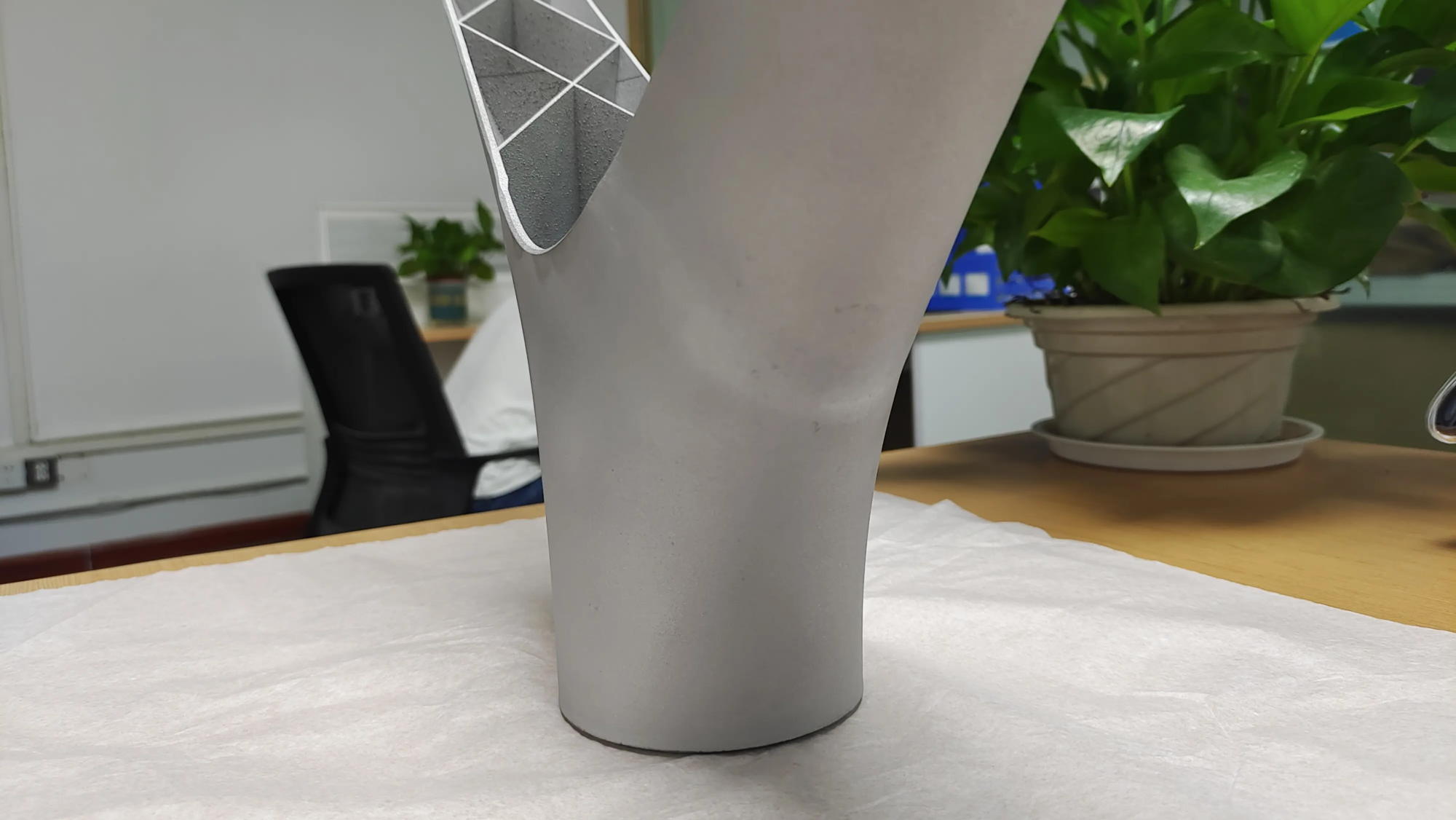
Greglight Loverages SLM (Selective Laser Melting) 3D Printer In addition to advanced polymer printing technology, it can also face complex prototyping challenges head-on. We understand the complex requirements of electronic equipment design – from managing tolerances and thermal issues to ensuring signal integrity and robust assembly.
More than just printing, Gremplime provides Comprehensive one-stop post-processing solution. Need your case to smooth, paint, plating, sober or precisely process to meet critical assembly tolerances? Our expertise covers the entire manufacturing workflow. We specialize in research Custom precision machining and Production of high-quality metal partswhen your project requires the highest level of accuracy, performance or aesthetic quality, even in small quantities, we can be our top resource.
Most materials can be quickly purchased and processed. Can’t find the perfect plastic wire? Do you need special metal alloys? Greglight has the ability and material knowledge to provide.
Ready to exceed the DIY limit? Customize your precision ESP32 case or any quick and effective prototyping section and use Greatlight effectively – get competitive quotes now!
in conclusion
Designing the perfect 3D printed box for your ESP32 project requires careful consideration of fitting, functionality, thermal management, RF requirements and manufacturing reality. By carefully applying tolerances, respecting the antenna area, enabling effective cooling, engineering robust installation, and choosing the right material and printing settings, you can create a professional and reliable housing.
Remember that experimentation and prototyping are the keys to success. Don’t hesitate to print small test pieces to suit critical features such as snapshots or fittings. For projects that require the highest level of accuracy, durability, exotic materials or complex geometry, work with experienced rapid prototyping experts, such as Greatlight, to ensure your vision becomes a reality without compromise. Happy building!
ESP32 3D Printing Case: Frequently Asked Questions (FAQs)
-
What is the best material for a 3D printed ESP32 case?
- PETG is usually the best all-around player: Strength, durability, temperature resistance (approximately 80°C), good layer adhesion and easy printing balance. Features outperform PLA in almost all aspects. ABS/ASA is better suited for higher temperature environments (> 80°C) or outdoor UV exposure, but prints more tricky. For maximum toughness or unique properties, consider using professional filaments such as nylon or composites (Pro Tip: Greglight can advise and provide the best materials for your specific application).
-
How much should I leave around the ESP32 board inside the shell?
- To obtain a safe but movable fit, the purpose is 0.2mm -0.4mm clearance on each side Between the plate edge/higher assembly and the plastic wall/cover. This illustrates minor printing changes and slight plate warp. Always prototype and test fit! Connector/switch holes are required More Clear.
-
My ESP32 WiFi/BLE signal is weak inside the case. Why?
- Plastic enclosed antenna: Make sure your case design is indeed no Cover the PCB antenna area. If using an external antenna, make sure the cable path is cleared.
- Conductive additives: The filaments with carbon fibers, metal particles or graphene significantly attenuate the signal. Avoid key RF applications.
- Trapped moisture: Some materials (such as nylon) absorb moisture, which may slightly affect RF performance.
- near: Components or metal objects inside the housing near the antenna may interfere. (Pro tip: SLM metal printed shells inherently block signals and require RF complex engineering solutions).
-
Can I 3D print a metal ESP32 shell?
- Yes, through advanced processes such as SLM (selective laser melting), Available from professional rapid prototype services, etc. Great. This results in completely dense metal parts (e.g. aluminum, stainless steel, titanium). Crucial: Metal severely blocks WiFi/Bluetooth signals. design must Includes specific RF antenna windows (well-calculated slots or merge non-metallic parts that require multi-material printing/processing). Metal printing is complex and expensive, but invaluable for demanding thermal, structural or EMI shielding requirements.
-
How to securely secure the lid to the base?
- screw: (Bounds are inserted in brass in the plastic post). The most powerful/repeatable. Interior space for pillars/screw heads is required.
- Snapshot: Seamless look, quick access. Precise engineering is required to avoid rupture. Not ideal for frequent disassembly.
- magnet: Clean aesthetics. Need to buy/embed magnets. Maintaining strength must be reliable. (Greatlight is specialized in precise insertion placement and complex multi-part assembly design and manufacturing).
-
ESP32 is getting hot! How should I cool down in this case?
- Ventilation slot: Basic! Place the intake slot near the bottom/side and output the exhaust slot on the top/top above the ESP32 chip. Size is important – small pinholes are not enough; use slot arrays or larger openings (grids that consider aesthetics/crumbs).
- Heat dissipation: Materials with better thermal conductivity than PLA (e.g., ABS, ASA, PETG). The thicker case section under/near the chip can act as a radiator.
- Avoid heating traps: Ensure the space around the chip and that there is no insulated foam/material too tight. (Note: A truly sealed metal housing may require active cooling or designed professional thermal paths).
- Where can I get professional help design or manufacture my case?
- For complex designs that require precise engineering, advanced materials (high temperature polymers, metals), demanding tolerances or complex post-treatment/finishings, working with a dedicated rapid prototyping company is essential.
- Greatlight specializes in these challenges. Utilizing industrial SLM printers, advanced polymer SLS/MJF/FDM systems, and a wide range of post-processing capabilities, we offer end-to-end solutions – from design consultation to delivery of high-quality prototypes or end-use parts. Customize your precision ESP32 case today – start with Greatlight!


