Understand 3D printer power consumption: cost, efficiency, and sustainability of prototypes
As the additive manufacturing industry reshapes from aerospace to medical devices, understanding the operating costs of 3D printing, especially energy consumption, is crucial for businesses. At Greatlight, our advanced selective laser melting (SLM) technology enables us to quickly convert complex digital designs into high-strength metal prototypes and end-use parts. But what electricity is the fuel for this innovative fuel? This guide unravels the complexity of power usage of 3D printers and explains its impact on the cost, sustainability and production strategies of different technologies.
Basics: What influences power attraction?
3D printers do not consume energy evenly. Key factors include:
-
Printer Type and Process:
- FDM/FFF (Plastic): Heated bed (500W – 1500W) and heat table (30W – 70W) are dominated by use. Average power: 50–250W during printing.
- SLA/DLP/LCD (resin): UV light source (LED panel 20W-100W, laser 10W-100W) and heating barrel (optional, ~100W). Average power: 30–150W.
- SLS (Nylon Powder): High temperature powder preheating (chamber heating: 1000W-5000W+) and laser sintering (30W – 100W). Average power: 300W – 2000W+.
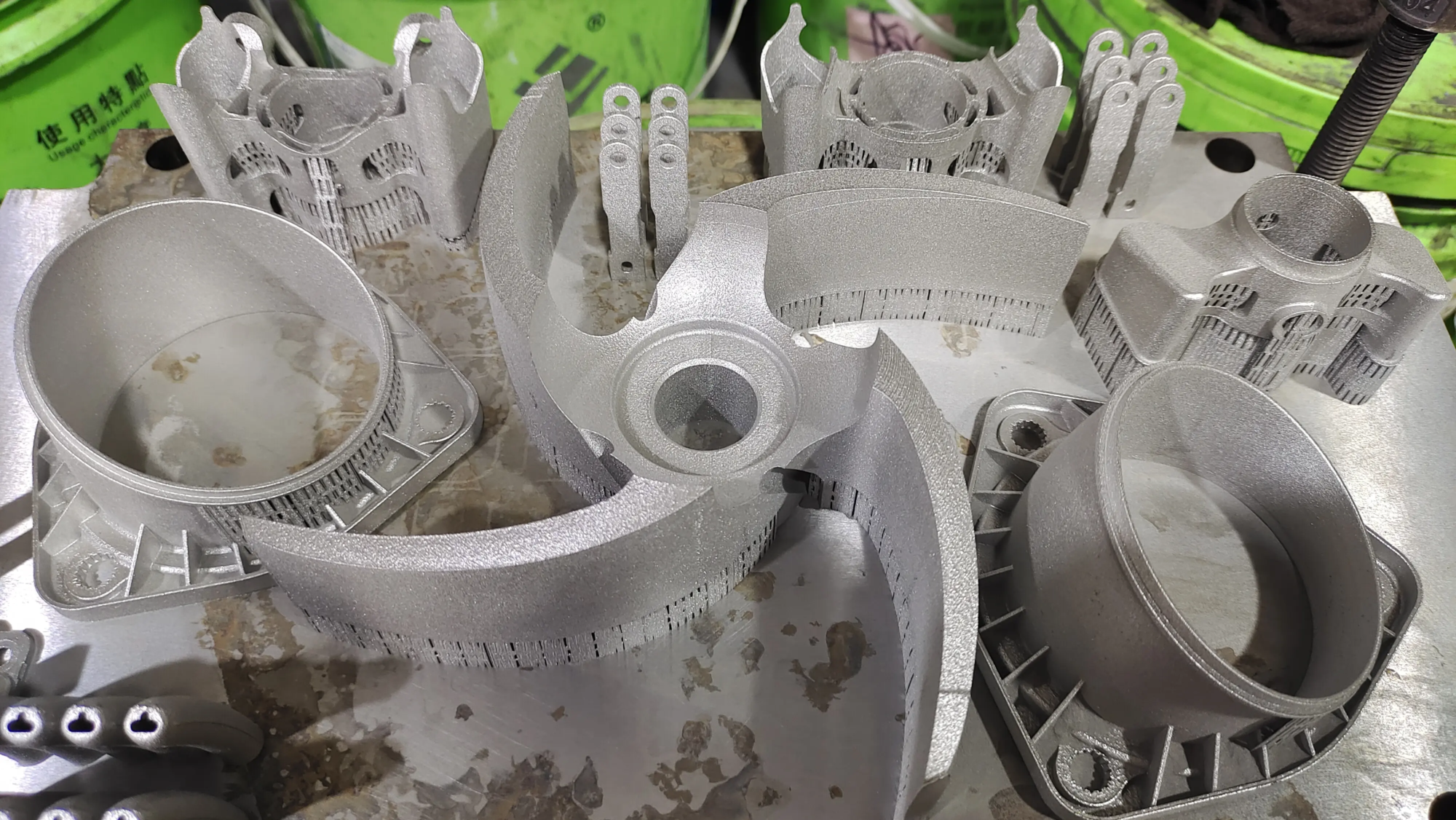
- SLM/DML (metal powder): Requires strong laser power (400W – 1000W+ laser common), extensive preheating (500°C+ use up to 8000W), inert gas circulation (hair dryer/pump) and complex cooling. Active printing capability can easily reach 2,000W – 10,000W+.
-
Printer size and build volume: Larger building rooms require more energy to heat and maintain a stable temperature.
-
Material characteristics: Metals require much higher melting energy than plastics. The melting point of the material directly affects the heating requirements.
-
Part geometry and printing parameters: Longer printing times, dense filling, high resolution layers and complex support structures increase total energy use. High laser power settings in SLM also soared.
- Auxiliary system: Industrial printers require air filters (dust extraction), water coolers (laser/depletion cooling) and a gas removal system. These add significant loads (500W – 3000W+).
Metal 3D Printing (SLM/DML): Powerful Energy
Metal additive manufacturing (such as SLM Systems Greatlights) is inherently energy-intensive. Understanding its phase clarifies the reasons:
- Preheat: Before printing begins, the metal powder bed must be heated evenly to hundreds of degrees Celsius (usually above 500°C). Large resistance heaters may drain a lot of power (compared to industrial ovens) and may drain for hours – easily consume several kilowatt hours only start.
- Laser melting: High power fiber laser (400W to kilowatts) selectively melts metal powder particles. Although effective, the energy density and constant operation increase significantly for hours. This load is exacerbated by multiple lasers in modern systems.
- Environmental Control: Maintaining a perfect inert atmosphere (usually argon or nitrogen) requires continuous gas circulation and filtration. Vacuum pumps and high flow gas systems contribute to baseline loads.
- Continuous heating: Throughout the build process, the build chamber temperature must remain incredibly stable, i.e. most days or even weeks – with the help of constant background power.
- Post-processing assistance: The integrated filtration system and external water chiller need to protect the laser and manage room temperature to run continuously with the printer. Oven pressure relief (post-treatment) is another major power user.
result: Typical industrial SLM printers may be consumed Active printing periods per day 15–60+ kWh. Within a few days, large complex metal construction can easily consume hundreds of kilowatt-hours.
Plastics vs. Metals: Key Comparison
Although both have variable use cases, the energy gap is large:
- Plastic FDM/Resin: Usually suitable for the initial prototype shape. Complex 10-hour plastic printing may use 0.5 – 3 kWh, similar to running a microwave. The daily fee is small.
- Metal SLM: For functional, durable or high heat prototype/parts required. 24 hours of metal manufacturing can be easily used for 36 – 144 kWh or more and can be run with a few days of home. Failed printing becomes Important Energy costs.
Therefore, choosing the right technology is consistent with project requirements and cost considerations.
Cost calculation: exceeds the price of printer stickers
Estimated operating costs:
- Confirm the power draw: Check printer specifications (rated input power: KW/KVA) or use a plug-in energy monitor.
- Estimated active printing time: Factors in the preheating/cold stage.
- calculate:
Total Energy (kWh) = Average Power Draw (kW) × Print Time (hours) - Multiply by the power: Learn about your local KWH costs (e.g. $0.12 – $0.30/kWh). Example: 24-hour SLM printing with AVG. 3kw draw:
3 kW * 24h = 72 kWh * $0.15/kWh = $10.80 electricity cost. Add auxiliary equipment to use!
Efficiency strategies (especially in metal AM)
- Printer selection: Working with services such as Greatlight, these services invest in modern equipment with advanced power management – effective laser, improved indoor insulation, regenerative cooling.
- Batch optimization: Maximizing the volume of the build chamber can greatly improve the energy efficiency per part for metal printing – multiple parts share preheating costs and indoor stability overhead. Gremight is effective at Nest complex parts.
- Process parameter optimization: Use proven, stable printing parameters to minimize reprinting due to failures. Less support material can also reduce energy indirectly by reducing printing time or height.
- Precision design: Effective topological optimization reduces part quality and printing time, thus reducing energy requirements. The design of additive manufacturing (DFAM) is key. Greglight engineers provide this expertise.
- Maintenance calibration: Calibrate the laser and clean the optics to operate for optimal efficiency.
- Idle power management: Make sure the printer enters low power sleep mode when not running in active production.
Environmental Impact: Efficiency is Important
Although Metal AM provides Huge material savings (near mesh, minimum waste and processing), energy consumption is its main environmental burden. Selecting an effective provider to work on sustainable practices such as Greatlight and leverage AM for partial consolidation/lifetime expansion, this impact significantly affects compared to traditional methods of wasted. Renewable energy procurement further reduces the carbon footprint.
in conclusion
3D printers vary greatly in power, mainly driven by technology (especially metal SLM) and application requirements. While desktop plastic printers have a modest energy footprint, industrial metal additive manufacturing is an important consumer due to the heat demand of molten metal powders.
Optimize cost and environmental impact through batch printing, modern equipment, design efficiency and expert process control (as per advertising light practice), ensuring rapid prototyping remains a viable and sustainable solution. Working with an expert service provider is critical to effectively navigating the complexity of power, cost and quality when considering metal parts for prototyping or production.
Greatlight utilizes state-of-the-art SLM technology and deep expertise to effectively deliver high-quality metal prototypes and end-use parts. We focus on room optimization, parameter stability and batch design, minimizing unnecessary energy consumption without damaging the results, providing sustainable precision manufacturing and fast prototyping solutions. Contact Greatlight now for a quote about your custom metal project.
FAQ: Power usage of 3D printers
-
Q: How much does it cost to run a 3D printer?
- one: It depends greatly on!
- Plastic desktop (FDM/resin): Several cents per print (<$1-$5).
- Industrial Metals (SLM): Large/complex buildings can cost billions of dollars due to high power draws and longer durations. Focus on part value, not just energy costs per kilowatt.
- one: It depends greatly on!
-
Q: Does a 3D printer use more electricity than a light bulb or refrigerator?
- one:
- Plastic printer (during printing): Usually similar to a standard incandescent cloth or small equipment (60-300W).
- Idle plastic printer: Very low (<5W in sleep mode).
- Industrial Metal SLM (during printing): It is significantly higher than that of household refrigerators. Comparable to running multiple hair dryers or a small AC unit frequently. The peak draw may exceed 10kW.
- one:
-
Q: Can I run a 3D printer from a battery or solar panel?
- one:
- Small plastic printer: If the continuous power tension is low enough (<200-300W lasts for several hours), a large power station/solar setup may be used.
- Industrial metal printers: unrealistic. Extremely high power demand (maintained several KW for several days), and the urgent need for stable, uninterrupted power supply makes grid connections or large industrial generators the only viable option.
- one:
-
Q: Why does metal 3D printing so eager to consume electricity?
- one: It requires huge, local and continuous heat to melt tiny metal particles in a layer. Preheating the entire powder bed to very high temperatures (usually > 500°C/932°F) consumes a lot of energy and keeps the same throughout the build process (days or weeks). High power lasers (~400W up to kW) add significant continuous load.
-
Q: Are newer 3D printers more energy-efficient?
- A: Yes, especially metal printers. Manufacturers design modern SLM systems with better thermal insulation, more efficient lasers, faster heating cycles, optimized airflow and smarter power management – with a considerable reduction in KWH/kg compared to earlier models. Look for energy efficiency ratings when selecting a device or partner. Greatlight continues to invest in state-of-the-art energy-efficient SLM platforms.
- Q: How to reduce the power consumption of 3D printing? (especially metal)
- one: Key strategies:
- Printing Services (Metal): Maximize indoor volume utilization (batch multiple parts) with experts like Greatlame.
- Optimized design: Minimize support, use topology optimization to reduce quality/volume, and design minimum print height.
- Select the appropriate settings: Balance the printing resolution and fill with part requirements.
- Optimize workflow: Minimize idle time. Ensure the first successful success of using verified parameters to avoid expensive reprinting.
- Modern, efficient equipment: Newer printers are fundamentally more efficient.
- one: Key strategies: