Utilize local and expertise: Your guide to finding 3D printing farms nearby
The transformative power of 3D printing is no longer limited to amateur workshops or niche labs. From complex prototypes to small batch production, demand for additive manufacturing soared. But what happens when your project exceeds the capacity of a desktop printer, requires professional materials such as metal or requires professional-grade finishes? This is 3D Printing Farm Intervene and become a basic partner. This guide delves into why and how to find the right printing farm service near you.
Why look for a 3D printing farm?
Think of the printing farm as a factory floor dedicated to additive manufacturing. They house many industrial grade 3D printers that run simultaneously. This is why digging local farms makes sense:
- Scalability beyond imagination: 100 identical parts are required for product release? Printing farms can be produced in parallel on multiple machines, converting the number of days of lonely printing into hours.
- Obtain industrial capacity and materials: Abandon the limitations of desktop FDM. The farm has advanced technology SLM for robust metal parts (selective laser melting)high resolution SLA, SLS for functional nylon, etc. They offer a huge portfolio of materials – from common plastics to engineering grade polymers, composites and metals – desktop printers simply can’t handle it.
- Speed and reliability: A pressing deadline? The farm uses the printer fleet to meet the demanding turnaround time. Their experience ensures optimized printing parameters, thus minimizing failed printing.
- Expertise and post-processing: In addition to printing, the farm also provides important value-added services. This includes expert design consultation, troubleshooting and comprehensive Post-processing – Consider professional support for removal, grinding, smoothing, dyeing, painting, electroplating, heat treatment and precision machining.
- Cost-effective quantity: Despite the presence of setup costs, the cost per batch of larger batches is usually significantly lower than the charging premium rate of using personal devices or service agencies.
How to find a reliable 3D printing farm nearby
Finding the right partner requires more than just getting close. Here is a strategic approach:
- Utilize online directories and search engines:
- Start with a targeted Google search: "3D printing farm near me," "Local 3D printing service," "Additive Manufacturing Services [Your City/Region]." Combined with key terms: "SLM printing," "Metal 3D printing," "Rapid prototyping."
- Take advantage of dedicated directories such as 3D hubs (now part of the ProtolAbs network), Xometry, Makexyz, or MFG.com (such as MFG.com). Filter by location, technology and material.
- Explore local business lists and comments:
- Check Google’s business profile, Yelp and industry-specific platforms. Pay close attention to customer reviews that pay attention to quality, reliability, communication and complex project processing. If needed, look for specific mentions for metal printing or post-processing.
- Click on the manufacturer community and social media:
- Interact with local manufacturer spaces, factory labs, university labs and technology hubs. Their members often know famous local service providers.
- Search for local Facebook groups, Reddit communities (e.g., R/3DPRINTING, R/MAUNDUCTURING) or LinkedIn for suggestions and discussions. Ask for recommendations.
- Participate in industry events and trade shows:
- Local manufacturing fairs, technology fairs, and even specialized 3D printing activities are gold mines to discover regional printing farms and witness their functions firsthand. The internet is priceless here.
- Check the supplier network and B2B platform:
- If you are purchasing for your business, explore established B2B manufacturing platforms that connect buyers to local suppliers who provide reviews of 3D printing services.
Key factors when evaluating local printing farms:
- Technology Stack: Do they provide the specific technology you need (SLM of metal?, high temperature FFF?, SLS?)? Are their equipment modern and well maintained?
- Material selection: Can they handle the materials you need (e.g., aluminum alloy, titanium, peep, uletem, specific resin)? Custom material function is a plus sign.
- Capacity and delivery time: Can they handle the amount you need within your time frame? Ask Rush to choose.
- Post-processing expertise: What complete services do they provide internally? How skilled are they? (This is usually a difference). Do they offer one-stop solutions?
- Quality Control: What are their processes? Can they provide certification (e.g., material certificates, dimension reports) if needed?
- Communication and support: Are they responsive? Do they provide engineering consulting to optimize your 3D Printing Design (DFAM)?
- Pricing transparency: How is pricing structured (per part, hourly, per build quantity)? Is there a clear quote? Avoid hiding fees.
Unlock advanced features: Greatlight exceeds
When exploring local options, it is crucial to align the complexity of the project with the capabilities of the provider. For demanding applications, especially Rapid prototyping and low volume production of metals, working with experts like Greatlight becomes crucial.
Greatlight is a professional rapid prototyping manufacturer with a focus on solving complex engineering challenges. Here is how they upgraded the printing farm concept:
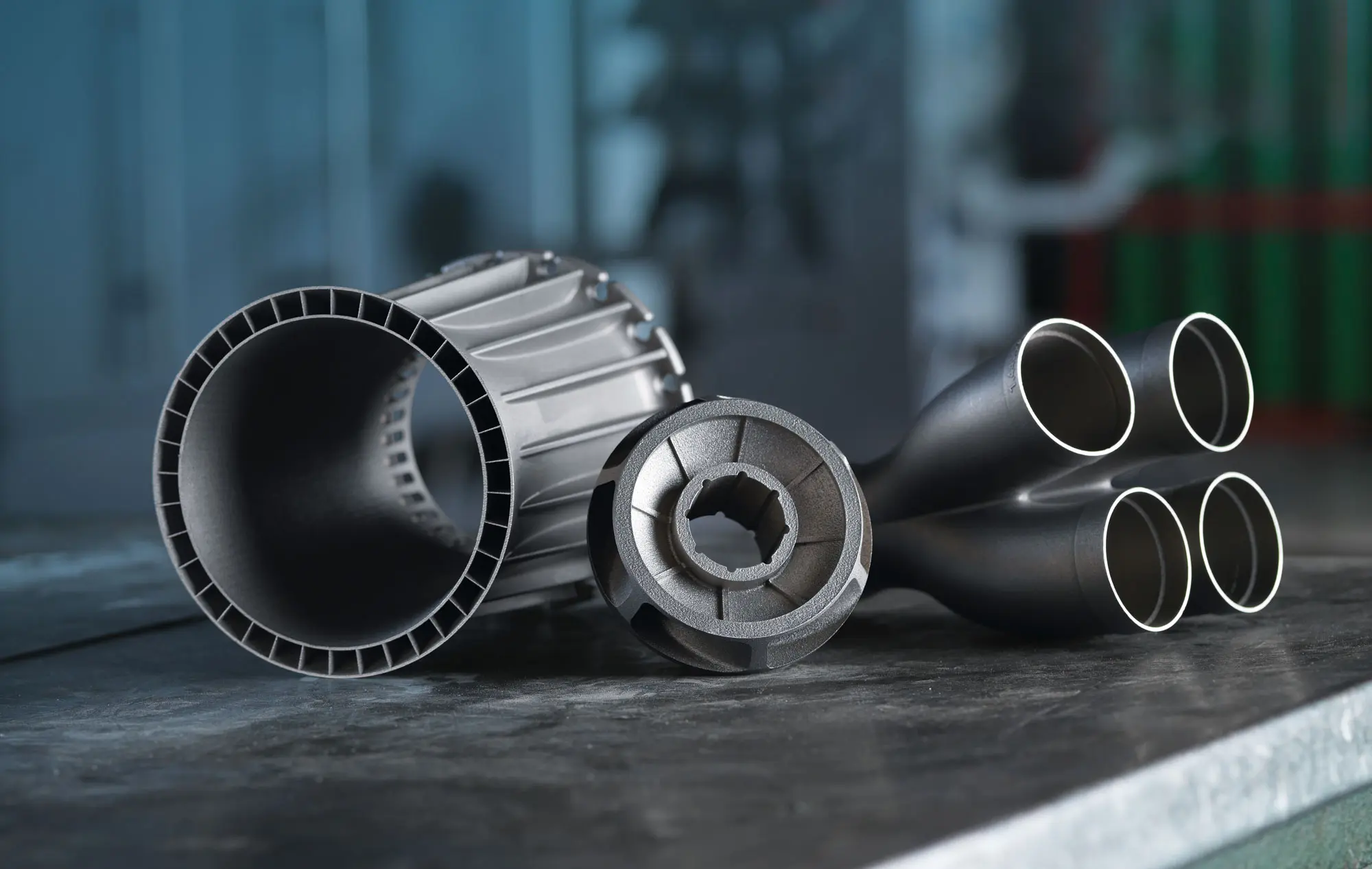
- Advanced Metal Mastery: Equipped with cutting-edge SLM (Selective Laser Melting) 3D PrinterGreglight is exceptionally skillful in producing high density and high intensity Metal parts From various alloys. This is crucial for aerospace, automotive, medical and industrial applications.
- Deep rapid prototyping expertise: They specialize in overcoming complex obstacles involved in rapid product development related to metal components, providing not only printing, but also providing experts in problem solving.
- Comprehensive one-stop solution: More than just printing, Greatlight offers an in-house kit Post-processing and completion of services. This includes everything from critical heat treatment (annealing, stress relief) and precise support for removal to advanced surface finishes (processing, polishing, explosion), verification, and more – simplifying the workflow.
- Material flexibility and customization: Have the ability to cooperate with it "Most materials" And provide custom madethey meet customization requirements beyond standard products.
- Speed and value: Positioned as "One of the best rapid prototype companies from China," Gremplions stressed Quick processing And provide high-quality custom precision parts at a highly competitive price.
Whether your project requires complex geometry of titanium or a batch of functional nylon fixtures, choose the right printing farm layer. For local speed and convenience in less critical sections, the nearby farm is great. high performance Rapid metal prototyping Professional partners like Greatlight require precision, reliability and full-service post-processing to deliver unparalleled value, often providing excellent results for logistics flows.
in conclusion
Finding a capable 3D printing farm near the corner is a strategic initiative to expand production, access advanced technology and leverage professional expertise. Combining online search, community engagement and diligent review, based on technology, materials, post-processing and other services, and proven quality. Remember that proximity provides convenience, but for projects that require peak Rapid metal prototyping, Specialized post-processing and engineering-level results, working with industry leaders Gremply provides guarantees of quality, speed and value. Assess the complexity of the project and select the partners that best meet their technical and logistical needs. Unlock the full potential of additive manufacturing by strategically leveraging local resources and the strategic nature of global experts.
FAQ (FAQ)
-
Q: What exactly is a 3D printing farm?
- one: A 3D printing farm is a factory that runs multiple (usually industrial-grade) 3D printers at the same time. It works like a small factory focusing on producing more printed parts faster and more reliably with a single printer, often offering a variety of technologies and materials.
-
Q: When should I consider using a printing farm instead of buying my own printer?
- one: When considering a farm: You need many Copy of parts; your project requires industrial printers (SLS, SLM for metals, large); you need advanced materials (nylon, metal, high temperature resin); you have strict deadlines; your parts require a lot of professional post-processing; or investing in expensive industrial printers is not feasible, or it does not make economic sense for sporadic projects.
-
Q: How much does it cost to use a 3D printing farm?
- one: Cost varies greatly based on technology (SLM Metal is premium), material/part size/volume, complexity, quantity, lead time and cost required for post-processing. Expecting hourly and hourly payments per hour or per build volume usually comes with a setup fee. Always get detailed quotes. Mass production runs are usually cheaper per part.
-
Q: I need metal parts. Do all local printing farms have the capacity?
- one: no. Metal 3D printing (especially SLM) requires highly professional, expensive equipment (laser powder bed fusion), controlled atmosphere (argon/nitrogen), extensive expertise and advanced post-processing (heat treatment, hips, processing). Generalist local farms usually focus on polymers. You may need to search specifically "Metal 3D printing service" Or experts like it Great With proven SLM capabilities.
-
Q: What materials are usually available on the farm?
- one: Functional differences are very large. Common choices include a variety of plastics (PLA, ABS, PETG, nylon/PA, ASA), engineered resins, elastomer-like materials (TPU) and composite materials. More advanced farms offer engineered thermoplastics (PEEK, ULTEM) and metals (stainless steel, aluminum alloy, titanium). Always check the farm’s specific material list. Companies like Greatlime often excel with a wider selection of materials, including customization.
-
Q: How to evaluate the quality of a printing farm?
- one: Looking for:
- equipment: Type, age and maintenance.
- Samples and portfolios: Request physical samples, especially for target materials.
- Post-processing: Internal capability and quality.
- Expertise: Employee knowledge, AM design (DFAM) support.
- Comments and references: Check Google, industry platform, and ask customers for reference.
- Communication and process: Quotations, project updates, clarity of quality control measures.
- Certification: Related industry standards (if applicable to your project).
- one: Looking for:
-
Q: How long does it take to obtain parts from a printing farm?
- one: Delivery times range from 24-72 hours of sprint polymer work to days or weeks of complex metal parts with extensive post-treatment. Factors include project complexity, current farm queues, technology and completion requirements. Always confirm delivery time in advance and discuss much-needed options when needed.
- Q: What file format should I provide?
- one: Most farms need watertight 3D models .stl or .obj Format. For exact requirements, they can request native CAD files (e.g. steps) or align with design specifications. Be sure to confirm its preferred export settings (resolution, units) before sending a file.
Ready to bring your design to life? Evaluate your needs, find a local provider, or explore advanced features from experts like Greglight, your next rapid prototyping or production challenge!