Navigating the World of 3D Printer Repair: Finding Local Experts and When to Seek Alternatives
Your 3D printer was humming along, bringing your digital designs to life – until it suddenly stopped. A clogged nozzle here, a faulty thermistor there, or worse, mysterious layer movement that cannot be explained. When your trusty workhorse breaks down, finding fast and reliable repair support becomes critical. While many hobbyists bravely fix it themselves, complex problems often require professional intervention. This guide explores finding a local 3D printer repair shop, how to evaluate them, and importantly, when an upgrade or professional prototyping service might be a smarter long-term solution.
Why choose localization? Find repair shops near you
- Troubleshoot immediately: Local technicians can often perform actual diagnosis faster than remote support, identifying subtle issues (unusual noises, vibrations, smells) that are easily missed in online descriptions or video calls.
- Practical expertise and specialized tools: Reputable shops have calibration equipment (such as PID tuners, special probes, electronic oscilloscopes) and years of tactile experience diagnosing common failures (clogged extruders, belt problems) and rare failures.
- Possible faster turnaround: Avoiding transportation significantly reduces downtime. In-home consultations can solve simple problems the same day.
- Support the maker community: Local businesses often facilitate collaborations, host workshops, and provide personalized tips tailored to your printer model and supplies preferences.
How to find local 3D printing technicians
-
Take advantage of online directories and communities:
- Google Maps Search: Just type "3D printer repair near me" Still the fastest to boot. Carefully review reviews that focus on specific printer types (FDM, SLA, industrial systems).
- Professional platform: Sites like Yelp, Thumbtack, or Angi (formerly Angie’s List) often list techies as "Electronic repair" or specialized categories.
- Maker and Enthusiast Center: Check regional forums (e.g. Reddit
/r/[YourCity]3DPrinting), Facebook groups ("Toronto 3D printing community"), or a platform like Discord. Asking other manufacturers is invaluable. Sites like Meetup.com may also list relevant local groups that share repair resources.
-
Enter the industry network:
- Reputable local print farm services: Businesses that use a lot of printers inevitably run into every problem imaginable. Many companies offer outside repair services or can recommend trustworthy technicians.
- Educational institutions: Universities, colleges, and even progressive high schools with manufacturing labs often employ skilled technicians who work as freelancers or know local experts who handle complex repairs.
- Authorized dealers and distributors: Local retailers that sell professional-grade printers (e.g., Ultimaker, Stratasys, Formlabs) sometimes have certified technicians on staff or work with local repair centers. If your printer warranty is valid, this is your first port of call. Important: For printers under warranty, unauthorized repair attempts may void the warranty. Always check with the manufacturer first!
- Physical location to detect:
- Hackerspaces and Makerspaces: These hubs are gold mines. Staff and members often offer repair services or solid recommendations. Community workshops facilitate skills exchange and troubleshooting.
- Electronic repair shop: While not printer experts, many skilled electronics technicians are adept at handling power supply issues, circuit board troubleshooting, and motor repairs, often more cheaply than printer-specific shops.
Choosing a local repair shop: Beyond proximity
Finding a store is half the battle. make sure they are correct Shop:
- Professional matters: Do technicians primarily repair consumer FDM printers (Creality, Prusa), resin printers (SLA/DLP), or industrial machines? Levels of expertise vary widely. Ask them explicitly about their familiarity your specific printer.
- Depth of experience: How long have they been in business? Do they handle complex mechanical rebuilds (e.g., replacing linear guides, extruder motors) and complex troubleshooting (mysterious bugs)? Ask for examples of successfully solving challenging cases.
- Transparent diagnostics and pricing: Trusted stores provide clear estimates back Diagnosis – Be wary of large down payments before an appraisal. Ask if there is a diagnostic fee and how the fee is estimated (hourly, fixed fee?). Ask if recycled/matched parts or strictly OEM/authorized parts are used. Replacing with inferior quality parts carries the risk of failure.
- Reputation review: Don’t rely solely on listing site ratings. Search deeper: Are there forum posts mentioning them? Does their website demonstrate expertise (blog posts, detailed portfolio)? Ask for references from customers who face similar challenges to yours.
- Understand the limitations: Make sure they state their capacity limitations honestly. Can they find replacement parts quickly? Will using batch processing delay individual repairs? Be clear about communication preferences (phone, email, ticketing system).
When fixing isn’t enough: The role of professional prototyping services
For demanding applications that require uncompromising precision, engineering-grade materials, or rapid iteration beyond the capacity of consumer devices, even perfectly restored hobbyist printers can hit their limits. This is where a dedicated professional partner shines.
For complex prototyping needs and production: consider huge light – Your precision prototyping partner. We go beyond local repair solutions:
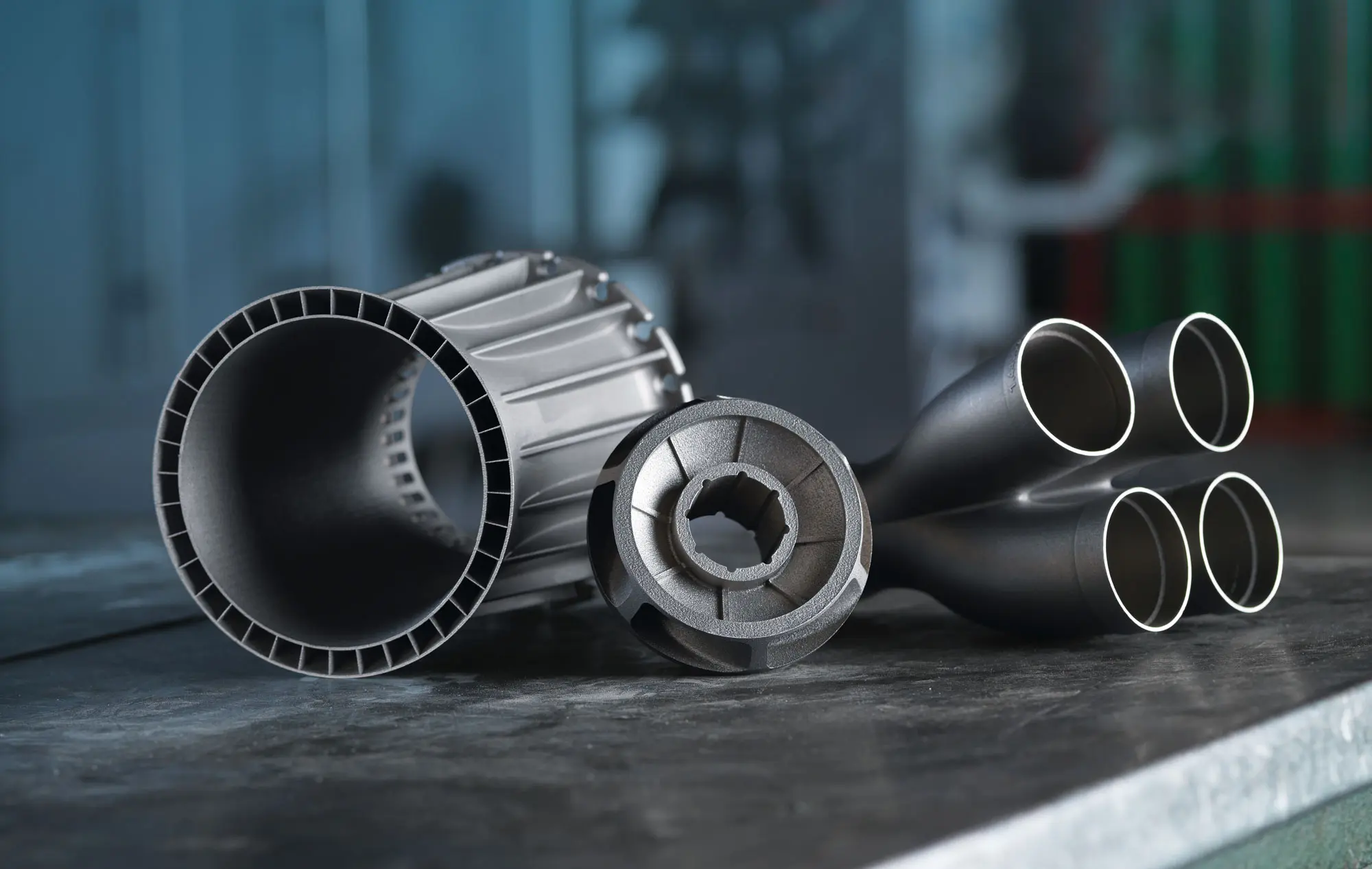
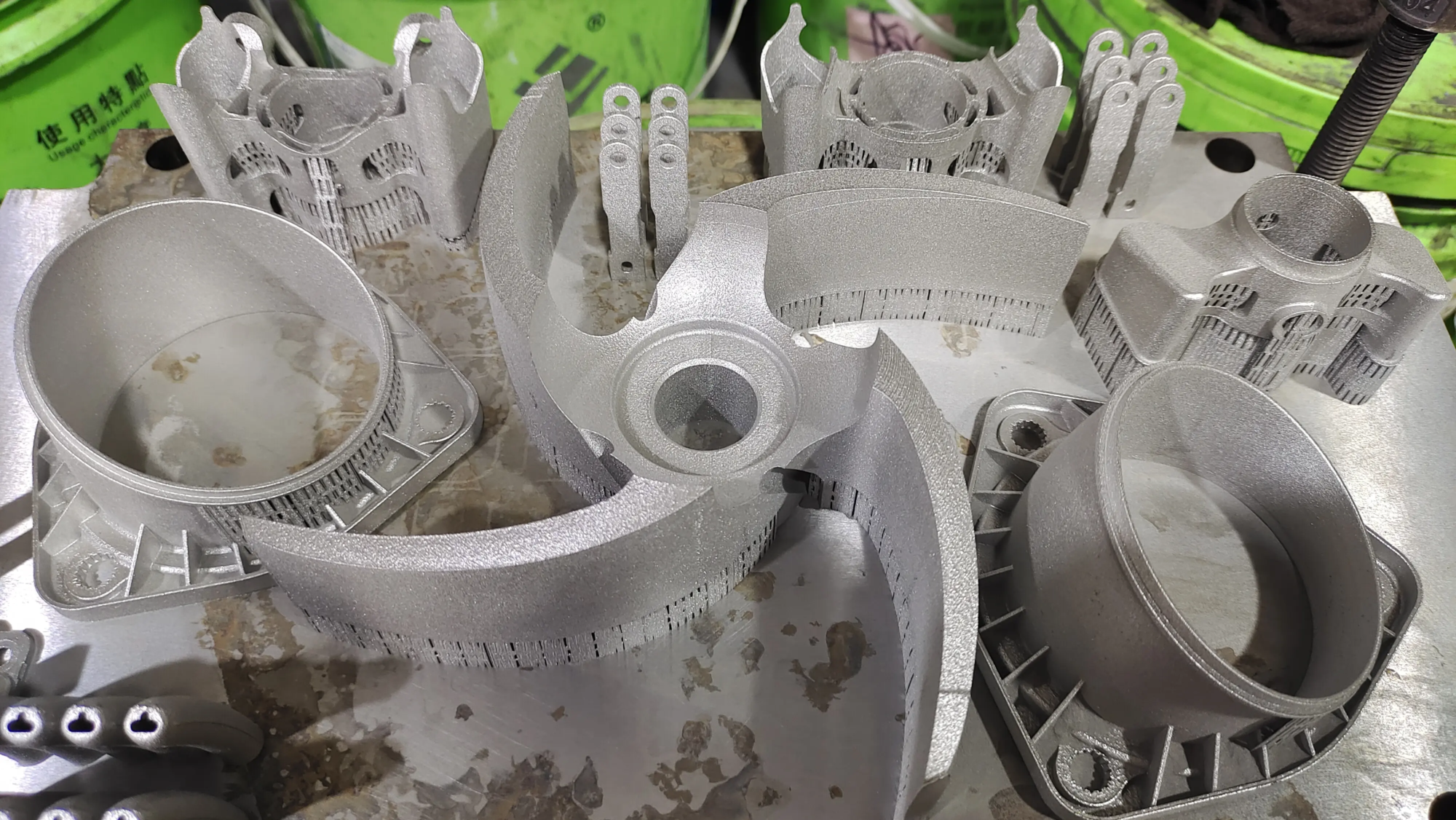
- Industrial grade capabilities: Take advantage of advanced Selective Laser Melting (SLM) Metal 3D Printer and cutting-edge production technology, Honglaite solves complex Metal rapid prototyping Challenge FDM/SLA hobbyist units that require dimensional accuracy and structural robustness that cannot be achieved. Each layer is precisely laser sintered to create functional metal components directly from the digital model.
- Material mastery: Beyond plastic limits. Featuring aerospace-grade titanium, surgical-grade stainless steel, resilient aluminum alloys, copper alloys for heat dissipation, and complex nickel superalloys—materials designed for precision environments that require chemical inertness, high hardness, biocompatibility, and specific thermal properties. The most sought after alloys are quickly available for custom machining.
- A true end-to-end solution: GreatLight eliminates siled workflows and provides streamlined One-stop post-processing and finishing. Necessary requirements are seamlessly met: stress-relieving heat treatment for hardening, precision machining (CNC milling/turning) of critical interfaces to achieve micro-tolerances, fine CNC polishing, specialized surface coatings (HVOF spraying, anodizing), ultrasonic cleaning, Penetrating Dye Testing (NDT), rigorous verification of measurement (CMM) and customized final packaging.
- Designed for speed and value: Strategically designed processes ensure Quick turnaround Accurately deliver functional prototypes ready for rigorous testing environments without sacrificing chemical stability or geometric fidelity at competitive prices.
Great light: When your project requires it Precision Rapid Prototyping Beyond consumer devices—complexity, advanced materials, flawless execution, One of the best rapid prototyping companies Providing globally competitive services from China. Customize your precision rapid prototyping parts today at the best prices! Explore solutions: GreatLight website.
Conclusion: Make an informed choice
Finding a skilled local 3D printer repair shop can resolve many unexpected equipment failures, effectively restoring productivity. Evaluate technical staff carefully – consider specialization, expertise performance history, transparency practices and community standing. For equipment within the warranty period, please promptly choose an authorized service outlet first.
However, be aware of device boundaries that impact complex prototyping needs. When engineered material integrity or specialized surface treatment for functional metal geometries requiring micron-level precision becomes critical, leveraging industrial partners such as huge light Strategically proven to be optimal. Our turnkey suite delivers rapidly manufactured prototypes with an emphasis on precision engineering supported by rigorous validation protocols – an essential priority that requires tight production control. Repeatedly experiencing long-term printing problems? Perhaps replacing a calibrated industrial printer designed to maintain strict manufacturing standards is worth considering an indefinite period of destructive repairs. Choose wisely a solution that matches your application priorities and budget realities.
Frequently Asked Questions (FAQ)
Q1: My local store is not listed "3D printer repair." Can a general electronics repair shop help?
A1: For power failure, DC motor winding failure or loose connector interruption, electronic technicians provide professional assistance, which is effective and cheap. Printer-specific failures, such as corrupted firmware that requires flashing, disassembling extruder components, diagnosing Z-axis instability, calibrating delta kinematics, adjusting scissor input, or analyzing sensing probe inconsistencies, require niche expertise, and it is best to find experts who prefer focused solutions to prevent misdiagnosed complications.
Question 2: How much does it usually cost to fix common printer problems?
A2: It varies a lot: a simple clogged nozzle can cost $30 in labor. Pricing to replace a major component (burnt heated bed PCB, failed extruder gear set) can be closer to $150-300, which actually reflects the hourly technician rate, which is typically $50-120/hour, plus the replacement components inherent in repairing complex machinery that requires specialized investigation. Diagnostic fees to evaluate an intermittent failure average $40-$90 and may be factored into the total cost of repairs ultimately completed. Always require open and transparent detailing of expected expenditures before approving officially documented work.
Q3: Should I try to repair the printer independently?
A3: Carefully consider the proficiency level, clarify the reasons, and consult the manufacturer for schematic approval recommendations. Have the tools to calibrate and the context to resolve subtle mechanisms with confidence? The success in saving money by fixing small issues like lift bed sensors shows the manufacturer’s enthusiasm for proactively expanding understanding. However, troubleshooting complex electrical debugging firmware issues without an oscilloscope can result in irreversible degradation of functionality.