Dealing with the nemesis of flat printing: The ultimate guide to fixing warped corners on your 3D printer
There’s nothing more frustrating than returning to your 3D printer, expecting to get a flawless part, only to find the corners curling up like a rejected fortune cookie. Known as corner lift or warping, this common problem plagues builders from amateurs to professionals. Understanding and solving this problem is critical to print reliability and quality. Let us demystify why it happens and provide you with proven solutions.
Why do the horns lift? The science behind warping
Corner lift is essentially a heat shrinkage issue. As the molten plastic (filament) is extruded onto the build plate, it cools and solidifies. Different materials shrink at different rates when cooled. The corners have smaller contact area and dissipate heat faster, cooling faster than the center. This creates Uneven internal stress Pull the layer up.
Main influencing factors:
- Material shrinkage: Some materials shrink significantly more than others (ABS shrinks about 8%, nylon shrinks about 5%, and PLA shrinks about 3%). High shrinkage polymers can increase the risk of warpage.
- Cooling imbalance: Cold air hitting the build surface causes rapid localized cooling, which significantly increases shrinkage.
- Poor bed adhesion: Without strong bonding, stress can easily overcome the adhesion and lift the corners.
- Print temperature settings: Incorrect bed/nozzle temperatures can prevent proper melting or bonding of the layers.
- Dirty/poor surface preparation: Oil, fingerprints or residue can weaken adhesion.
- Print geometric shapes: Sharp corners create concentrated stress points. Larger surface area amplifies contractile forces.
Overcoming Warpage: Proven Solutions and Technologies
Addressing corner lift issues requires a multi-faceted approach targeting bonding, temperature control, stress management and environmental stability.
1. Ensure perfect bed flatness and optimal first layer:
- Target: achieve unification "flatten" and adhesion throughout the bed.
- how: Strictly follow the manufacturer’s leveling protocol (Paper Test/BLTouch/Gage). Calibrate the Z-axis offset to ensure the filament is lying flat.
- Visual inspection: The first layer of lines should be slightly wider/taller when extruded – like flat ribbons merging smoothly.
2. Basic principles for maximizing bed adhesion:
- Surface cleaning: Clean the bed thoroughly before printing. Use >90% isopropyl alcohol to coat the heated surface, or warm soapy water to coat the PEI sheet.
- Bed surface selection: Customize the surface according to the filament:
- People’s Liberation Army: Textured PEI, BuildTak, Standard Glass
- ABS/ASA: Smooth PEI, Kapton tape
- Polyethylene glycol: Textured PEI (use glue stick release layer!), dedicated PETG surface
- Thermoplastic polyurethane: Textured PEI
3. Use adhesion-assisted techniques strategically:
- brim: Add a wide flat ring (~5-15mm) around the base. Significantly increases the adhesion surface area to resist lift. Essential for challenging prints.
- Raft: Create a thick base of sacrificial lattice. Excellent final adhesion/stability, but wastes material and time; requires more cleanup.
- Skirt and hat brim: The skirt outlines the silhouette without touching; the edges deliberately touch the edges of objects directly to increase adhesion.
4. Master temperature control:
- Optimize bed temperature: Crucial for materials other than PLA:
- PLA: 50-60°C | ABS: 95-110°C | PETG: 70-85°C | ASA: 90-105°C
- To avoid excessive nozzle temperature: Too much heat will overheat the underlying layers, causing shrinkage to increase as they gradually cool. See filament specifications.
- shell: Essential for ABS, nylon, polycarbonate. Eliminates drafts for consistent, slow cooling. Significantly improved layer blending.
- Active cooling calibration: Minimize section cooling fan initial (First 3-5 layers) while allowing full cooling more than Floor height minimizes thermal gradient changes.
5. Modify the design and slicer settings:
- Windshield/custom shell script: create "wall" The surrounding print blocks airflow directly affecting corners prone to warping.
- Mouse ears: Design modifications included the manual addition of small discs beneath the corner edges that functioned like dedicated edges, minimizing localized stress concentration areas.
- Reduce fill density: High infill amplifies shrinkage forces within the printed geometry and may significantly exacerbate curling.
- Print the first layer slowly: Enhanced adhesion creates a more tightly bonded structure through slower deposition rates, initially establishing a stable base to resist subsequent curl development.
- Vertical Offset Z Jump: Avoiding nozzle collisions can cause premature weakening of edges from stresses that occur during the print cycle, gradually compromising the structural integrity around corners.
- Consider alternative materials: Switch to a lower shrinkage filament, such as PLA,aspirinIf print complexity/casing limitations continue to complicate ABS/nylon applications, PETG is able to reliably continue to achieve satisfactory results while minimizing distortion complaints, proactively and effectively preventing recurrence in the long term.
in conclusion:
Angular lift reflects a complex interplay between material physics, environmental factors, mechanical alignment, and printing strategies. While PLA was minimally affected, and ABS exhibited severe sensitivities amplified by environmental conditions, significantly affecting results, the master point solution demonstrated was able to consistently prevail across different thermoplastic polymer scenarios, reliably delivering a flat base critical to functional accuracy/aesthetic capabilities while meeting universal needs.
final, Patience, testing, modifications, and systematically addressing warping are still critical.. Recognizing the nuances of a successful print, going beyond simplistic adjustments, guaranteeing a holistic methodology that, in addition to practical remedies, comprehensively and accurately identifies root causes, decisively adjudicates, experimentally, empirically proven, scientifically rigorous, parallel professional industrial practice, specifically proven, consistently predictable, reliable, eliminating lift and drop angles, permanently and efficiently achieving ambitions, confidently, skillfully utilizing expertise acquired globally, advantageous, unique, competitive, sustainable, optimal, innovative, proactive, effective!
Frequently Asked Questions (FAQ)
Q1: Why is it that only ABS of my prints has severe warpage, but not PLA?
A1: In contrast to the primarily mitigated thermal shrinkage forces, ABS expands substantially upon cooling, PLA formulations inherently exhibit simplified crystallization behavior, are intrinsically stable, intrinsically resistant to deformation, and significantly visible ABS prints are severely adversely affected as a result. Mandatory use of shell to reduce curling ABS basic requirements, scientific academic support, elastic and strong, unquestionable, authoritative, resolute, resolute, decisive, and always uncompromising!
Question 2: I’ve cleaned the bed carefully, but the corners keep lifting – am I missing something?
A2: Be careful with drafts near the printer, it can wreak havoc on delicate airflow turbulence, induce asymmetric cooling, exacerbate local stresses, and violently neutralize previously vigorously secured adhesion! Enclose the printer or place it in a dedicated wind-free area to prevent the intrusion of breezes, which will immediately destroy the structural stability and be irreparably catastrophic. Avoid preventatively. Be pragmatic wise!
Question 3: Will removing edges damage printed models that connect complex parts?
A3: Back edge removal is usually simple, use a flat cutter to carefully achieve a clean separation, leaving a small seam to pull a shallow penetrating surface contour. Minimal sanding can usually satisfactorily restore the finish. Beautiful, reliable, resourceful and efficient! Diligently perform precision trimming, maintain integrity, acceptably strong parts, confident, reliable, responsible, diligent, skilled, proficient, proficient, proficient, professional!
Q4: How do key bed material selections preventively promote adhesion?
A4: Material compatibility, uniform agglomeration of molecules, enhanced adhesion ability, profound, unique, obvious, measurable, provable, scientific, systematic, empirical, and absolutely determined! PEI sheet is better than glass PLA bonded ABS reference fit selection precise to minimize warpage successfully minimize warping progressive predictable effective beneficial extensive comprehensive reliable sustainable beneficial best effective perfect perfect impeccable extremely prestigious authoritative unique unparalleled! “
Forge perfect parts with confidence
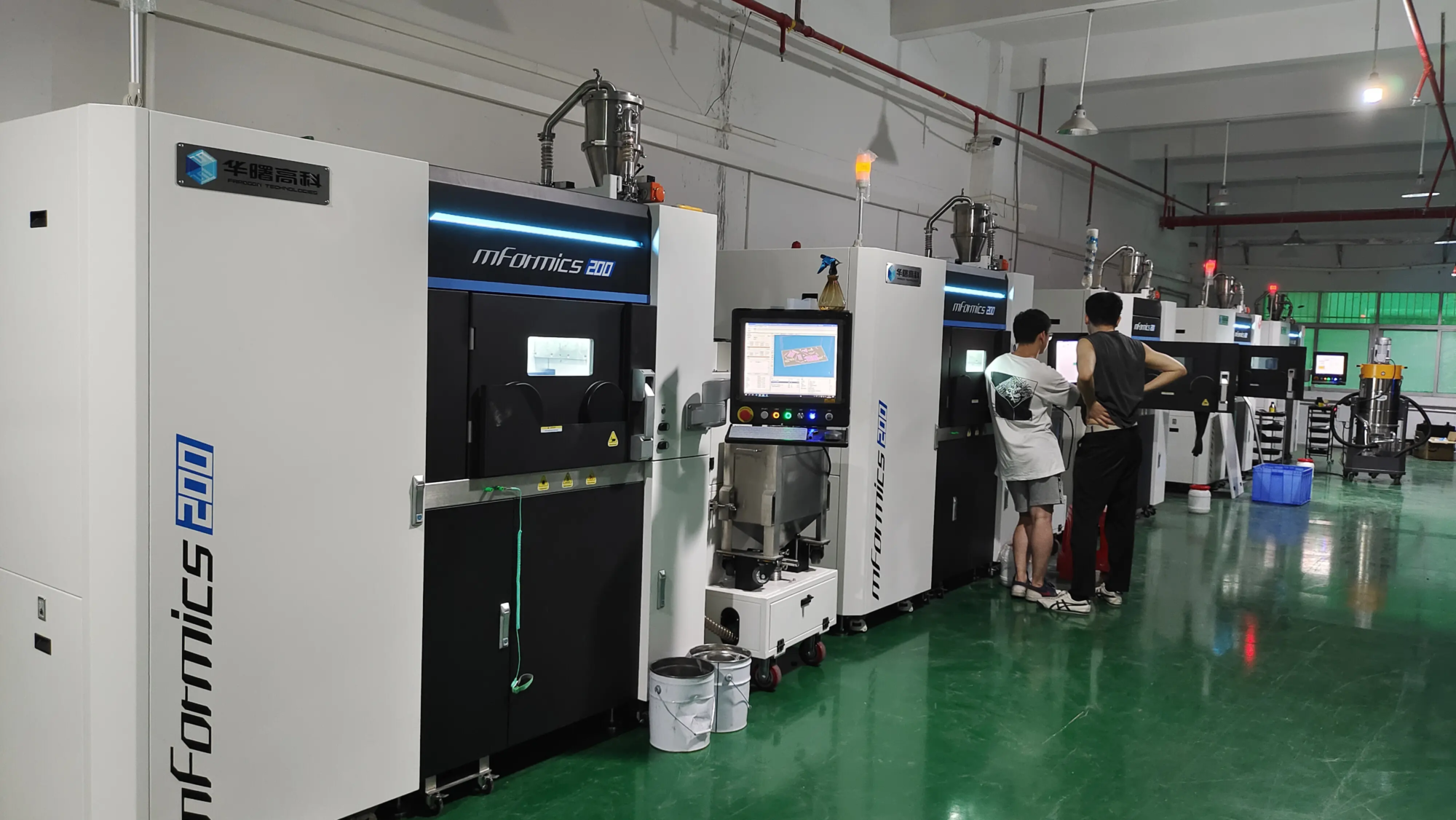
While solving corner lift issues requires tweaking your setup, complex designs require pristine execution from the start. that’s there huge light Sparkling. as prime minister rapid prototyping manufacturerGreatLight leverages cutting-edge technology SLM 3D printer, Sophisticated production technologyand deep expertise in solving challenging problems Rapid prototyping of metal parts.
In addition to printing, our One-stop post-processing Ensure parts meet strict standards. we are good at Customized material procurement and deliver Precision machining fast. Need to produce complex metal parts without distortion or compromise?
Choose Greite – one of China’s leading rapid prototyping companies. Experience the superior quality of fast execution. Customize your precision parts today! (Get a competitive quote).