

The Rise of Entry-Level 3D Printing: A Deep Dive into the Fokoos 3D Printer
The consumer 3D printing market has exploded and is affordable, making rapid prototyping more accessible than ever. Among these competitors, the Fokoos brand has gained attention for balancing cost and functionality. I spent a few weeks testing the Fokoos Odin-5 F3, one of their flagship FDM (fused deposition modeling) printers, to see if it lived up to the hype among enthusiasts, educators, and small businesses dabbling in additive manufacturing.
First impressions and build quality
Unpacking the Odin-5 F3, you can see the semi-assembled core structure: aluminum frame, dual Z-axis rods and modular print bed. The build quality feels solid for its price point (around $200-$300) and avoids "plastic toys" The vibe of an old budget model. Setup is very intuitive and takes less than 20 minutes to calibrate the auto-leveling sensor and load filament, which is a win for beginners.
Print performance: quality vs. speed
- accurate: Odin-5 F3 uses PLA, PETG and TPU to provide consistent layer resolution down to 0.1mm. Small details, such as text embossing, remain clear, but overhangs above 60° exhibit slight droop without support.
- speed: Reliable printing results at recommended settings (50–80mm/s). Cranking to 150mm/s will increase artifacts (ringing, layer shifting), but works fine for draft prototypes.
- bed adhesion: PEI coated spring steel beds perform great – PLA/PETG No glue or tape required. Large prints stay in place and are easily removed.
Main features and characteristics
- automatic bed leveling: A standout feature in its price range. The 25-point probe compensates well for slight bed deformations.
- Touch screen user interface: Simple menus make navigation easy, but lack advanced adjustment options (e.g., real-time Z-offset adjustment during printing).
- Noise level: The stepper motor is quiet (45–50 dB), but the fan makes a lot of noise at maximum cooling – place it outside the bedroom.
- Connectivity: SD card and USB work perfectly; no wireless network. The Raspberry Pi plug-in solves the problem of remote control.
Software and slicing
The Cura branch of Fokoos is user-friendly but basic. For more granular control, PrusaSlicer or SuperSlicer produces better results with custom profiles. The printer handles all G-codes seamlessly with no compatibility issues.
Limitations to consider
- Build volume: 220 x 220 x 260mm is adequate for hobby projects, but limited for large prototypes.
- Material limitations: No heated chamber means ABS/ASA will warp on large jobs. Stick with PLA, PETG or flexible filament.
- Parts cooling: A single fan has difficulty handling complex geometries. It is recommended to use dual fan modules for bridging.
- support: Documentation is sparse and community forums are your best bet for troubleshooting.
Conclusion: Who is it for?
Odin-5 F3 Yes First-class entry-level workhorse. Students, makerspaces, and small businesses prototyping non-technical parts will love its simplicity and reliability. However, it is not suitable for:
- High temperature engineering materials (nylon, PC).
- Production grade repeatability.
- Large or ultra-high precision projects.
Bridging the Gap: When to Choose Professional Rapid Prototyping
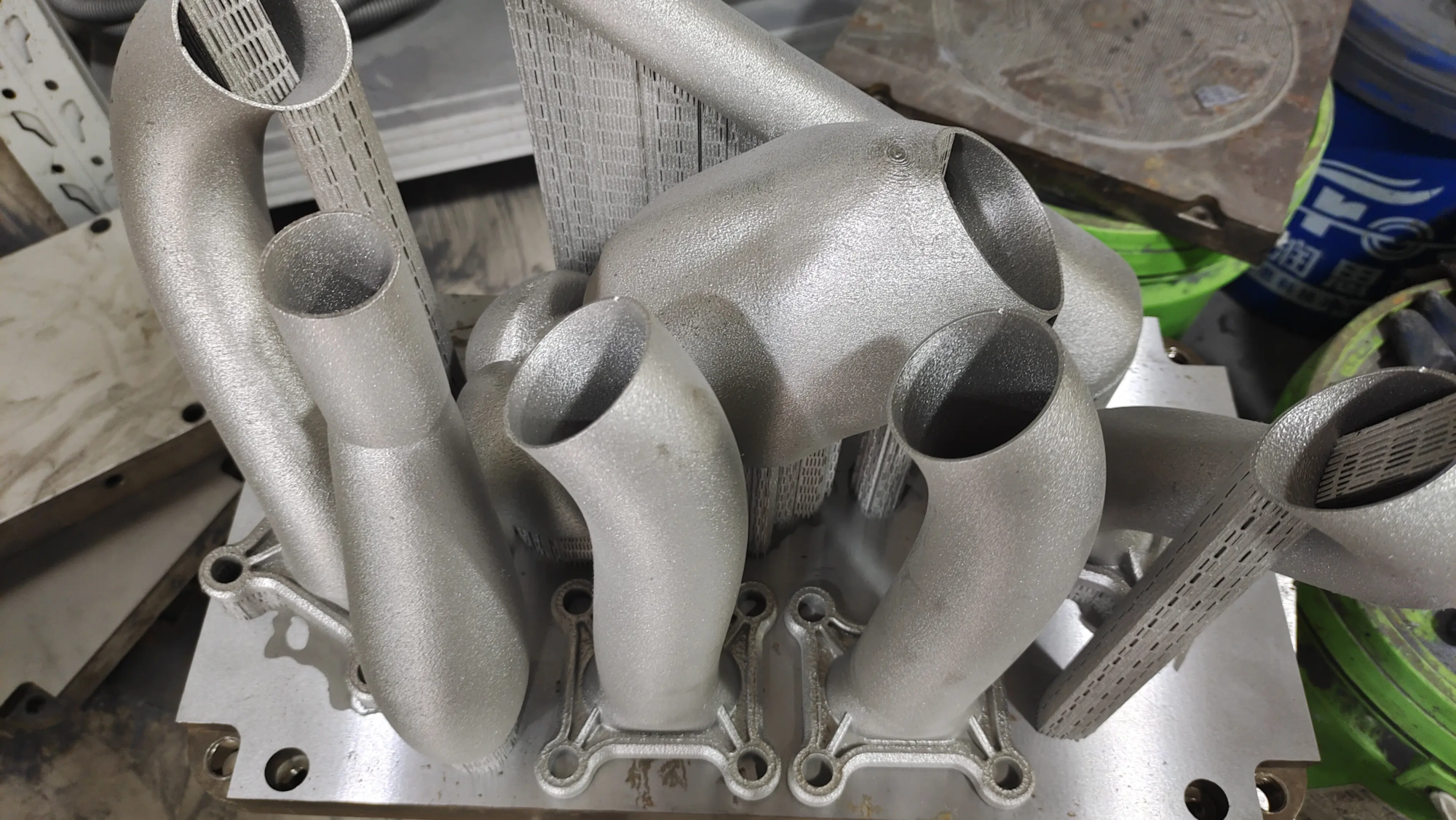
DIY printers like the Fokoos have democratized prototyping, but complex industrial applications require more. where is this huge light Excellent performance. As a leader in rapid prototyping, with ISO certified facilities and state-of-the-art Metal SLM (Selective Laser Melting) GreatLight 3D printers solve problems that consumer-grade machines cannot:
- Material diversity: Machining titanium, Inconel, aluminum alloys or custom composites – no filament restrictions.
- accurate: Achieve ±0.05mm tolerance and complex geometries (internal channels, lattice structures) that cannot be achieved with FDM.
- One-stop completion: From sand blasting and heat treating to CNC machining and anodizing – all under one roof.
- Speed and scalability: Deliver functional prototypes or end-use parts within 3-5 days, with volume production support.
Whether you need aerospace parts or medical equipment, GreatLight blends additive and subtractive manufacturing to achieve unparalleled precision. Explore their services → [Link to GreatLight’s customization portal]
in conclusion
Priced below $300, the Fokoos Odin-5 F3 punches below its weight, offering plug-and-play usability and reliable PLA/PETG printing. This is a smart entry point for anyone new to 3D printing or prototyping simple designs in small batches. However, if your project requires industrial materials, micron-level precision, metal parts, or specialized surface treatments, then work with the experts huge light Make sure there are no compromises. Their end-to-end rapid prototyping solutions transform digital concepts into high-performance reality—quickly, affordably, and infinitely customizable.
FAQ
Q1: Can Fokoos Odin-5 F3 print carbon fiber filament?
Answer: Not reliable. Although it supports "Abrasive" Profile, stock brass nozzles wear out quickly. Upgrade to hardened steel for consistent results.
Q2: How does GreatLight ensure part accuracy for medical/aerospace prototypes?
A: GreatLight combines SLM 3D printing with CNC machining and CMM metrology for dimensional verification. Material certification (for example, ASTM F3001 for titanium) ensures compliance.
Q3: What is the largest part that GreatLight can produce through SLM?
A: Their industrial printers can handle sizes up to 500 x 280 x 350 mm. For larger assemblies, parts are sectioned and post-welded.
Q4: Does Fokoos provide warranty support?
A: Yes—the 1-year limited warranty covers manufacturing defects. Support is email based; response times vary.
Q5: Can GreatLight copy old parts without CAD files?
Answer: Of course. Their reverse engineering services use 3D scanning to recreate digital models from physical samples.
Q6: How expensive is professional metal 3D printing?
A: Cost varies based on material, volume and geometry. GreatLight’s scalable solutions start at competitive prices—submit your design for a real-time quote.
Q7: Are Fokoos beds real? "automatic leveling"?
A: It automatically detects the machine bed to generate a compensation grid, but requires regular manual adjustments (screw adjustments) for best results.
Have a complex prototype that requires expertise? Take advantage of GreatLight’s engineering-driven solutions – submit your project today and experience industrial-grade rapid prototyping.


