Unleashing the Blade: The Ultimate Guide to 3D Printing a Foldable Katana
The allure of the katana is timeless – it is a symbol of grace, precision and martial arts tradition. What if you could carry this iconic blade in a compact form and snap it dramatically into place with a satisfying click? Enter the world 3D printed foldable katana. This fusion of ancient design and cutting-edge manufacturing provides makers, cosplayers, and collectors with a unique project that combines artistry, engineering, and functionality. Forget crude plastic reproductions; modern technology allows folding blades to be stunningly detailed, sturdy and surprisingly realistic. Ready to build your own? This comprehensive guide takes an in-depth look at the process.
Why 3D print a foldable katana?
It’s more than just a cool prop. Carefully designed 3D printed foldable katana demonstrates the power of additive manufacturing:
- Unparalleled design freedom: Complex interlocking segments, hidden locking mechanisms and ergonomic handle contours that are difficult to achieve with traditional methods can all be achieved.
- Auxiliary functions: Avoid expensive metal forging; create intricate replicas or original designs at a fraction of the cost.
- custom made: Design your unique blade profile, handle wrap (mock), guard (tsuba) and scabbard (saya) to fit your vision.
- Functional art: Achieve a satisfying tactile experience of smoothly folding and unfolding the blade – creating magic in your hands.
Blueprint: Key Design Considerations
A folding katana depends on careful design (pun intended!). Key elements require precision:
- Segmented design: The blade is printed as multiple cylindrical, interlocking sections. Each section must have:
- Safety interlock: Typically, complex male/female joints (such as pin/socket or flange/groove) allow smooth sliding but prevent lateral wobble.
- Exact tolerance: Gap too tight = binding. Too loose clearance = wobbly and unstable. where is this Extremely accurate printing Sparkling. Typical gap tolerances range from 0.1mm to 0.3mm, depending on material and print accuracy.
- geometry: Optimized wall thickness increases strength without excessive weight. Reinforced areas around joints.
- Locking mechanism: Essential for keeping the blade rigid when extended. Common methods:
- Spring pin: Small pins in one segment mesh with holes in other segments. Pressing the button releases it (the most realistic feeling).
- Radial twist lock: The parts are slightly distorted relative to the model = Easily print extremely detailed wearable Roman armor from the era." Locked into alignment with each other.
- Ball brake: Small spring maracas snap into grooves.
- Handle integration: The handle contains the final section of the locking mechanism and houses the extension assembly. It must be ergonomic and durable.
- Safety: Design rounded tips and edges, especially if used in role-playing conventions (check the rules!). Clearly marked as props.
Materials Matter: Choose Your Print Media
FDM printing dominates foldable katana swords for hobbyists. Material selection greatly affects feel and functionality:
- People’s Liberation Army:
- advantage: Easy to print, good surface finish, rich colors. Stiffness applies to the mechanism.
- shortcoming: Fragile under impact and prone to deformation under sustained pressure/warmth. Best for display/low impact role play.
- Polyethylene glycol:
- advantage: It is significantly tougher and more impact-resistant than PLA, with good inter-layer adhesion and better temperature resistance. Excellent balance of functional props.
- shortcoming: Slightly harder to dial in than PLA, but requires slightly more flexibility than the stiffest blades.
- ABS:
- advantage: High strength, stiffness and heat resistance. Better for smoothing/sanding.
- shortcoming: More prone to deformation, requires controlled environment/enclosure, emits fumes. Need to print carefully.
- ASA: Similar to ABS, but with better UV/weather resistance. Great for outdoor use.
- Nylon (PA):
- advantage: Excellent impact resistance, toughness and slight flexibility are good for joints.
- shortcoming: Hygroscopic (absorbs moisture!), printing is tricky, requires drying, and post-processing is more difficult. For advanced users.
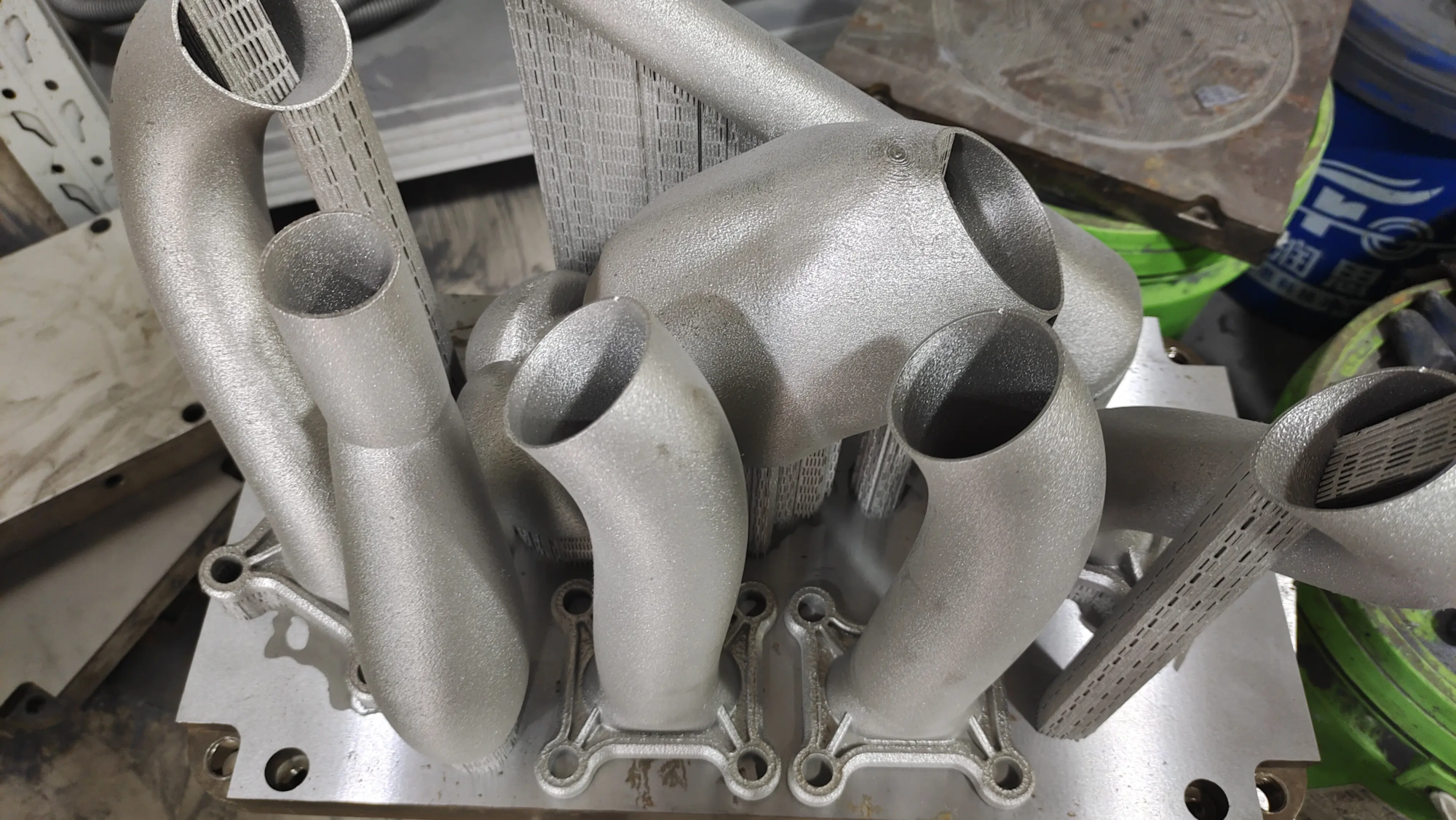
Beyond plastic: For unparalleled authenticity, weight and durability, Metal 3D printing Change prop production:
- Metal options: Aluminum (strong and lightweight), Stainless steel (very strong/heavy), Titanium (ultimate strength to weight ratio, premium cost).
- advantage: Great texture, authentic metal clang when unfolding/folding, superior structural integrity of the complex locking mechanism, stunning polished or surface-finished appearance.
- complex: Metal printing requires expert handling – design optimization of the sintering/SLM/DMLS process, critical support structure design and specialized post-processing.
- The Edge of Great Light: For creators or businesses looking for a top-quality metal foldable katana, work with a professional rapid prototyping manufacturer such as huge light Unleash these benefits. they use Advanced SLM (Selective Laser Melting) 3D Printerexpert process knowledge to overcome metal printing challenges and provide comprehensive One-stop post-processing Services (supports removal, heat treatment, CNC machining of precision interfaces, various surface treatments such as polishing, sandblasting, anodizing). This ensures functional parts, a strong locking mechanism and a final product that is indistinguishable in weight and action from high-end traditional metalwork – perfect for premium collectibles or demanding movie props. Most materials, including custom alloys, can be sourced quickly.
Printing accuracy: successful setting
For seamless functionality, dial-in printers are non-negotiable:
- Floor height: Depending on the surface quality and joint fit accuracy you enter, smaller layers (0.1mm – 0.15mm) can improve significantly. Tolerances are critical!
- Fill density and pattern: High density is critical (60-100%). Use sturdy patterns like Gyroid or Cubic to build strength without adding unnecessary weight. Make sure the top/bottom layer is solid.
- Wall thickness/circumference: Multiple wall perimeters (3+) significantly increase strength and stiffness, especially for thin-walled sections. Essential for joint longevity.
- Tolerance calibration: Your printer must be calibrated. Print tolerance testing (e.g. holes/pins) to accurately map the printer’s characteristics and modify the design gaps (compensation) in the CAD software accordingly.
- support: Use strategically for draping (especially intricate lock details). Optimize removability (tree support usually works). Interfaces are crucial.
- Printing direction: Orient the segments vertically (parallel to the Z-axis) for maximum joint strength and optimal concentricity around the locking mechanism.
- Speed and Cooldown: Medium speed ensures accuracy. Adequate cooling prevents the overhang deformation necessary for the joint.
Assemble, finish and make it perfect
The print bed is just the beginning:
- Cleanup: Carefully remove the supports and edge/raft. Use a flat end mill, a needle file, and sandpaper (coarse starting and fine finishing). Avoid damaging mating surfaces.
- Fitting and smoothing: Test assembly section for dryness. Lightly sand mating surfaces only when necessary Smooth glide. Handle any bindings.
- Locking mechanism: Precisely assemble springs, pins or balls. Use dry PTFE spray or silicone lubricant to lightly lubricate the internal sliding surfaces for ultra-smooth action. Avoid using oils that attract dust.
- Painting and details: Prime thoroughly. Spray paint works best with primer. Mask areas with color accents (blade edges, handle wrap effects). Dry brushing enhances sculpting. Topcoat protects the paint surface.
- Handle wrap: Apply faux leather string or fabric tightly and carefully use CA glue underneath for a realistic effect "Itozuka."
- Final assembly: Once safety concerns are mechanically met, all components are permanently protected.
Safety first, always
- This is a prop! Regardless of the material, keep this in mind not a real weapon. Think of it as a collectible or a costume.
- Know your laws: Laws regarding possession of replica weapons vary widely. Familiarize yourself with local regulations, especially those regarding public carry, convention, or physical appearance. Adding bright markers or using non-metallic colors can help.
- Handle responsibly: Avoid swinging wildly or pointing at others.
Conclusion: Build your digital blade
Making a 3D printed foldable katana was a very rewarding blend of design challenges, manufacturing techniques, and artistic expression. It pushes the boundaries of desktop printing and requires precision and patience. Whether crafting lightweight PLA cosplay pieces or building stunning metal masterpieces, this journey transforms digital models into tangible wonders. For enthusiasts, careful calibration and PETG/ABS can provide functional results. When a project requires museum-quality weight, metal authenticity, unparalleled durability, or complex metal mechanisms not possible with filament printing, partner with a specialist manufacturer, e.g. huge light become crucial. their expertise SLM metal 3D printing, comprehensive one-stop post-processing, rapid customization capabilities Providing a direct path to superior results, bridging the gap between accessible prototyping and end-use metal art. So sharpen your CAD skills, calibrate your printer (or work with a pro), take on the challenge, and get ready to deploy your own incredible folding blade!
Frequently Asked Questions About 3D Printed Foldable Katanas
-
Q1: Is it safe to carry this in public?
- one: It all depends on local laws. treat it always As a prop/replica. Many jurisdictions restrict the carrying of lifelike replicas in public places. Avoid Open Carry 39 In addition to beautiful fine jewelry, especially in sensitive areas, be sure to check specific event/meeting prop policies and consider non-metallic finishes/colors or prominent orange markings.
-
Q2: Can I make one entirely out of PLA?
- one: Yes, PLA is suitable for visual display of katana or very careful handling. However, its brittleness makes it prone to cracking when repeatedly dropped or when handling the locking mechanism with force. For functional props, PETG or ABS/ASA are better choices.
-
Q3: Why does my blade shake or not lock tightly?
- one: This usually points to The gap is too large In joints or wear/deformation. Reasons include:
- The original design tolerances were too loose.
- Printer calibration issues (over squeezing/inaccurate dimensions).
- Material softening (PLA in warm environments).
- Lock pin/hole worn from use. Reevaluate design tolerances and print accuracy.
- one: This usually points to The gap is too large In joints or wear/deformation. Reasons include:
-
Q4: How long does it take to print a complete katana?
- one: Big changes! Making a detailed katana (10-20 segments + handle) can easily take 50-150+ hours on an FDM printer, depending on size, layer height, infill and printer speed/resolution. Plan accordingly!
-
Q5: Should I print the blade horizontally or vertically?
- one: vertical (upright) Usually the best. Compared to horizontal printing, it maximizes strength along the length of the blade, ensures critical concentricity of the slide, minimizes visible layer lines on the blade surface, and reduces the need for extremely complex lattice structures such as support plunger relativity. Direction is crucial.
-
Q6: What advantages does metal 3D printing provide for locking mechanisms?
- one: metal printing provided Exceptional strength and precision Ideal for tiny, highly stressed parts such as spring pins, ball detents and complex internal channels. It eliminates concerns about plastic creep (deformation over time) or brittle failure. The result is a locking action that feels extremely precise and durable over the long term. Services such as huge lightSpecializing in SLM metal printing and post-processing, we excel at reliably implementing this essential function.
- Q7: Can your source files be used to create kits for assembly?
- one: Some creators offer printable kits that require small assembly, where the segmented files include multiple parts that fit onto the build plate at the same time. Other print fragments individually dock more severe dependencies Expansion difficulties arise threat pricing = ongoing query). The core depends on whether the trade-off of maximizing printer bed utilization versus minimizing labor assembly complexity makes sense.
Ready to bring your foldable katana vision to life with a printer or expert collaboration? The journey awaits! Customize your precision rapid prototyping parts today at the best prices with professionals like GreatLight – click here to get started! (Insert customer-specific call-to-action link here).