Uncovering the secrets of Powerhouse: How GPU acceleration is revolutionizing 3D printing
The world of 3D printing is constantly evolving, pushing the boundaries of speed, precision and complexity. While recent advances have focused largely on hardware (printers, materials) and software (slicers, design tools), a silent revolution is happening behind the scenes: the growing reliance on graphics processing units (GPUs). Once just synonymous with gaming and visual effects, high-performance GPUs are now becoming the indispensable engines driving next-generation 3D printing workflows, from design conception to final part verification.
Beyond Rendering: The Many Faces of the GPU
Traditionally, the slicing process of converting 3D models into printer instructions (G-code) has relied heavily on the computer’s central processing unit (CPU). While CPUs are well suited for sequential tasks, the highly parallel nature of manipulating complex 3D geometries and simulating complex physical processes during slicing is a task tailor-made for GPUs:
- Turbo Slice: Modern slicing software such as Cura and PrusaSlicer increasingly take advantage of GPU acceleration. Complex operations such as mesh analysis, support structure generation (especially delicate organic shapes), collision detection and complex path planning can be distributed across thousands of GPU cores. This greatly reduces slicing time (sometimes by orders of magnitude), which is especially important for large, detailed models or when quickly iterating on design variations. For engineers and designers, this means faster turnaround in prototyping cycles.
- Realistic visualization and simulation: The power of the GPU enables extremely detailed and realistic renderings of final printed parts directly in design software (CAD) or slicers. Beyond aesthetics, complex simulations to predict warpage, stress distribution, thermal behavior during printing (especially for metals!), and the efficacy of support structures require enormous computing power. GPU acceleration allows these complex physics-based simulations to run interactively or faster, enabling designers to preemptively identify and resolve potential print failures before material is wasted.
- AI-powered monitoring and correction: Advanced vision systems integrated into high-end printers use cameras to monitor the printing process in real time. Using artificial intelligence algorithms to analyze such high-resolution video for defects (deformations, spaghetti failures, clogged nozzles, deviations from the CAD model) requires massive parallel processing. The GPU excels here, enabling on-the-fly analysis and potentially triggering automatic print pauses or on-the-fly corrections, significantly improving first-time success.
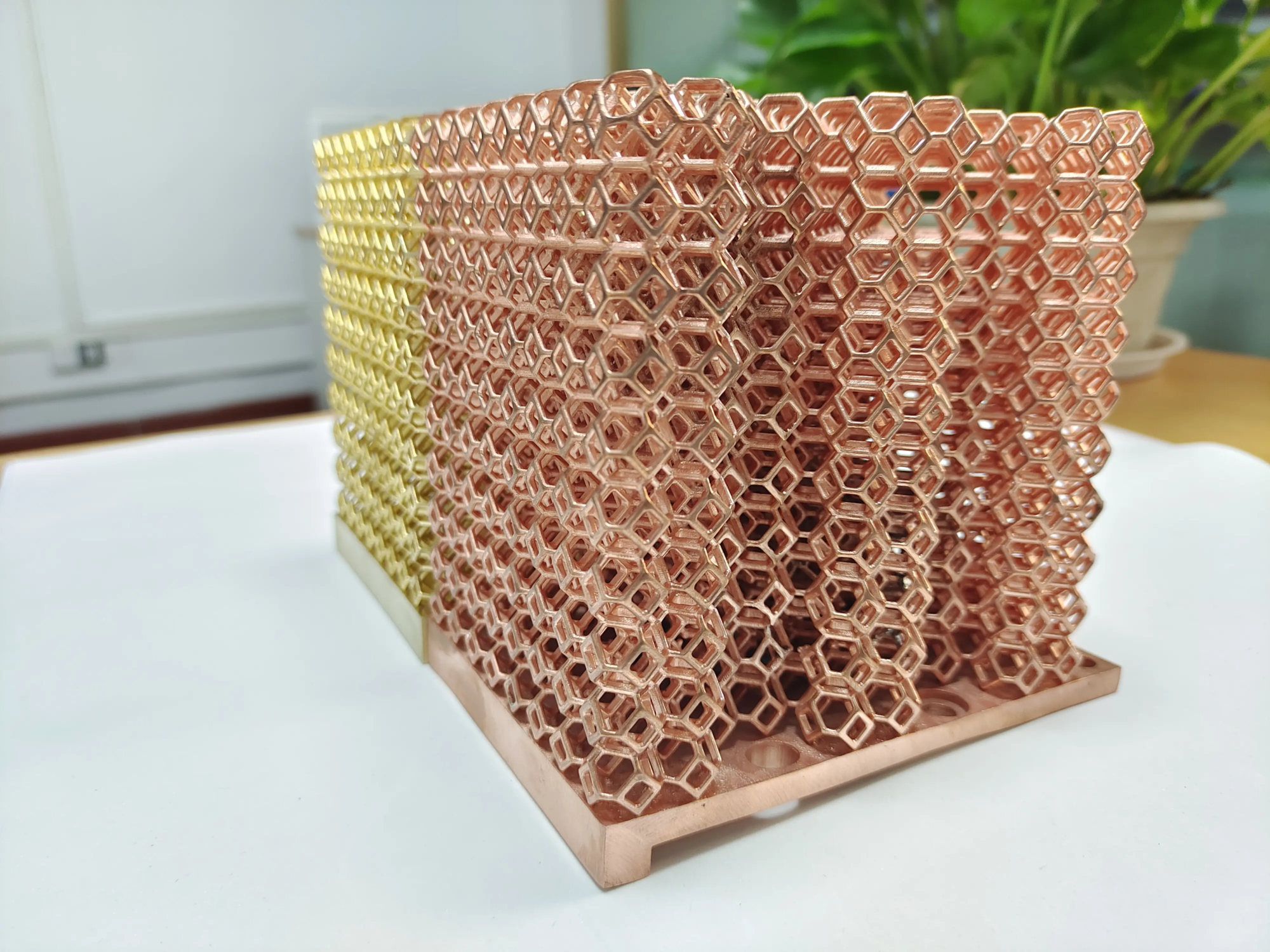
- Process massive data sets: As industries such as aerospace and medical adopt additive manufacturing (AM) to create complex lattice structures or patient-specific implants, the resulting STL files have become extremely dense, containing millions of triangles. Smoothly navigating, manipulating, and slicing these massive data sets requires the raw memory bandwidth and parallel processing capabilities of high-end GPUs to prevent frustrating lags and crashes.
Tangible Benefits: Why invest in GPU performance?
Integrating powerful GPUs into AM workflows brings significant benefits:
- Unprecedented speed: Dramatically reduced slicing times and faster simulation runs accelerate the entire design-to-print cycle.
- Enhanced reliability: Advanced simulations proactively predict printing issues, while AI monitoring can detect them during the process.
- Greater complexity: Ability to design and cut highly complex geometries (topology-optimized parts, lattices, organic structures) that were previously unachievable due to computational limitations.
- Improve accuracy: Realistic visualization and accurate simulation enable parts to more consistently meet dimensional tolerances and functional requirements.
- Cost efficiency: Reducing slicing time saves engineering time, while minimizing print failures saves expensive materials (especially important in metal additive manufacturing).
GreatLight: Leveraging advanced computing for superior prototyping
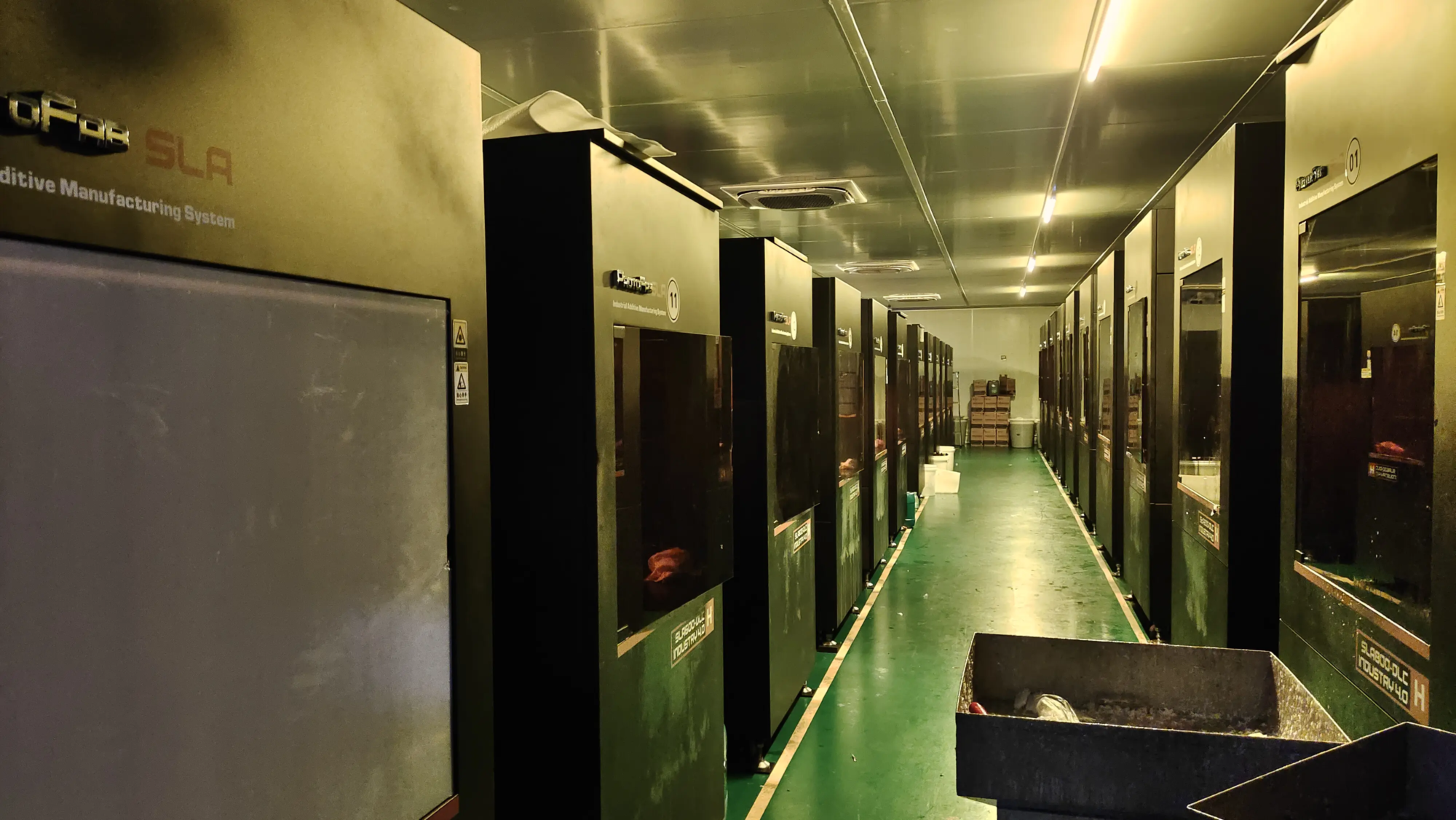
At GreatLight, we know that cutting-edge results require cutting-edge technology—and that includes harnessing computing power. As a professional rapid prototyping manufacturer specializing in the production of complex metal parts through advanced SLM (Selective Laser Melting) technology, we invest heavily in the infrastructure required for excellence.
Our workflow includes powerful GPU-accelerated workstations running sophisticated simulation software to model the complex thermal dynamics of metal powder melting. This allows us to predict and mitigate potential stresses, distortions and porosity forward Laser emission. We leverage advanced GPU-driven visualization tools to ensure a seamless transition from customer CAD models to our production systems, employing AI-enhanced monitoring where applicable to guarantee print fidelity and catch anomalies immediately.
The result? Faster project timelines, superior dimensional accuracy for custom precision machining requirements, support structures optimized for challenging geometries, and significantly reduced risk of costly print failures. We combine advanced SLM 3D printer and production technology with this computing power to provide truly professional solutions to your most demanding metal part rapid prototyping challenges, backed by comprehensive one-stop post-processing services. Whether your project requires high-strength alloys, complex internal channels or complex lightweight structures, our technology ecosystem ensures superior results.
The future: GPUs become the standard
The trajectory is clear. As 3D printing adopts higher resolutions, complex multi-material printing, real-time closed-loop control systems, and increasingly sophisticated artificial intelligence analysis, the need for powerful GPU computing will only intensify. Hardware-aware slicers will become smarter, dynamically optimizing paths based on simulated physics and predicted results. Driven by GPU-powered realism and simulation accuracy, the lines between screen design and physical printing will continue to blur.
in conclusion
GPU support is no longer a niche feature in 3D printing; it is quickly becoming a cornerstone technology that increases efficiency, reliability and unlocks new design possibilities. From reducing slicing times to enabling realistic simulation-driven designs and enabling intelligent print monitoring, GPUs are dramatically enhancing the entire additive manufacturing value chain. For businesses and designers seeking a competitive advantage through rapid iteration, perfect first-time prints, and handling the most complex geometries, investing in GPU acceleration or partnering with a facility like GreatLight that provides such services is critical. We harness this computing power to turn your innovative concepts into precision-engineered reality with unparalleled speed and reliability, proving why we’re among the leading rapid prototyping partners.
FAQs about GPU support in 3D printing
-
Do I need a powerful GPU for my personal/hobbyist 3D printing?
- For basic slicing of simple models using a standard FDM printer, a modern CPU is usually sufficient. However, if you frequently slice complex models, large sculptures, complex lithographs, or want faster slicing speeds and smoother preview rendering, even a mid-range dedicated GPU can significantly improve your experience.
-
Which is more important for slicing, CPU or GPU?
- Modern slices benefit from both. Slicing involves both sequential tasks (which are handled very well by CPUs) and massively parallel tasks (which are handled very well by GPUs). High-end slices are increasingly optimized for GPU offloading. Ideally, a balanced system with a good CPU and a powerful GPU provides the best performance.
-
Do you have a GPU? in Does the 3D printer itself matter?
- Basic printers typically use simple microcontrollers for motion control rather than dedicated GPUs. However, premium industrial metal printers, such as the advanced SLM machines used by GreatLight, are increasingly using powerful onboard computers and GPU. These GPUs handle real-time control algorithms, complex path planning calculations for redundancy checks, and most importantly, power an AI-driven visual monitoring system that inspects each layer during the printing process.
-
What GPU specs should I look for in a professional 3D printing workstation?
- Focus on:
- CUDA core/stream processor: Generally, the more parallel tasks the better (NVIDIA GeForce RTX / Quadro RTX; AMD Radeon Pro).
- Video memory: At least 8GB recommended; 12GB+ is critical for handling extremely complex assemblies/deep simulations (especially metal additive manufacturing simulations).
- Memory bandwidth: Higher bandwidth speeds up data transfers across the GPU core.
- Industry-standard simulation and slicing software generally works best with NVIDIA CUDA cores, but AMD options are increasingly supported.
- Focus on:
-
Can GPU help with 3D modeling CAD software?
- Absolutely! Professional CAD software (SolidWorks, Siemens NX, CATIA, Fusion 360, etc.) relies heavily on GPU acceleration to enable smooth real-time rendering of complex assemblies, dynamic rotation, apply realistic textures/materials, apply real-time shading/lighting effects (ray trace preview), and complex surface manipulation. Workstation GPUs significantly improve responsiveness and visualization quality.
- What specific benefits does GPU acceleration have for metal 3D printing?
- Metal printing (SLM/DMLS) involves critical thermal processes that are prone to warping and residual stress. GPU-driven simulation accurately simulates laser-powder interactions, melt pooling, heat dissipation and cooling, allowing engineers to optimize scanning strategies, supports and orientations to prevent problems before expensive parts are built. Real-time, GPU-driven AI monitoring also plays a vital role in ensuring consistent melt pool quality for layer-by-layer defect detection. Factories like GreatLight take advantage of this to ensure robust metal parts production.
Staying at the cutting edge of additive manufacturing requires embracing computing power. At GreatLight, we integrate GPU technology into our rapid prototyping workflow, ensuring we deliver on our promise of speed, precision, and reliability for your custom metal parts. Contact us today to discuss how we can leverage these advancements to realize your next breakthrough project.