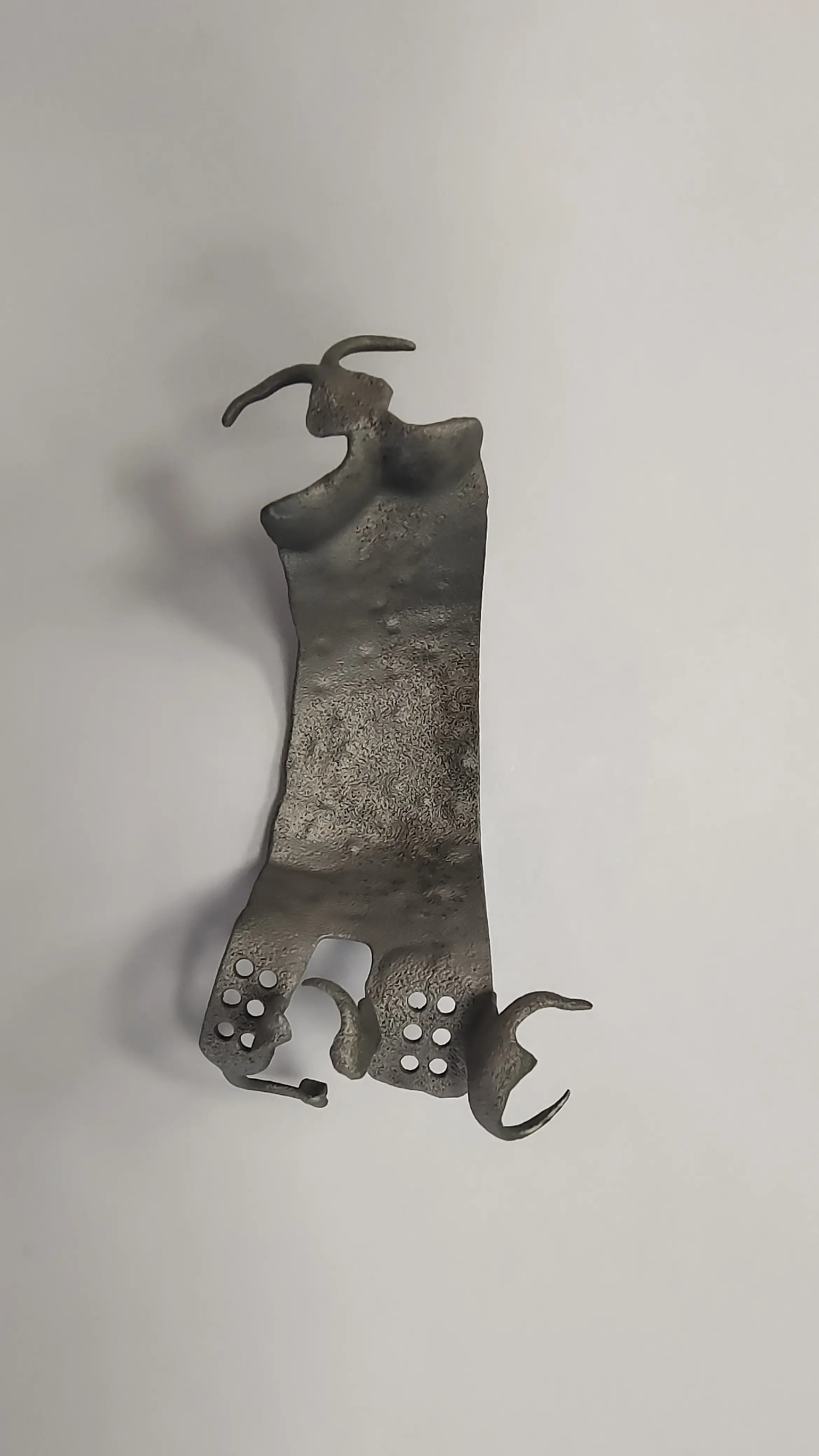
Get the hang of it: Why 3D printed charger stands are your ultimate desktop solution (and how to use them properly)
We’ve all been there. Cellphones, tablets, wireless headphones, smartwatches, laptops—each one requires power, often at the same time. The result? A frustrating jungle of cables cascades down your desk, drawers are filled with tangled wires, and chargers disappear forever into the void. But what if there was a smarter, sleeker and more versatile solution? Enter the world of custom design 3D printed charger holder.
Gone are the days of one-size-fits-all playmakers. Whether you’re a DIY enthusiast designing your own creations, or a professional looking for the ultimate custom solution, 3D printing can help you overcome cable clutter with precision and style.
Eye-catching custom 3D printed charger storage box
- Perfect fit guaranteed: Say goodbye to adapters, wobbly bases, or stands that are too big/small. 3D printing allows you to design or commission custom braces exactly Depending on your specific charger module, phone model (especially those with bulky cases!) and the size of the device it can be docked with.
- Maximize space utilization: Optimize awkward corners, mount chargers vertically under desks, or create complex multi-device charging stations that challenge traditional manufacturing constraints. Take advantage of the precise footprint of your setup.
- Unparalleled organization and aesthetics: Consolidate multiple chargers into a streamlined block. Integrate dedicated, labeled cable channels and entry points. Choose materials and finishes that complement your decor, from functional industrial nylon to polished metal.
- Enhancements: Prevent the charger from sliding off the surface. Create stands with integrated weighted bases, ventilation slots (vital for thermal management!), dedicated slots for accessories like earbuds, clips for cable management, and even tilting for a better viewing angle.
- Material advantages: Customization isn’t limited to shapes:
- plastic: Affordable, versatile PLA/PETG for home printing; engineering-grade ABS, ASA, nylon (SLS/Powder Bed Fusion) or UV-resistant resin for enhanced strength and thermal properties.
- Metal (GreatLight Professional): When you need extreme durability, heat dissipation, ESD shielding or premium aesthetics, metal 3D printing like SLM – Selective Laser Melting is unbeatable. At GreatLight, we specialize in manufacturing high-performance metal charger brackets using advanced SLM technology.
- Cost-effective prototyping and production: Quickly and cheaply test complex designs before going into volume production. For custom prototypes or low-volume end-use parts, 3D printing eliminates expensive injection molds.
Materials matter: choose the right ones
- People’s Liberation Army: Great for initial prototypes, basic desktop stands. Affordable and easy to print, but prone to deformation in high temperatures over time.
- Polyethylene glycol: Stronger and more heat/chemical resistant than PLA. A great choice for durable, functional plastic stands. Minimal warping.
- ABS/ASA: Stronger and has better heat resistance (~85-100°C). Ideal for settings near heat sources or demanding environments. Ventilation may be required during printing.
- Nylon (SLS/Powder Bed Fusion – PBF): Extraordinarily strong, flexible and thermally stable. Professional-grade solution resists impact and repetitive stress. Excellent surface finish options.
- Resin (SLA/DLP): Ultra-smooth surface finish, exquisite details of intricate designs. Fragile compared to thermoplastics; best suited for decorative/low stress brackets with minimal flex.
- Professional Metal Printing (SLM/Metal PBF – GreatLight Core Expertise): The pinnacle of charger stands:
- aluminum: Light weight, good conductivity, and versatile.
- Stainless steel (e.g. 316L): Corrosion-resistant, sturdy and hygienic.
- titanium: Extremely strong, lightweight and biocompatible.
- Copper alloy: Excellent heat dissipation and Conductivity for special applications requiring ESD safety.
The Power of Precision: Superior Metal Printing
When plastic brackets reach their limits, metal 3D printing shines. GreatLight utilizes state-of-the-art SLM printers For metal charger bracket manufacturing:
- Superior strength and durability: Its ability to withstand drops, impacts and continued use far exceeds that of plastic. Ideal for industrial or high traffic environments.
- Superior heat dissipation: Metals such as aluminum actively draw heat away from chargers and sensitive electronics, improving safety and longevity, which is critical for high-power GaN chargers embedded in tight brackets.
- Electrostatic discharge (ESD) protection: Manufacturers requiring precise grounding can seamlessly integrate ESD-safe metal brackets.
- ULTIMATE STABILITY AND WEIGHT: The metal stand provides unparalleled stability and prevents tipping even on slippery surfaces. Adds a noticeable sense of quality.
- Complex design freedom: SLM enables complex internal architecture that is not possible with machining – think of integrated heat sinks or complex wiring channels within the body of a stent.
Designing your winner: key considerations
Whether it’s DIY CAD or debugging your design:
- Measure twice, print once: Accurately measure charger size (including plug!), phone thickness (including case!), required angle, and placement.
- Thermal management: Prioritize airflow. Place slots strategically around charging blocks. Metal braces inherently manage this best.
- Cable management: Plan your exit path. Includes features such as clamps, guide channels, stress relief points and slack space at stent entry/exit.
- Stability and installation: If permanent removal is not required, a weighted base, clamping mechanism, screw countersink, mounting flange or strong adhesive pad can be used. Metal inherently provides excellent base weight.
- assembly: Design clips, slots, or tabs for multi-part brackets that require assembly.
- Strength and safety: Ensure critical stress points (mounting areas, connector slots) have adequate wall thickness, rounded corners, and well-structured geometry. GreatLight provides professional engineering simulations.
- aesthetics: Smooth radii, ergonomic grip points, logos, textures – the sky’s the limit. Metal printing provides excellent surface fidelity.
Turn your vision into reality: two routes
-
DIY road:
- CAD software: Fusion 360, FreeCAD, Tinkercad, Blender. Start simpler.
- Find existing models: Popular repositories like Printables or Thingiverse may have tight designs that need modification.
- Home printers: Choose plastic (PLA, PETG). Optimized settings for strength and adhesion.
- Limitations: Size restrictions, limited material selection (especially metal), variable print quality/strength.
- Professional rapid prototyping path (highly recommended for quality and metal):
- Work with experts: Like huge light.
- benefit:
- Access to advanced materials (engineering plastics via SLS/PBF, metals via SLM/PBF).
- Unparalleled precision and consistency.
- Scalability: Rapidly prototype and then seamlessly scale to end-use production quantities with consistent quality.
- Robust Manufacturability: Expert Assessment Ensures Your Design able Print successfully and powerfully.
- Comprehensive surface treatment: sanding, polishing, media blasting for textures such as pearlescent, satin or mirror, painting, electroplating, passivation, heat treatment – all professionally processed under one roof.
The importance of post-processing
Never underestimate post-processing! It transforms raw prints into professional-grade components:
- plastic: Sanding and painting/plating can significantly enhance aesthetics. Steam smoothing produces a glossy finish. Assemble multi-part parts.
- Metals (the key and core of GreatLight services): Removing the supports requires precision cutting/grinding. Surface treatment options are diverse: sanding, media blasting (aluminum oxide, glass beads, sintered beads, plastic beads), various levels of matte to mirror polish. Chemical passivation enhances corrosion resistance. Heat treatment improves mechanical properties. Anodizing/plating provides coloration and a secondary protective layer. GreatLight offers comprehensive metal finishing tailored to your specific needs.
Conclusion: Organize clutter with custom innovation
3D printed charger holders are more than just storage pieces; they represent smart, personalized solutions to ubiquitous modern problems. Leveraging technologies ranging from accessible desktop FDM to industrial-grade metal SLM can unlock possibilities not possible with off-the-shelf products.
While DIY plastic printing provides an entry point, achieving truly optimized performance, durability and premium aesthetics often requires specialized rapid prototyping expertise. This is especially true for thermally challenging setups or environments that require a rugged metal solution.
At GreatLight, we combine cutting-edge SLM metal 3D printing technology with deep expertise in design for additive manufacturing (DfAM) and comprehensive post-processing services. We work with innovators, engineers, designers and businesses to rapidly prototype and produce custom charger stands that solve real end-user problems – whether it’s a complex multi-device charging dock optimized for heat, an ESD-compliant industrial station, or a sleek, weighted metal base for executive desks.
Ready to turn chaotic charging into streamlined perfection? Please contact GreatLight today for a consultation. Let us design the ultimate charging solution for you.
FAQ: Answers to your 3D printed charger holder questions
Q1: Can the plastic 3D printed bracket effectively withstand the heat of the charger?
A1: Engineering-grade plastics such as ABS, ASA, or nylon (printed via SLS/PBF) handle typical charger heat well, especially if the ventilation design is adequate. However, for long-term high-power charging or integration into a limited space, Metal printing (SLM/PBF) has excellent heat dissipation and inherent temperature resistance.
Q2: Is it difficult to design a special product like a charger holder?
A2: Levels of complexity vary. Use beginner CAD tools to quickly design simple single-slot brackets. Complex multi-device docking stations benefit from CAD expertise. GreatLight provides expert DfAM consulting – we can help design, optimize and ensure manufacturability based on your needs.
Q3: How long does it take to professionally make a custom charger holder?
A3: Turnaround depends on complexity, material, finishing and quantity. Simple plastic prototypes can take several days. Post-processing of complex metal stents can take several weeks. GreatLight prioritizes rapid prototyping; please contact us for an accurate estimate tailored to your specific requirements.
Q4: Is metal 3D printing bracket expensive?
A4: Compared to mass-produced plastic brackets, yes. However, they offer unparalleled durability, precision, thermal management and longevity. For mission-critical environments, prototypes for validating injection molds, or luxury end-use products, metal printing provides compelling long-term value over cheaper, inadequate alternatives. Think of it as an investment in a lasting solution. We offer competitive pricing for high value prototyping solutions.
Q5: Can I add my company logo or specific brand on the stand?
A5: Of course! This is a major advantage 3D printing and rapid prototyping. Logo can be seamlessly integrated into the design, embossed, debossed or applied via finishing processes such as laser engraving, painting or plating. GreatLight integrates brands seamlessly.
Q6: What are the best installation options?
A6: Options depend on your surface:
- Strong adhesive pad: Easily removed with solvents.
- Reusable adhesive: Easy to relocate.
- Fixture: Securely secures underneath desk/table.
- Screw installation: Permanent and extremely strong (ideal for metal).
- Weighted base: Simple gravity-based stability.
Q7: How do I choose high temperature plastics and metals for my application?
A7: Consider features:
- Plastic (SLA/SLS/FDM): Best for cost-sensitive prototypes, moderate heat scenarios, softer aesthetic needs, lighter weight, less complex geometries best suited for additive manufacturing.
- Metal (SLM/DMLS/PBF): Critical for maximum heat dissipation (embedded charger), extreme durability/shock resistance, ESD requirements, challenging thin walls under pressure, luxury/heavy duty feel, safety critical applications or specialized thermal/electrical performance. **GreatLight is good at