Unlocking Customization: A Complete Guide to 3D Printing Cherry MX Keycaps
The tactile satisfaction of a mechanical keyboard is unparalleled, and Cherry MX switches reign supreme among many enthusiasts. But why stop with regular keycaps? Enter the world of 3D printing – your gateway to create truly unique, personalized Cherry MX keycaps that reflect your style and enhance your typing or gaming experience. Whether it’s a specific character, artisan artwork, ergonomic shape, or durable metal design, 3D printing can open doors that traditional manufacturing cannot.
Why choose 3D printed Cherry MX keycaps?
- Ultimate customization: design anything. Craft intricate patterns, incorporate logos, sculpt miniature characters, or create custom profiles optimized for your typing style.
- Prototype perfection: Use low-cost prototypes to test fit, aesthetics and ergonomics before committing to expensive tooling or production runs.
- Niches and alternatives: Replace missing keycaps, create kits for discontinued keyboards, or design unique layouts not offered by mainstream vendors.
- Material diversity: Explore options beyond standard ABS/PBT – from flexible TPU for quieter operation to high-performance resins that pay attention to even the smallest details Strong metal alloy With amazing durability and beauty.
- Creativity Unleashed: Become a craftsman. Design and produce unique pieces.
Understanding Cherry MX Compatibility: Key Points
The heart of any Cherry MX compatible keycap is its stem. Successful printing depends on replicating complex "cross shape" The stemming is accurate. Key considerations:
- Size issues: The inner cavity of the valve stem must exactly match the top of the Cherry MX switch’s valve stem. Too tight and the keycaps won’t fit; too loose and they’ll wobble or fall off.
- Cross axis thickness: Vertical and horizontal rods require precise thickness (usually around 1mm +/- fractions) and slight draft angle for smooth insertion.
- Depth and Tolerance: The stem must be deep enough to securely engage the switch’s top housing clamp, but not so deep that it jams. Printing tolerances must accommodate slight variations inherent in printing and switching.
- direction: Printing valve stems upright often produces the best dimensional accuracy and surface finish on critical mating surfaces.
Choose materials wisely
Material selection profoundly affects aesthetics, feel, durability and printability:
-
Polylactic acid (FDM):
- advantage: Easy to print, wide color range, affordable and biodegradable.
- shortcoming: It softens easily when exposed to heat (direct sunlight, hot car), is not as durable as ABS/PBT, and may become shiny over time.
- Best for: Prototyping, non-daily driver sets, art/display keycaps.
-
ABS (FDM):
- advantage: It has higher heat resistance than PLA and good impact strength, and can be smoothed with acetone.
- shortcoming: Requires a heated bed/enclosure to print reliably, is prone to deformation, and emits fumes during printing.
- Best for: More durable feature set, preferably filament printed, with post-processing for a smoother finish.
-
PETG / PETG-CF (FDM):
- advantage: Excellent layer adhesion, good impact and heat resistance, chemical resistance, slight flexibility to prevent brittleness, and carbon fiber reinforcement for increased stiffness.
- shortcoming: May be sticky, need conditioning, hygroscopic (need drying).
- Best for: Due to its balance of durability and printability, it is arguably the best FDM material for functional, everyday use keycaps.
-
Resin (SLA/DLP/MSLA):
- advantage: Unparalleled detail resolution, smooth surface finish, wide range of options (standard, tough, flexible, high temperature).
- shortcoming: Requires post-processing (cleaning, curing), brittle standard resins may crack on the stem, degrade over time from UV rays, and cost more per part.
- Best for: Highly detailed artisan hats, complex geometries requiring fine features, smooth surfaces requiring minimal finishing.
-
High temperature/engineering resins:
- advantage: Significantly improves heat deflection temperature, impact resistance, tensile strength (e.g. resins used for snap-fits).
- shortcoming: The price is higher and often requires specific printer settings.
- Best for: Stronger stem resists cracking under repeated actuation stress.
- Metal powder (SLM/DMLS):
- advantage: Ultimate durability, thermal stability, unique metallic aesthetic, electrical conductivity (for capacitive applications), light weight.
- shortcoming: The cost is high, industrial-grade printers and expertise are required, and expert design optimization is urgently needed to minimize residual stresses and compensate for sintering shrinkage, which is heavier than plastics.
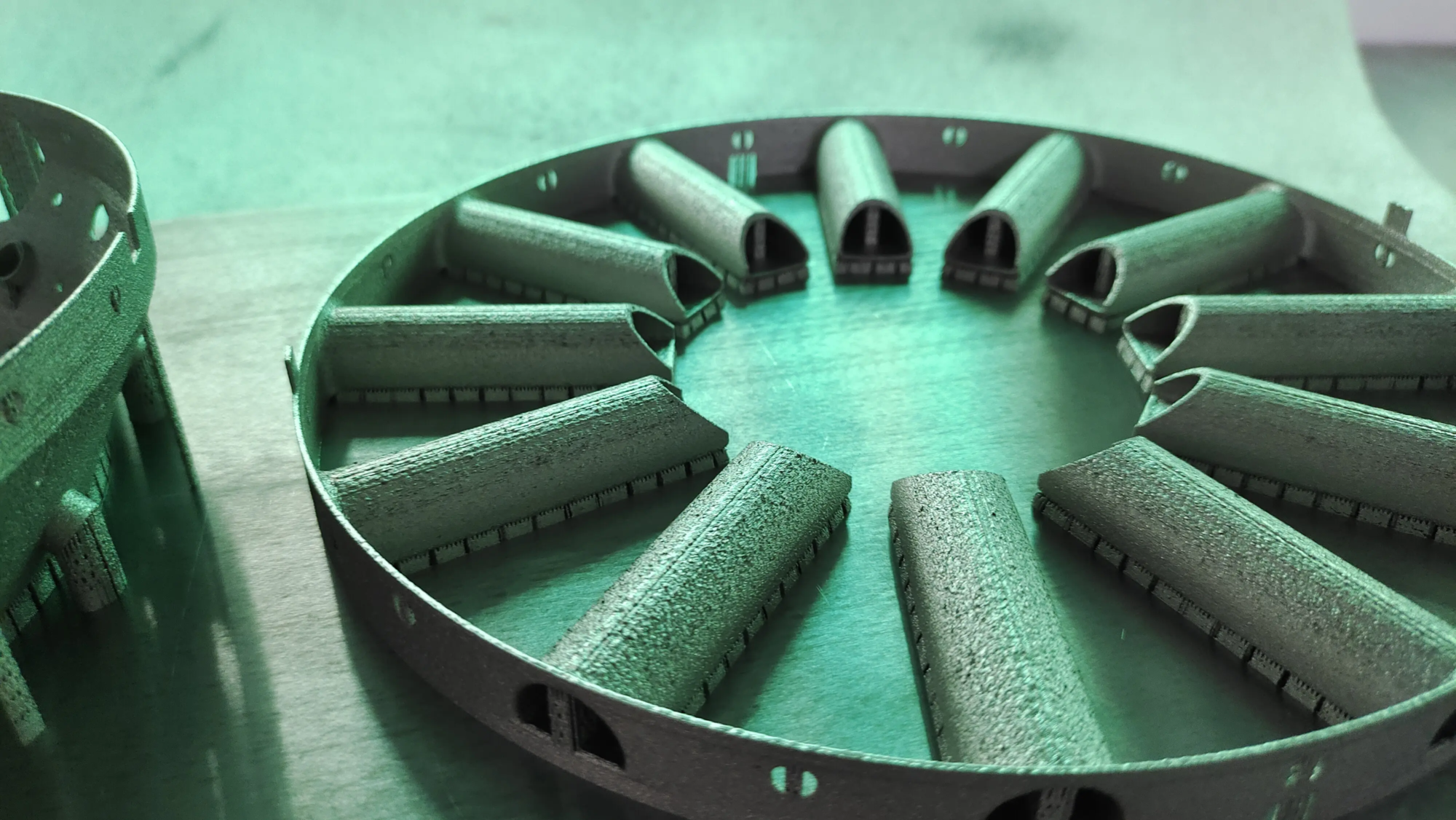
- Best for: Ultra-premium, highly durable and visually striking keycaps require top-notch engineering. For precision metal keycaps that require strength and complex geometries, working with experts like GreatLight is critical. Utilizing an advanced industrial SLM printer, combined with deep metallurgical knowledge and sophisticated post-processing, ensures the dimensional accuracy of the delicate Cherry MX stem and minimizes the risk of warping or defects inherent in metal printing.
Printing process: FDM, resin, metal sintering
-
Fused Deposition Modeling (FDM):
- advantage: Easy-to-use printer, cost-effective materials for functional PETG/ABS parts.
- shortcoming: Layer lines are visible, stem details are challenging without precise adjustments, and support removal on the stem is tricky.
- set up: Print stems vertically for best strength/detail. Minimize protruding parts in the valve stem cavity. Use tree supports or custom designed breakaway supports. The recommended layer height is 0.1mm. Calibrate the extrusion carefully.
-
Stereolithography (SLA/DLP/MSLA):
- advantage: Superb detailing, smooth surfaces, and the ability to handle complex geometries.
- shortcoming: Brittleness issues (mitigated with tough resins), UV degradation, important post-processing.
- set up: The orientation of the stem is crucial (angles often balance detail and strength). Hollow models require drainage holes. Support placement is critical to avoid stem damage. Thorough cleaning and curing is critical.
- Selective Laser Melting (SLM) / Direct Metal Laser Sintering (DMLS):
- advantage: Unparalleled strength/material diversity (stainless steel, titanium, aluminum alloys), functional metal properties. Essential for a truly permanent metal handle.
- shortcoming: High costs, limited material availability/lead times require unparalleled manufacturing design expertise to ensure stem accuracy and prevent warping/twisting. Companies like GreatLight excel in this area, leveraging their advanced SLM capabilities and production technology to overcome these challenges, delivering complex metal parts with accuracy far beyond amateur methods.
- set up: Advanced orientation and support simulation is required to minimize warpage/stress. Steering angle is critical for accuracy. Complex thermal management is required. Rigorous post-processing (e.g. machining, EDM) ensures valve stem tolerances.
Keycap design and modeling
- Find a design: Repositories such as Thingiverse, Printables, MyMiniFactory, etc. provide free/paid STL. Make sure they specify Cherry MX compatibility and material suitability.
- DIY design:
- software: Specialized tools such as Fusion 360, Blender, OpenSCAD, KeyV2 and more.
- Key points: Start by accurately modeling the Cherry MX stem cavity. Please refer to the existing keycaps/models for dimensions.
- Ergonomics: Consider engraving profiles (SA, DSA, OEM) or design your own.
- legend: If printing FDM/SLA, you can model a relief or raised legend on the top surface. Avoid using fine recessed legends unless you are using very high resolution resin.
- Valve stem design tips: Include a slight draft angle (1-2 degrees) on the stem axis. Design stiffeners careful to avoid interference. Keep wall thickness consistent. Make sure there is adequate clearance around the stem base.
Post-processing: Make it sparkle
- Polishing: Removal of layer lines is critical for FDM. Progress through grinding (200-1000+). Green sand for resin/metal.
- Primer/Spray Paint: Use FDM to fill the primer. Plastic/resin spray paint. Professional metal coating/powder coating.
- smooth: Acetone Vapor for ABS (use with care!). Special solvent baths for certain resins. Metal polish.
- Clear coat: Protects paint and finishes. Matte/gloss options. For resins, mitigating UV yellowing is critical.
Pros and cons of DIY 3D printed keycaps
- advantage: Unique customization, rapid iteration, accessibility (FDM), creative outlets, substitution potential.
- limit: Crucial: Durability confidence requires rigorous testing of plastics and especially metals. Stem integrity testing is critical. Detail/resolution limitations of each technology/material. Potential ergonomic compromise of amateur design with established silhouette. A lot of time invested. Equipment/Material Cost Barriers to Quality Home Resins/Metals.
in conclusion
3D printed Cherry MX keycaps open up a realm of personalization and functional innovation for mechanical keyboard enthusiasts. While art projects and prototyping can be done with a home FDM or resin printer, Professional gradetruly lasting results require careful material selection, impeccable calibration and expert design mastery.
For complex designs, durability-critical applications, or unlocking premium potential Metal 3D printed keycapsleveraging industrial technology and expertise becomes critical. Professional rapid prototyping partners, e.g. huge light Bridging the gap between ambitious concepts and reliable, high-performance reality. Equipped with state-of-the-art SLM printers and deep technical proficiency before printing, they streamline the process from initial iterative prototyping to complex final production output, including precision metal parts, integrating the necessary finishing stages to protect creations both cosmetically and functionally. If your vision calls for the resilience of metals like stainless steel, titanium or brass, rendered with the precision of Cherry MX stems, a no-compromise approach to direct fabrication of these demanding geometries can transform unique designs, provide an exceptionally durable tactile experience, and have unparalleled longevity. Whether pursuing convenient home crafting or high-end metal prototyping, using 3D printed keycaps will ultimately reshape interaction at your fingertips in creative and pragmatic ways.
Frequently Asked Questions (FAQ)
-
Are 3D printed keycaps safe?
- Material safety: For FDM/resin printing at home, make sure there is good ventilation. Use non-toxic, food-safe filament or resin only Standard printer output is not inherently safe for physical contact if specifically certified and applied correctly. Industrial metal powders require professional handling. finals used Once cured/cleaned, keycaps pose minimal risk.
- Keyboard/switch safety: A properly printed cover will not damage the switch if the stem is the correct size and the force is applied appropriately. Wrong valve stem design can lead to excessive pressure, which can lead to risks.
-
Will 3D printed keycaps wear out faster?
- It depends on the situation completely About the material and printing quality. Poorly printed FDM PLA valve stems will deform quickly. PETG/ABS/Nylon or strong resins work well in plastics. The service life of high-density metal printed keys may exceed the service life of injection molded PBT when professionally manufactured.
-
What is the best material for a strong keycap stem?
- Home printer: Compared with domestic ones, PETG, PETG-CF, nylon, and Tough/ABS resins provide the best valve stem durability using FDM and SLA methods respectively.
- Industrial: The production of mechanically elastic valve stems mainly based on metal (stainless steel, titanium alloy variants) requires the involvement of professional SLM manufacturing services and prioritizes precision.
-
How do I make sure my printed cap fits my Cherry MX switch?
- Use carefully checked and reliable reference STL files.
- Calibrate the printer’s dimensional accuracy. Printers will naturally exhibit differences that affect stem size.
- For metal prototyping, utilize iterative validation: print verification prototypes, incrementally modify the geometry, ensure compatibility with precise Cherry MX rod connections, and optimize strength with DFAM’s professional services for accurate guidance.
-
Will they sound different?
- Absolutely! Materials can significantly affect the sound profile. PLA Sound Hollow/Resonant PETG Silent Bass TPU Damping SLA Resin Different plastics metal produce unique solid rich tonal characteristics The relative weighting significantly affects the acoustics. The greater the mass, the lower the resonant frequency, which widely affects the perception of the keyboard’s harmonic characteristics.
- Where can I print custom metal Cherry MX keycaps?
- Seek professional rapid prototyping companies equipped with industrial SLM/DMLS systems who understand the nuances of metal additive manufacturing and guarantee the dimensional integrity of Cherry MX valve stems requiring minute precision, often incorporating well-known prototyping experts such as huge light Possessing enduring expertise in solving challenges involving detailed metal mechanisms as well as user-required geometries through standardized streamlined workflows, facilitating rapid prototype test batches and ultimately reliably proceeding to volume production, leveraging peak machine capabilities while designing superior metal keycaps for cost optimization. * Explore project surface discussions, communicate unique requirements, proactively assess manufacturability, and effectively and accurately translate personalized visions.