

Unleash creativity with a 3D printed foldable sword: a modern prototyping masterclass
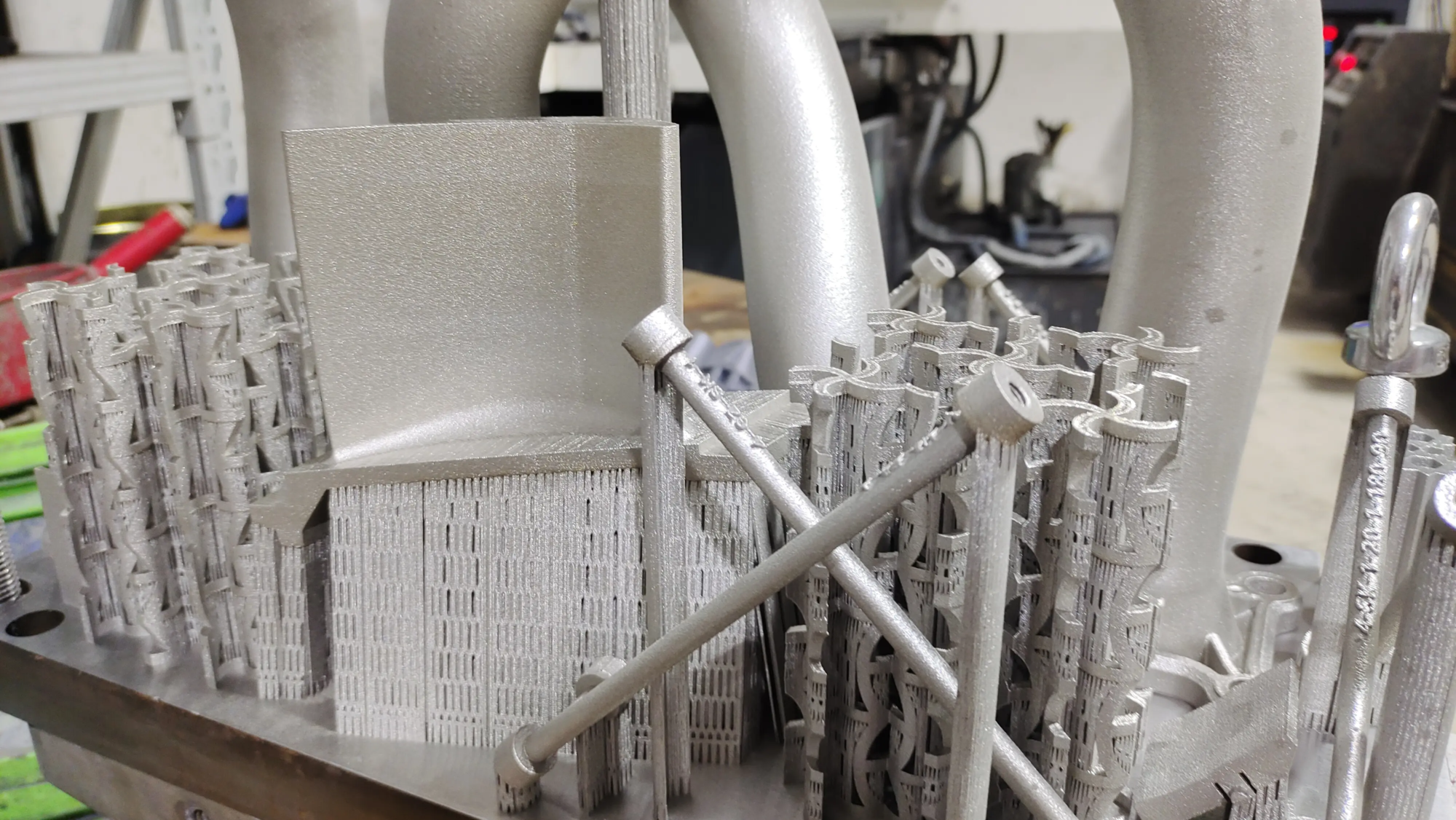
The allure of the sword is timeless – it is a symbol of power, art and history. But what happens when you blend old-world charm with cutting-edge manufacturing? The 3D printed folding sword is born: an engineering marvel that combines complex mechanism with elegant functionality. For enthusiasts, cosplayers, prop makers and designers, these dynamic blades represent the pinnacle of custom manufacturing, with Selective Laser Melting (SLM) metal 3D printing a key enabler.
Why folding swords require advanced manufacturing
Traditional swords are static. Creating a functional foldable version – one that can be securely retracted for easy portability and storage, while unfolding into a rigid, convincing form – pushes the boundaries of traditional processing. This complexity involves:
- Complex internal mechanisms: Hinges, locking levers, slides, latches and spring-loaded components must work in perfect harmony within a limited space.
- High precision: Sub-millimeter tolerances are often critical for smooth sliding, secure locking, and preventing wobble or unnecessary failure points.
- Material Strength and Durability: Moving parts are subject to friction and pressure. The material must be able to withstand repeated deployment cycles without shearing, excessive bending or fatigue, especially in the presence of stress concentrations such as pins or grooves.
- Weight optimization: A sword has to feel believable. Material selection and smart lattice structure are critical to achieving a balance between strength, weight distribution and functionality.
This is where the dilemma lies with traditional subtractive methods such as CNC machining. Manufacturing one-piece foldable blades typically requires assembling dozens of tiny, carefully machined parts—a costly and time-consuming process prone to misalignment. SLM 3D printing revolutionizes this.
SLM 3D printing: the engineering wizardry of movable blades
Selective Laser Melting (SLM) is a leading powder bed fusion (PBF) technology uniquely suited to overcome these barriers:
- Complexity is free: SLM uses a high-powered laser to build parts layer by layer from fine metal powders. This unleashes unprecedented freedom. Can print complex hinges, internal sliding dovetails, snap-in mechanisms and pin channels as a single componenteliminating potential weaknesses at assembly steps and interfaces.
- Unparalleled precision and detail: Modern SLM systems offer resolutions down to tens of microns, allowing the creation of features critical to foldable mechanisms – tiny detent balls, precision grooves, snap-in latches and smooth-running sliding surfaces.
- Material Versatility: SLM works with a variety of aircraft-grade metals that are critical to a strong sword:
- Stainless steel (316L/17-4PH): Excellent corrosion resistance and good strength-to-weight ratio, ideal for making costume props and training tools.
- Titanium alloy (Ti6Al4V): Unparalleled strength-to-weight ratio, superior corrosion resistance and biocompatibility.
- Aluminum alloy (AlSi10Mg): Extremely light weight, good stiffness, corrosion resistance, very suitable for large props.
- Tool steels (e.g. maraging steels): Functional blades are extremely hard and wear-resistant, requiring excellent edge retention and mechanical durability.
- Integrated design: SLM allows the consolidation of multiple functional elements into fewer components, thereby reducing gaps and increasing reliability. Springs can even be functionally integrated using lattice structures designed into the metal itself.
Designing for Success: Key Considerations
Making a reliable folding sword requires more than just hitting "Print." Design for Advanced Manufacturing (DfAM) principles are critical:
- Material properties: SLM parts have anisotropic properties. Orientation during printing affects strength, especially in critical shear or bending planes. Simulation tools predict stress points to optimize print direction.
- Tolerances and Clearances: Account for sintering shrinkage (~2%) and ensure adequate clearance at sliding/tolerance critical interfaces. The finished surface may require minor compensation. Smaller scale test prints are extremely valuable.
- Hinge/Pivot Design: Choose a strong pivot mechanism – a clevis pin with a cotter pin completely enclosed within the printed structure, integrated bearings or a printed snap pin. Avoid weak fillets at hinge points.
- Locking mechanism: Design reliable, redundant locking to ensure safety. Ball detents hidden within the channel, sliding bolts integrated into the handle or geometric locks such as dovetails or bayonet locks are popular SLM solutions.
- Stress analysis: Finite element analysis (FEA) software is used to simulate deployment forces, effects on locks/hinges, and potential fatigue areas. Optimize wall thickness and internal lattice accordingly.
- Surface finish: The printed surface exhibits roughness. Expect critical moving surfaces to be sanded, polished, vapor smoothed or electropolished to minimize friction.
Overcoming Challenges: The Glow Advantage
At GreatLight, we specialize in turning ambitious concepts like complex foldable swords into tangible, high-performance realities. Our expertise solves core challenges:
- Advanced SLM equipment: Our state-of-the-art SLM printers deliver the extreme precision, resolution and repeatability required for the fine details and tight tolerances of foldable mechanisms.
- Material mastery: We offer a broad portfolio of metal products and have an in-depth understanding of their SLM processing parameters to achieve optimal density, strength and surface quality of structural and decorative parts.
- DfAM expertise: Our engineers are DfAM experts. We don’t just print your designs; we print your designs. Our collaboration to optimize SLM—increasing strength, reducing weight, improving functionality, and ensuring manufacturability—inevitably led to improvements in the foldable mechanism.
- One-stop post-processing: Our prototyping capabilities go far beyond


