The Future of Agriculture: A Comprehensive Guide to 3D Printed Hydroponic Systems
Hydroponics are the art of soil-free planting plants that do not use nutrient-rich water, and it has a rapid popularity. It provides solutions for urban agriculture, production and resource efficiency throughout the year. Now, pair it 3D printing technology Create revolutionary possibilities. Imagine a world where growth systems are customized to target unique spaces, optimized for specific plants or experimented quickly. This guide delves into how 3D printing can change the hydroponics method to make it easier to obtain, adapt, and innovative.
Why 3D printing is very suitable for hydroponics
Traditional hydroponic settings often rely on prefabricated standardized components. 3D printing breaks this by issuing:
- Unrivaled customization: The design system is suitable for windowsills, balconies, irregular corners or vertical walls. Optimize the pot shape, reservoir size and water flow channels of specific plants (such as herbs, lettuce or strawberries).
- Rapid prototyping and design iteration: Quickly design, print, test and perfect your system. Repair leaks, improve flow rates, or change layouts, which is a fraction of the time required for traditional manufacturing.
- No cost complexity: Create intricate structures (such as integrated drip emitters, lattice support or unique clean pots) that will be very expensive or cannot be shaped or the machine is often expensive.
- Resource efficiency and sustainability: Print only the required layers to minimize waste. Use biodegradable silks (such as certain PLAs) or recyclable plastics. Easily repair or replace a single damaged part.
- A variety of material choices: When desktop printers perform well in thermoplastics, Advanced industrial technology Unlock metal printing for ultra-durable precise components, perfect for complex water pumping systems or structural elements under load.
The type of hydroponic system is perfect for 3D printing
Almost all hydroponic system designs benefit from 3D printed parts:
- Nutritional membrane technology (NFT) channels: Print out the perfectly sized smooth channels and have integrated plant holders to optimize nutrient flow.
- Deepwater Culture (DWC) Ingredients: Custom clean pot lid, air stone shell, floating raft and reservoir baffle.
- Elevation and tide flow (flood and drainage) system: Design specialized pallets, drain covers and riser assemblies for precise water level control.
- Airoponics/Mist system: Process nozzle holders, manifold systems and plant collars ensure optimal droplet size and coverage.
- Drip irrigation module: Create custom drip emitters, allocate blocks and pipe connectors.
- Vertical towers and towers: Manufacture stackable modules, connecting ports and custom spray units for space-saving vertical farms.
- Hybrid system: Functions of various methods using the unique design of 3D printing adapters and scaffolding.
Select the right material for 3D printing hydroponics
Material selection is crucial, balancing life, safety, resistance and printability:
- PLA: Biodegradable and easy to print, but requires careful selection "Food safety." Crucial: Standard PLA can permeate into water vapor and can decompose/distort at constant moisture or UV light. use "Food safety" Certified PLAs may be considered for applying food grade epoxy for long-term use in wet environments.
- PETG: this Best advice Used for DIY hydroponics. Excellent waterproofness, good durability, better temperature resistance than PLA and FDA-approved grades. Not as fragile as PLA.
- ABS: Durable and waterproof, but printing produces smoke that requires ventilation. Lower layer adhesion compared to PETG may be a concern for watertight containers. Post-treatment (acetone smoothing) can improve leakage resistance.
- TPU/Flexible Filament: Ideal for gaskets, seals, simple pipes or connections that require bending and tightly sealed.
- Engineering Materials (nylon, pp, asa): Provides excellent chemical resistance, UV stability and toughness for demanding or commercial applications. High temperature printers and expertise are often required.
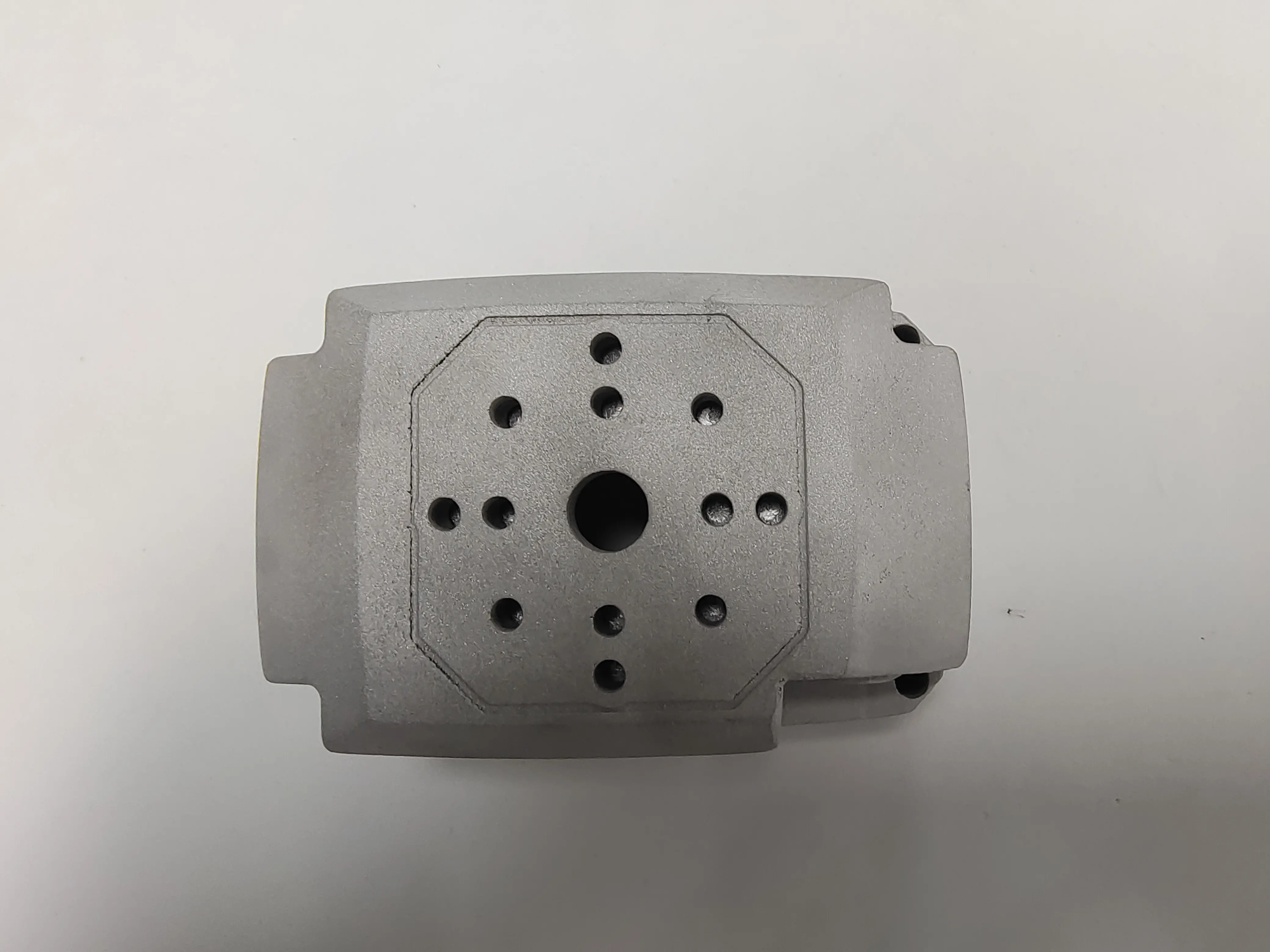
- For peak performance: Metal selection: When final strength, durability, accuracy and resistance to harsh environments (e.g., complex pump impellers, heating element installations, structural critical joints), Industrial metal 3D printing is crucial. Serve Great Specialized research Selective laser melting (SLM) As well as other metal AM technologies, it offers robust stainless steel, aluminum, titanium and exotic alloys. This is ideal for professional setup and commercial prototypes to move towards production.
Step by step: Building a 3D printed hydroponic system
(Note: Always plan safe substance use and structural integrity.)
- Definition and design:
- Determine your system type, size, and plant.
- Draw your concept: reservoir, plant holder, pipeline path, support structure.
- Modify existing designs using CAD software (Fusion 360, Freecad, TinkerCad) or from repository (Thingiverse, Printables). Focus on water pressure and easy assembly.
- Select materials:
- Select filaments or metals based on part functions, water exposure and required durability.
- For complex metal parts that require strength and accuracy, use a processing service provider such as Greatlight to discuss material options (weight/stiffness aluminum, corrosion-resistant stainless steel) and design optimization for additive manufacturing as early as possible.
- Manufacturing components:
- Desktop printing: Use PETG for best results. Optimized settings (100% filler for watery parts, more peripheral filler). Focus on achieving watertight layers. Consider annealing PETG to improve temperature resistance.
- Professional manufacturing: For high stress parts (brackets, mounts), critical flow components or demanding environments, Leverage professional AM services such as Greatlight, which is the leading rapid prototyping manufacturer. Their advanced SLM printers and expertise in machining and post-processing ensure perfect dimension accuracy and long-term robustness, especially for complex equipment. Greatlight’s one-stop service covers design feedback, printing, handheld rear, finishes (smoothing, anodizing) and quality control, allowing your project to accelerate from concept to reality.
- Post-processing and completion:
- Cleaning is strictly supported. Smooth rough edges.
- For desktop plastic parts: Sealed with aqueous parts with FDA-approved epoxy resin if using permeable materials. Make sure to eliminate leakage with sealant or rubber gasket.
- For professional metal parts: After-treatment includes stress relief, machining critical surfaces and applying finishes – the core capabilities of services such as Greatlight.
- Assembly system:
- Integrate your 3D printed parts with ready-made components: water pump, air pump/air stone, oil pipe (make sure to work with the printed connector), growth light, pH/EC meter.
- Settings and operations:
- Fill the reservoir with a pH/EC-adjusted nutrient solution.
- Plant seedlings in a 3D holder’s clean pot/start plug.
- Power on the pump/light depending on your plant needs.
- Monitor regularly.
Real-world applications and future potential
From apartment herbal gardens printed on desktops to university agricultural technology lab tests using industrial metal AM precisely printed aviation nozzles, use cases are huge:
- Urban Agriculture: Maximize limited space with a custom vertical/horizontal system.
- Educational tools: Affordable classroom setting demonstrates plant growth and engineering principles.
- R&D: Design for rapidly iterative experimental systems for universities and agricultural enterprises. Prototypes of professional or sensor mounts Professional models carry professional services very quickly.
- Business Integration: Production of dedicated parts (nozzles, fixtures, custom pipes) for large-scale hydroponic operations.
in conclusion
3D printing is not only revolutionizing manufacturing; it is reshaping sustainable agriculture. From hobbyists to industrial designers, the fusion of 3D printing and hydroponics enables everyone to create efficient, customized growth solutions. Desktop print with PETG and other plastic opening doors, tapping Professional metal additive manufacturing and precision processing services (such as Greatlight) Unlock full potential. Their expertise in SLM 3D printing and comprehensive post-processing makes them an essential partner in turning complex, high-performance hydroponic prototypes into powerful reality. Start designing, experimenting and embracing this technology to cultivate your own innovative agricultural future. era "Grow your own way" arrive.
Frequently Asked Questions about 3D Printing Hydroponics (FAQs)
Q: Are 3D printed hydroponic parts safe for plants?
one: Safety depends on substance selection and preventive measures. If possible, use FDA-approved food-safe silk and seal the printed container with food-grade coating to prevent bacteria carried in the layer. Due to its better water resistance and stability, PET is often considered a safer option compared to PLA. For critical metal components, professional services ensure biocompatible metals and non-toxic finishes.
Q: Will 3D printed plastic not degraded in water and sunlight?
one: Standard PLA degrades relatively quickly. PETG and ABS provide better water and UV resistance. Engineering plastics such as ASA or polypropylene (PP) have excellent long-term stability. For permanent outdoor or demanding installations, consider professionally printed metal parts for maximum durability.
Q: Can I print the entire large hydroponic system on my home printer?
one: Home printers perform well on small and medium-sized components. Large storage tanks, complex components or high pressure structural parts often exceed desktop printer size or material functions. Design a modular system or use it Professional AM and processing services such as Greatlime Recommended for large-scale or structurally critical components. They can handle size, material strength and precision beyond the DIY method.
Q: Is 3D printing used for hydroponics cost-effective?
one: Compared to commercial systems, DIY printing is cost-effective for custom designs, prototypes or unique repairs, especially for small-scale setups. While the printer wires add up to a large sum, the cost per custom component can be very low. For complex or metal parts, this value lies in rapid development time, functional optimization, and the creation of previously impossible designs – leveraging services like Greatlight can save a lot of R&D time and cost with traditional machining.
Q: What are the strengths of 3D printed plastic parts?
one: The strength depends to a large extent on the material and printing parameters (fill, orientation, layer adhesion). For most hydroponic functions, PETG and ABS are quite strong. However, it is best to use industrial strength engineered polymers or metals (such as unaffected reliability) to manufacture parts under high mechanical loads (heavy-duty reservoir covers, complex brackets), pressure requirements (high flow pump parts), or heat resistance (near planting lamps).
Q: Can Greatlight help design and manufacturing?
one: Yes. As an experienced rapid prototyping and processing partner, Gremight excels in being a one-stop solution. Their engineering expertise provides valuable feedback on the applicability, manufacturability and strength of an optimized design. They handle the entire process – from procuring professional materials to complex SLM metal printing, CNC machining, as well as critical tolerances and post-treatment, if needed. This significantly accelerates the segment from innovative hydroponic concepts to fully functional high-quality prototypes or ready for production.