The Precision Revolution in Gun Accessories: Why 3D Printed Iron Sights Are Changing the Game
Iron sights remain the cornerstone of gun sighting systems—simple, reliable, and unaffected by batteries or electronics. While traditional manufacturing methods work well, the emergence of advanced metal 3D printing is opening up unprecedented possibilities for customization and performance. Let’s explore how direct metal laser melting (DMLM) or selective laser melting (SLM) technology is revolutionizing the production of iron sights, focusing on the critical role of a specialized rapid prototyping partner like GreatLight.
Why Choose 3D Printed Iron Sights? Compelling Advantages
3D printing goes beyond traditional CNC machining or investment casting and has unique advantages that are particularly suitable for iron sights:
- Unparalleled customization: This is a game changer. Forget about generic off-the-shelf heights or apertures. 3D printing can create precisely customized sights:
- Personal Shooter Anatomy: Perfectly matches the scope image to the shooter’s eye relief, cheek weld, and dominant eye position for faster target acquisition and less fatigue.
- Professional applications: Create ultra-low profile sights for suppressor use, optics-ready common sighting heights, or unique apertures (ghost rings, inverted V, micro-dots) optimized for competition shooting, hunting, or tactical use.
- Specific firearms and optics: Ensure seamless integration and optimal visual images with non-standard platforms or specific optics/mount combinations.
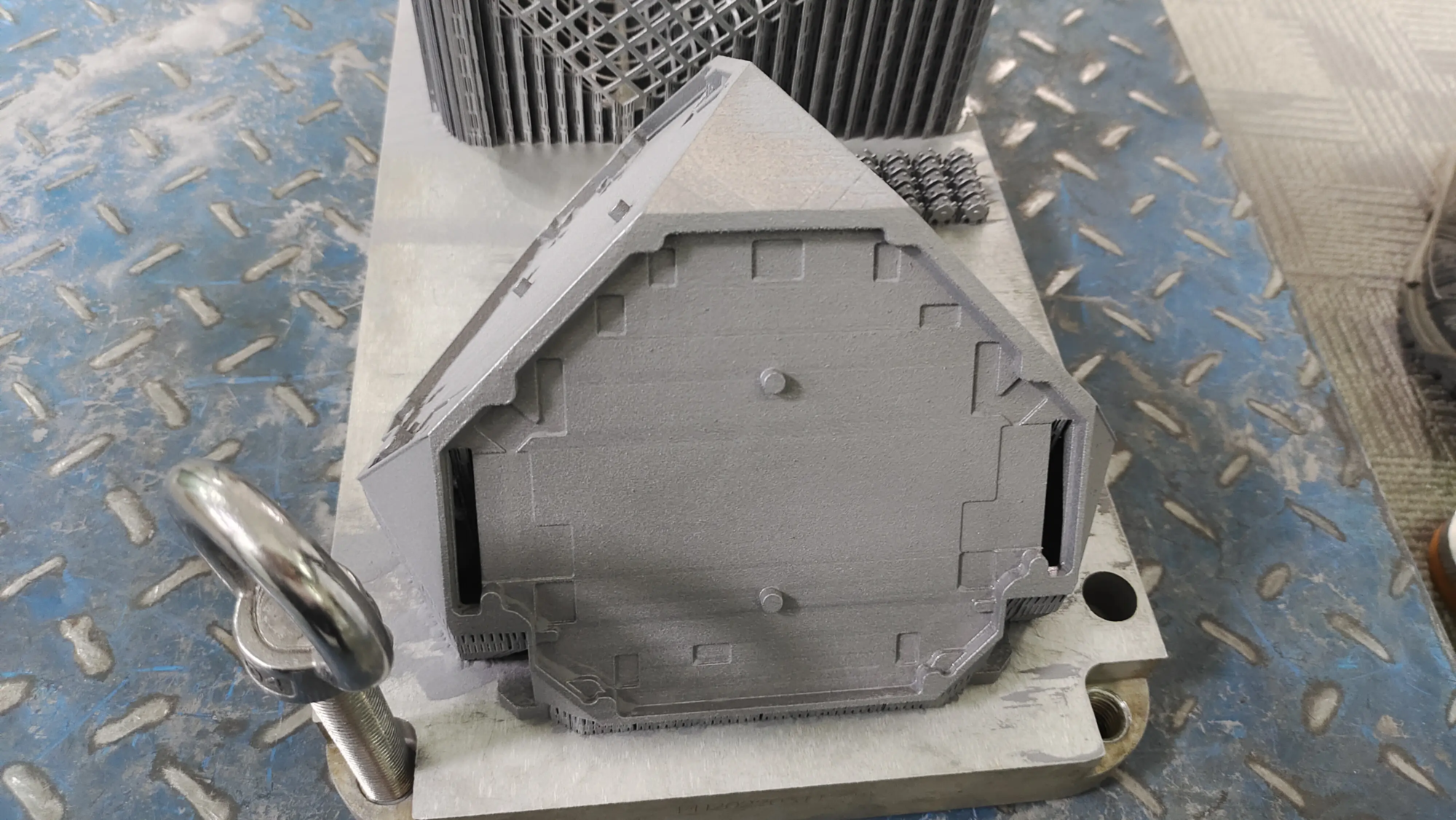
- Lightweight and durable: SLM printing allows complex internal lattice structures (such as generative design) without affecting external geometry. This results in significant weight savings compared to solid metal counterparts—critical for reducing the sliding mass of a pistol or minimizing the bulk of a rifle—while maintaining the necessary rigidity and impact resistance when using appropriate aerospace-grade alloys.
- Rapid design iteration and prototyping: Designing the perfect iron sight usually requires testing and refinement. 3D printing allows for extremely fast turnaround times (within days) for design changes. Quickly test prototypes with accurate final materials, evaluate ergonomics and visuals, make adjustments and reprint – accelerating the process from concept to perfect design.
- Implementation of complex geometry: Create aerodynamic contours in unconventional locations, integrate serrations or gripping aids, or economically machine unique aesthetic decorations from solid blanks that would be extremely difficult or impossible. This unleashes innovative functional and aesthetic design freedom.
- Merge parts: Using directional deposition to integrate the sight base, blade and lift mechanism into fewer, stronger, single-piece structures has the potential to reduce moving parts and increase durability.
Turning designs into reality: materials, craftsmanship and precision
Success depends on precision and material science:
- Key materials:
- Maraging steel (1.2709/18Ni300): The gold standard for strength, toughness and dimensional stability. Highly polishable and finishable, ideal for demanding firearm components. Often selected for their ability to withstand repeated sliding cycle impacts.
- Stainless steel (316L, 17-4 PH): Has excellent corrosion resistance and good strength. When heat treated, 17-4 PH provides higher strength comparable to some low alloy steels. Ideal for wet environments or applications where corrosion is a major concern.
- Titanium alloy (Ti6Al4V): The ultimate in lightweight strength. Ideal for applications where minimizing weight is a priority. Highly corrosion-resistant and biocompatible, but generally more costly.
- GreatLight Advantages – SLM Technology and Expertise: Manufacturing a fully functional, reliable mechanical sight requires industrial-grade metal additive manufacturing capabilities. GreatLight excels in this area:
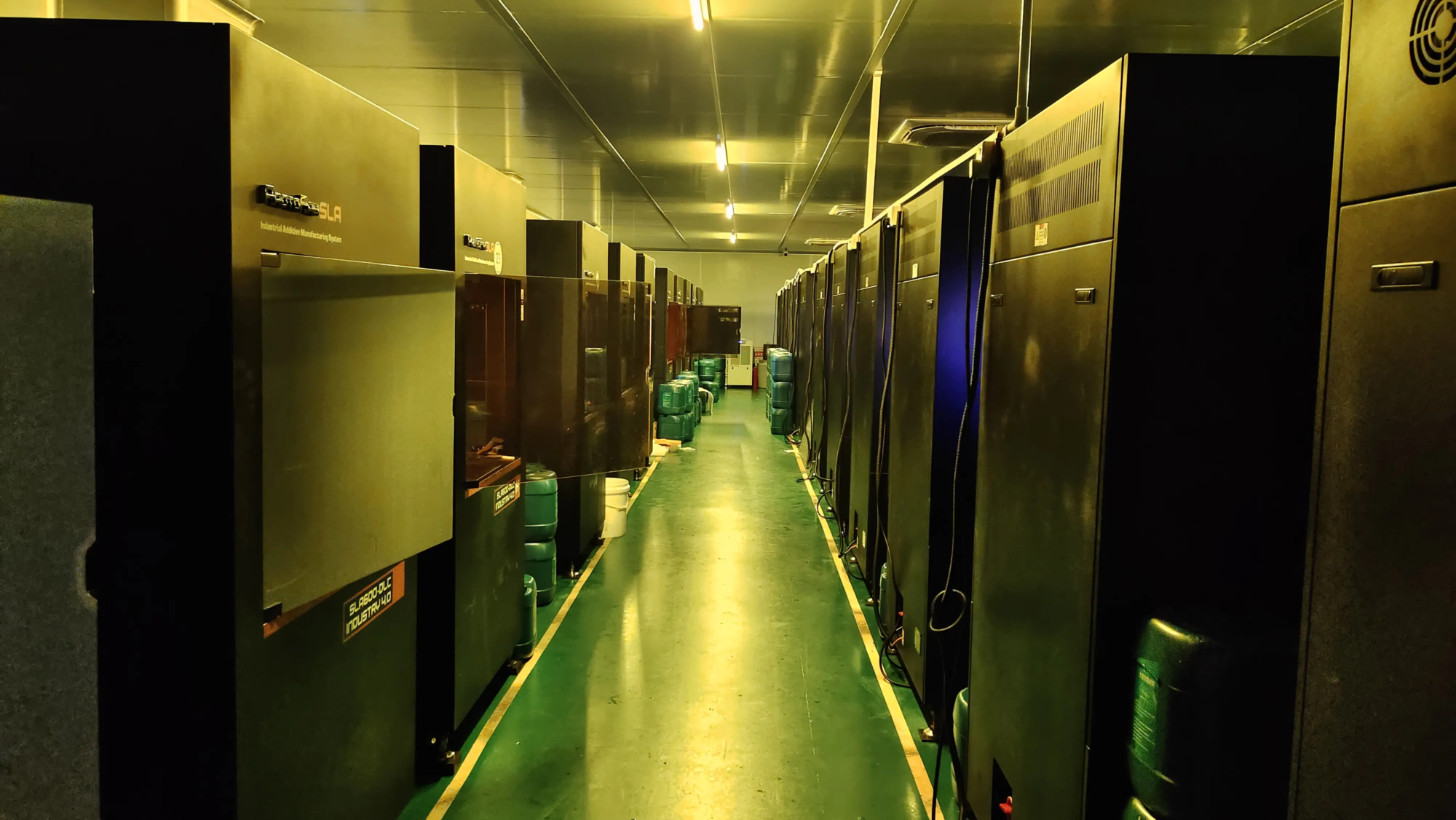
- Advanced industrial SLM/DMLM system: Utilizing state-of-the-art multi-laser SLM machinery ensures high build rates, excellent layer resolution (down to 20-30 microns) and superior powder bed management – critical to achieving the required fine details, smooth surfaces and dimensional accuracy.
- Engineering process parameters: Optimize laser power, scan speed, fill pattern and thermal management Every material and geometry is the most important. GreatLight leverages deep materials science expertise to define parameters that ensure optimal metallurgical properties (density >99.9%), mechanical strength and minimal internal stresses.
- Comprehensive post-processing: Original prints need to be sorted:
- Heat treatment: Stress relief is mandatory. Steels such as 17-4 PH or maraging steels are solution age hardened to achieve target hardness and toughness.
- Support removal and cleaning: Support structures are carefully removed, followed by industrial cleaning techniques (ultrasonic, chemical, powder spraying).
- Precision machining: Crucial for iron sights: CNC machining of critical mating surfaces (dovetails, mounting holes) and precision grinding, honing or grinding of sight surfaces and apertures for smooth operation and crisp edges. Use ultra-finishing, sandblasting, polishing or special coatings (nitriding, DLC, PVD) to enhance corrosion resistance, wear resistance and aesthetics.
- Strict quality control: Complying with aerospace/automotive standards, dimensional verification is performed using CMM (Coordinate Measuring Machine) and advanced optical scanners. Material testing (tensile, hardness) verifies batch integrity. Functional testing of fit and mobility (if applicable).
Key considerations for designers and end users
- Design for Additive Manufacturing (DfAM): Success depends on understanding the limitations of SLM. Wall thickness, support minimization, orientation for optimal strength/accuracy, and clearance of moving parts must be considered early on. Working with experienced additive manufacturing engineers like GreatLight is invaluable.
- Durability and testing: 3D printing metal able Meet or exceed the performance of traditionally manufactured parts when produced correctly. Key components such as sights must undergo rigorous destructive and non-destructive testing. Initial prototyping often includes failed verification tests. Request relevant material certificates and test reports.
- Surface finish and precision: While SLM can achieve complex shapes, critical sight mating surfaces/surfaces that affect performance often require post-machining to achieve the necessary smoothness and tolerance (±0.025 mm or better). Discuss finishing requirements clearly with your manufacturer. Raw sintered surfaces are generally not suitable without secondary finishing.
- Regulatory and Legal Compliance: Manufacturers and gun owners must ensure that printed sights comply with all applicable laws and regulations regarding firearm components, including relevant marking and serialization requirements. It is critical to understand these responsibilities upfront.
Conclusion: The future of sight alignment is 3D printing
3D printed iron sights are beyond a manufacturing novelty; they represent a major leap forward in firearm customization, performance optimization, and innovative design. The ability to rapidly prototype and produce lightweight, ultra-precise sights that perfectly fit the shooter and firearm provides clear advantages in speed, comfort and accuracy.
Realizing this potential requires working with rapid prototyping experts with deep expertise in metal additive manufacturing, specifically SLM/DMLM technology and comprehensive post-processing capabilities. GreatLight is at the forefront, leveraging cutting-edge industrial equipment, rigorous materials science knowledge, and extensive finishing expertise to transform custom sight concepts into reliable, high-performance realities.
Unlock the full potential of personalization accuracy. Turn your iron sight concept into a precision-engineered reality with GreatLight’s expertise in metal 3D printing and finishing.
Frequently Asked Questions (FAQ) about 3D printed iron sights
Q1: Are 3D printed metal sights really strong enough?
A1: Of course. When printed using high-quality industrial SLM machines and properly selected aerospace-grade alloys (such as maraging steel, 17-4 PH stainless steel, or titanium) and properly heat treated, the resulting parts have material properties (strength, hardness, ductility) that are equivalent to, and sometimes exceed, their conventionally manufactured counterparts. Proper heat treatment and design optimization are critical.
Q2: How accurate is the 3D printed mechanical sight?
A2: Modern SLM systems provide excellent layer resolution. The original print achieves impressive accuracy. However, critical functional surfaces, especially dovetail mounting interfaces, apertures, and front-view blade surfaces, often require precision CNC machining in post-processing to achieve less than ±0.025 mm (±0.001"). This ensures a reliable installation and a clear visual picture.
Q3: Can I get a 3D printed Glock sight (or other specific model)?
A3: Yes! This is the main application for customization. Reputable manufacturers like GreatLight can accurately replicate OEM specifications for replacement or work with you to design a completely custom sight designed specifically for your Glock (or other platform), optimizing height, aperture size/shape, profile, and aesthetics to your specific requirements.
Q4: How is the surface finish? Will it look rough?
A4: Original "at the time of printing" The surface has a characteristic texture. However, This surface is not suitable for functional iron sights. A comprehensive set of post-processing options is critical. Processes such as CNC machining, grinding, honing, polishing and sandblasting modify parts. Critical surfaces are machined smooth, while non-critical surfaces can be sandblasted or polished to a variety of beautiful finishes, from matte to mirror. Superior post-processing capabilities provide precision and a professional look.
Q5: How long does it take to get a customized 3D printed iron sight?
A5: The time is greatly reduced compared to traditional mass tooling methods such as machining or casting. While complex geometries may take longer to print, eliminating tool setup can speed up the process. Prototype iterations can often be completed in just a few days. Complete production, including all necessary post-processing and quality control checks, typically takes 10 to 25 working days, depending on complexity, finishing requirements and quantity. Rapid turnaround speeds up development cycles.
Q6: Is it complicated to design your own mechanical sight?
A6: Functional firearm component design requires expertise in engineering mechanics, ballistics, and ergonomics. While the basic concept can be sketched out, successfully translating it into a manufacturable, safe and effective DfAM iron sight requires specialized CAD (computer-aided design) skills and knowledge of SLM design constraints and firearm functionality. It is highly recommended to work with a manufacturer like GreatLight to provide design consulting and engineering support combined with their production expertise. They can work together to refine your concept into an optimized, printable design.