Conquer the Trails: An Expert’s Guide to 3D Printing a Rock Crawler
The world of RC climbing is a thrilling blend of precision engineering, rugged terrain, and pure adrenaline. When your well-built machine faces a steep cliff face or jagged rock, every component matters. Traditional manufacturing often imposes limitations—affordability, availability, or design compromises. 3D printing arrives – a revolution that allows amateurs and professionals alike to push boundaries. This guide takes an in-depth look at how you can leverage this technology to improve your rock crawler’s performance, customization, and resiliency.
Why 3D printing is the ultimate game-changer for rock crawlers
Rock crawling components face unique demands: extreme forces, impacts, torsions and environmental wear. Off-the-shelf solutions sometimes miss the mark. 3D printing solves this problem head-on:
- Unparalleled Customization: Design parts precisely based on your chassis, weight distribution, suspension geometry or specific crawling style. Create custom linkages, motor mounts, shock towers, battery trays or intricate internal gearing to fit your rig and terrain.
- Rapid prototyping and iteration: Design the part on CAD, print the prototype overnight, test it on the equipment over the weekend, find weaknesses, refine the design, and print it again – all within a few days. This lightning-fast cycle is impossible to achieve with traditional machining or injection molding.
- Complex geometric shapes made simple: 3D printing excels at complex organic shapes, lightweight internal lattices, integrated snap-fits, and functional channels—features that are difficult or expensive to achieve conventionally. Consider an optimized chassis design or lightweight yet strong suspension components.
- Cost-effectiveness for small batches: Only need one or a few specialized parts? Injection molding requires expensive tooling. 3D printing removes this barrier, making custom or low-volume production feasible and economical.
- Innovation playground: Easily try out novel approaches – optimized gear tooth profiles, new suspension concepts, modular mounting systems or integrated electronic housings – to unleash the potential of your crawler.
Design parts for maximum durability and performance
Success depends on intelligent design adapted to the printing process:
- Priority loading path: Understand the forces acting on you (compression, tension, twisting). Design material distribution to efficiently follow these load paths, thereby minimizing stress concentrations. Use fish fillets generously!
- Orientation question: Part orientation on the print bed greatly affects layer adhesion strength. Orient components so that critical stress directions are parallel to the printed layer as little as possible. This maximizes the important interlayer bond strength.
- Wall thickness and filling: Balance is key. Thin walls flex; thick walls add unnecessary weight. Use sufficient wall thickness (usually 1.5mm+ for functional parts) and optimize the fill density (usually 20-40%) and pattern (gyros provide good isotropic properties) for the expected load. Consider variable packing density.
- Minimize overhang: Complex geometries require support. Design should minimize overhang >45 degrees to reduce support contact and potential surface scarring.
- Connection interface: Design screw bosses with heat-set inserts or locking nuts for maximum thread durability. Avoid relying solely on printed wires for high stress applications.
Material selection: matching technology to terrain
The right materials are critical to handle impact, bending, friction and environmental exposure:
- Nylon-based filament (PA6, PA11, PA12, nylon-CF): Polymer Fused Filament Manufacturing (FFF/FDM) The gold standard in toughness and impact resistance. It has excellent interlayer adhesion, good fatigue resistance and moderate flexibility. Nylon-CF (Carbon Fiber Fill) significantly increases stiffness and dimensional stability, making it ideal for rigid structural components such as chassis panels, suspension arms and gearboxes. Careful printing is required due to hygroscopicity and tendency to warp.
- Polyethylene glycol: The perfect balance between toughness, impact resistance and ease of printing. Easier to print than nylon and more impact resistant than ABS or PLA. Excellent chemical resistance. Suitable for bumpers, skid plates, wheels and non-critical structural components.
- ABS: Known for durability and temperature resistance, but more brittle than nylon or PETG. Suitable for housings, covers or structural parts requiring higher HDT. Enclosures and careful print setup are required to manage warping.
- Advanced polymers (PP, PEEK, PEI): Suitable for extreme conditions (high temperatures, chemicals). Printing is expensive and challenging, and less common for hobbyists.
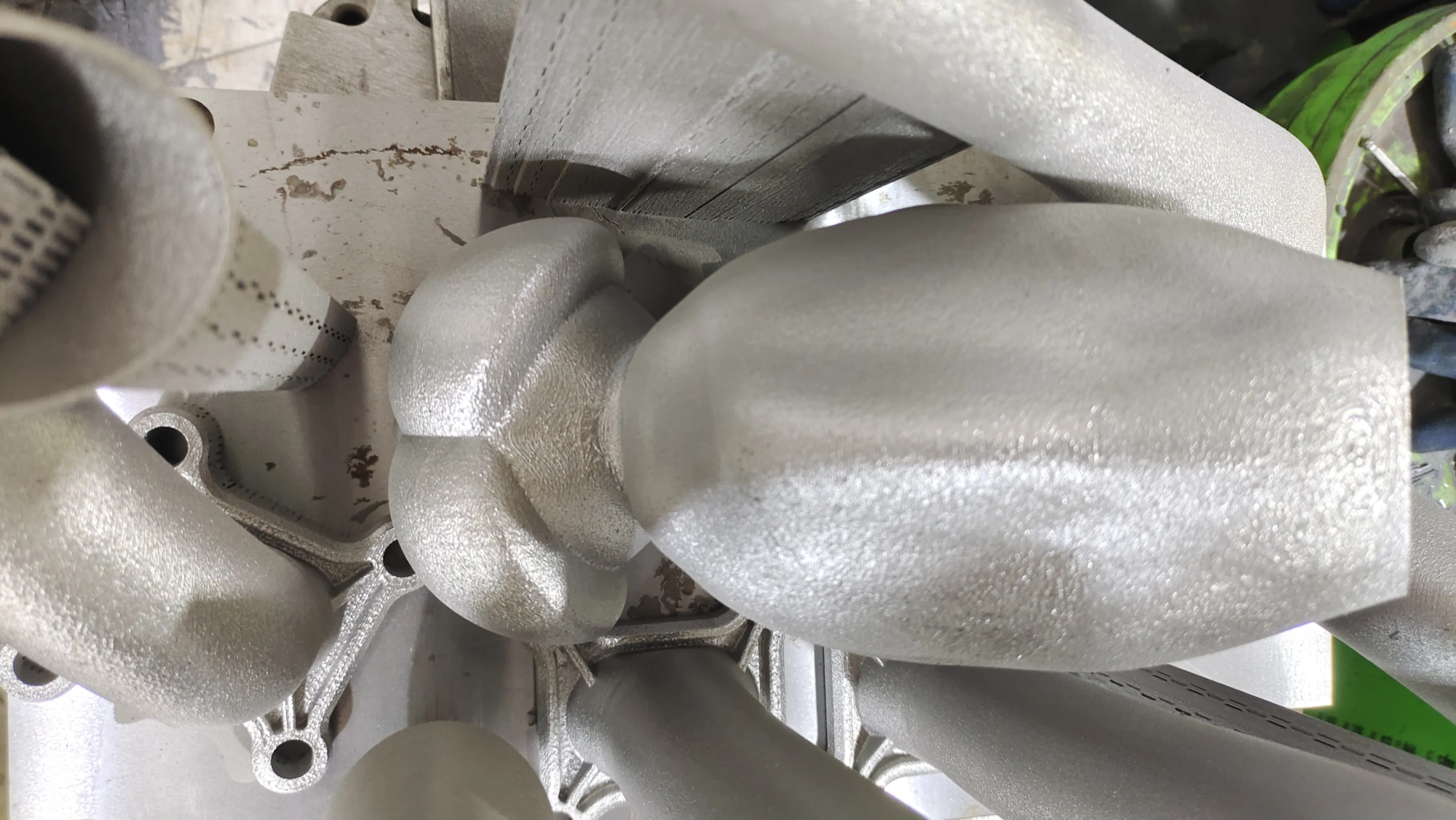
- Metals (SLM – Selective Laser Melting): Provides ultimate strength, stiffness and heat dissipation for mission-critical components like pinions, spur gears, differential internals or complex suspension linkages. Aluminum alloy (AlSi10Mg), titanium (Ti6Al4V) or stainless steel (316L) have excellent properties. This is where professional service with advanced industrial SLM machines and expertise like GreatLight becomes invaluable. They overcome the complexity and precision requirements of metal additive manufacturing.
Professional Advantage: From CAD to crawler-ready components
While desktop printers unlock possibilities, professional rapid prototyping can enhance results, especially for demanding applications:
- Expert design consultation: Experienced engineers analyze CAD models to provide recommendations for printability, strength/weight optimization, material suitability, and potential failure points for RC loads.
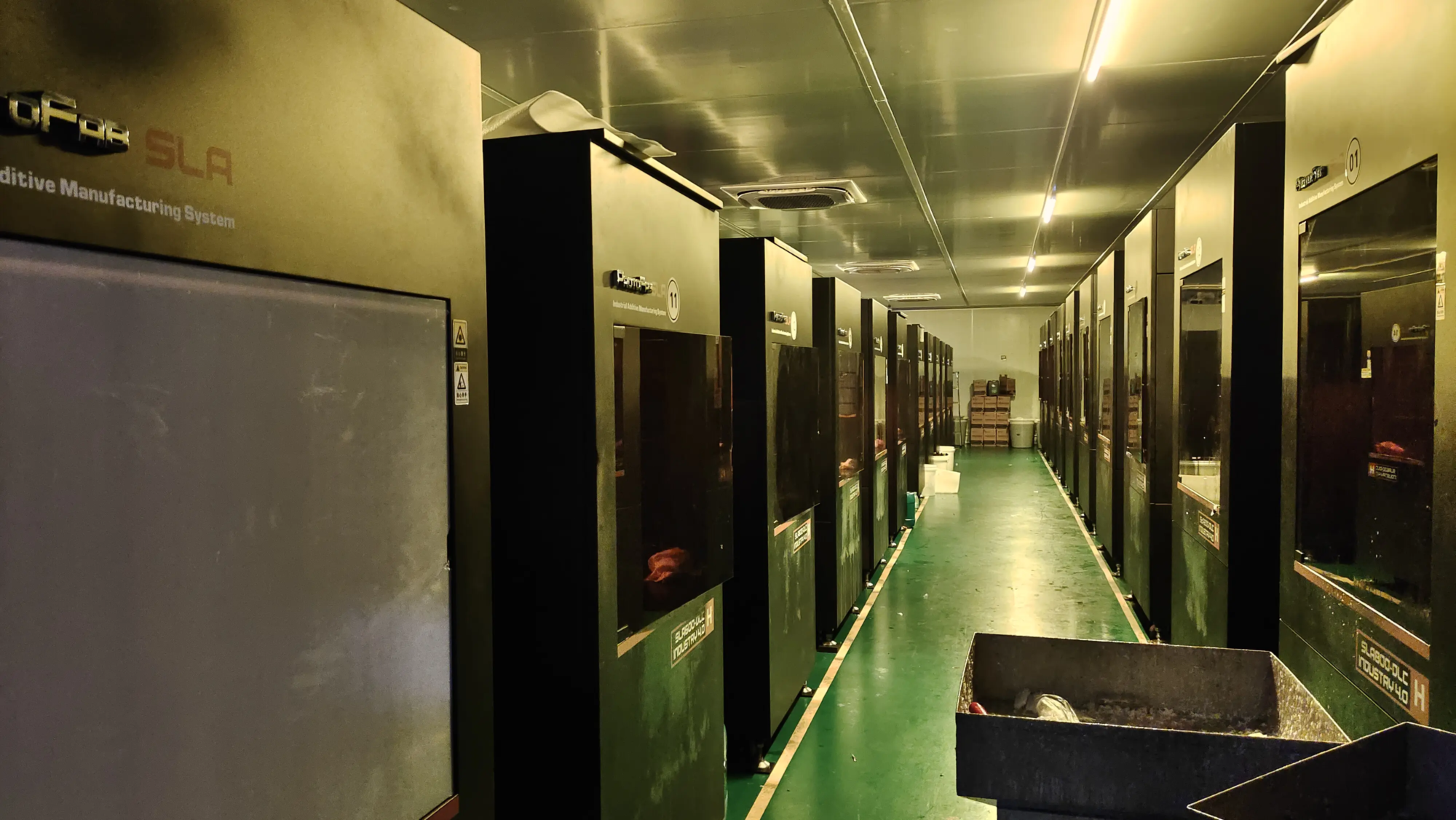
- Industrial Grade Machines: Using a professional FDM printer with its enclosed chamber, high-temperature extrusion, and superior motion control goes far beyond typical hobbyist machines. For metals, industrial SLM printers can provide the density and mechanical integrity required for gears or highly stressed parts. GreatLight uses advanced SLM technology It is for such a high-risk segment.
- Accuracy and consistency: A professional environment ensures tighter tolerances, minimal layer shifts and consistent results, which are critical for reliable assembly and performance tuning.
- Comprehensive post-processing: In addition to removing supports:
- smooth: Steam smoothing (solvent for ABS), sanding, sandblasting to reduce friction points and improve aesthetics.
- strengthen: The annealing process, especially for nylon, increases crystallinity and enhances temperature resistance and toughness.
- finishing: Paint, dye (especially nylon), seal, add texture or decals.
- For metal: Heat treatment (stress relief, aging), CNC machining for precision fit of critical surfaces, surface treatment (anodization, passivation).
- Materials expertise and handling: Professionals carefully store and handle materials (especially hygroscopic materials such as nylon and metal powders) to ensure optimal printing conditions and final part performance. They also offer a wider range of materials.
Transforming common parts through 3D printing
- Chassis/skid plate: Customized layout, optimized weight holes, integrated electronics mounting.
- Suspension parts: Connecting rods (not subject to traditional flex limitations), booms, shock mounts/motor plates.
- Body mounts, roll cages and scale accessories: Unique mounting solutions, complex roll cage, detailed scale components (tool box, winch).
- Drive train: Hubs/splines, gearbox housings, custom gear sets (especially SLM metal).
- Interior/Electronics: Customized battery tray, ESC/receiver/LED mount, servo mount (printed resin pattern for aluminum casting).
- Tires/wheels: Prototype tread pattern, custom bead lock rings, lightweight inserts.
Overcoming Challenges: Professional Insights
Obstacles faced by DIY printing:
- Layers/Weaknesses: Incorrect microtome settings (temperature, speed, cooling), unsuitable material or wrong orientation lead to poor adhesion. Solution: Good at adjusting settings, selecting appropriate materials/settings/orientations, post-processing such as annealing.
- Warpage/Shrinkage: Especially using nylon/ABS on large prints. Solution: Optimal bed bonding strategy (specialized surfaces/adhesives), controlled chamber conditions (heat), design adaptability (anti-warp functionality).
- Dimensional error: Poor calibration, inconsistent filaments. Solution: Finely tuned machines, precise calibration protocols, stable environments, using dimensionally reliable filament suppliers.
- Surface finish defects: Layer lines, stringing, and support scars are visible. Solution: Advanced slicing strategies, optimized support type/placement, professional post-processing (sanding, sandblasting, smoothing).
Conclusion: Reaching new heights with additive manufacturing
3D printing has fundamentally changed the rock crawling landscape. It provides enthusiasts and engineers with unmatched ability to innovate, personalize and optimize their gear beyond the limitations of off-the-shelf parts. From rapid prototyping iterations to producing customized high-performance components from advanced polymers and even metal alloys, the technology unlocks potential. While hobbyist printers provide accessibility, leveraging industrial-grade machinery and deep manufacturing expertise is critical to reliably tackle the toughest terrains and mission-critical components. Companies that specialize in rapid prototyping, such as GreatLight, have advanced SLM capabilities and comprehensive materials and post-processing