Building the Emperor’s Peak: The Ultimate Guide to 3D Printing Space Marine Armor
The Adeptus Astartes, humanity’s bulwark against the horrors of a dark future, has captured the imagination for decades. Their iconic power armor is a symbol of unyielding strength and technological wonder. While Geneseed may be in short supply, thanks to the revolutionary power of 3D printing, enthusiasts and cosplayers can now recreate the Space Marine’s stunning presence through meticulously crafted armor. This guide delves into the process of converting CAD files into ceramic overlay reality.
Why Choose 3D Printed Space Marine Armor?
Traditional methods like foam crafting or resin casting have served hobbyists well, but 3D printing offers clear advantages:
- Unparalleled details: Capture intricate Aquilaes, skull patterns, Legion/Chapter emblems and battle damage directly from digital files with incredible accuracy.
- Structural integrity: Printed parts, especially those made from solid materials, offer superior rigidity and durability compared to foam, creating a more realistic armor feel.
- Extensibility and customization: Easily adapt the suit to fit different wearers, or create unique, chapter-specific variations not available commercially. Want a custom heraldic shield or modified helmet? Design and print it.
- Repeatability: Need multiple pauldrons printed for your squad? Click Print again. Great for group projects or replacing damaged parts.
- Complex geometric shapes: Achieve shapes not possible with subtractive machining or foam carving, such as complex internal helmet structures or layered plating.
The Road to Powered Armor: Step-by-Step Workflow
Making wearable power armor is a major project that requires planning and patience. Please follow these key steps:
-
Design acquisition:
- STL files: The backbone of your project. Sources range from paid marketplaces with high-quality, pre-supported files (MyMiniFactory, Cults3D) to free repositories (Thingiverse, Printables). Pay close attention to the license terms.
- Model selection: Consider printability and practicality. Find model number:
- Designed for role play (segmented, hollow parts).
- With integrated attachment points or assembly rails.
- This matches the aesthetic and complexity you want for your clan/chapter.
- scale: Critical! Incorrect scaling can cause parts to fail to wear. Most documents provide guidance, but scaling involves:
- Take precise body measurements (chest, waist, shoulder width, arm/leg length).
- Calculate the scaling factor in the slicing software based on these measurements and the armor segment dimensions. Test prints of critical parts such as the breastplate are crucial.
-
Printer and material selection:
- FDM (filament) printer: The most common route for large armor pieces. Pros: Cost-effective wire, allows for large build volumes, durable final part (even flexible TPU for comfort). Disadvantages: Layer lines require extensive post-processing and are slower than resin for intricate details.
- Best materials: PLA (easiest to print, good for beginners), ABS/ASA (stronger, heat resistant, good for sanding/painting), PETG (very durable, impact resistant, good adhesion between layers), TPU (flexible, good for underwear or padding).
- Resin printer (MSLA/DLP/LCD): The intricate detail on the helmets, knives, bolters, seals and small armor decorations is unparalleled. Pros: Excellent detail and surface finish, faster for small parts. Cons: Smaller build volume limits large parts (requires segmentation), resin is more expensive and brittle, requires hazardous materials handling and post-processing.
- Best materials: Standard/tough resin (good detail/durability balance), ABS-like resin (more flexible/impact resistant), flexible resin (for seals/gaskets). for Functional metal parts (bolter parts, chain sword blades), specialized metal-infused resins exist, but require secondary sintering.
- FDM (filament) printer: The most common route for large armor pieces. Pros: Cost-effective wire, allows for large build volumes, durable final part (even flexible TPU for comfort). Disadvantages: Layer lines require extensive post-processing and are slower than resin for intricate details.
-
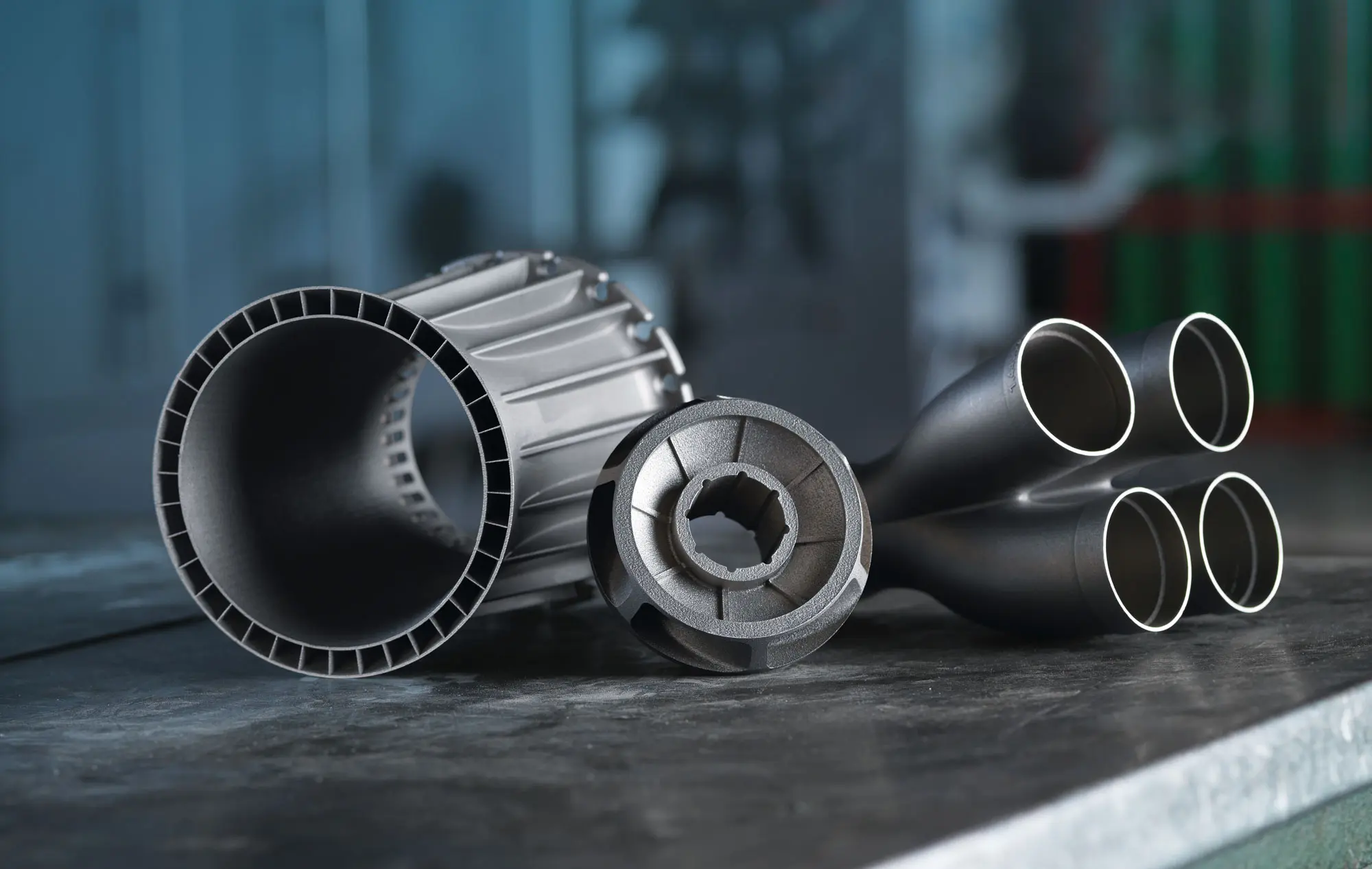
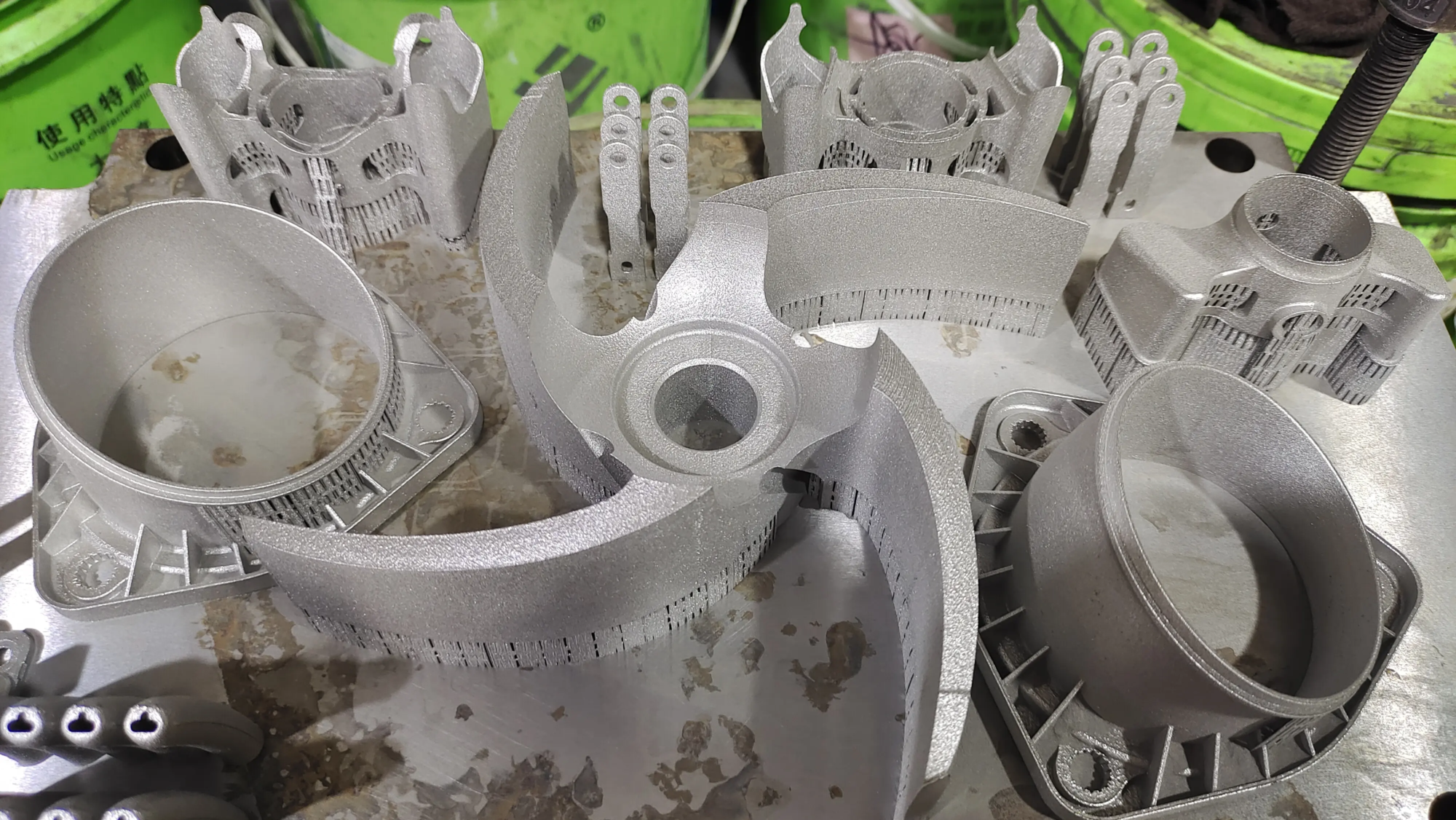
Advanced Metal Printing: For those looking for ultimate durability, realism (metallic finish) or replicating functional metal components within armor. Direct metal laser sintering (DMLS/SLM) It’s the pinnacle. The technology uses lasers to fuse fine metal powders layer by layer. company likes Glow Industry It is this high-end technology that is focused on. Use materials such as stainless steel (316L), titanium, maraging steel or aluminum, huge light Extremely strong, lightweight, and complex custom metal components can be expertly manufactured that are integral to advanced armor structures—think complex articulation mechanisms, structural reinforcement plates, real metal weapons components, or specialized buckles. Their expertise ensures dimensional accuracy and material performance far beyond desktop printers.
- Master printing: Success depends on careful slicing:
- segmentation: Split large files (helmets, breastplates) into