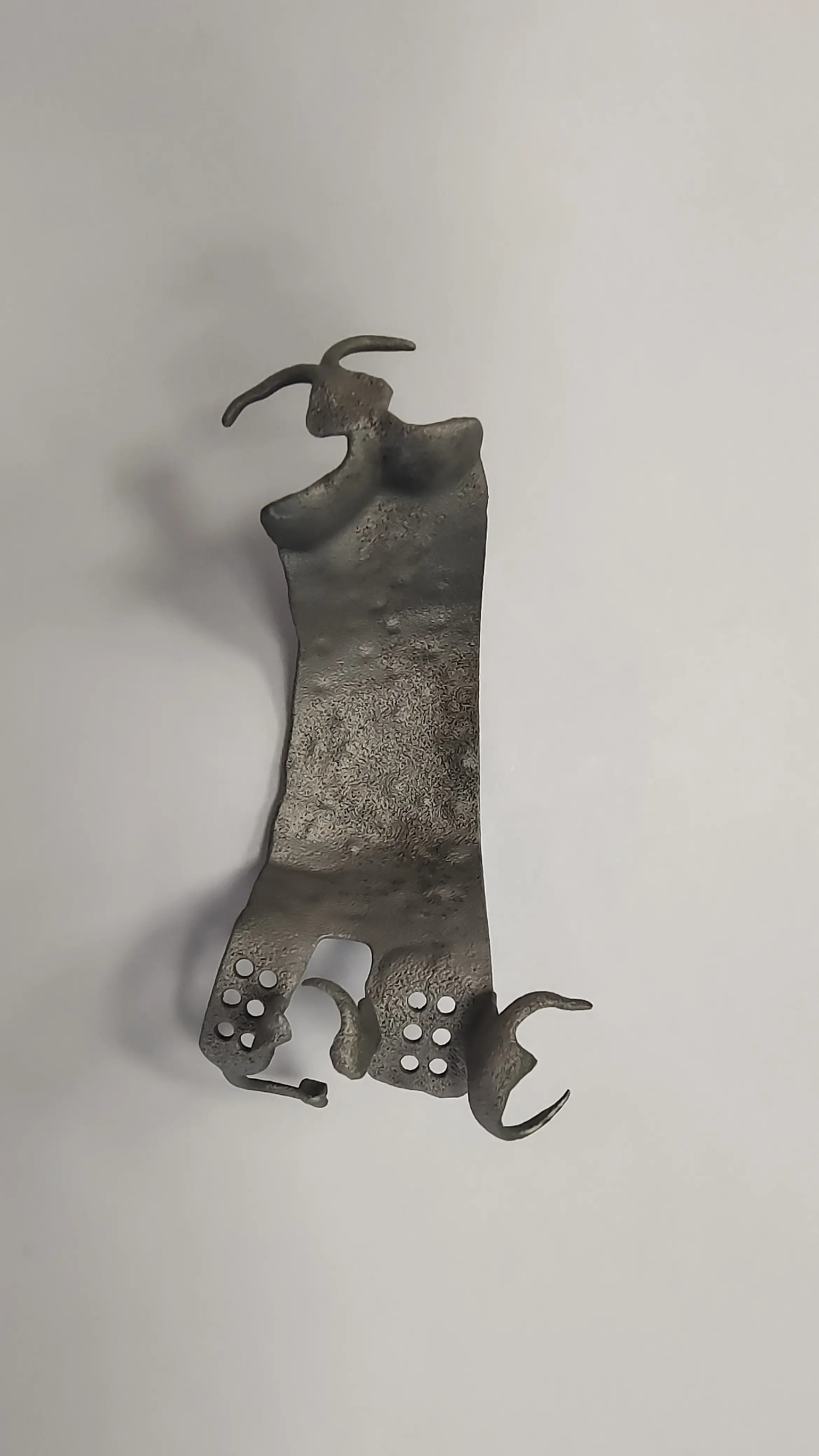
Hat Brims and Skirts: Your Essential Guide to 3D Printing Bed Bonding
In 3D printing, achieving a perfect first layer of adhesion is not optional, but fundamental. Two tools dominate this battle: edge and skirt. Both combat warping and ensure print stability, but their methods are very different. Let’s break down their roles, best use cases, and how to deploy them strategically.
Getting to Know the Skirt: Print’s Warm-Up Act
skirt is a non-contact contour Draw around the base of the model before printing begins. Think of it as a printer calibration ritual:
- Function: Mainly cleans the nozzle and establishes consistent material flow.
- appearance: Similar to concentric rings at a distance from the model (usually 3-10 mm).
- advantage:
- Minimal material waste (only a few cycles).
- Removes quickly (does not stick to print).
- Verify bed flatness by showing gaps or uneven squeezing.
- When to use:
- Suitable for small prints with low risk of warping (e.g. simple geometric shapes).
- On textured printing plates, adhesion is naturally strong.
- for "Trial run" Verify extrusion before making larger prints.
Brim: Your Anti-Warp Anchor
The edge extends horizontally from the edge of the model as connected lattice. Unlike skirts, it’s physically bonded to your print:
- Function: Increase surface contact with the build plate to counter lift forces.
- appearance: A flat, one-thick mesh blends into the base of the model (width is adjustable).
- advantage:
- Eliminates edge deformation of easily deformable materials (ABS, nylon, PETG).
- Stable tall/narrow models or prints with small footprints.
- act as "Raft Lite" Tricky geometries can be accomplished without using too much material.
- When to use:
- Printing on highly stressed materials is prone to thermal shrinkage.
- Objects that have minimal contact with the bed (e.g., poles, statues, sharp corners).
- No heated bed or environment prone to drafts.
head to head comparison
| factor | skirt | edge |
|---|---|---|
| adhesion | Zero contact; prime nozzle only | Physically fused to the edge of the print |
| Prevent warping | weak | Excellent |
| Materials used | Minimum (<1g) | Medium (scales with width) |
| move | Effortlessly | Needs pruning/sanding |
| most suitable | Calibrated, low-risk plastic | Easily deformable material, small base |
Deployment expert tips
- Skirt settings optimization:
- Set 3-5 loops and 5mm offset to catch leveling problems early.
- Hat brim customization:
- Increase the edge width of ABS or large prints (5–10mm).
- enable "only on outer edge" in a slicer to simplify the removal process.
- Material matters:
- Skirt features PLA technology on PEI sheet for a sparkling finish.
- Use composite materials (carbon fiber PLA) or hygroscopic silk edges.
- Hybrid approach:
Pair the skirt (for priming) with the edge (for gluing) in intricate work.
Conclusion: The strategic adhesion option wins
Hat brim and skirt are not universal "better"– They are situationally driven allies. choose one skirt When testing settings or printing low-risk PLA. Deploy a edge When dealing with twisting monsters like ABS, use a design with minimal surface contact or draft. In high-end prototyping where precision cannot be compromised, such as aerospace or medical components, engineers combine edges with advanced bed surface and chamber temperature controls to achieve zero-tolerance adhesion.
Frequently Asked Questions about Hat Brims and Skirts
Q1: Can the brim and skirt be used together?
Yes! Slicers often allow for both. The skirt prepares the nozzle and the edge ensures the print quality.
Question 2: Why is my hat brim peeling off the print?
This indicates poor bed adhesion. Clean the plate thoroughly, increase the bed temperature slightly (5°C), or adjust the nozzle height.
Q3: How to remove edges without damaging the model?
Use flat-nose pliers or a deburring tool. For fragile prints, dissolve the PLA edges with light sanding or a specialized plastic remover.
Q4: Can skirts improve printing quality?
Indirectly – they ensure consistent filament flow and reveal leveling defects before printing begins.
Work with GreatLight to create the perfect 3D printed prototype
At GreatLight, we engineer perfect adhesion from the first layer to the final surface. Our industrial-grade SLM 3D printers overcome warpage challenges with a calibrated edge/skirt strategy while delivering:
- Material mastery: Custom processing of metals (stainless steel, titanium), ceramics and engineering polymers.
- End-to-end solution: One-stop post-processing services (heat treatment, CNC machining, polishing).
- Speed and accuracy: Rapid prototyping with tolerances up to ±0.05mm – ideal for functional testing or end-use parts.
Improve your project foundation –Request a custom rapid prototyping quote from GreatLight today. Precision is not printed by accident, but by design.