Cellular Wall 3D Printing: A Comprehensive Guide
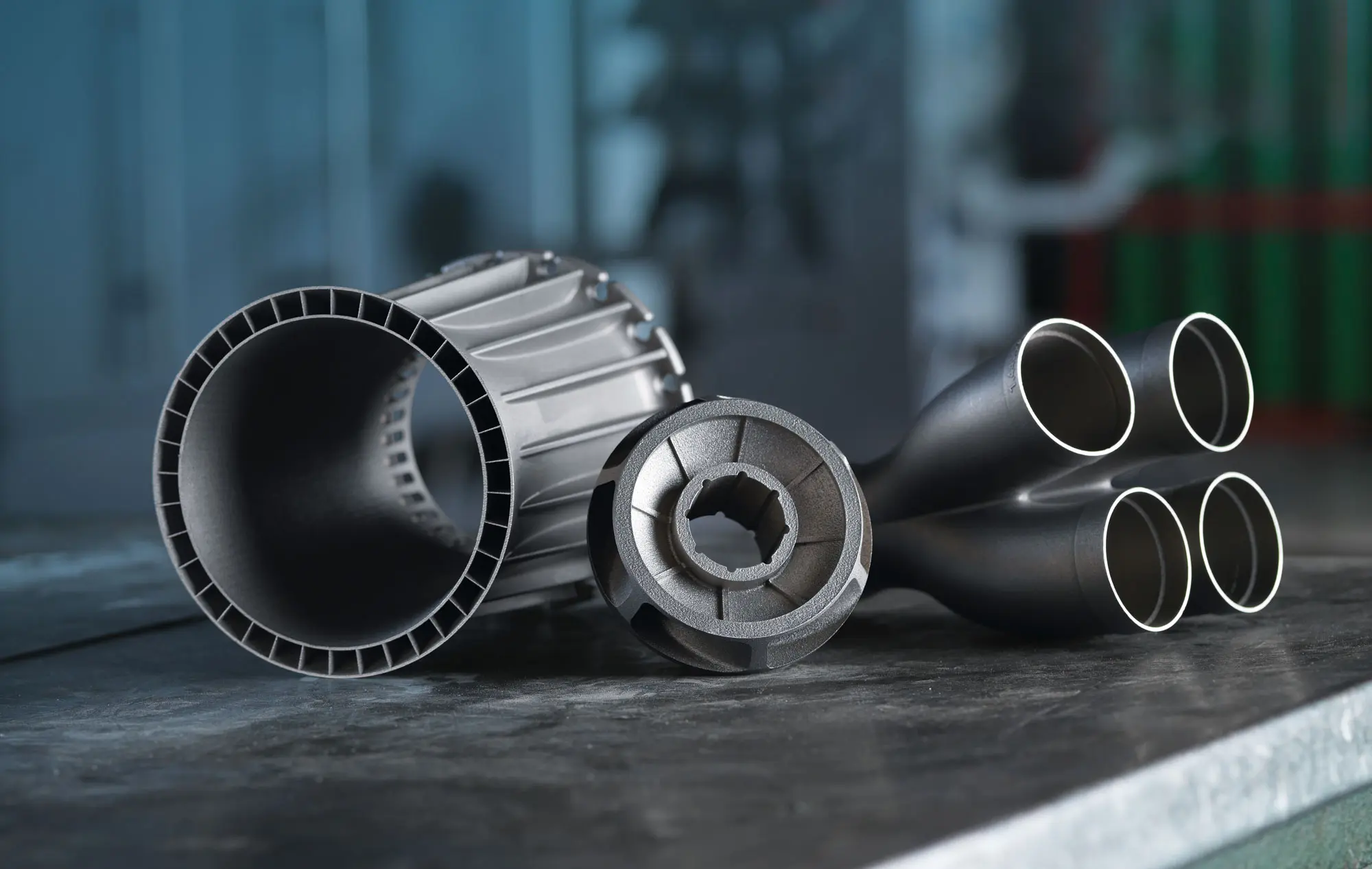
In the ever-growing field of additive manufacturing, honeycomb structures stand out as the pinnacle of bionic engineering. These intricate hexagonal patterns are designed to mimic the natural cell structure found in beehives and bones, providing an unparalleled strength-to-weight ratio when integrated into 3D printed components. At GreatLight, we leverage state-of-the-art Selective Laser Melting (SLM) technology to transform this complex geometry from conceptual brilliance to functional reality, revolutionizing rapid prototyping for demanding applications.
Why cellular walls? The science behind the structure
Honeycomb walls not only provide visual impact, but also represent mechanical optimization. Repeating hexagonal cells distribute stress evenly throughout the structure, absorbing impact and resisting compression more effectively than a solid wall of equivalent mass. This makes them ideal for applications where weight is reduced without sacrificing durability: aerospace components, automotive stents, biomedical implants and high-performance sporting goods. By removing excess material and optimizing load paths, the honeycomb design significantly reduces part weight while maintaining structural integrity, a balance difficult to achieve with traditional manufacturing.
Successful Design: Key Parameters of Cellular
Effective implementation of cellular requires careful planning:
- Cell size adjustment: Smaller units increase strength but increase printing complexity and time. Larger units allow for more significant weight savings, but may compromise stiffness.
- wall thickness: Must comply with material properties and expected loads. Too thin and the wall risks deforming; too thick and less weight is saved.
- Filling density: Changing the packing density of a part (e.g., denser at stress points) can optimize performance and material usage.
- Software integration: Utilize topology optimization tools such as nTopology or ANSYS to algorithmically generate honeycomb patterns suitable for part stress maps.
Material selection: from polymers to high-performance metals
While honeycombs can be printed with polymers such as nylon or resin, metal honeycomb Unlock ultimate performance. Gretel specializes in:
- Titanium (Ti6Al4V): For use in aerospace or medical implants – biocompatible and exceptionally strong.
- Aluminum alloy: Lightweight heat dissipation in the automotive/electronic field.
- Stainless steel (316L): Corrosion-resistant parts suitable for industrial or marine environments.
- Inconel: Heat-resistant components used in jet engines or chemical processing.
Overcoming manufacturing challenges
Honeycomb structures present unique obstacles to 3D printing:
- support structure: Internal geometries may require complex supports, risking damage during disassembly.
Solution: Advanced lattice generation software minimizes support through self-supporting angles (>45°). * - thermal stress: Thin walls in metal prints may deform under rapid heating/cooling.
Solution: GreatLight uses SLM printers with precise laser alignment and in-room thermal monitoring to control residual stress. * - Post-processing: Remove residual powder from cells or polish complex internal structures.
Solution: Our multi-stage post-processing, including ultrasonic cleaning, chemical polishing and precision machining, ensures finished parts are flawless. *
Practical application
- aerospace: The weight of the bearing seat is reduced by 40% and has been verified for flight safety.
- medical: Customized orthopedic implants promote bone ingrowth through bionic holes.
- car:Lightweight brake calipers increase electric vehicle efficiency.
- robotics:Durable and flexible arm sections enhance movement dynamics.
in conclusion
Honeycomb wall 3D printing exemplifies how additive manufacturing can transcend traditional design limitations, blending lightweight efficiency with unprecedented strength. As experts in metal rapid prototyping, GreatLight doesn’t just print parts, we design solutions. With advanced SLM technology, material science mastery and integrated post-processing, we transform complex honeycomb designs into robust functional prototypes and end-use components. Whether you require a single prototype or series production, our approach ensures structural perfection without compromise.
FAQ: Honeycomb Wall 3D Printing
Q: Is cellular structure weaker than solid walls?
A: No – if designed correctly, honeycomb outperforms solid walls in: Specific strength (strength per unit weight). They distribute forces efficiently, making them ideal for dynamic loads.
Q: Can honeycomb walls be 3D printed from any material?
A: While feasible in most printable materials (plastic, resin, metal), metals like titanium or aluminum yield the highest structural benefits. GreatLight specializes in producing metal honeycombs using SLM technology.
Q: How to ensure that the powder inside the battery is removed?
A: We combine high-pressure gas purge during printing with ultrasonic cleaning and chemical baths after build. Critical applications may include electrolytic polishing for absolute cleanliness.
Q: Is cellular cost effective?
A: Yes, although the print time is longer, the material savings and performance improvements offset the cost. Lightweight parts reduce transportation/logistics costs, and optimized design extends product life.
Q: What is the minimum achievable wall thickness?
A: With GreatLight’s SLM printers, we can reliably produce walls as thin as 0.3 mm from metals such as aluminum or steel, and even thinner titanium (0.2 mm).
Q: Can you combine honeycomb with other lattice structures?
Answer: Of course. We often mix honeycomb with spiral or diamond fillers to optimize specific stress areas within individual components.
Ready to harness the power of cellular structures in your projects? As a leader in rapid prototyping companies in China, huge light Providing end-to-end solutions – from topology optimization design consultation to precision SLM printing and comprehensive post-processing. Get custom metal parts that redefine lightweight strength. Contact GreatLight today for a competitive quote and engineering support!