Unlock the potential: Make your own customizable 3D printed bottle opener
Have you ever struggled with a flimsy bottle opener that failed at a crucial moment? Maybe you long for a bottle opener that suits your grip or aesthetic. 3D printing is a game-changer for rapid prototyping, allowing you to design, iterate, and produce custom tools like bottle openers from your desk, or work with professionals like us. Whether you’re a hobbyist experimenting with plastics or an engineer looking for an industrial-grade metal solution, this guide will walk you through the process. Let’s dive into how to create your ideal opening.
Why choose a custom 3D printed bottle opener?
Standard openers often compromise ergonomics for mass production. Via 3D printing:
- Personalized ergonomics: Designed to contour to match your hand for enhanced comfort and leverage.
- Unparalleled durability: Choose advanced polymers or metal alloys that are resistant to bending/breaking.
- Iterate quickly: Test designs in hours/days, not weeks. Fix defects quickly.
- Endless customization: Add logos, textures, multi-tools (cork pullers/can labels) or themed shapes.
Step by step: Design your opening statement
1. Define usage and dimensions:
- Target audience: Beer bottle? Soda cans? Both? This determines the hook size/cut geometry.
-
Ergonomics first: Draw hand drawn outlines. Key areas:
- Handle width (about 2-3 cm, comfortable to hold).
- Lever arm length (see picture below).
-
Finger notches/grooves.

Concept: Balanced pivot points minimize effort.
2. CAD modeling software:
- Beginners: TinkerCAD or Fusion 360 (free).
- Professionals: SolidWorks or Rhino.
- Key dimensions:
- Bottle cap hook: inner diameter is about 28-30 mm, depth is about 6 mm.
- Can tank: width ≈ 13mm, height ≈ 8mm.
- Material thickness: stress point ≥ 4mm.
3. Stress simulation (optional but recommended):
- Use Fusion 360 or ANSYS to simulate load distribution during lever operation.
- Prioritize tensile strength around the hook/slot – the weak point absorbs around 20kg of force.
Material Choice: Plastic vs. Metal – Which Is Best?
Choose based on durability needs and application:
- People’s Liberation Army: Affordable and strong – perfect for infrequent home use.
- PETG/Polypropylene: Stronger and chemical resistant – withstands refrigerator to dishwasher cycles.
- Nylon (PA12): Flexible and elastic – won’t break when dropped.
For demanding environments – use metal:
- Stainless steel 316L: Corrosion resistant, high strength – perfect for outdoor/beverage industry tools.
- Aluminum AlSi10Mg: Lightweight Stiffness – Best for high cycle fatigue performance.
- Titanium Ti6AlV: Ultimate strength-to-weight ratio—aerospace-grade longevity.
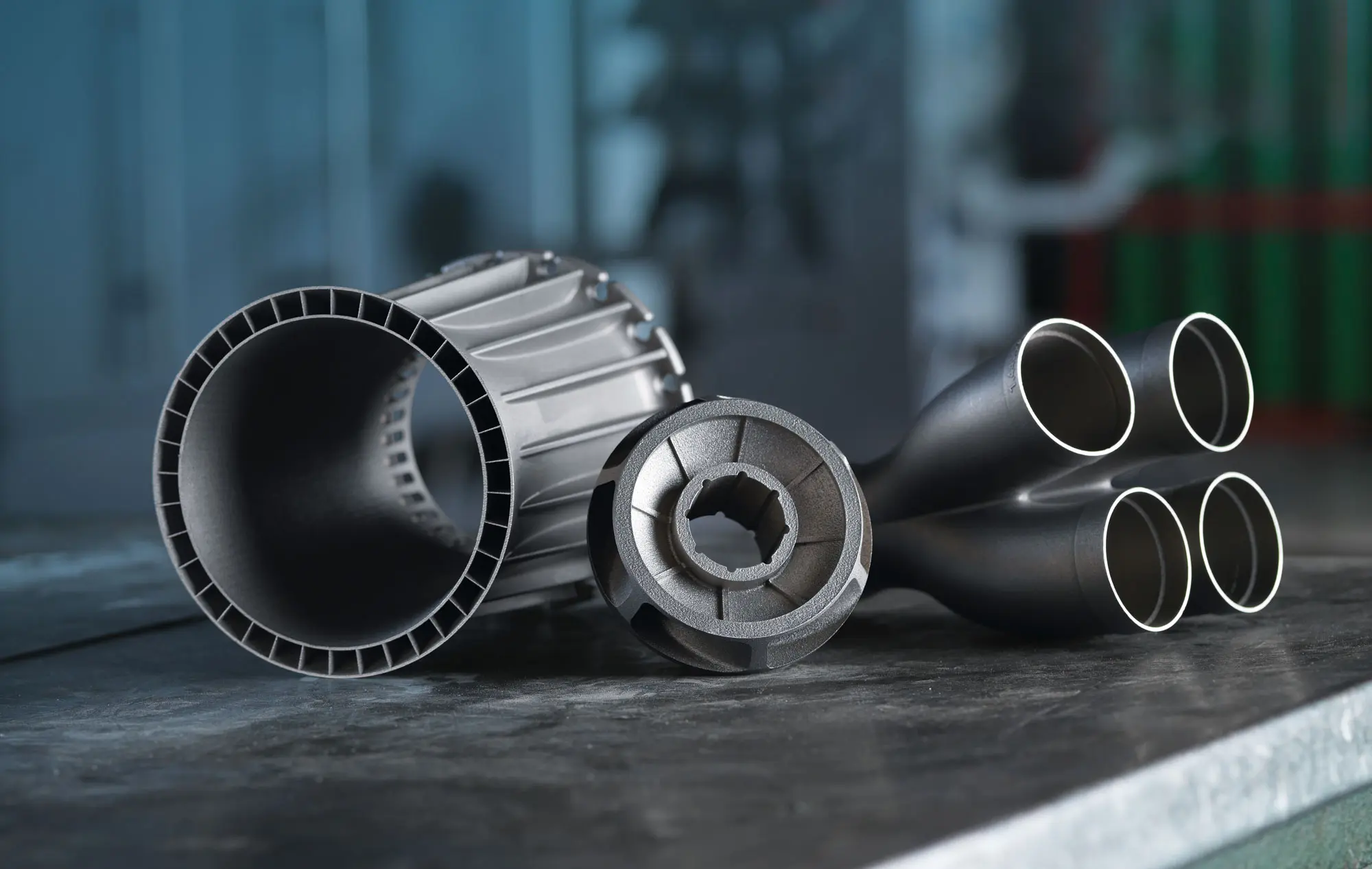
In Daguang: Specializing in Selective Laser Melting (SLM), we offer sintered metal hole openers with >99% density (no pores), ideal for commercial use. Need personalized material specifications? We customize alloys on demand.
Printing Technology Revealed
For plastic printers (FDM):
- direction: Print flat to avoid layer separation under shear stress.
- set up: >30% infill, 3–4 perimeters, ≥0.15mm layer resolution.
- support: Minimum -> 45° angle to avoid them.
Metal printing via SLM (GreatLight Specialty):
Laser sintering builds layers with micron precision. step:
- Design export as .STL, optimization support added.
- The bed is filled with alloy powder (stainless steel/aluminum/titanium).
- The laser selectively melts the powder layer by layer.
- Printed parts undergo a powder removal process.
Key Tips: Metal designs require draft angles/wide tolerances – eliminate residual internal voids!
Post-Processing: Make Your Opening Sparkle
Plastic surface treatment:
- Sanding: Start with rough sanding (120 mesh) and polish to 1000+ mesh.
- Gap Filling: Epoxy resin filler line pre-painted.
Metal surface treatment (GreatLight end-to-end service):
- Separation: Wire cutting removes substrate.
- Deburring: CNC machined for clean edges.
- Surface enhancement:
- Shot Peening/Tumbling: Improves fatigue resistance.
- Polish: Mirror grade finish.
- Powder Coated/Ceramic Sealed: Food safe finish.
- Heat treatment: Solution aging maximizes alloy hardness/dimensional stability.
Test and Iterate: The Advantages of Prototyping
Always verify prototypes:
- Load test: Torque is applied via a heavy object (~20kg).
- Cycle test: simulate 100 open circuits.
- Field testing: daily use feedback.
Found a failure? Modify geometry/thickness in CAD → reprint → retest. This rapid iteration cycle—GreatLight’s core strength—takes days as opposed to weeks with traditional machining. Shortening time to market empowers innovators!
Conclusion: Path from concept to professional tool
The 3D printed bottle opener beautifully demonstrates the power of rapid prototyping: democratizing design while enabling industrial-grade output. Plastic printing allows DIY enthusiasts to economically solve household troubles. For mission-critical applications such as commercial barware or aerospace kits, metal SLM printing offers unparalleled flexibility and customization capabilities.
Why stop here? If you need high-density prototypes that are ready for mass production (from bottle openers to complex aerospace components)huge light Ready. As a leader in rapid prototyping in China, we integrate SLM 3D printing With tailor-made materials science and one-stop post-processing. our advanced The printer refines your concept into a durable, precision-machined reality, optimizing delivery time by up to 70%. Don’t compromise; work with professionals equipped to handle complexity. Customize your bottle opener or metal prototype → and experience manufacturing redefined.
FAQ:
Q1: How strong is the 3D printed metal bottle opener?
A1: Professionally printed SS/Al hole openers match/exceed forged steel strength – SLM ensures isotropic properties. Expected porosity is ≤0.2%, while casting porosity is approximately 5%.
Q2: Can my hobbyist FDM printer produce functional openers?
A2: Yes, PETG/Nylon can handle moderate daily tasks. Avoid using thin hooks/fragile PLA.
Question 3: How much does it cost to prototype a metal SLM bottle opener?
A3: Price depends on size/material. Simple designs: $25-50; custom alloys/complex geometries up to $150. Through GreatLight’s economy, the cost of scaling has dropped dramatically.
Q4: What tolerance should I design for?
A5: Plastic FDM: ±0.5mm. Metal SLM: ±0.1mm (support/angle